
Author: Rach
Photos: Rach (unless specified otherwise)
Our time in Vietnam was flying by and the day had come around to move further down the coast to riverside Hội An. We had a few beautiful sights and the alluring stretch of road known as the Hai Van pass ahead of us. See this episode of top gear here (3-7 minutes), if you don’t know what we’re talking about:
And so once again one adventure ends and another begins.
20 April
Most people make the 76 mile land journey from Hue to Hội An by motorbike, giving them the freedom of the open road, wind in their hair, and the opportunity to stop at various viewpoints en route to soak up the scenery, or revel in the interesting history and religion caught up in the mountains. Without having ridden motorbikes before, nor with international driving permits, now was not the time to cut our teeth on the meandering ascending pass, so we had opted to take in the sights from the comfort of an air conditioned car.
For $49 USD we would be picked up at our Hue hotel and dropped at the door of our hotel in Hội An (another perk) with 4 stops along the way. Our driver was decidedly late, arriving at 10.15am instead of 9.30am, but we were soon on our way, hugely grateful for choosing a method of transport with air conditioning in the absolutely blistering heat. How can it be this hot this early in the day???
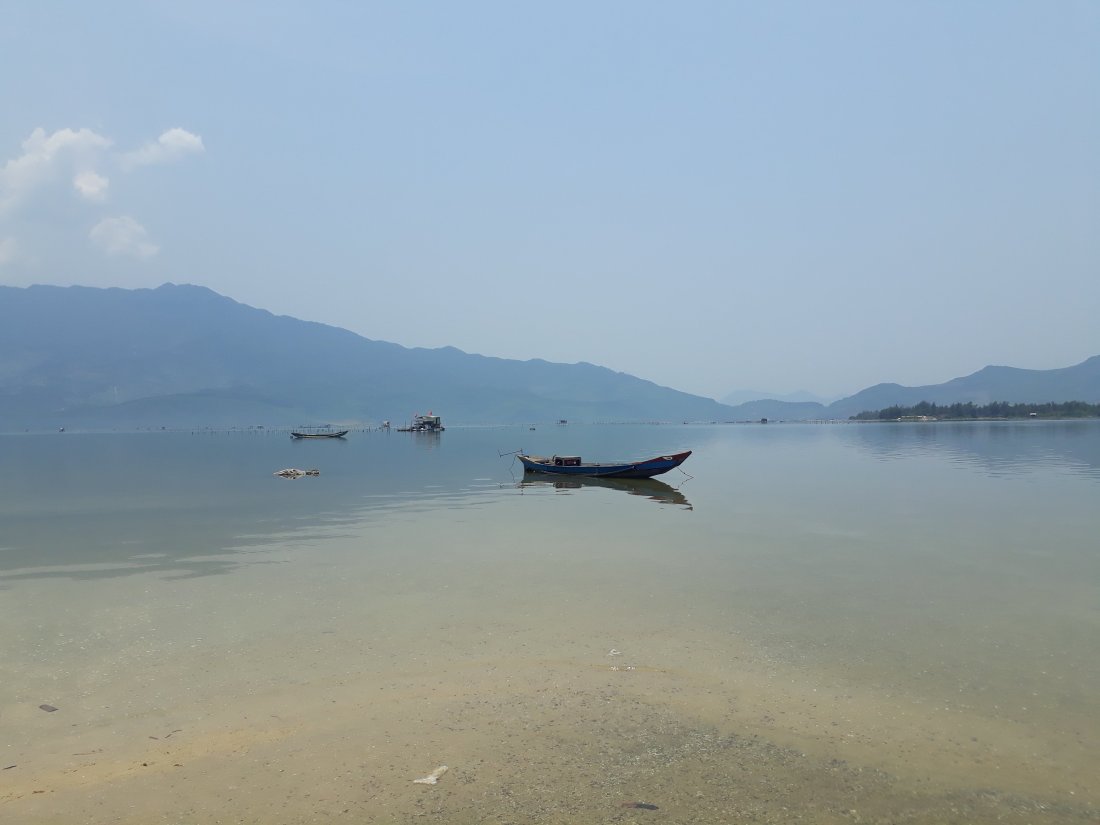
Our first scheduled stop was at a picturesque fishing village. With cities largely dominating our Vietnam tour thus far, this was certainly the most still and tranquil place to date of our journey down Vietnam’s long country.
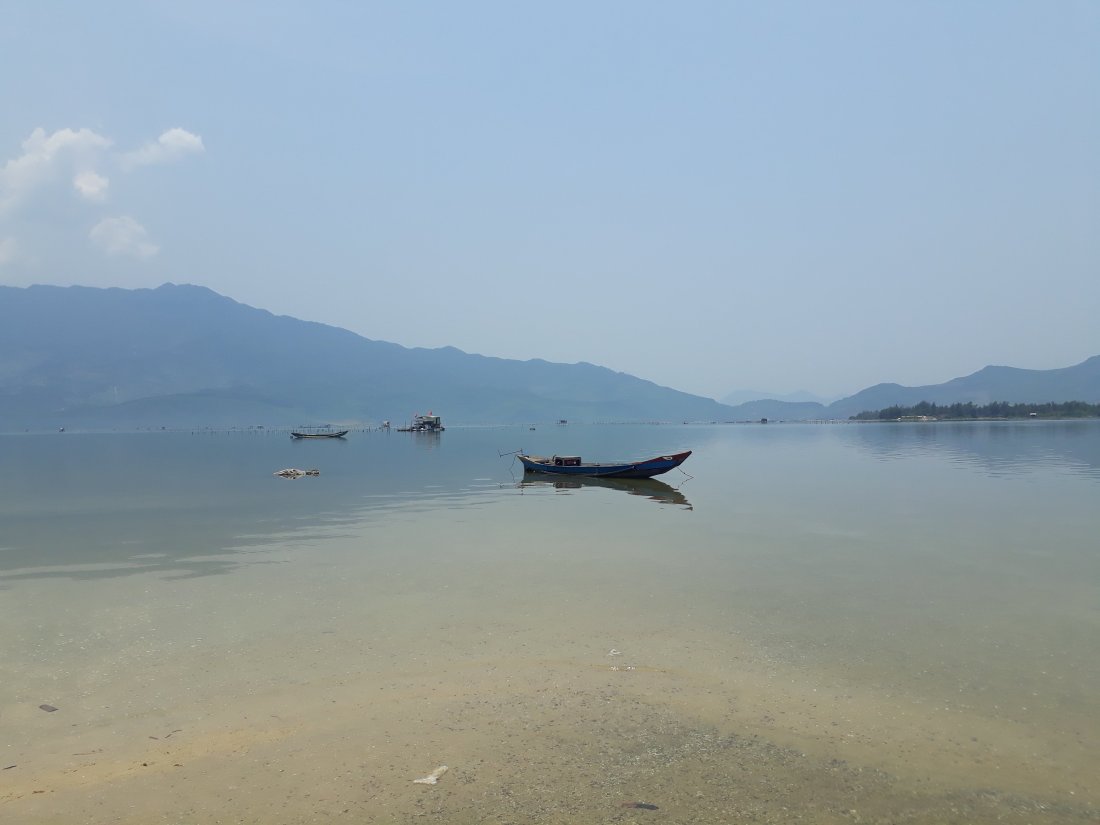
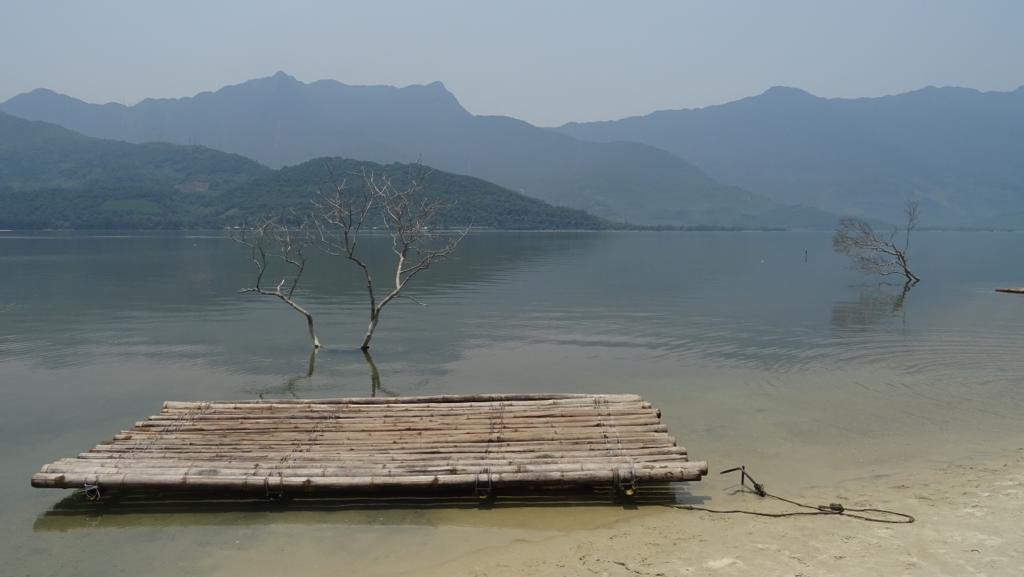
Only a few fishermen at work in this eerily calm lake, and equally few seafood restaurants dotted along the roadside, we were hypnotised by the beauty of this lovely yet ‘industrial’ locality.
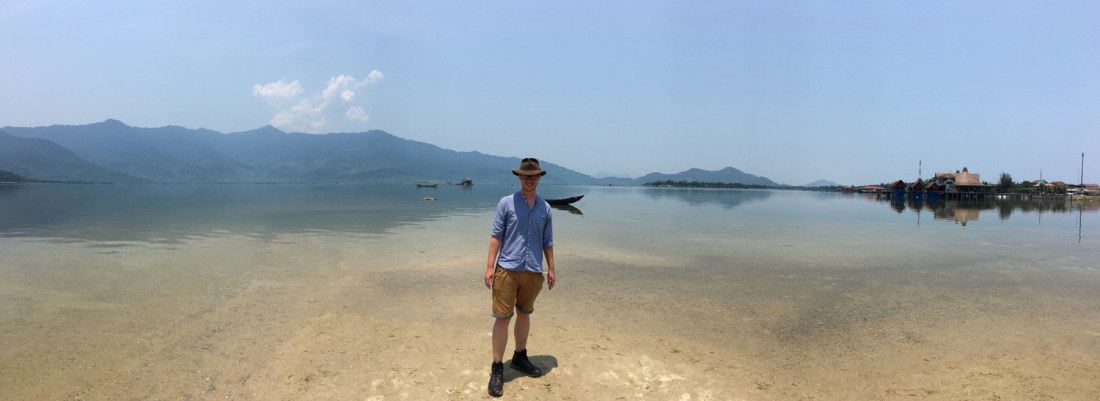
The water moved not an inch, the searing heat hanging over the lake so it presented more like a painting than an active fishing ground. Perhaps whatever lay below the surface was too hot to move – on touch the water was surprisingly hot as a bath.
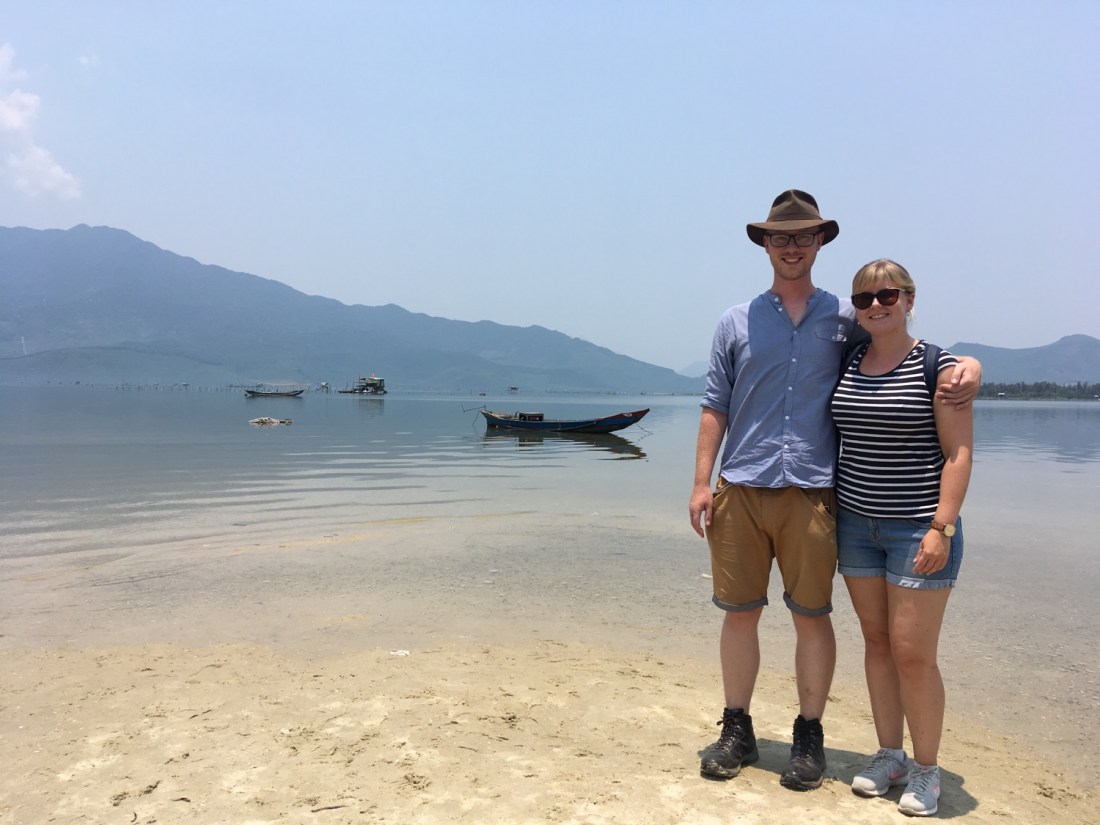
Back in the coolness of the car blowers we moved onto the start of the Hai Van pass, where we stopped at its base to admire Lăng Co bay. Nestled between the foot of the pass into the mountains and the new tunnel (National highway no.1) through them, it’s an unexpectedly beautiful spot, where we’re sure you could while away a few hours unbothered by anyone, tourist or local. We snapped a few photos from the side of the ascending road, and got back in to enjoy the drive.

The pass is a 20km winding track that joins Lăng Co with the seaside city of Da Nang. Ascending to almost 500m it’s the highest pass in Vietnam, and was dubbed one of the finest coastal roads in the world by Top Gear in its 2008 Vietnam special. The curvature of the road reveals beautiful scenes of beach, forest, and distant towns, glimpsed futilely from the momentary vistas of each hairpin bend. Hai Van roughly translates as ‘Sea of Clouds’ in Vietnamese, which was apt for our journey, the mist and haze masking the most distant views along the coastline and atop the mountains, although the weather still markedly better than in the off season pre-April.
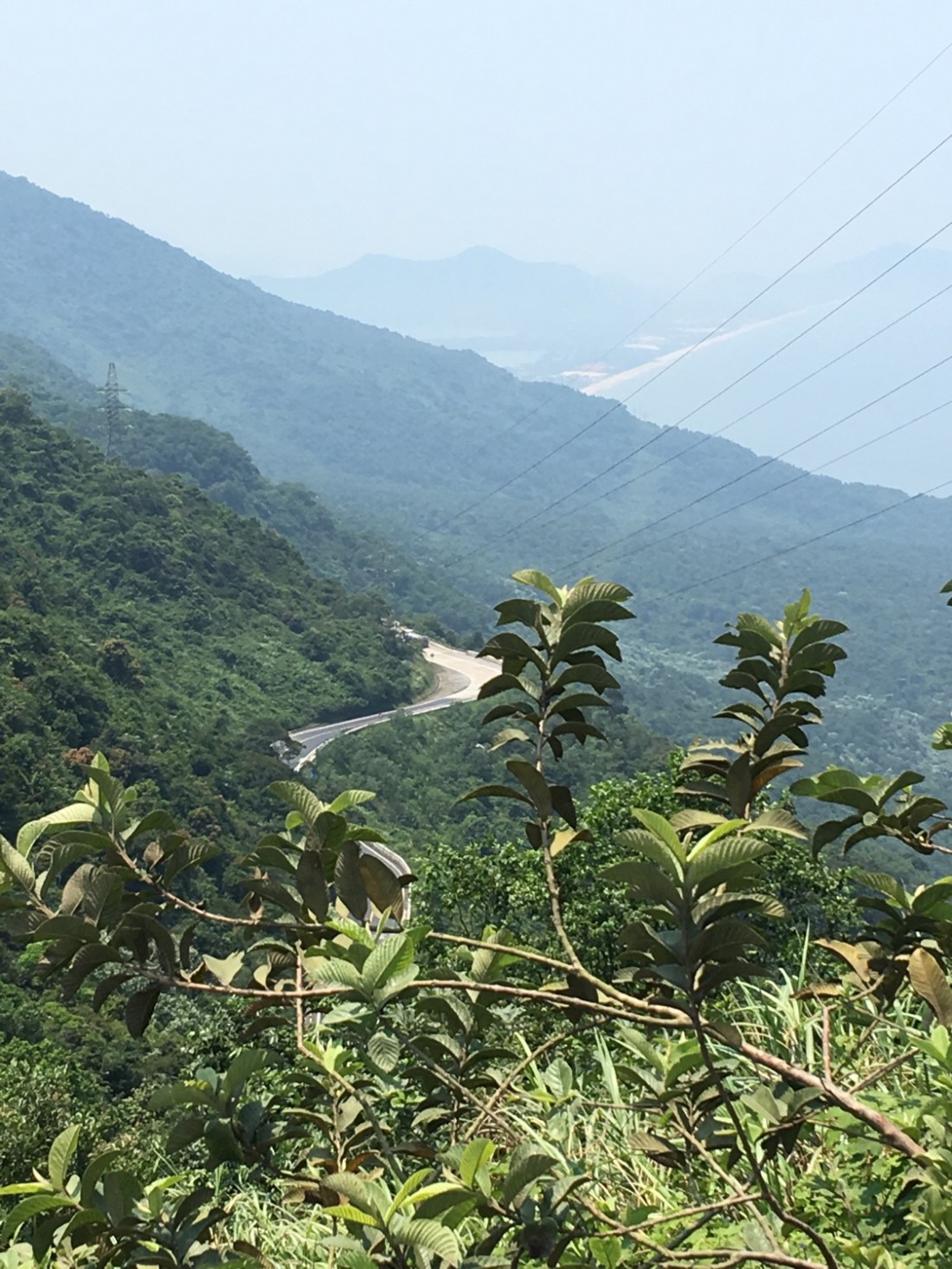
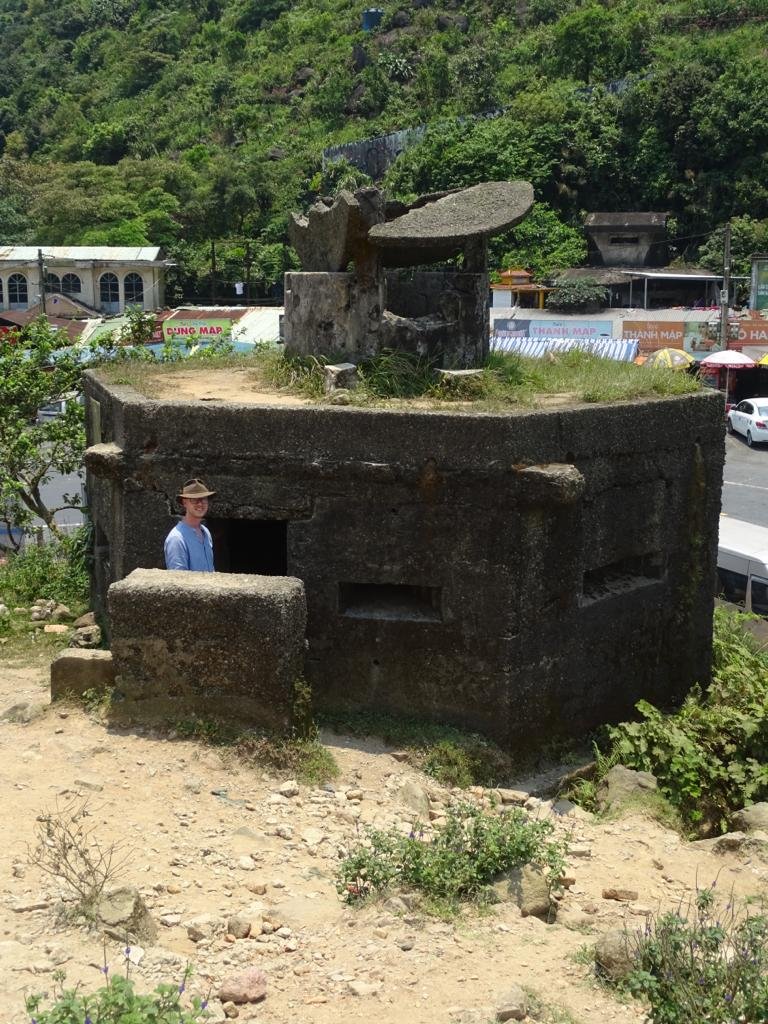
The pass is also symbolic in being a meeting place of ‘North’ and ‘South’ Vietnam, and their respective distinct personalities – the north more industrial, spicier, wetter and cooler, the south more beach-lined, tropical and sweeter. In the 1300s the pass did indeed divide two kingdoms, the Hindu kingdom of Champa to the south and the Confucian-Buddhist kingdom of Dai Viet to the north, and it was once the only thoroughfare between the two cities of Da Nang and Hue. Today however, the more real marker at the mid-way point are the remnants of the Vietnamese-American war, where the north and south were truly geographically divided by a strategic military post. It was here, after much wiggling and winding, that we stepped out of the car and scrambled up the grassy path, towards the gun towers that were used by French, South Vietnamese and American respectively, during the long wars from 1946-75.
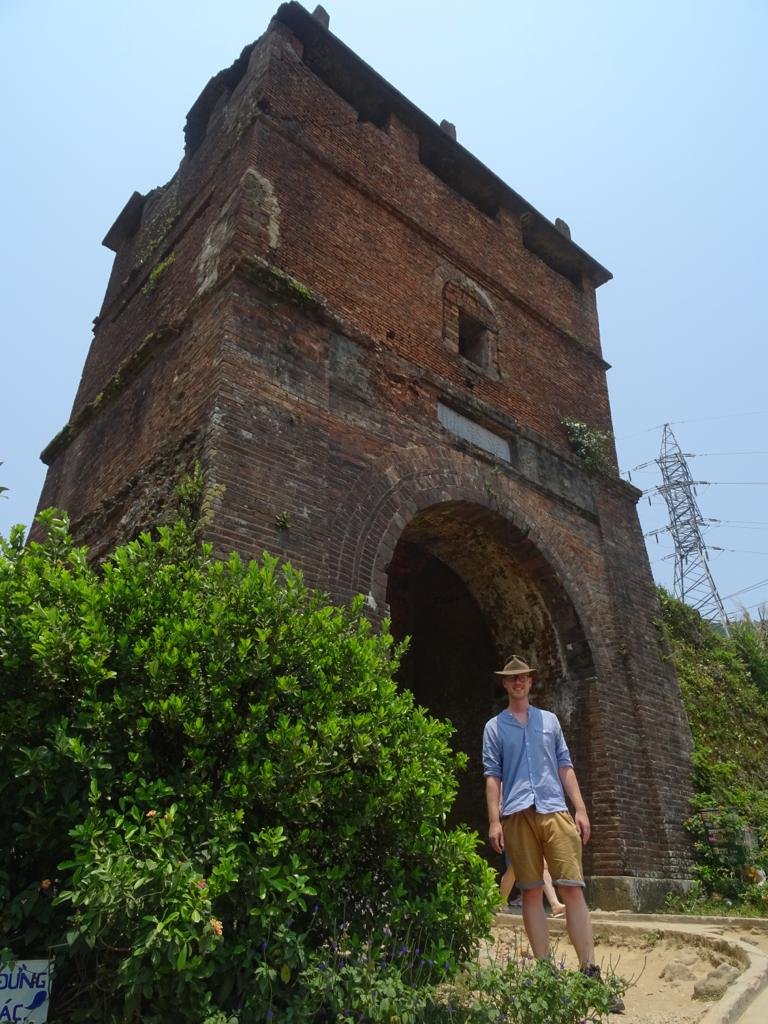
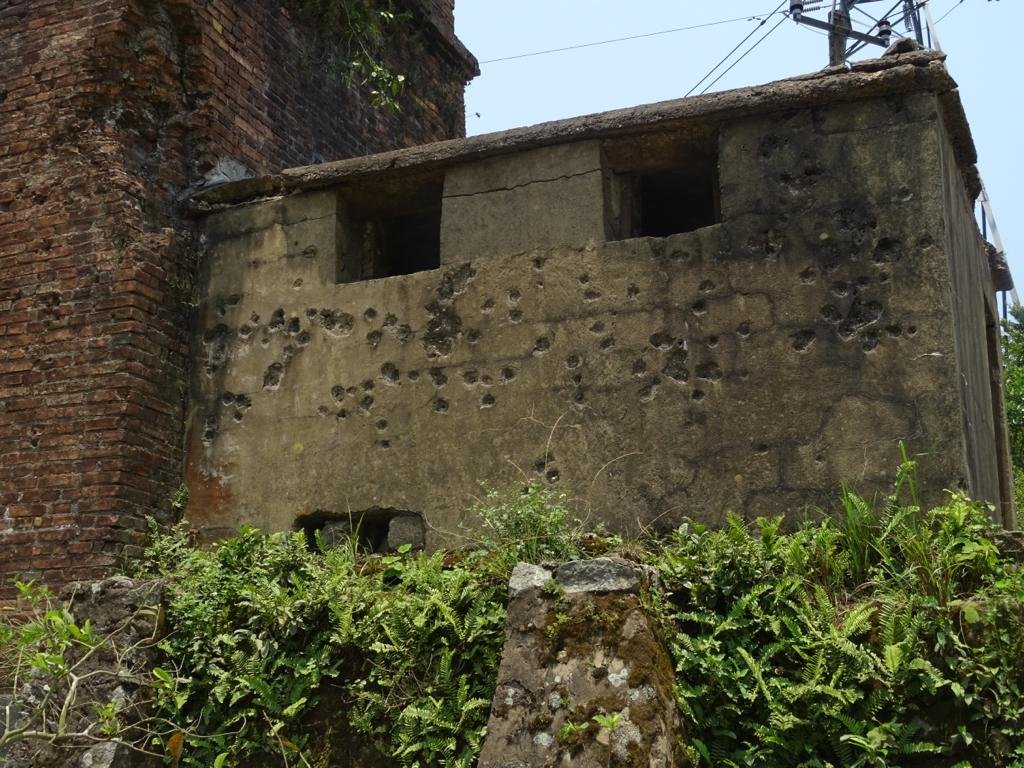
Our descent down the other side of the mountain along the pass afforded us lovely views of the Da Nang coastline, once ravaged by war but now unrecognisable in the wake of the boom of tourism here.
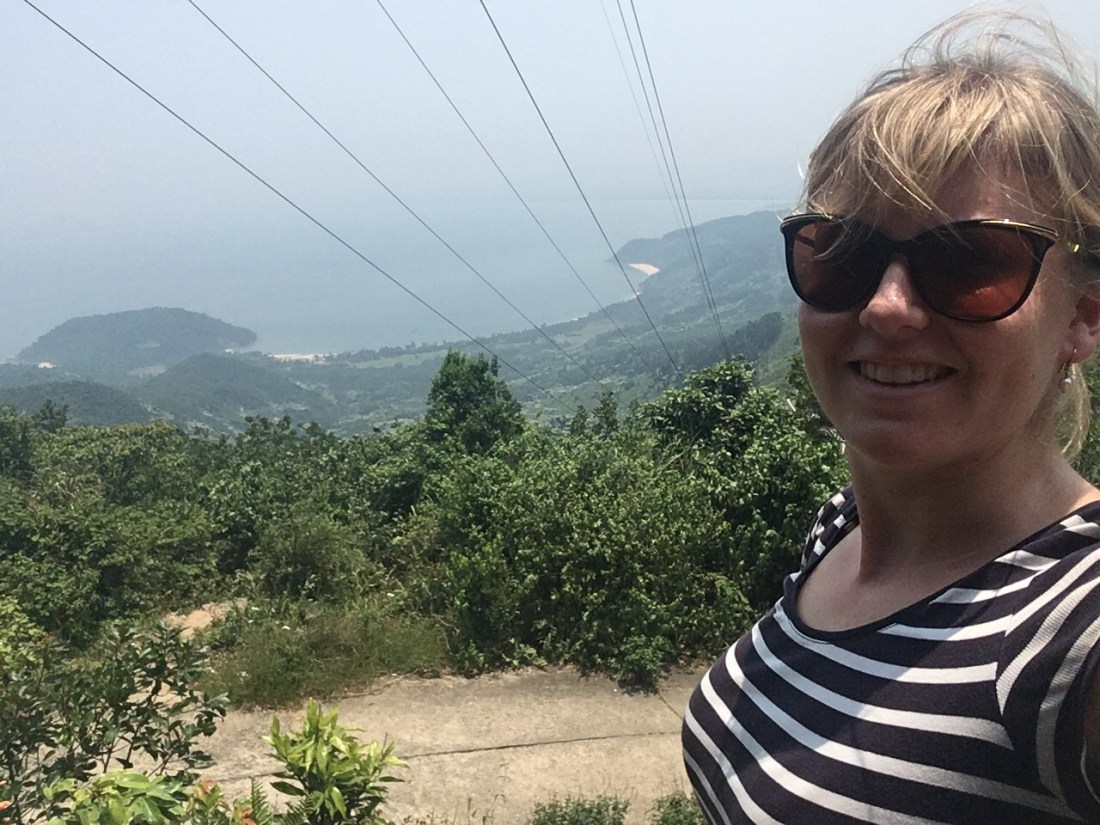
As the beach became closer and closer so seemingly did the sunshine, as we cruised along the sea front towards our next and final stop.
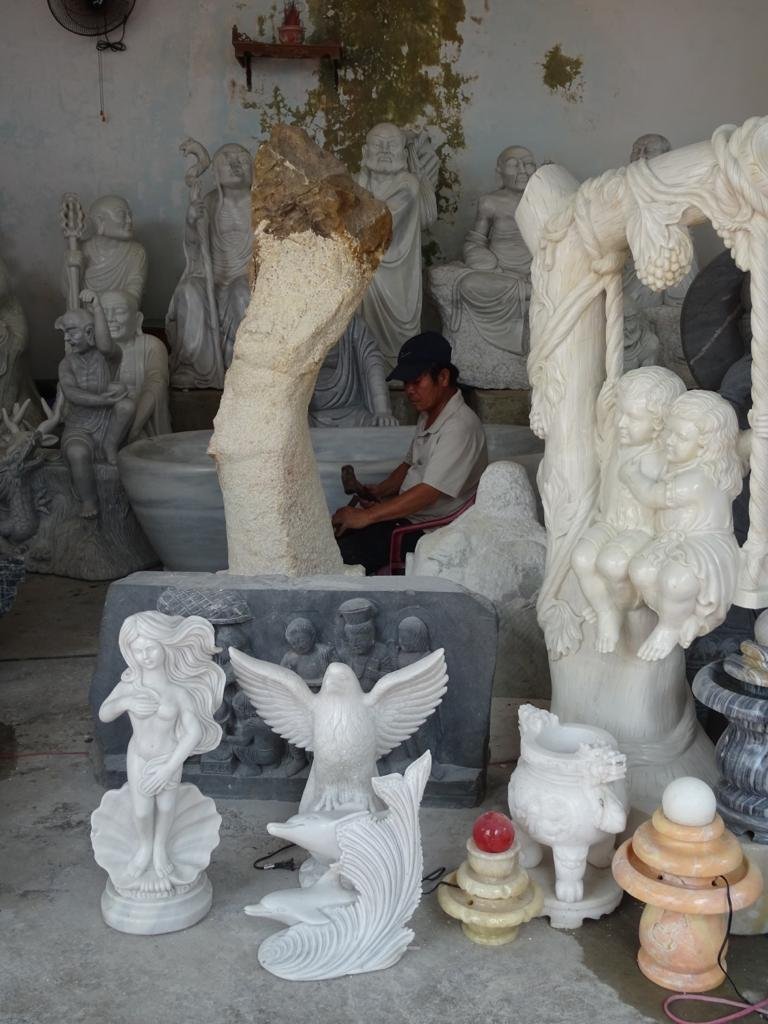
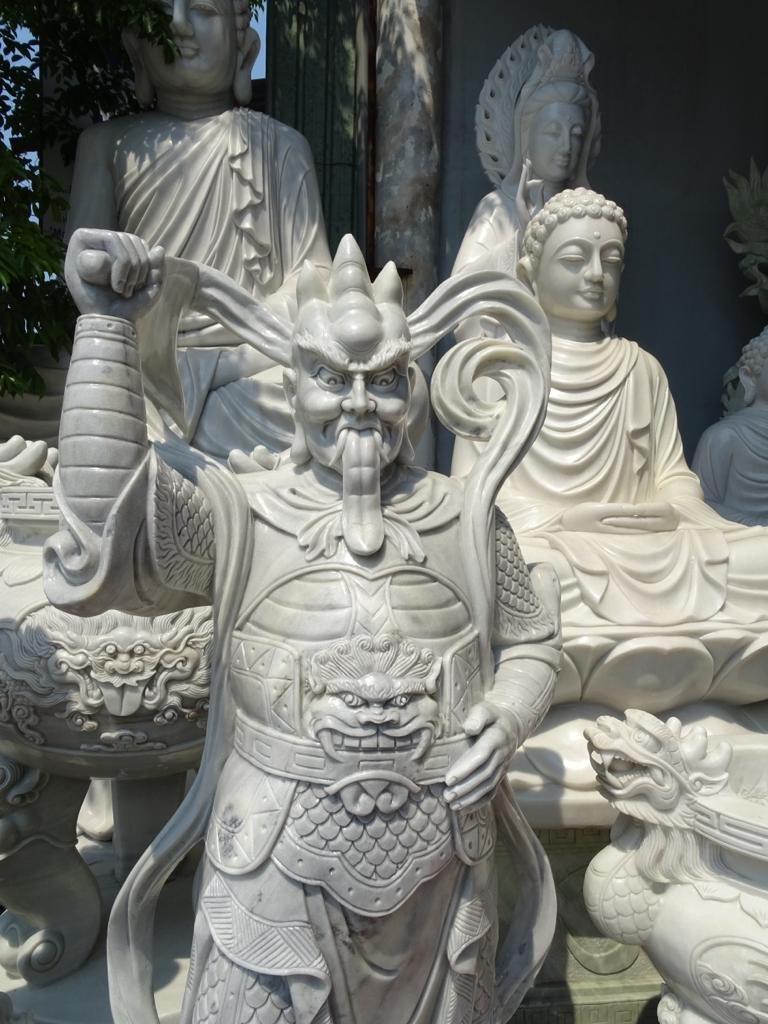
The ‘Marble mountains’ are a cluster of 5 mountains formed from limestone and marble with alluring caves, tunnels and temples to explore. They were so named by the French upon study of the chemical elements of the mountain’s soil, and in Vietnamese is known as Ngu Han Son (the five element mountain) after the eastern philosophy of the 5 elements of life – metal, plant, water, fire and soil. On their approach, c.9km south of Da Nang, you drive through the area the mountains reside which is famous for stone cutting and sculpture. It was here we first stopped to admire some of the amazing work for sale, and it was so interesting to see some of the masons at work in the yard, chipping away in the heat. The resultant sculptures were stunning, though sadly by no means backpack friendly!
After a quick bite to eat to sustain us, we walked to the entrance of Water Mountain, one of the five in the range, each named after one of the elements, but this one open to the public. At the foot of water mountain lay Am Phu cave, and before we could be tempted up the mountain to take in the views of the valley, we had to explore.
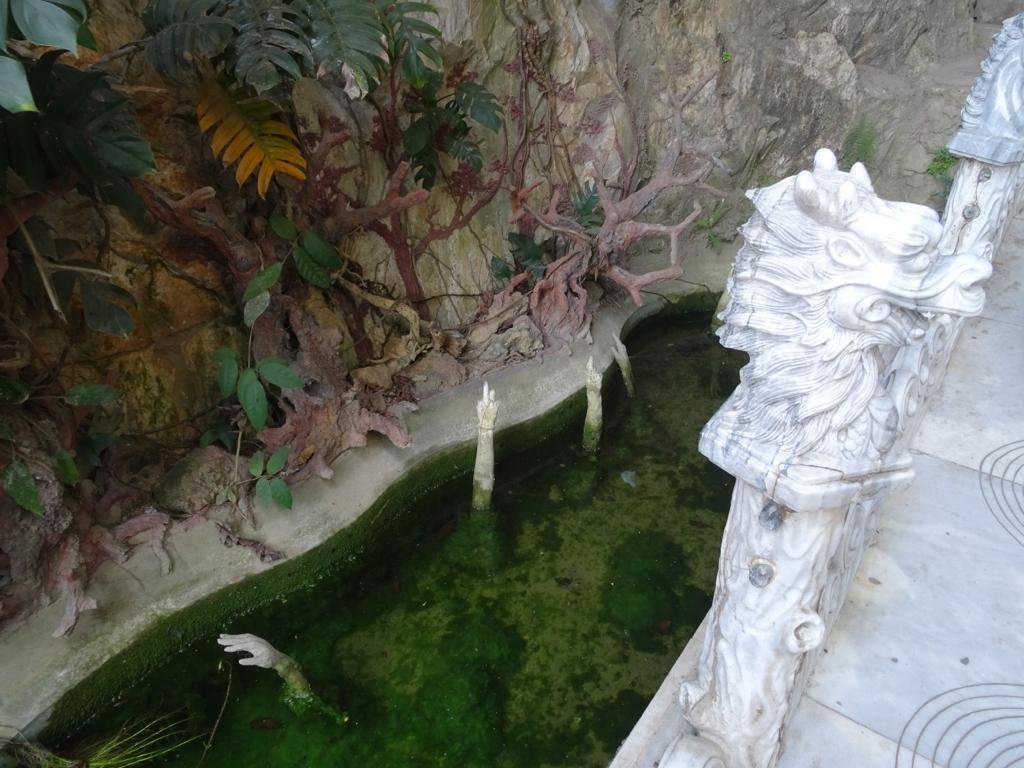
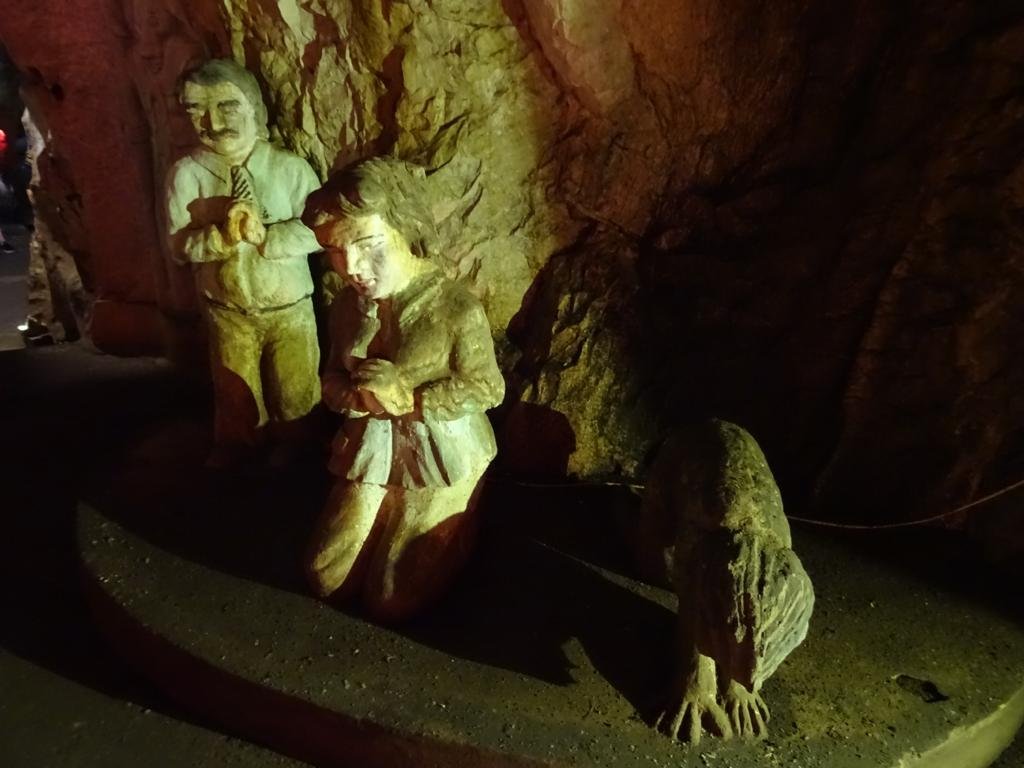
The cave is said to symbolise the 9 floors of Buddhist hell. In the walls along stairways are the distraught faces of those being tortured, and the bridge over the pond in the cave’s entrance has stone hands reaching out of the water, pleading for rescue. The cave goes deeper and deeper underground, and is filled with altars at which locals come to pray and make offerings.
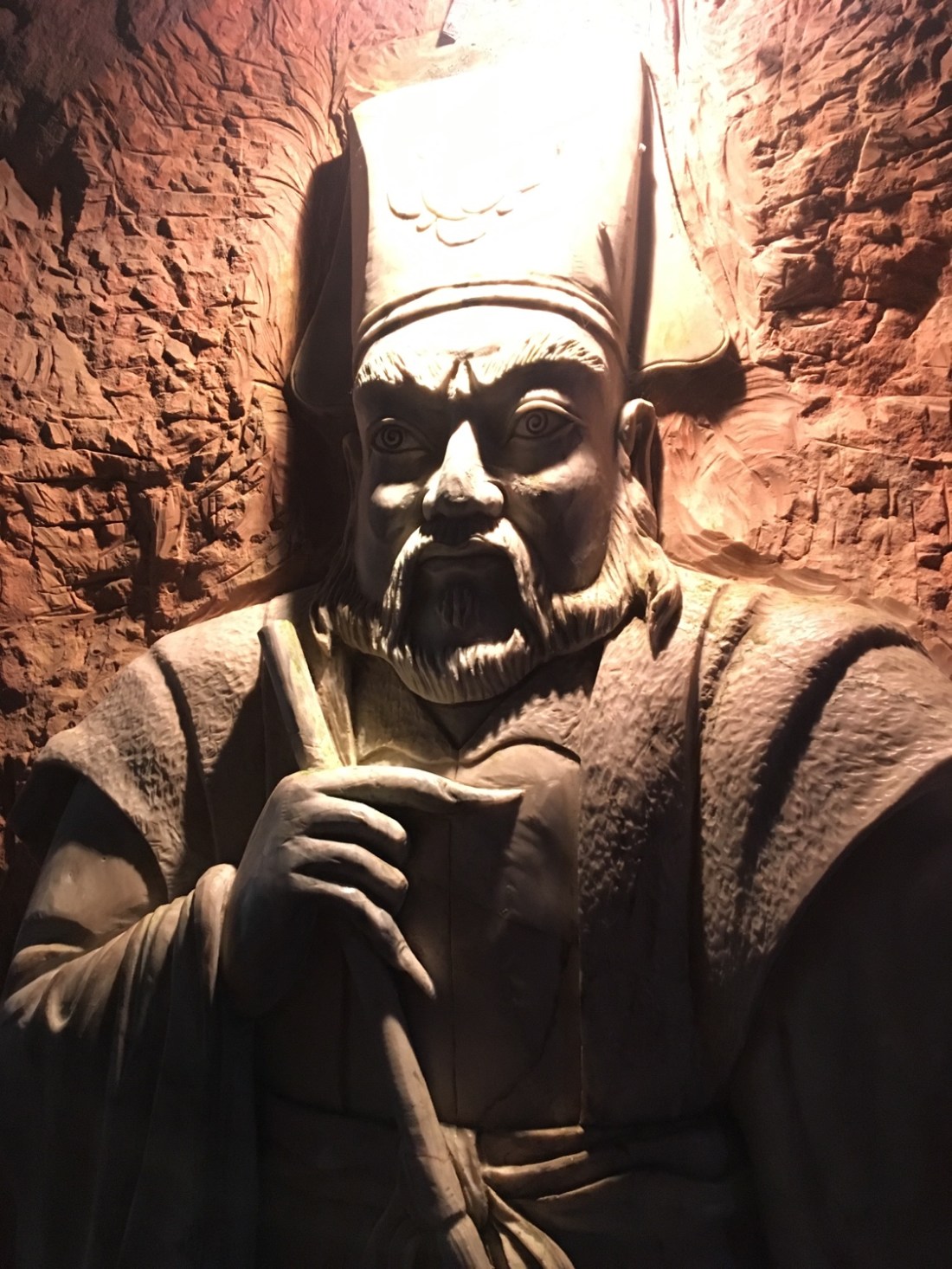
Simultaneously though, the cave also rises up dramatically to a shaft of sunlight streaming in through an open area, symbolising, as you might have guessed, heaven. Up the steep and narrow steps, adorned with heavenly carvings, you eventually reach a small balcony with an altar and statue of laughing Buddha.
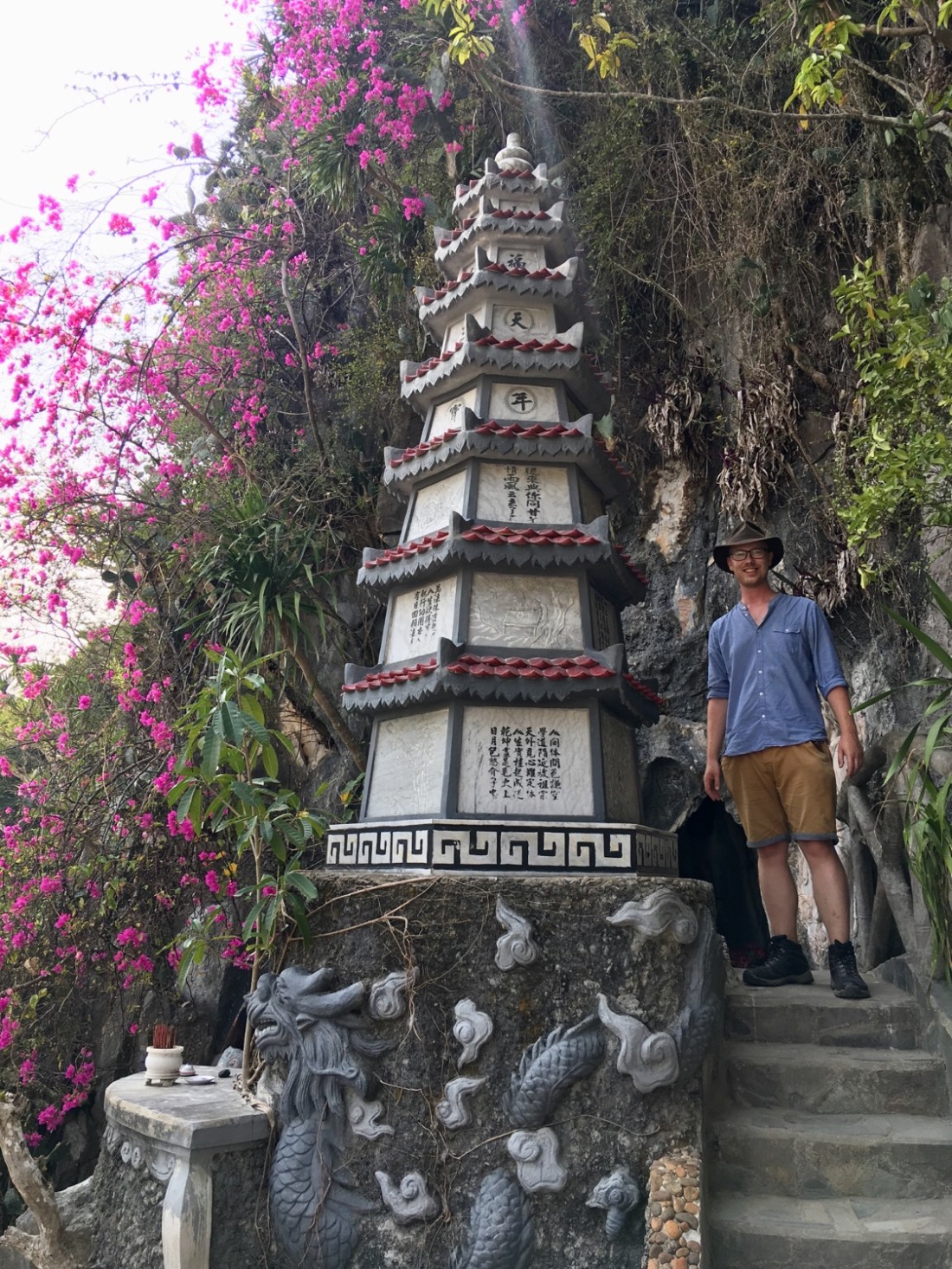
The climb to salvation required grabbing onto handhold rings in the side of the rock, as we ascended towards the light. The route down was the same, this time once more entering the darkness of hell. Quite cool on the whole!
After we left the hell-heaven cave we took the elevator up the side of water mountain to the very top, and had around 40 minutes to explore its beautiful pagodas, sculpture gardens and temples with Buddhists praying.
The 400-yr old Tam Thai pagoda was a particular highlight.
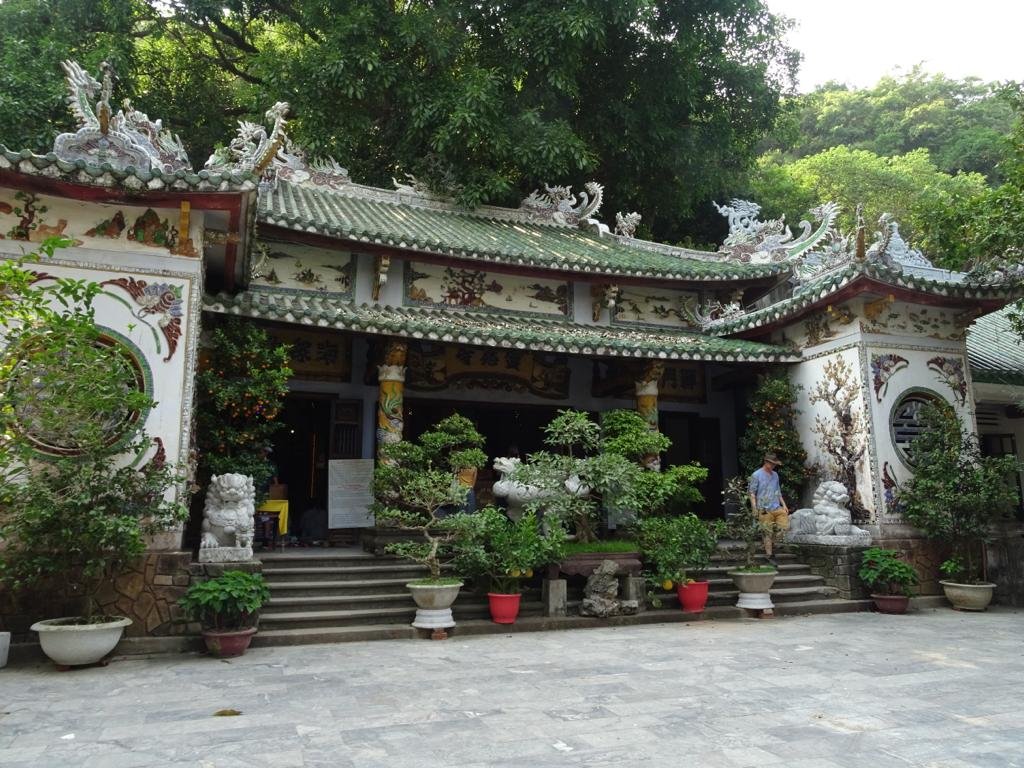
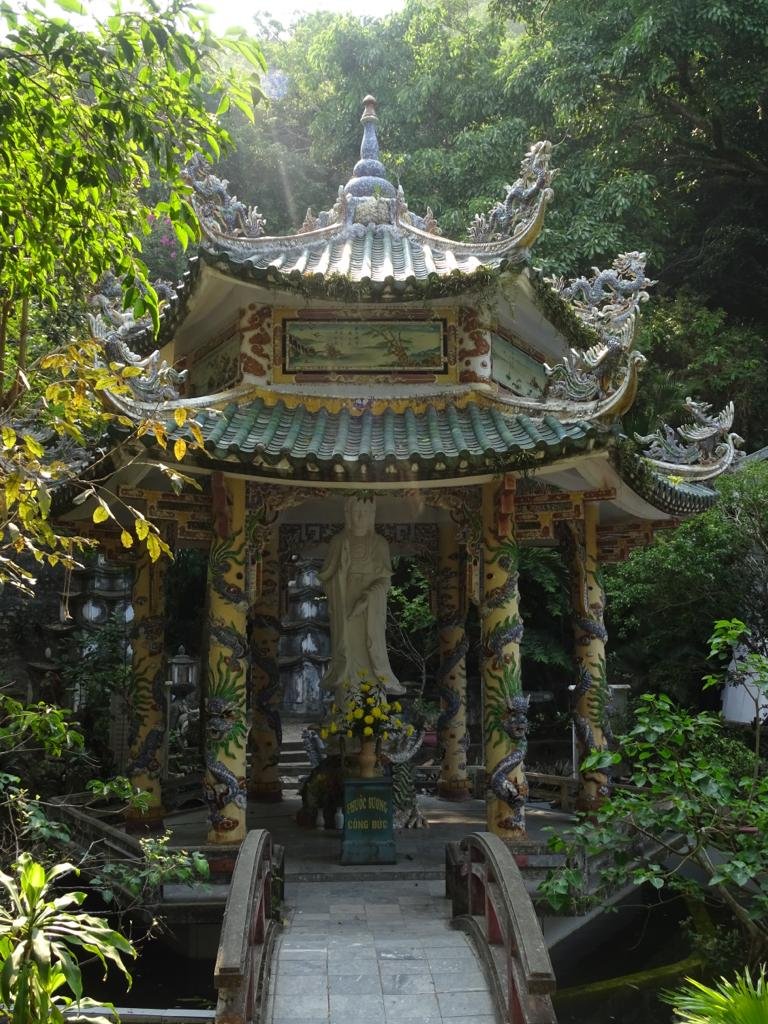
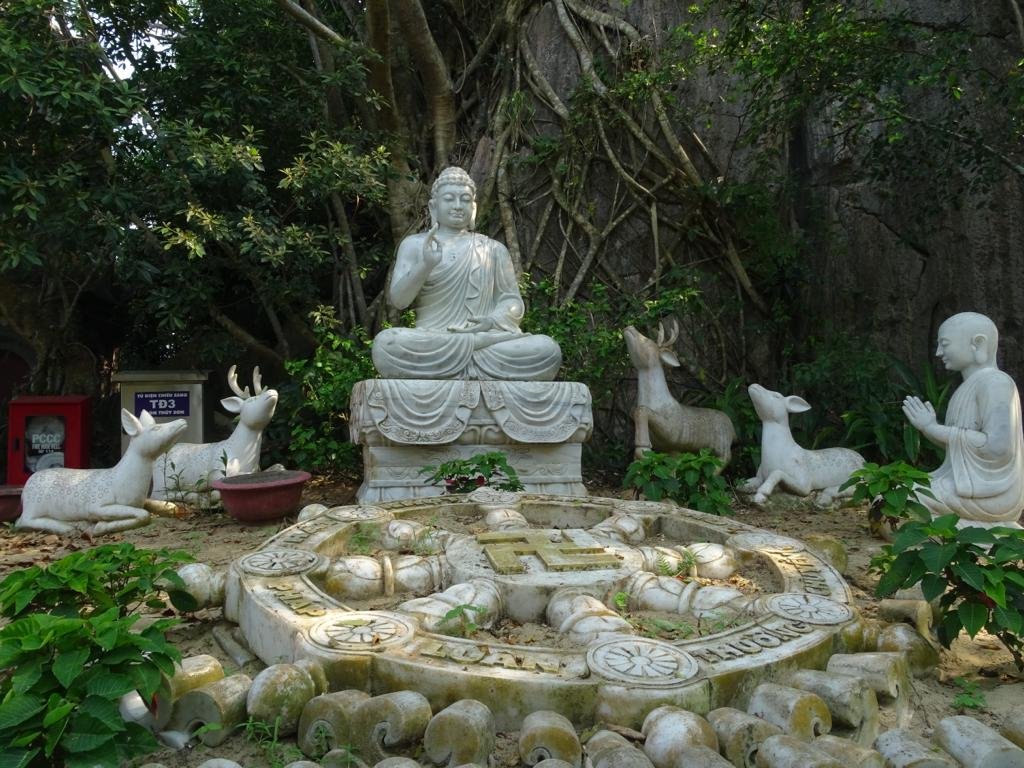
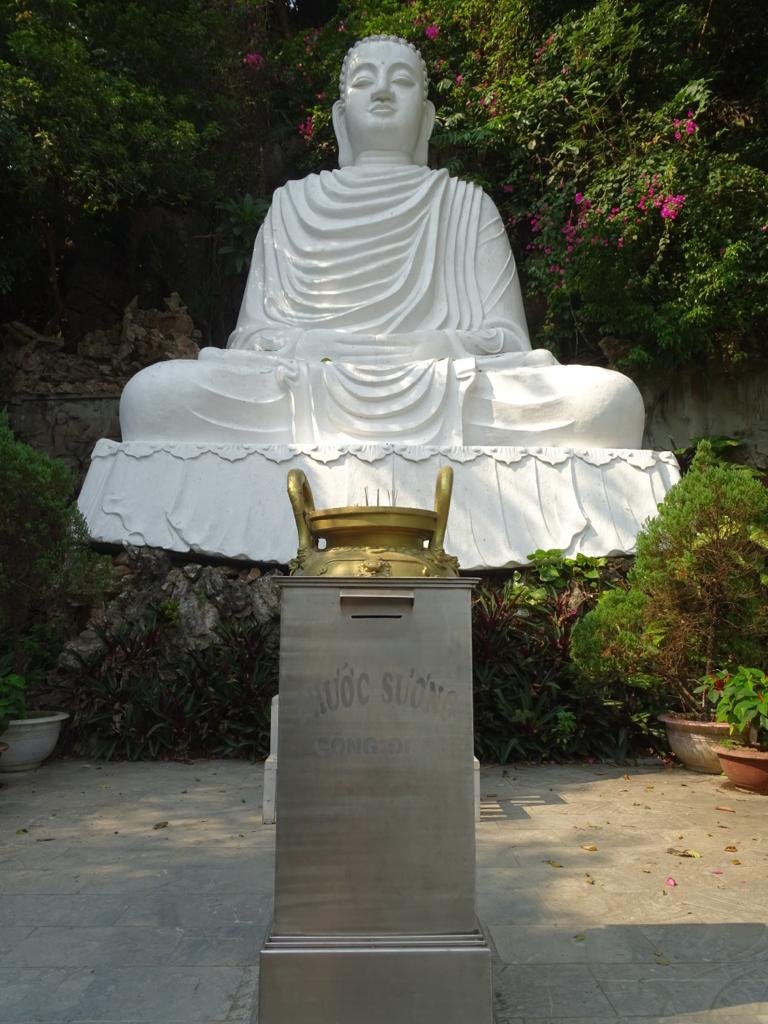
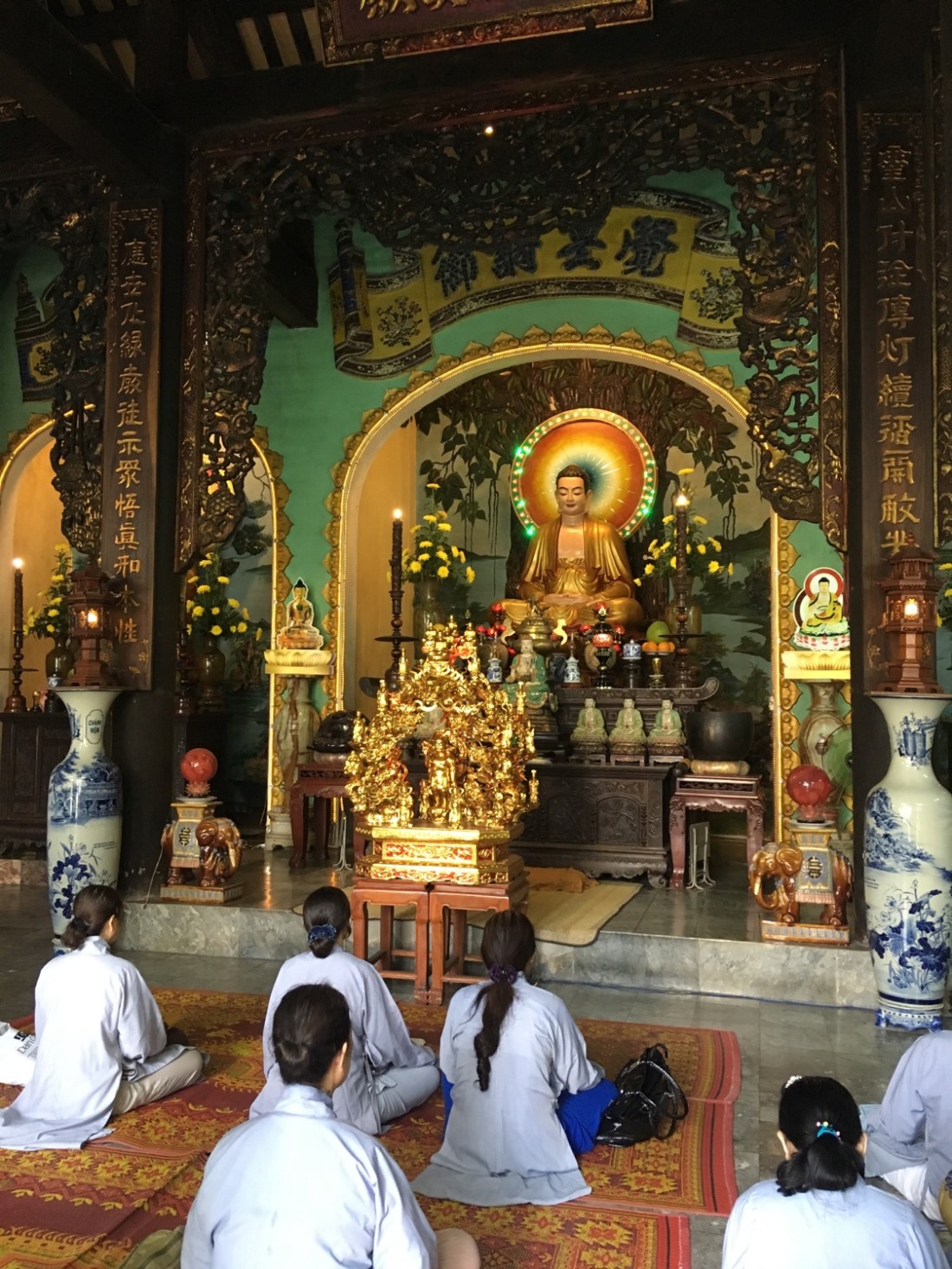
We could have spent hours here, and our advice to fellow travellers would be to factor in an afternoon to really explore fully, but the air conditioned car awaited patiently, ready to deliver us to historic Hội An, which we reached around 35 minutes later at about 3.30pm. Next time, on the blog!
 Around the world in 140 days