
Author: Rach
Photos: Rach (unless specified otherwise)
9 April
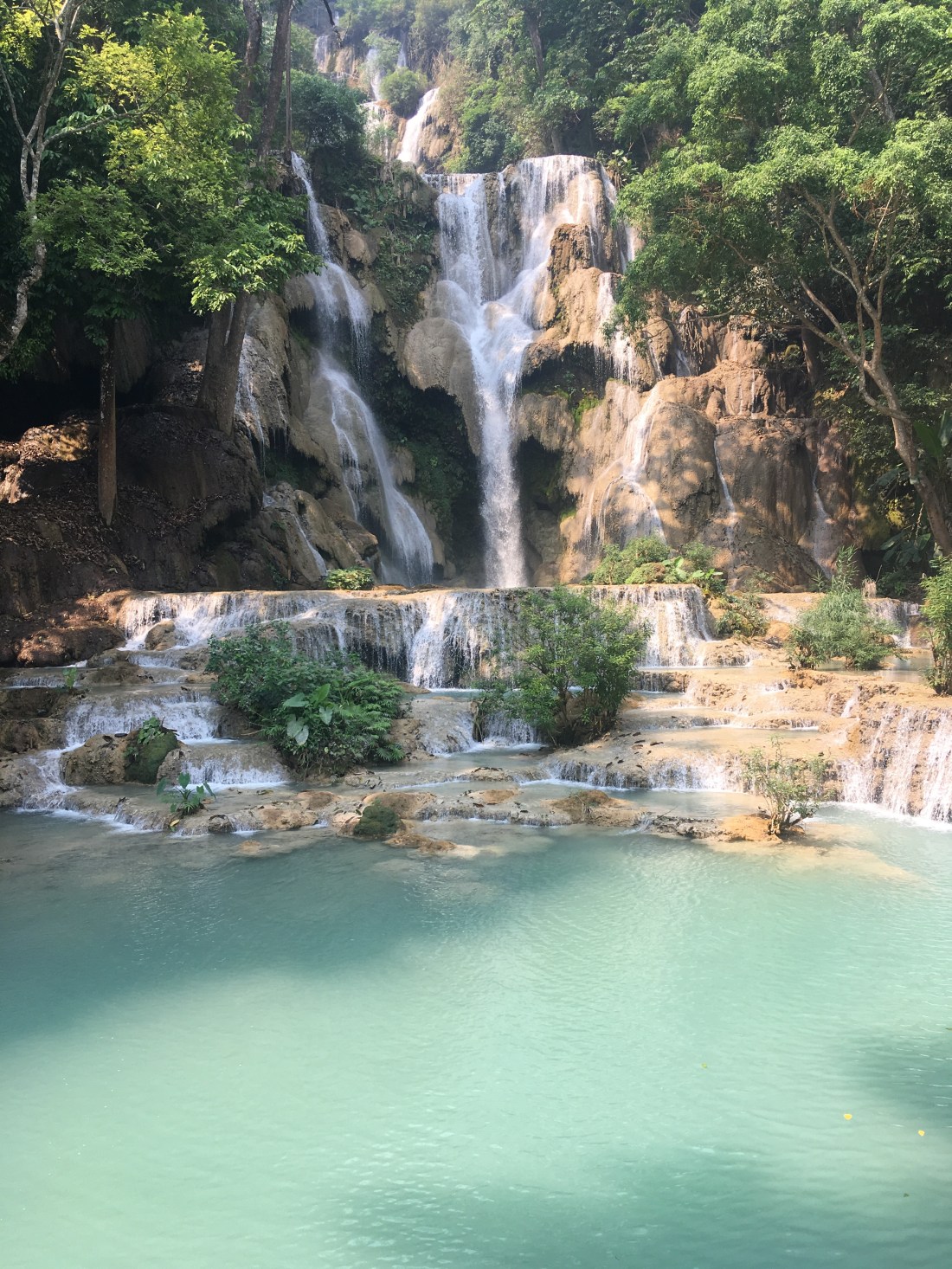
Today we were headed into the hilly countryside to see the famous Tat Kuang Si waterfalls. According to one local legend the falls were formed when a wise old man revealed the waters of the Nam Si by digging deep into the earth. After the waters came a beautiful golden deer which made its home under a big rock that protruded from the falls. Tat Kuang Si gets its name from this legend: ‘Tat’ meaning waterfall, ‘Kuang’ meaning deer and ‘Si’ meaning dig.
Our tuk tuk driver, secured for 200,000 kip for the day (about £20, after some bargaining on the street a few days prior), picked us up at 8am to do the 50 min or so drive. The tuk tuks in Luang Prabang are more like mini vans with an open caged back where you sit side on to the road, so it’s impossible to see where you are going unless you stick your head out of the side of the bars like a dog would with the window down. So we clung on and saw some of the quiet countryside when we felt like looking!
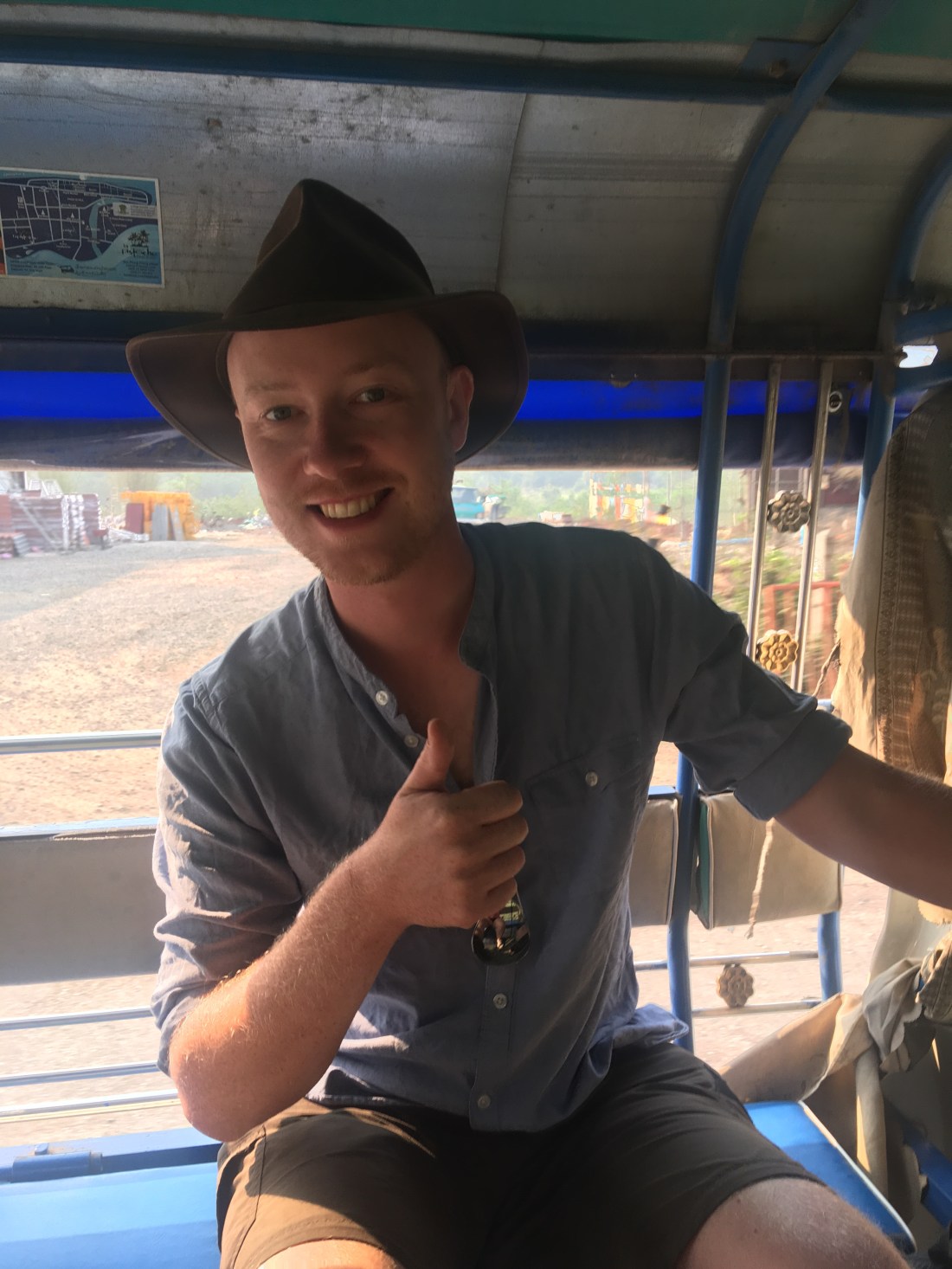
As a side note, we had considered hiring a more budget-friendly scooter for the day for just £8, but chickened out due to stories about inexperienced tourists getting caught out by pot holes and coming back with multiple scrapes to bodies and bikes.
We had got up early enough to be there before the droves of tourists arrived, so with only a handful of other people around Rach was able to get some good photos. Winner.
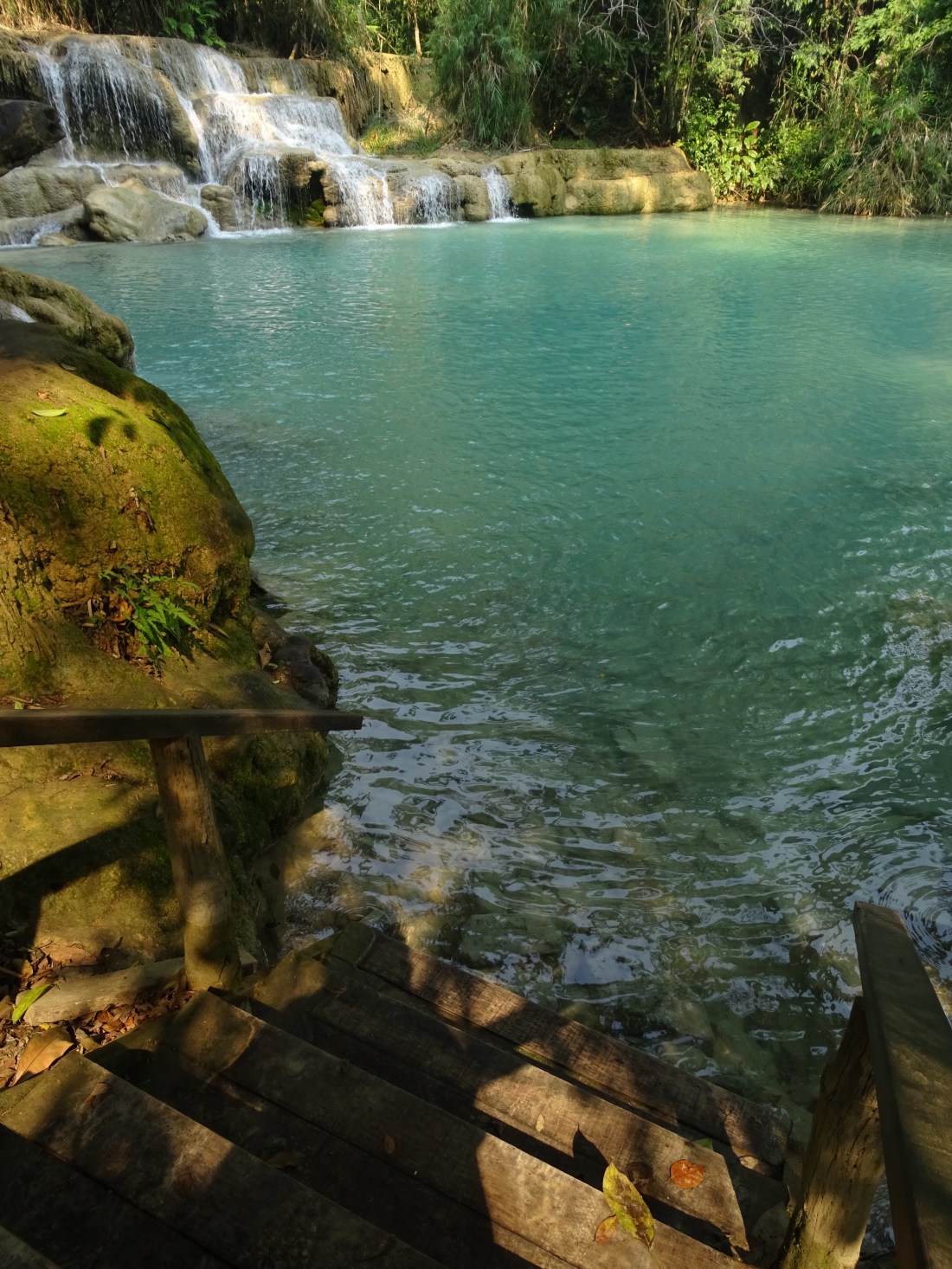
We made our way slowly along the tree root-lined path, gradually ascending the length of the waterfall’s Nam Si river level by level. The water was the most fantastic colour; a by product of the build up of calcium carbonate as the water flows over limestone, causing the light to reflect so that the rivers and pools appear a stunning turquoise blue.
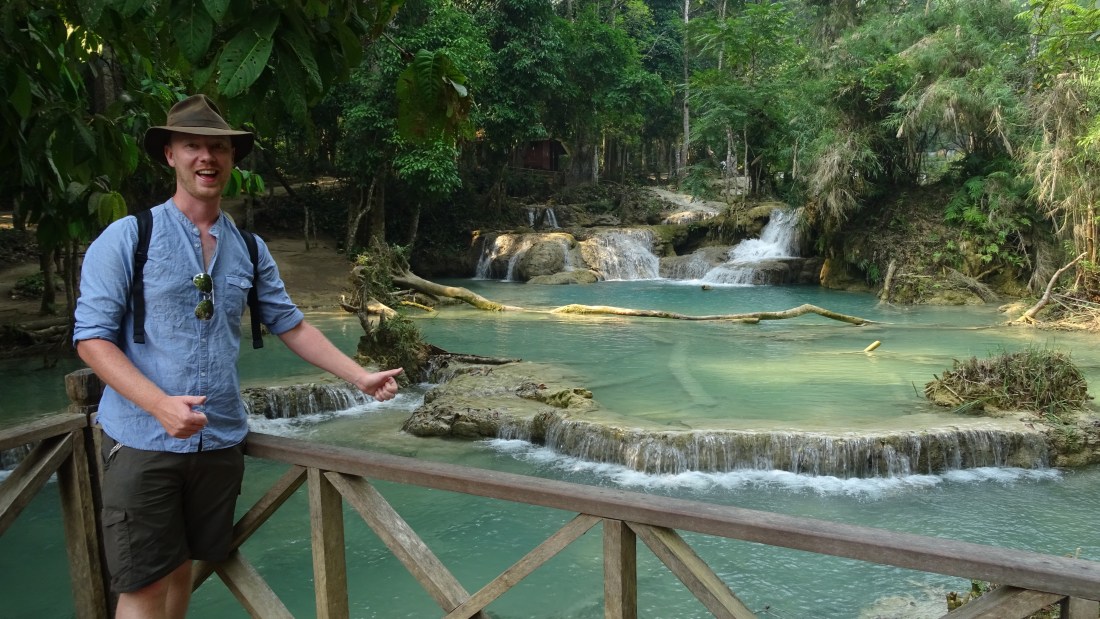
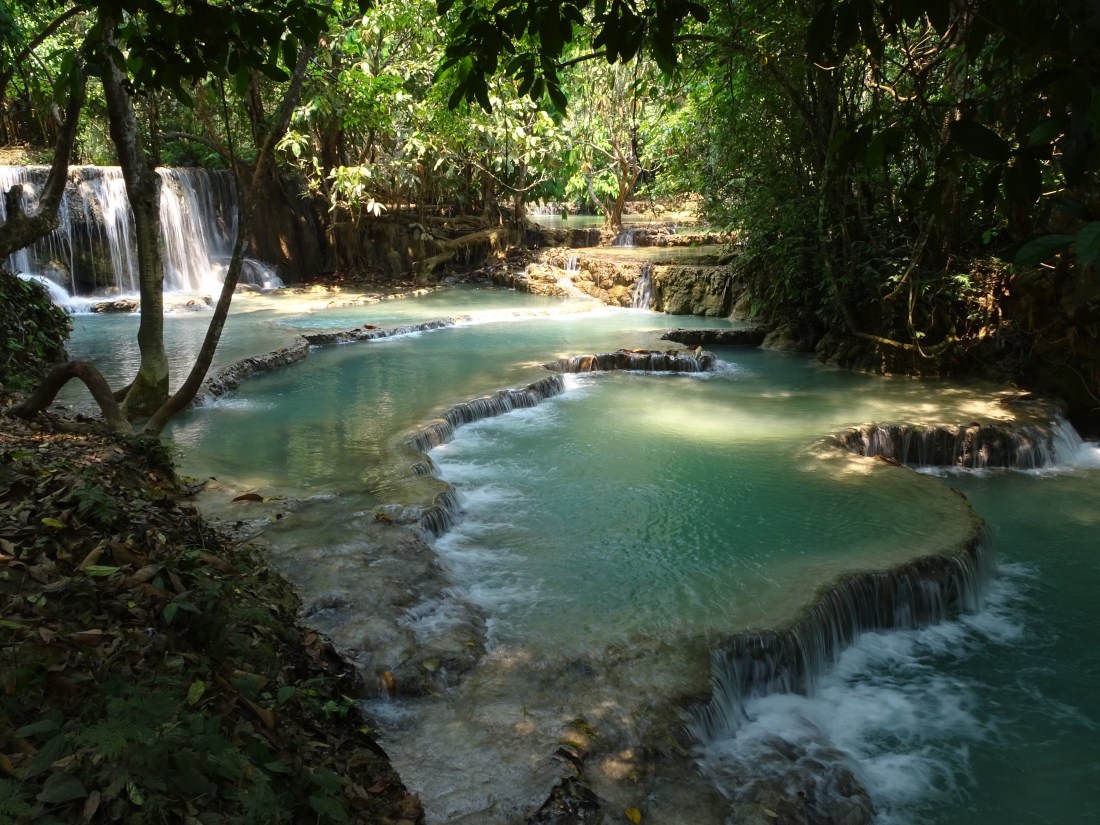
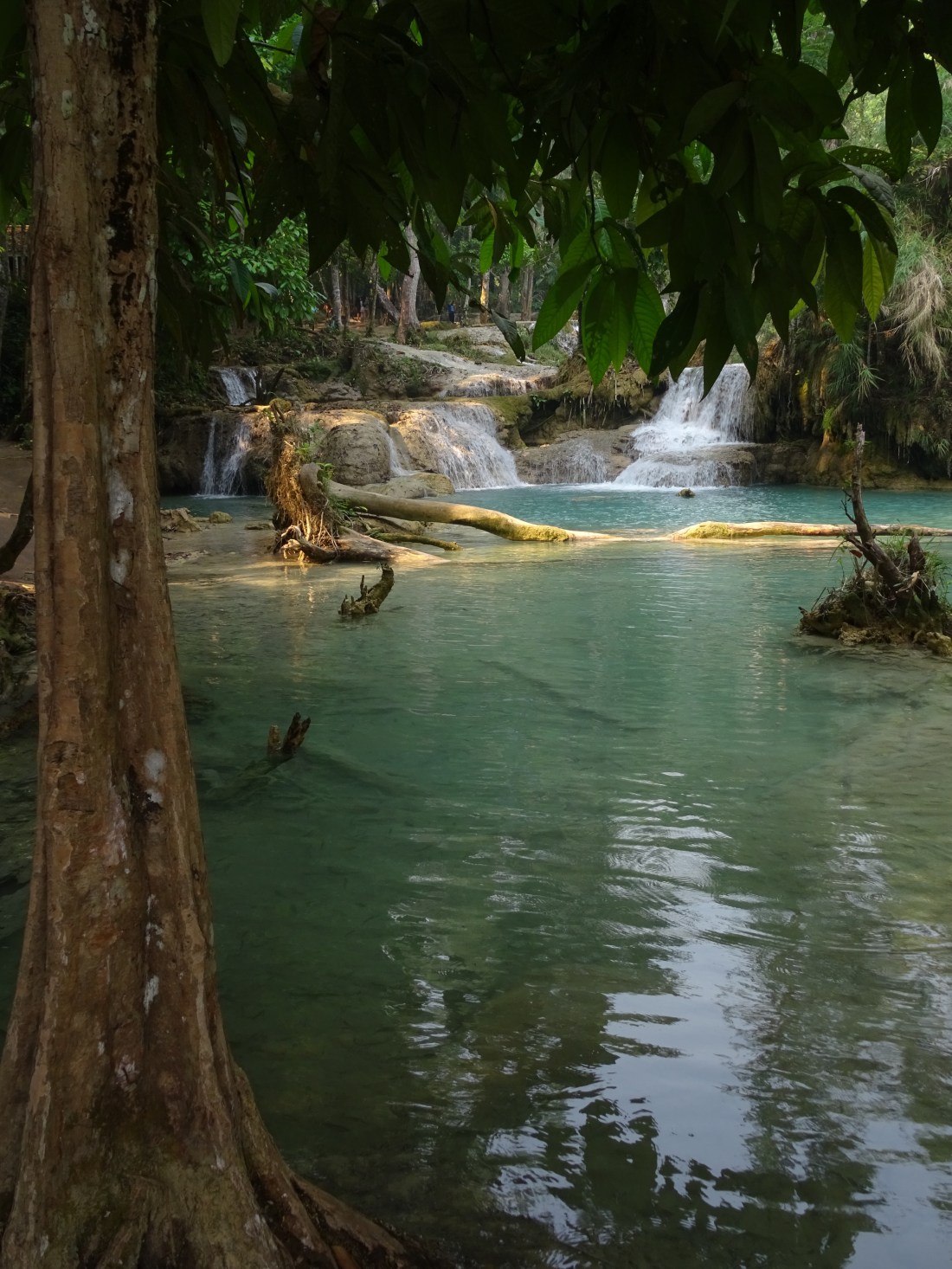
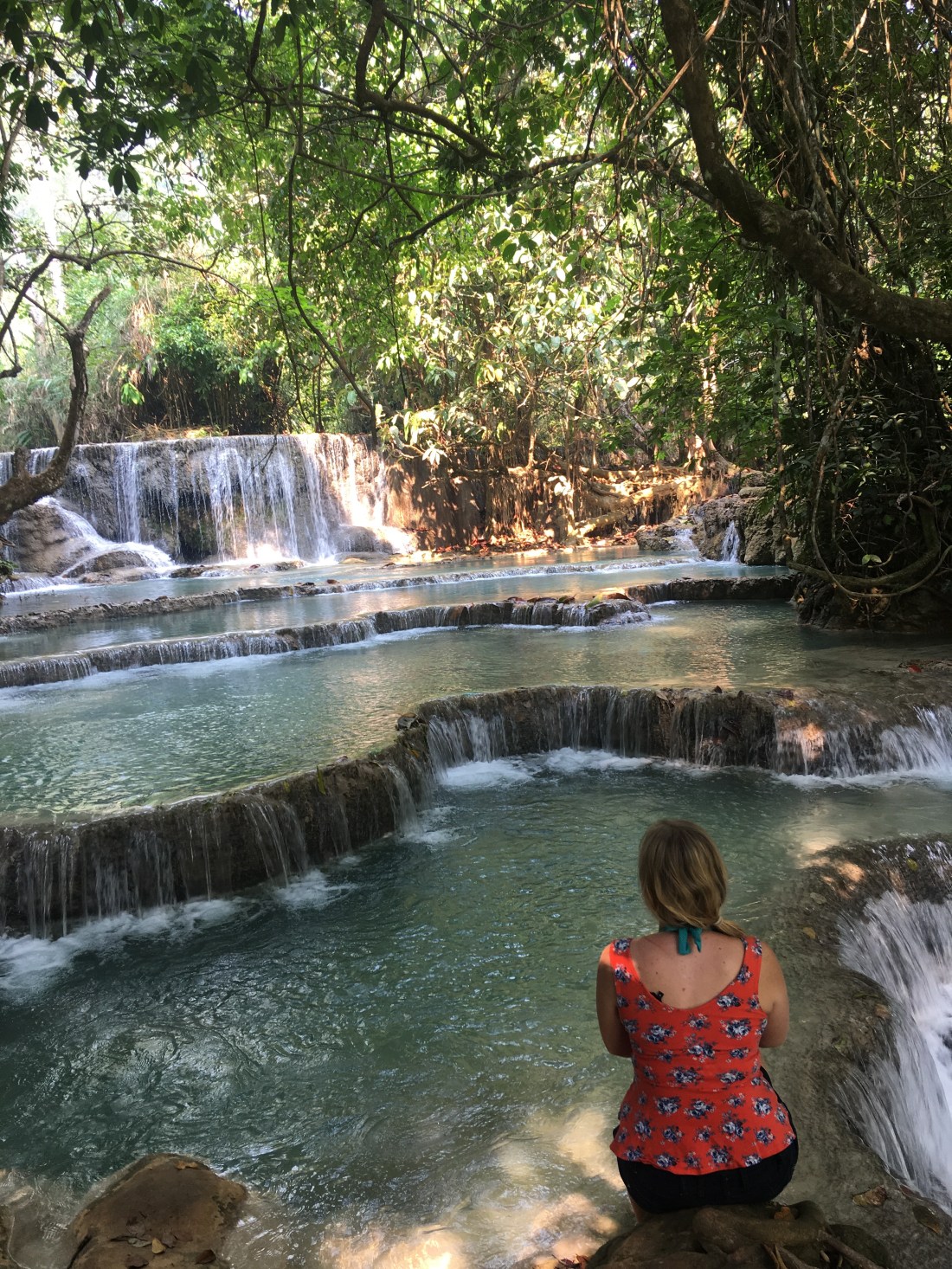
In the warmth it was tempting to jump in right there and then! When we finally reached level 7 and the base of the majestic Kuang Si we stopped for a while to admire this fairytale scene.
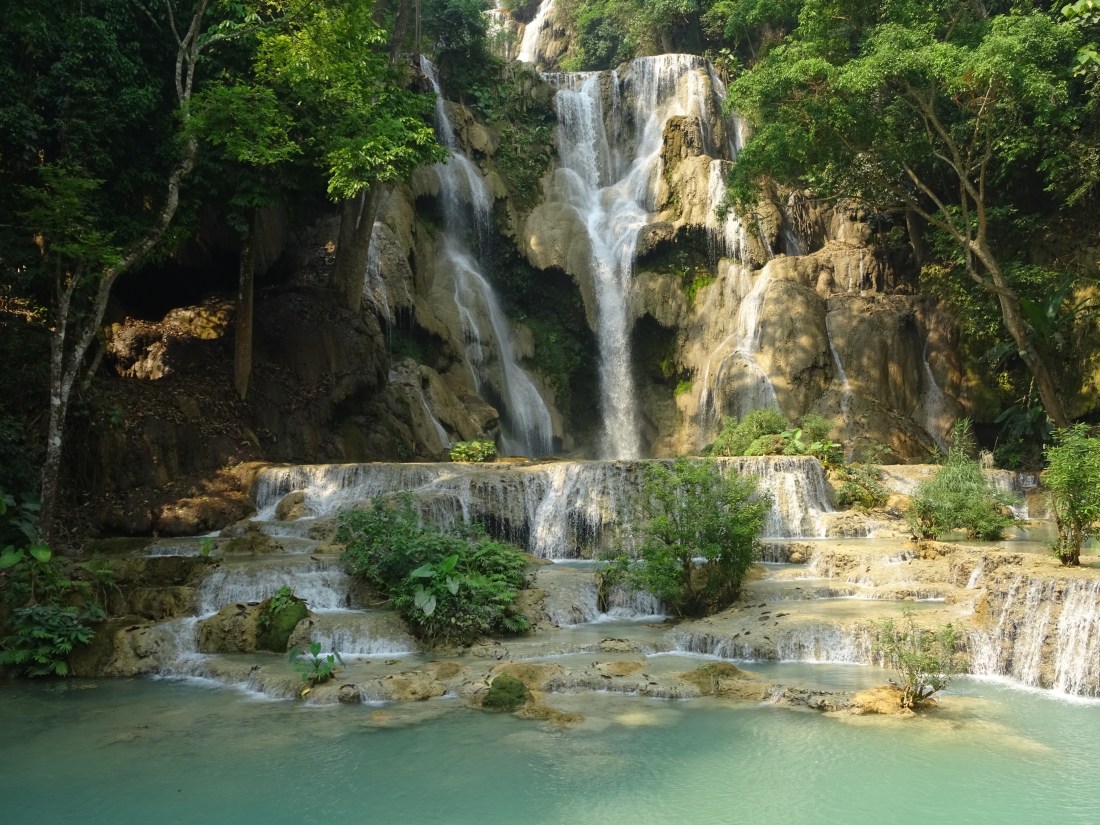
After, we trekked up the west side of the waterfall to the top. It was steep and a little slippy but fairly quick going, and although we didn’t see the source of the waterfall we did find a rope swing sitting alluringly beside one of the pools. It was too good an opportunity to pass up! Here we are thoroughly enjoying ourselves.
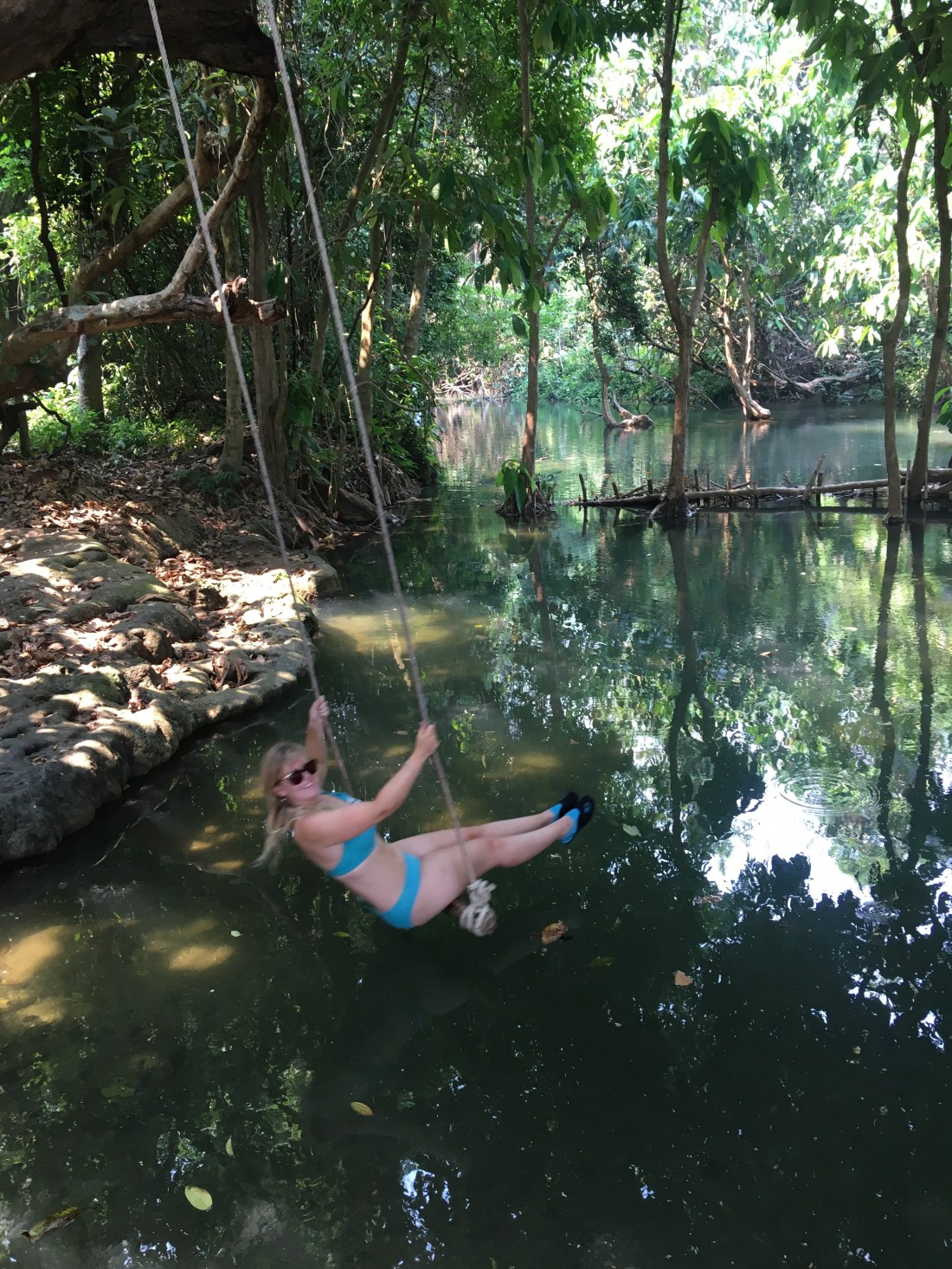
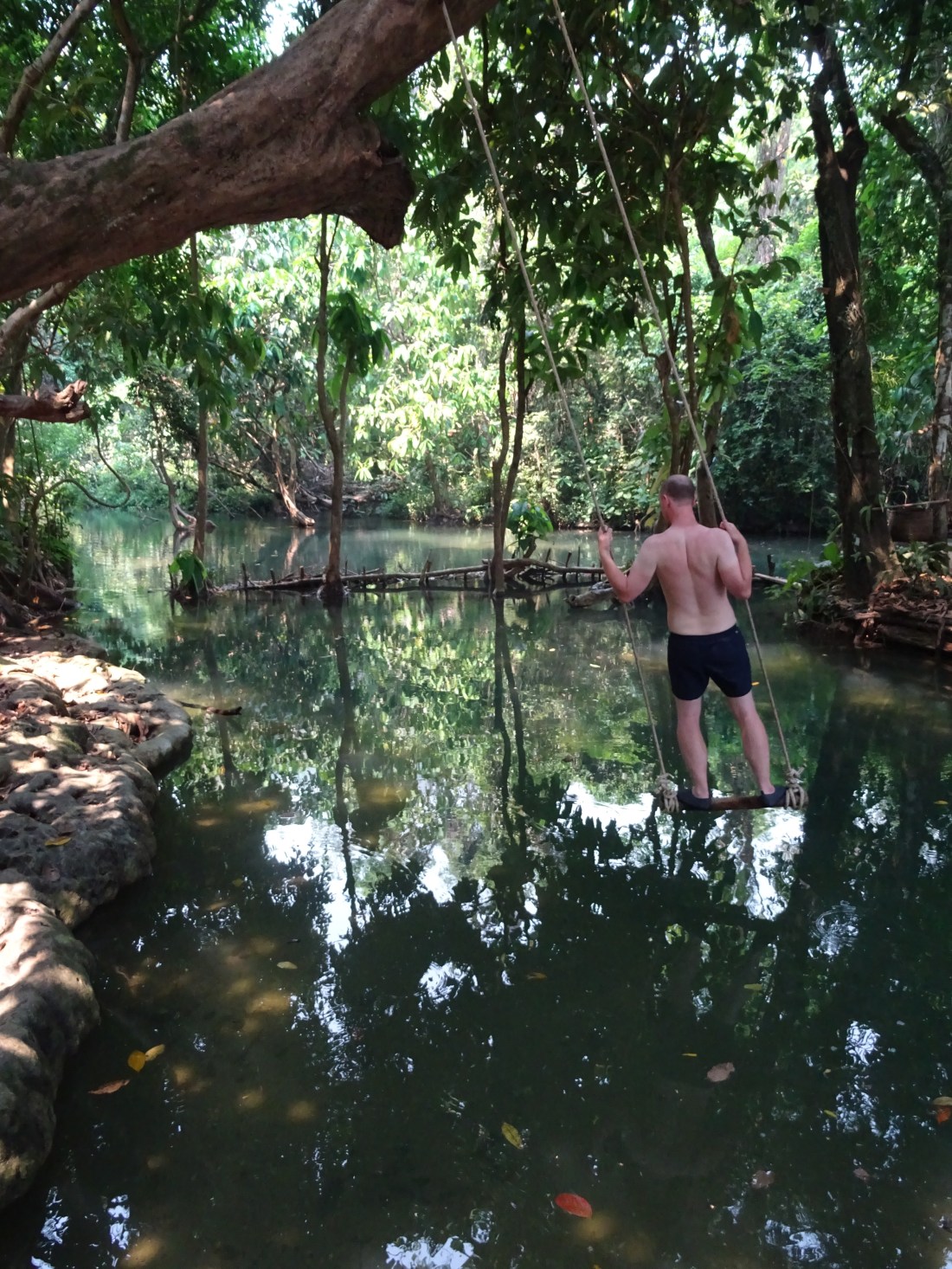
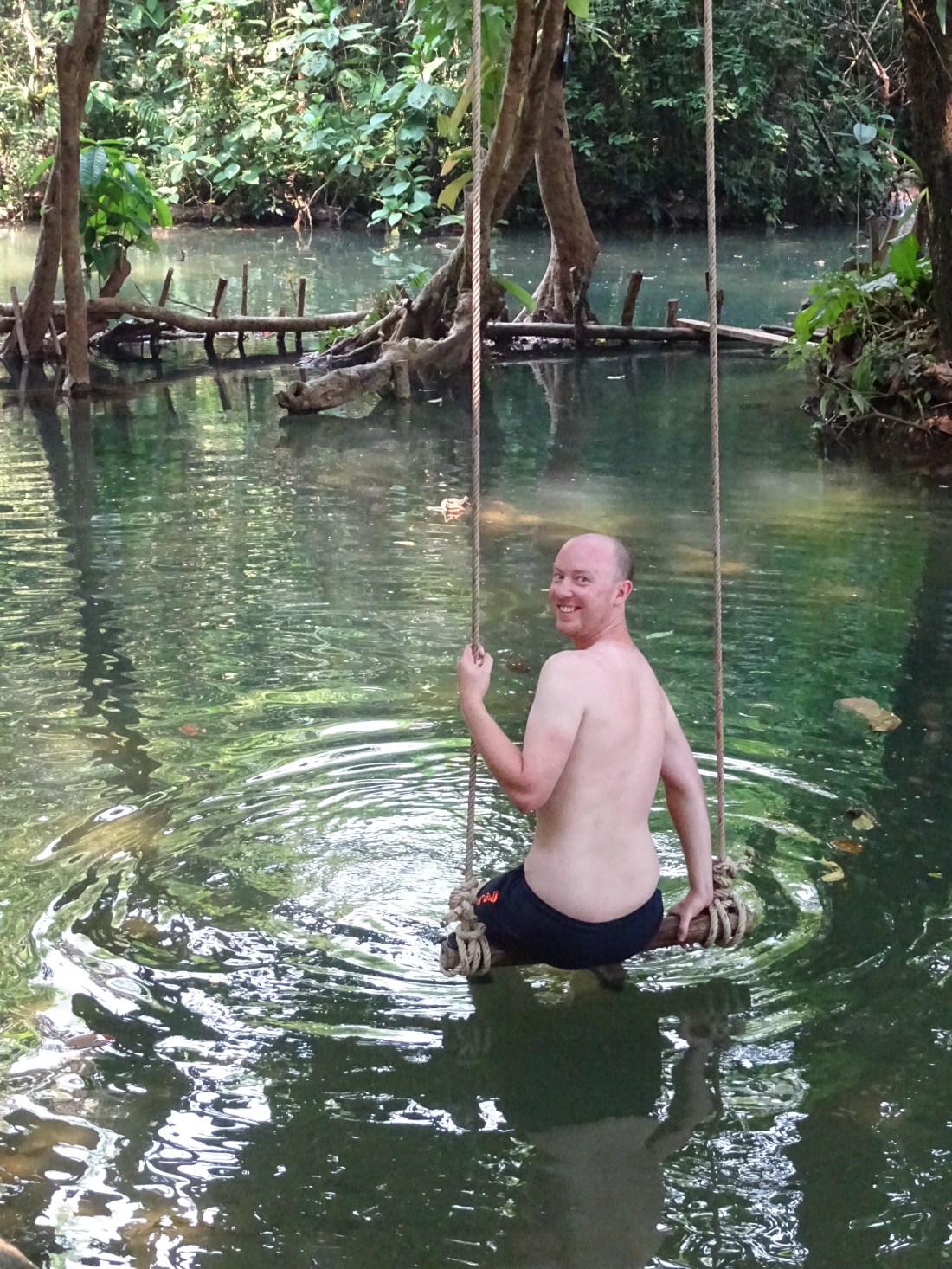
In case you were wondering, the water was pretty damn cold, although not by New Zealand Riwaka Resurgence standards…
We had paid our driver for the day so we could spend more time here. Most of the organised trips give you 2hrs maximum, and we had spent this already just walking around. So we spent the next 3 hours or so swimming in the various pools, enjoying the sun on our skin for the first time with the coolness of the water to counteract the heat.
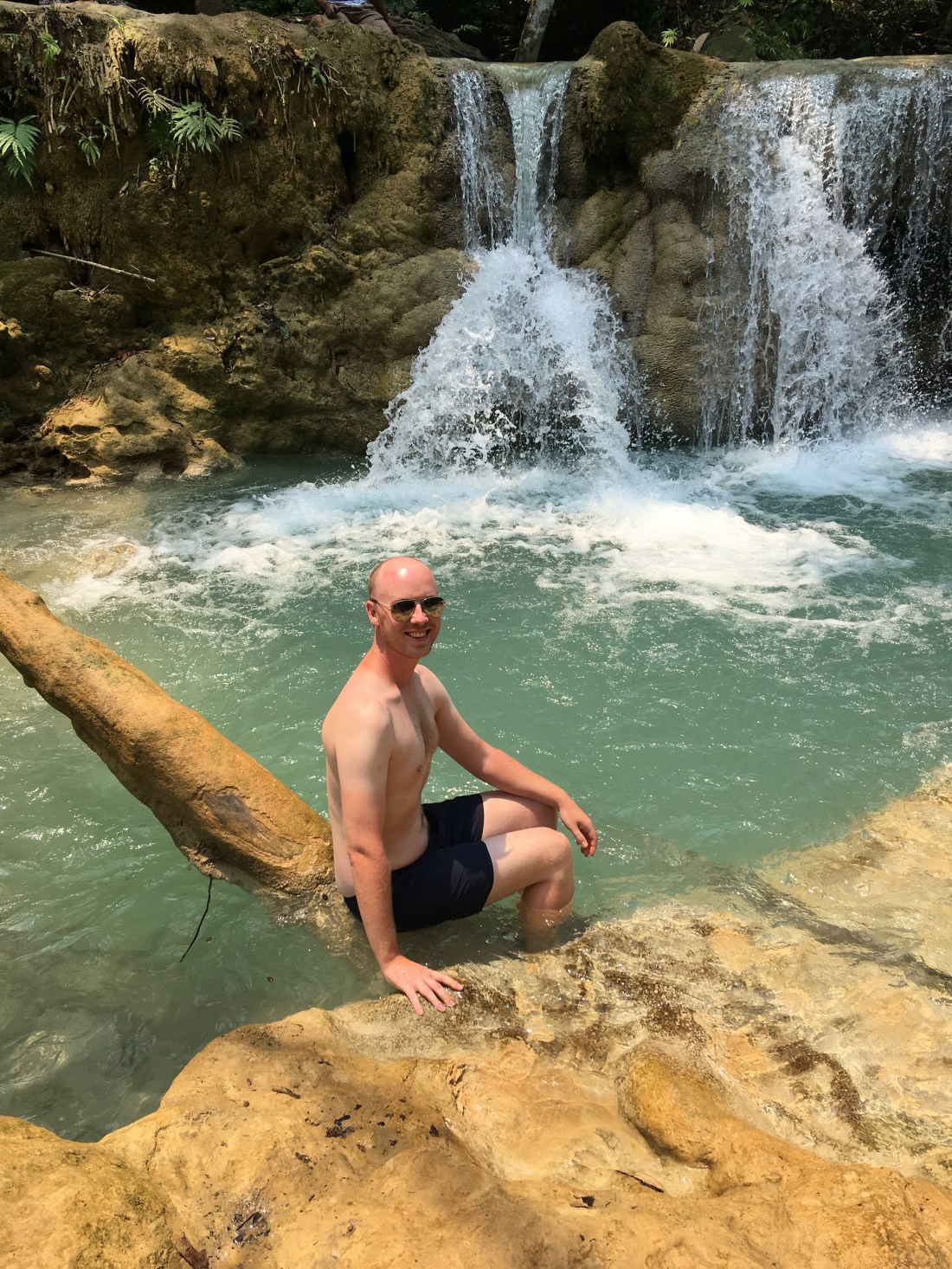
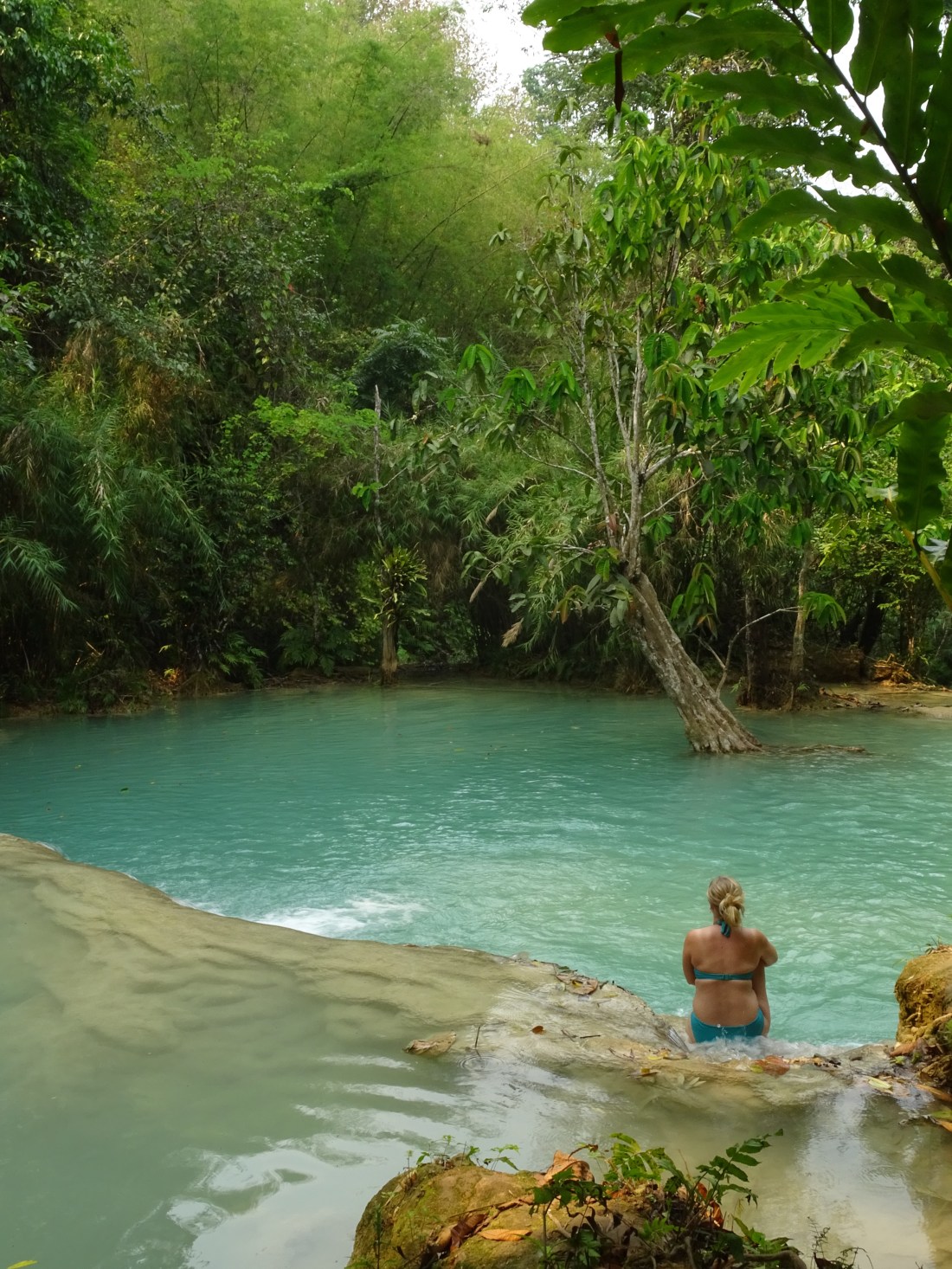
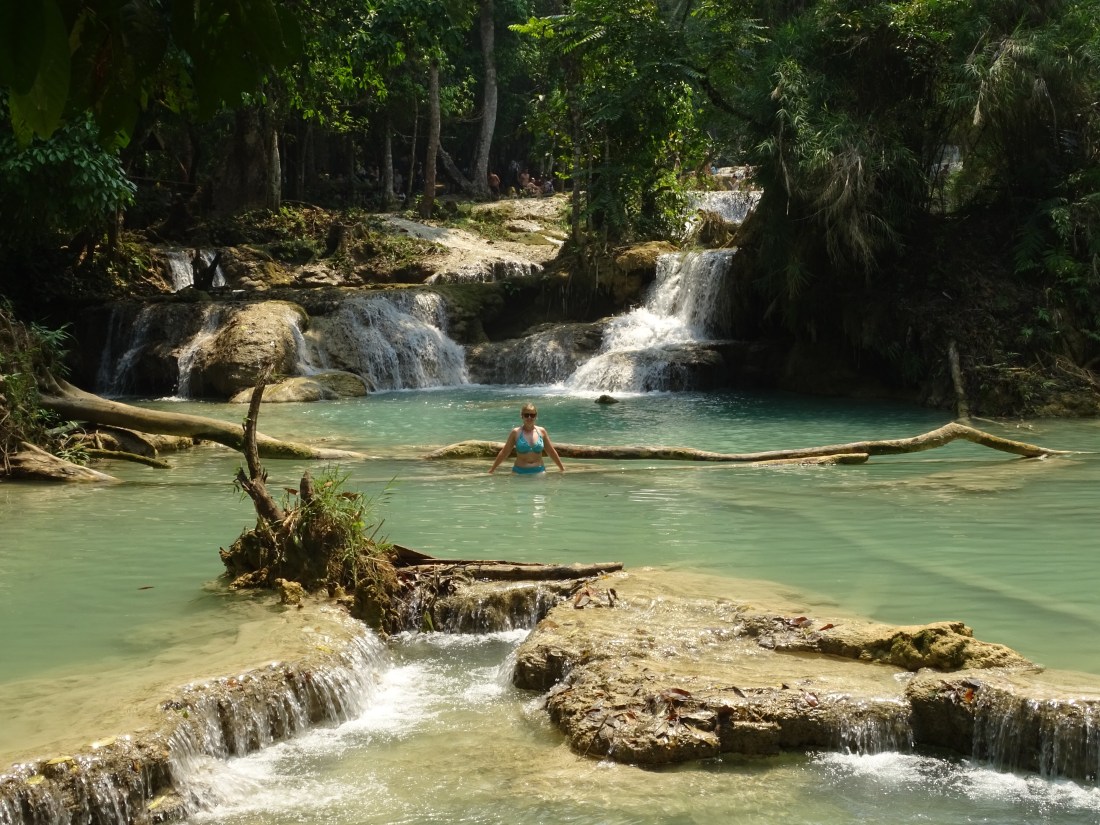
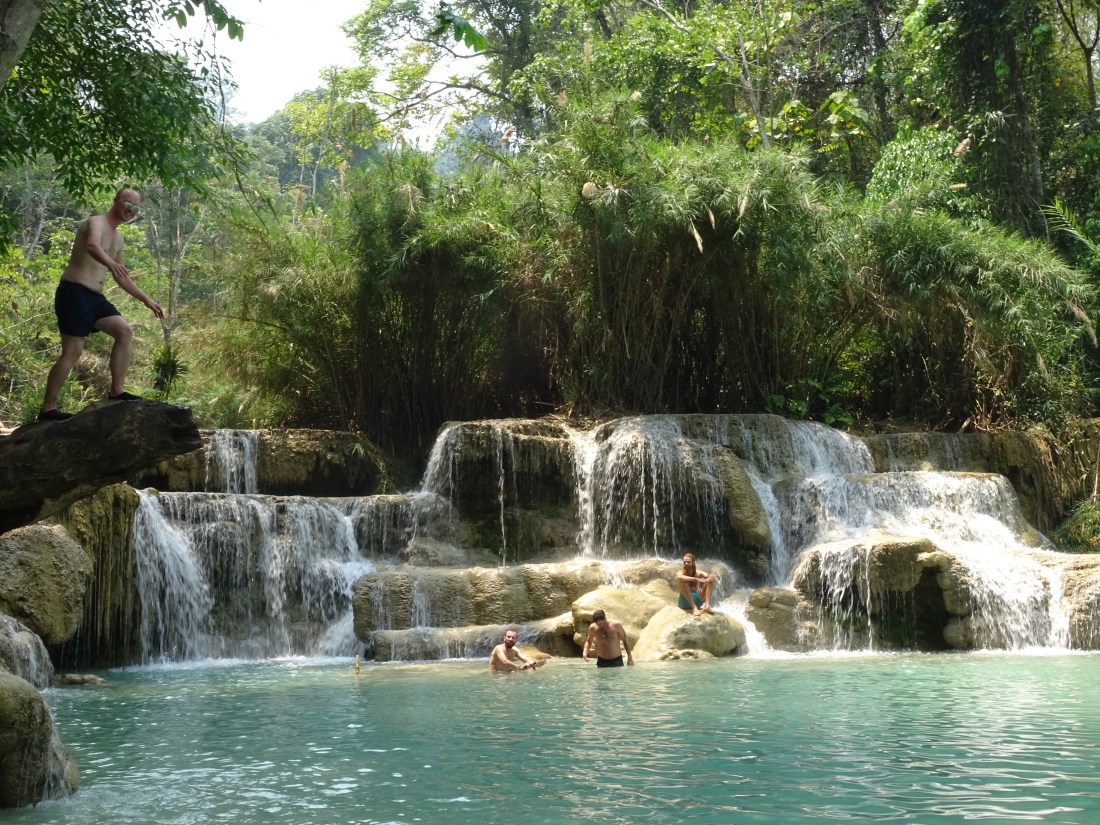
What we did need to do though was avoid the free fish spa, courtesy of the countless fish who like to nibble on your skin! Ged’s favourite way to avoid them was by joining the adventurous kids in jumping into one of the pools off a tree trunk!
On the walk back to meet our driver we passed through the Free The Bears sanctuary. This special place was opened in 2003 to rescue and rehabilitate sun and moon bears (Asiatic Black bears) who are captured and cruelly held in coffin sized cages unable to move, so that catheters can be inserted directly into their gall bladders to ‘milk’ their bile for traditional medicine.
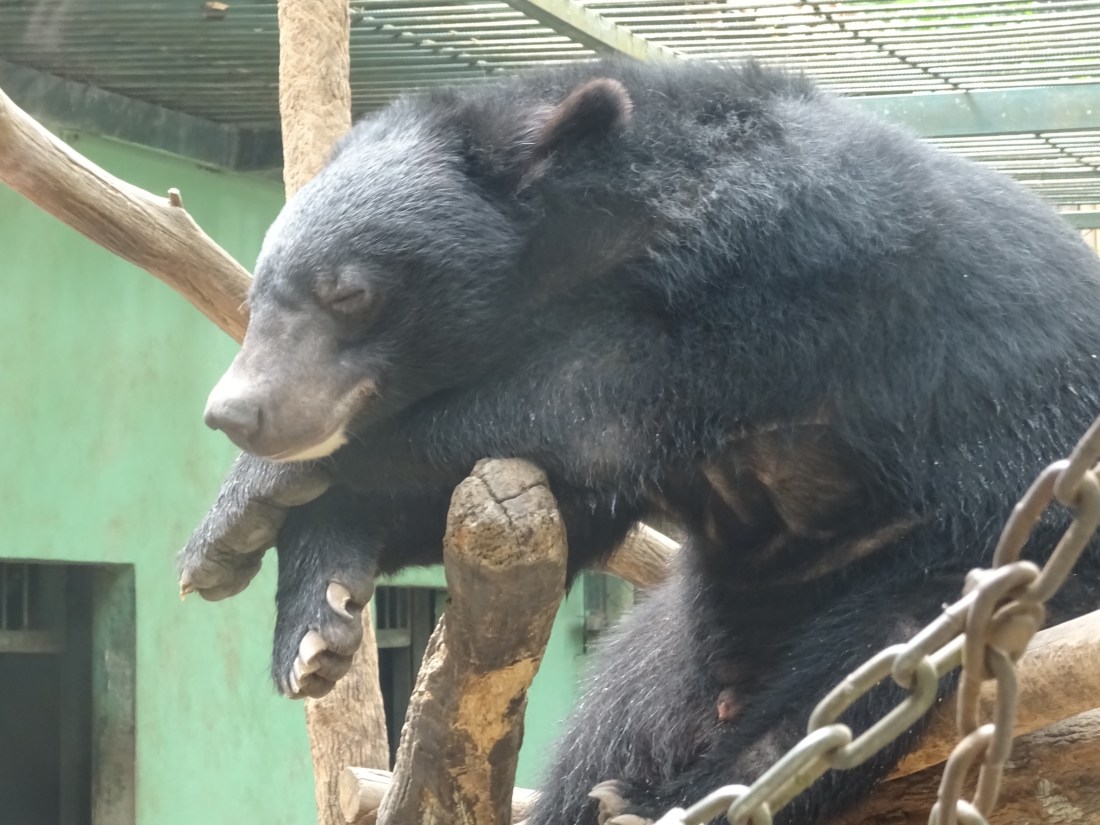
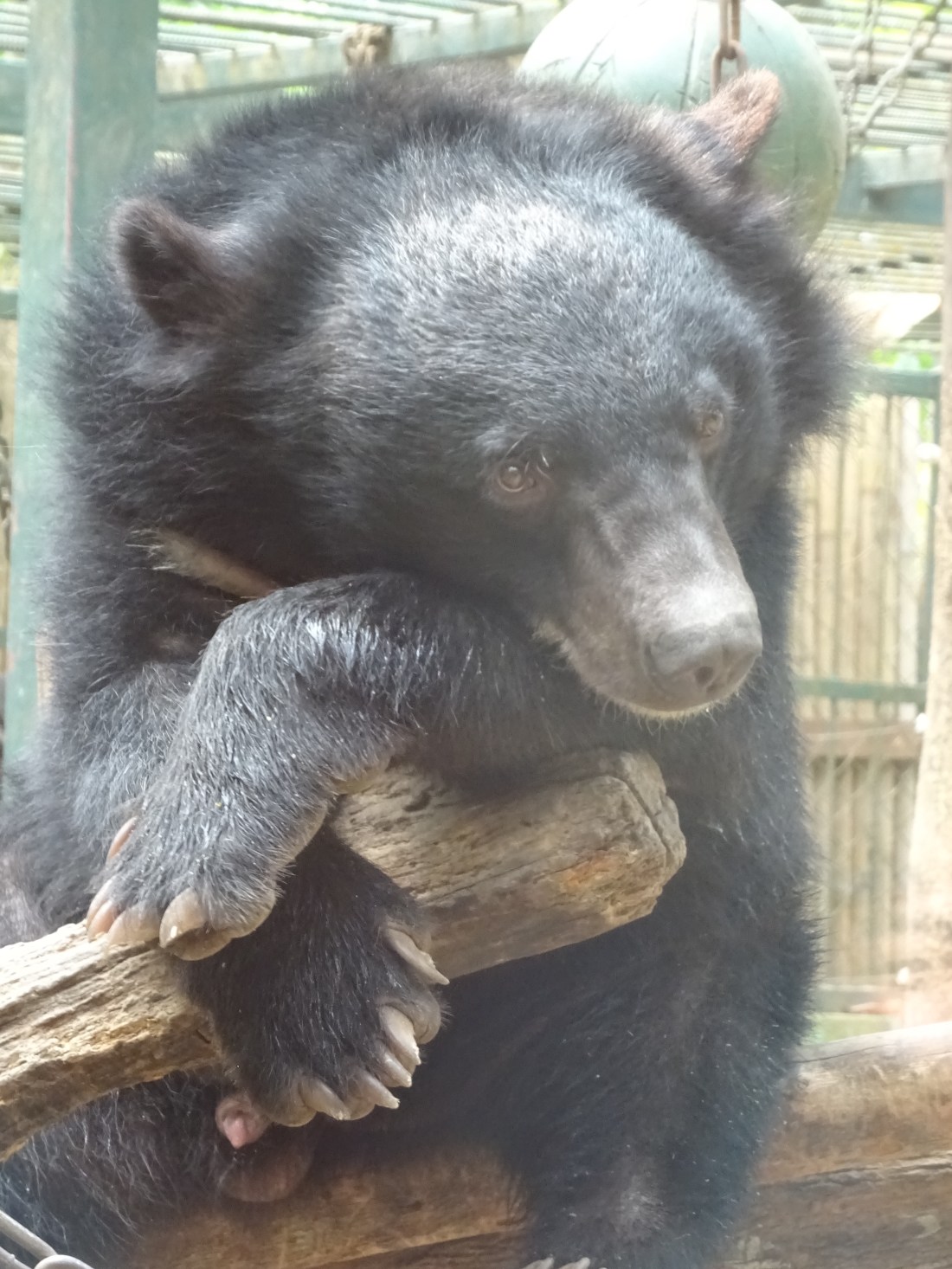
From what we could see, this non profit is doing great work, not only in rehabilitating and caring for rescued bears but in educating society about the need to respect and protect these engendered animals.
We got back to the hotel around 3.45pm and after chilling out with the air con for a bit we ventured to the famous night market which takes place every evening on the Main Street past Haw Pha Bang temple in the Royal Palace complex. The sleepy, calm streets of Luang Prabang were utterly transformed, with street vendors and stalls as far as the eye could see. It was easy enough to lose yourself, wandering around among the brightly coloured silk clothing, woven textiles, pottery, artwork and souvenirs, but that was made even easier by the sheer length of the market – you could hardly tell how far down the main road you had gotten to!
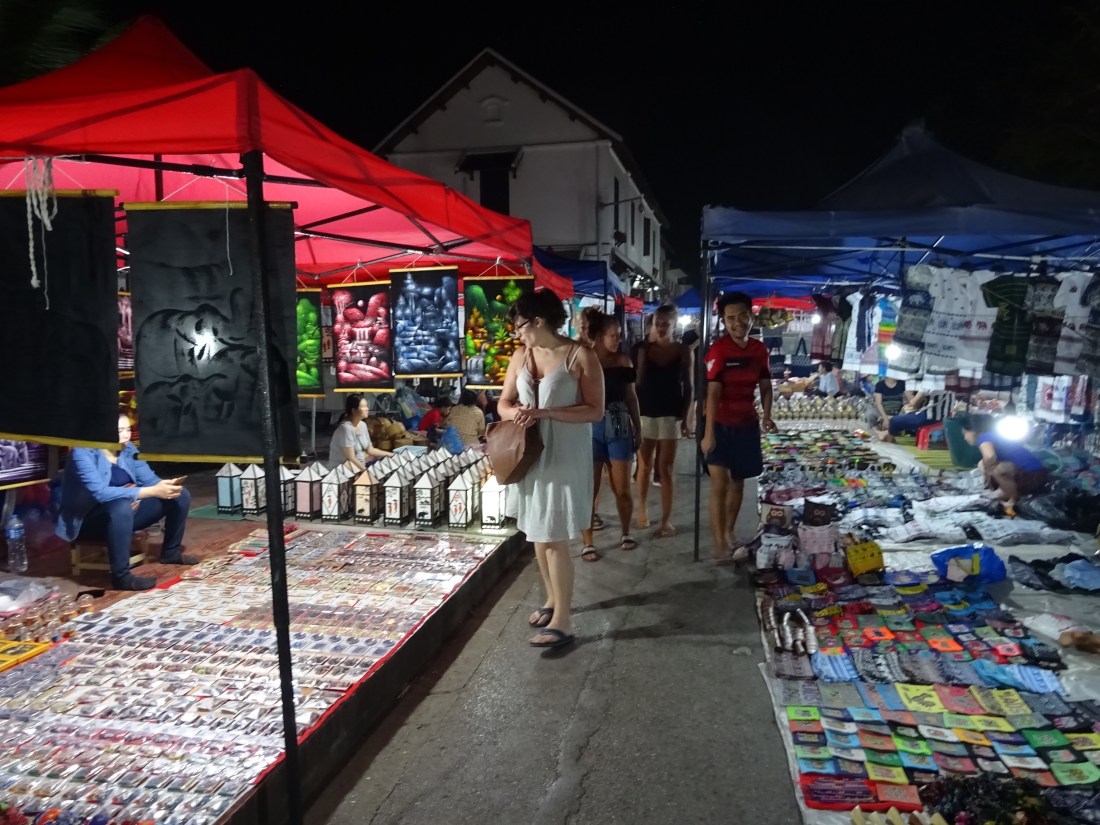
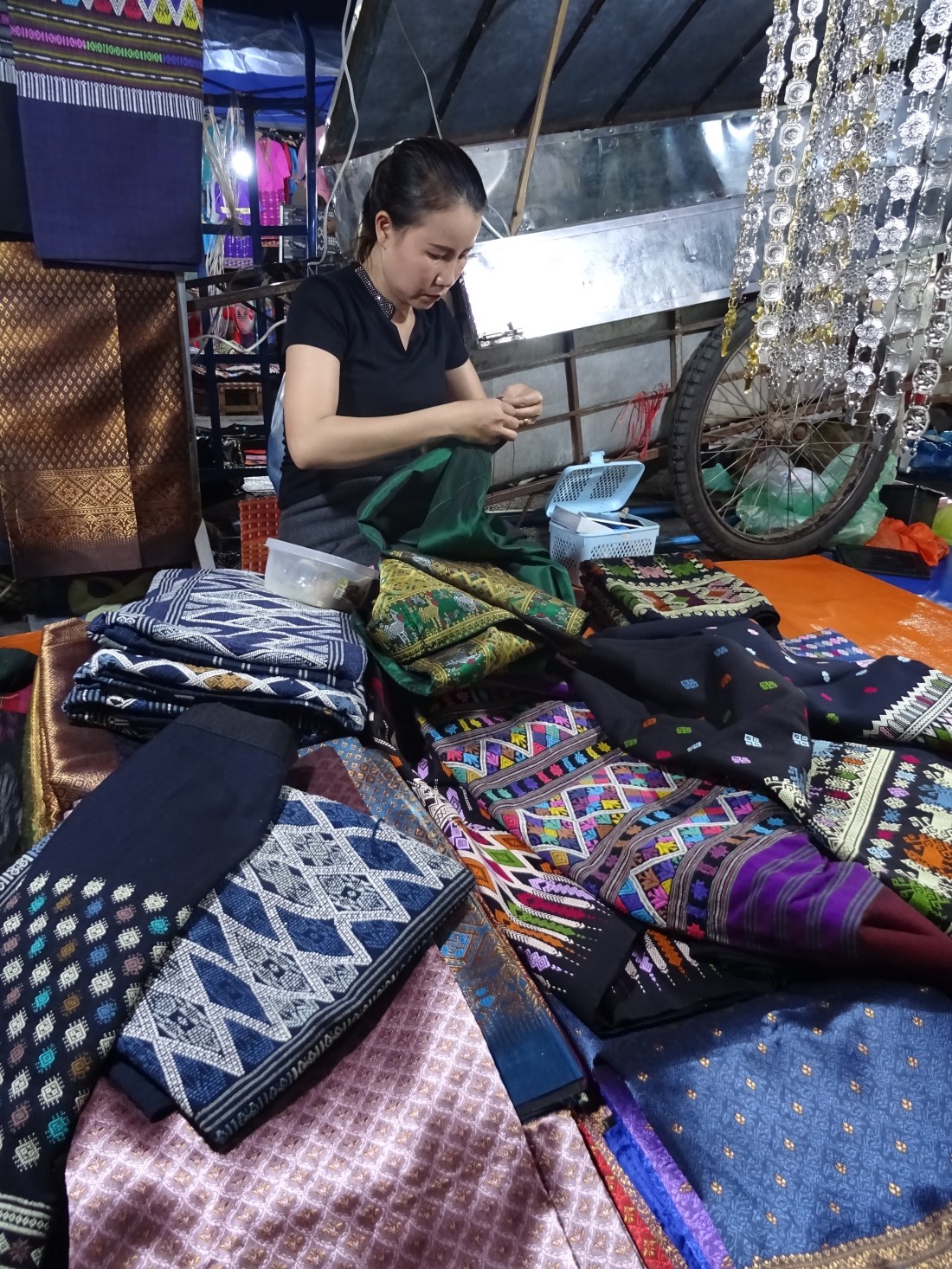
Rach put her bargaining skills to good use and picked up a lovely silk embroidered skirt for an upcoming family wedding at an amazing £9. Here is the seller moving the clasp for her!
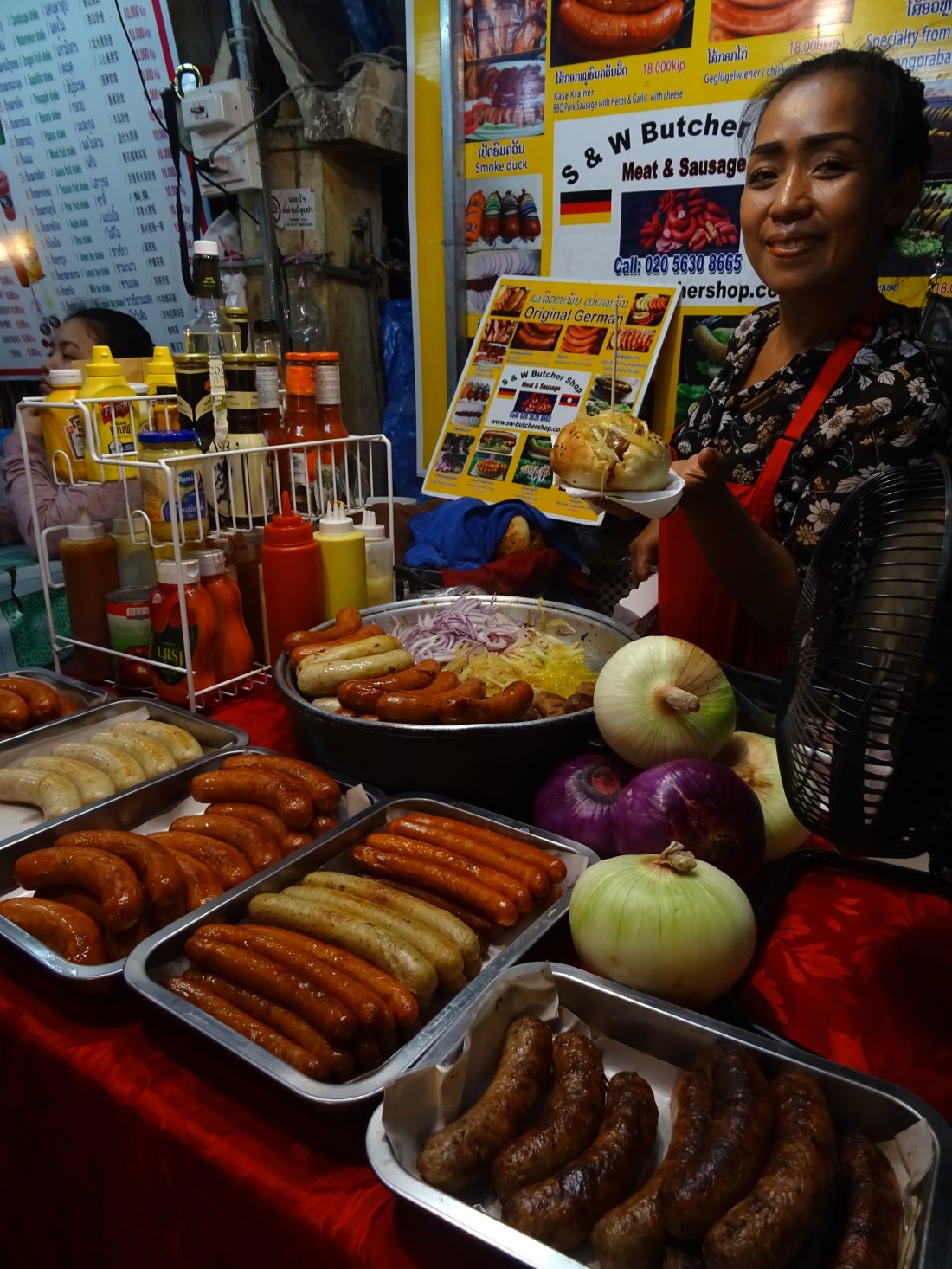
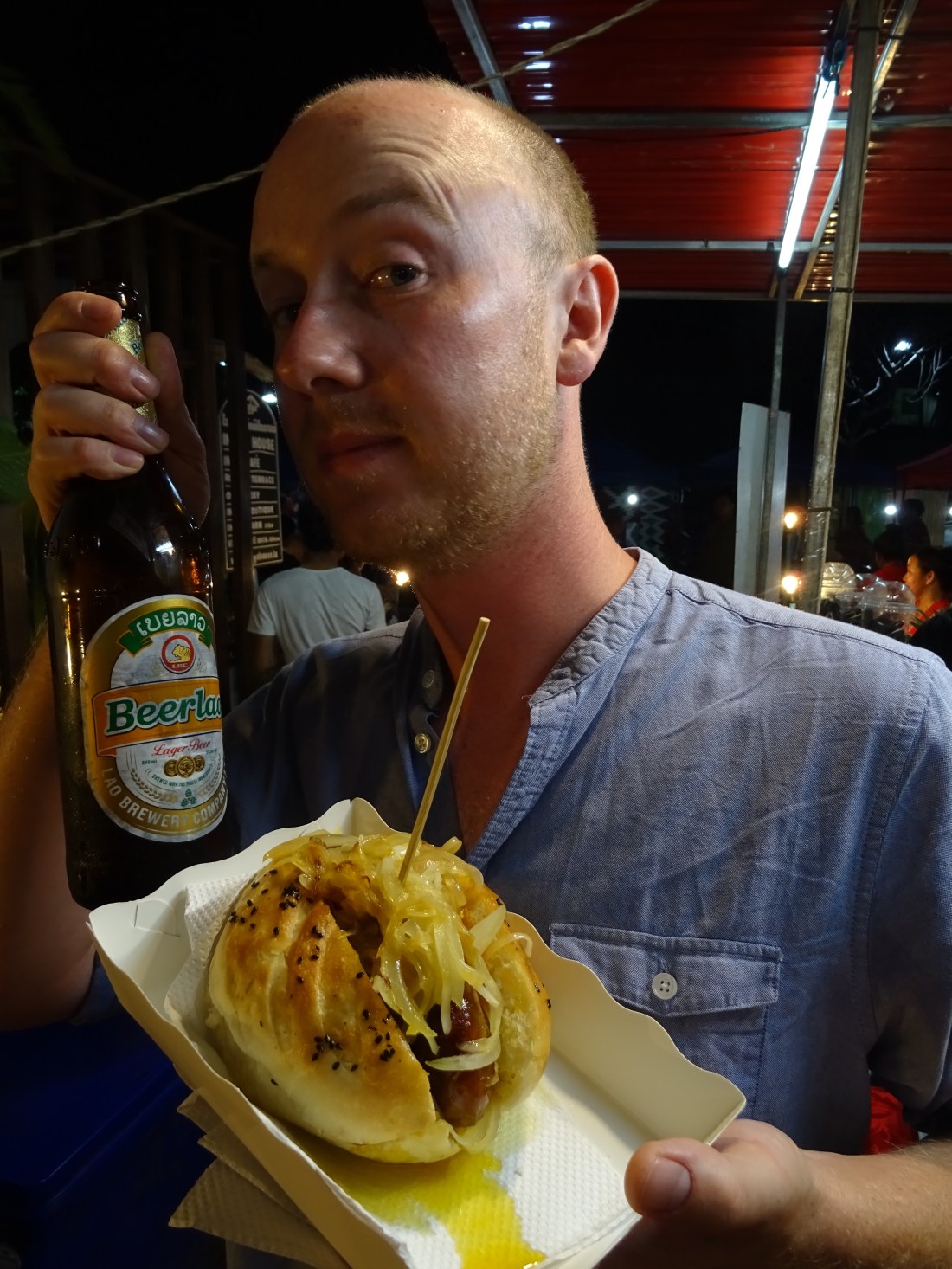
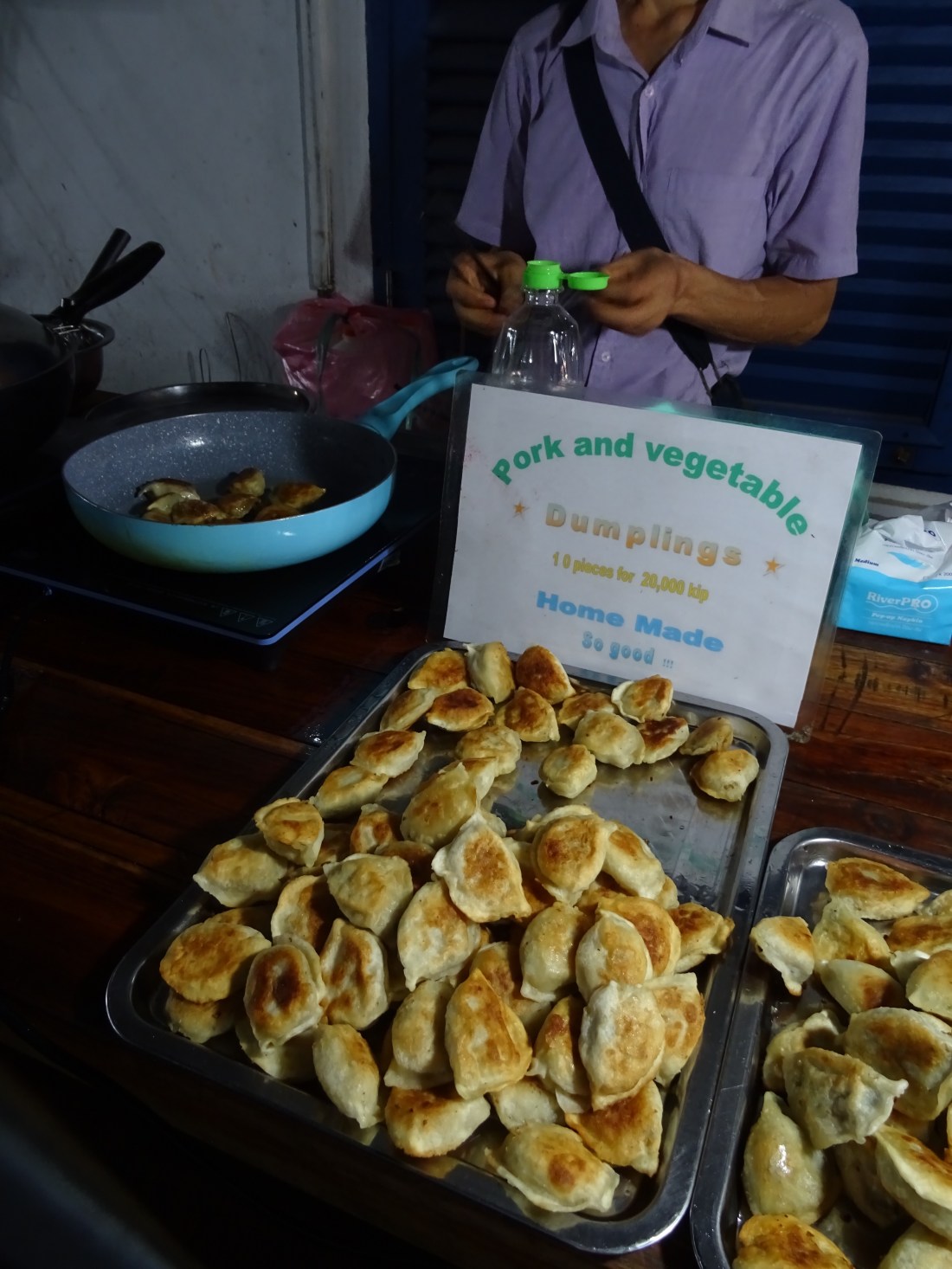
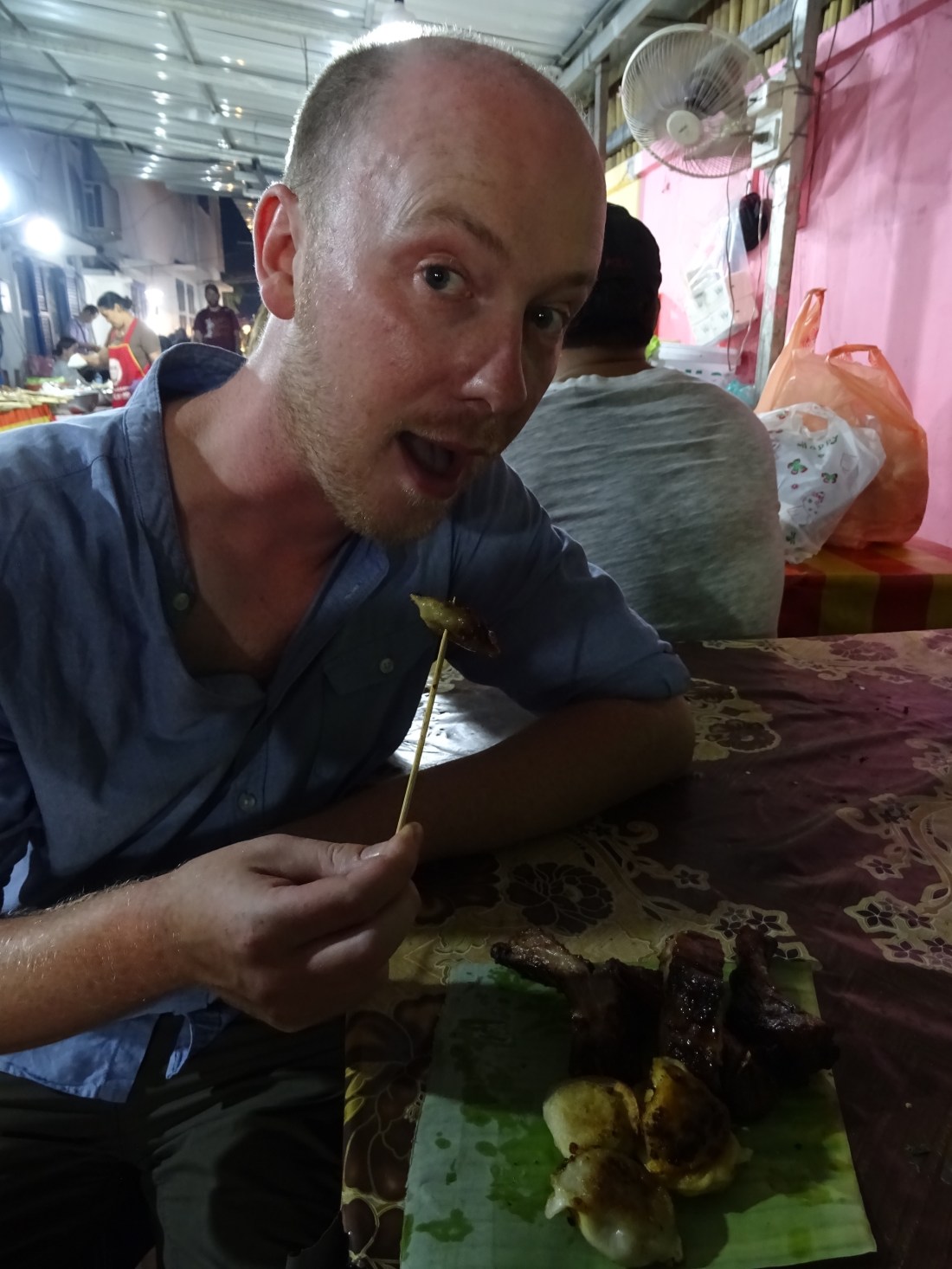
We then circled back to the beginning of the market where a long narrow street branched off to the left. This seemed to be the street food street and this was a good chance to give a few more local things a try! For pittance we munched on some Luang Prabang sausage (hot dog style) pork and vegetable dumplings and some pork ribs for a couple of quid total. Happy days.
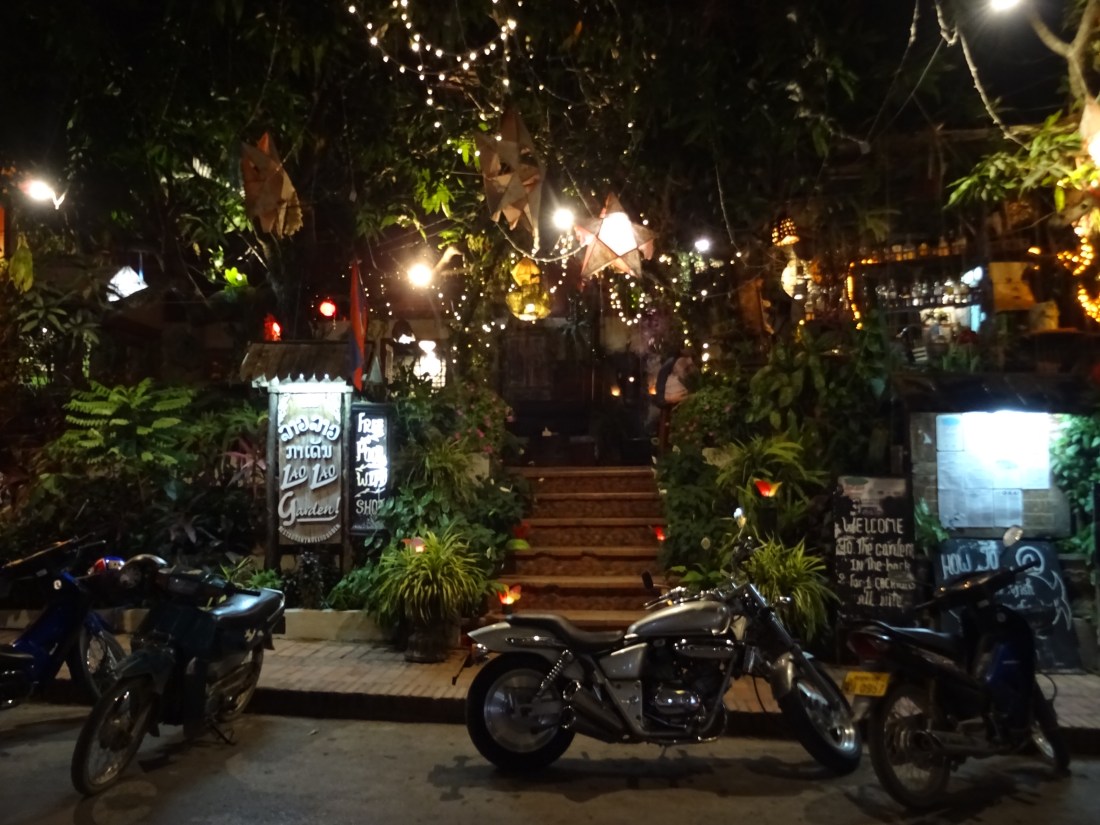
When our feet were tired from wandering the market we headed back to the twinkly bar opposite our hotel for Lao Lao cocktail part II, this time made with lychee. Fed and watered for around £5 total – could Luang Prabang get any better?!
10 April
The next day we were up and out for 8ish, to board our longboat along the Mekong to Pak Ou Caves via the ‘whisky village’.
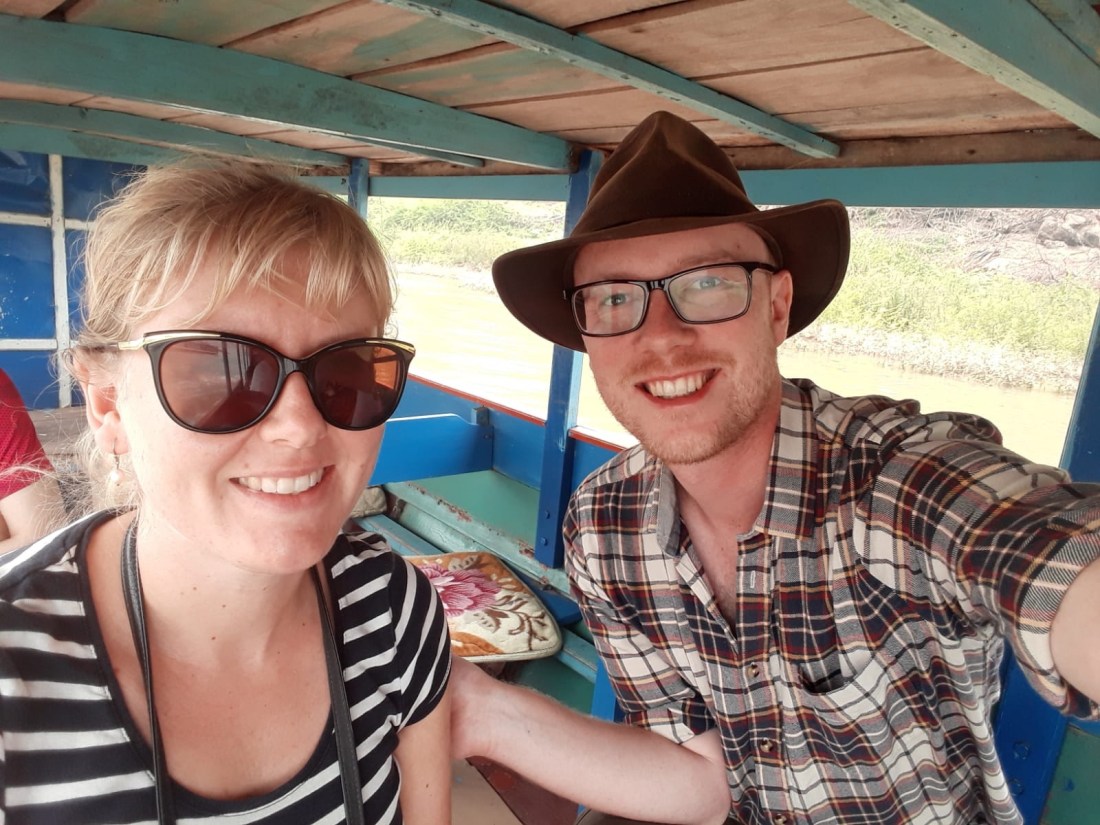
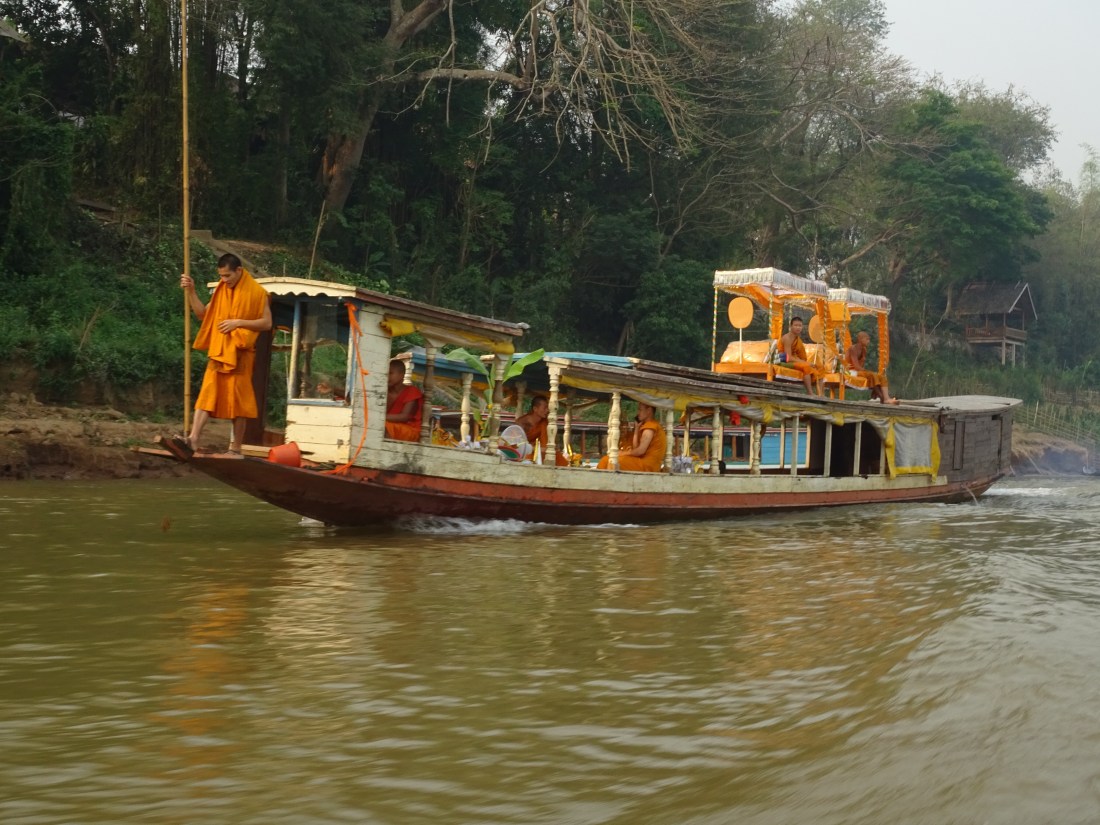
The boat was about as basic as they come, but we settled into our wooden chairs to take in the river breeze and local life going by beside us. And that we did – fishermen, families and water buffalo aside we saw a few monks going the same way on some sort of ceremonial boat!
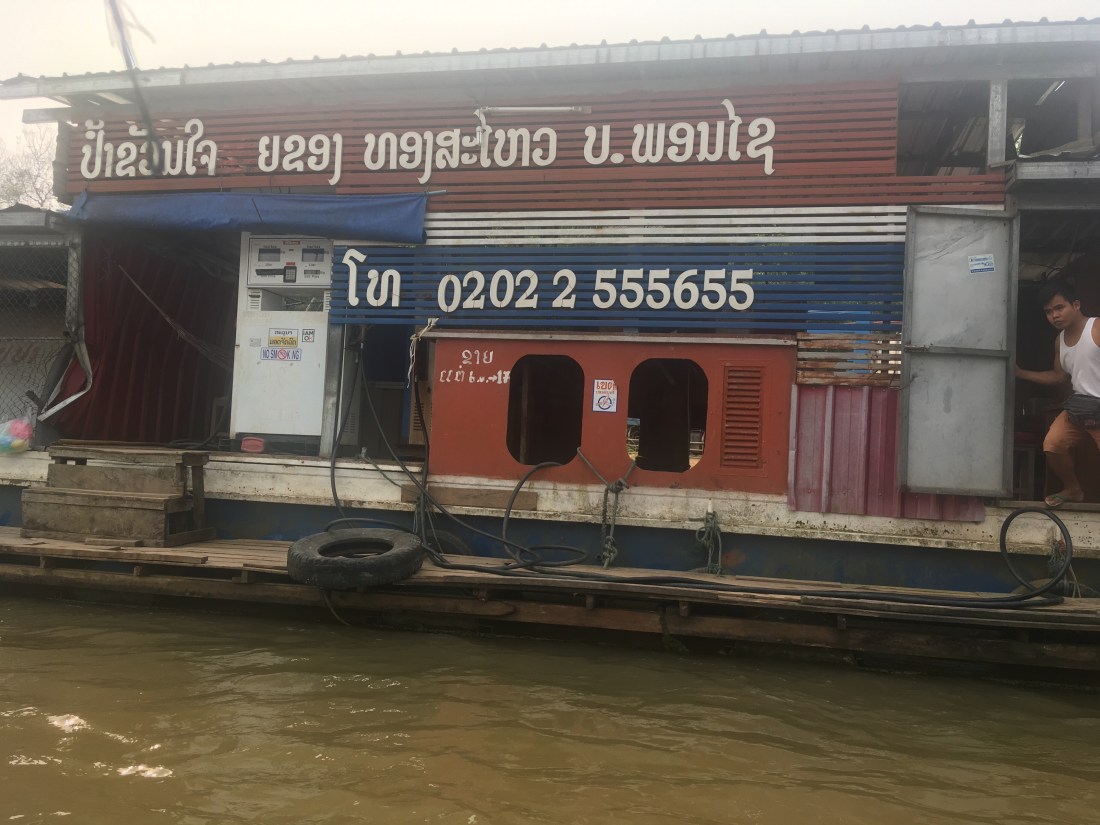
Less than half way to the caves our boat suddenly coughed and spluttered to a slow drift. We had broken down! Marooned on the Mekong, we watched quizzically as our driver attempted to restart the motor time and time again. We’ll admit a tiny hint of worry set in when he grabbed an oar and started paddling in the direction of a big house boat. What were we going to do now?! By his gesticulating and waving we gathered that another boat would be along to pick us up, so we waited it out. Eventually we were rescued and carried on, via the river’s petrol station (pictured) to whisky village.
We were greeted on arrival by Mr Khomdy, the village’s enthusiastic whisky producer. He had an array of bottles lined up and enjoyed pouring us more than generous shots of the various concoctions he was selling, including sweet rice wine and of course his ‘super lucky’ Lao Lao rice whisky.
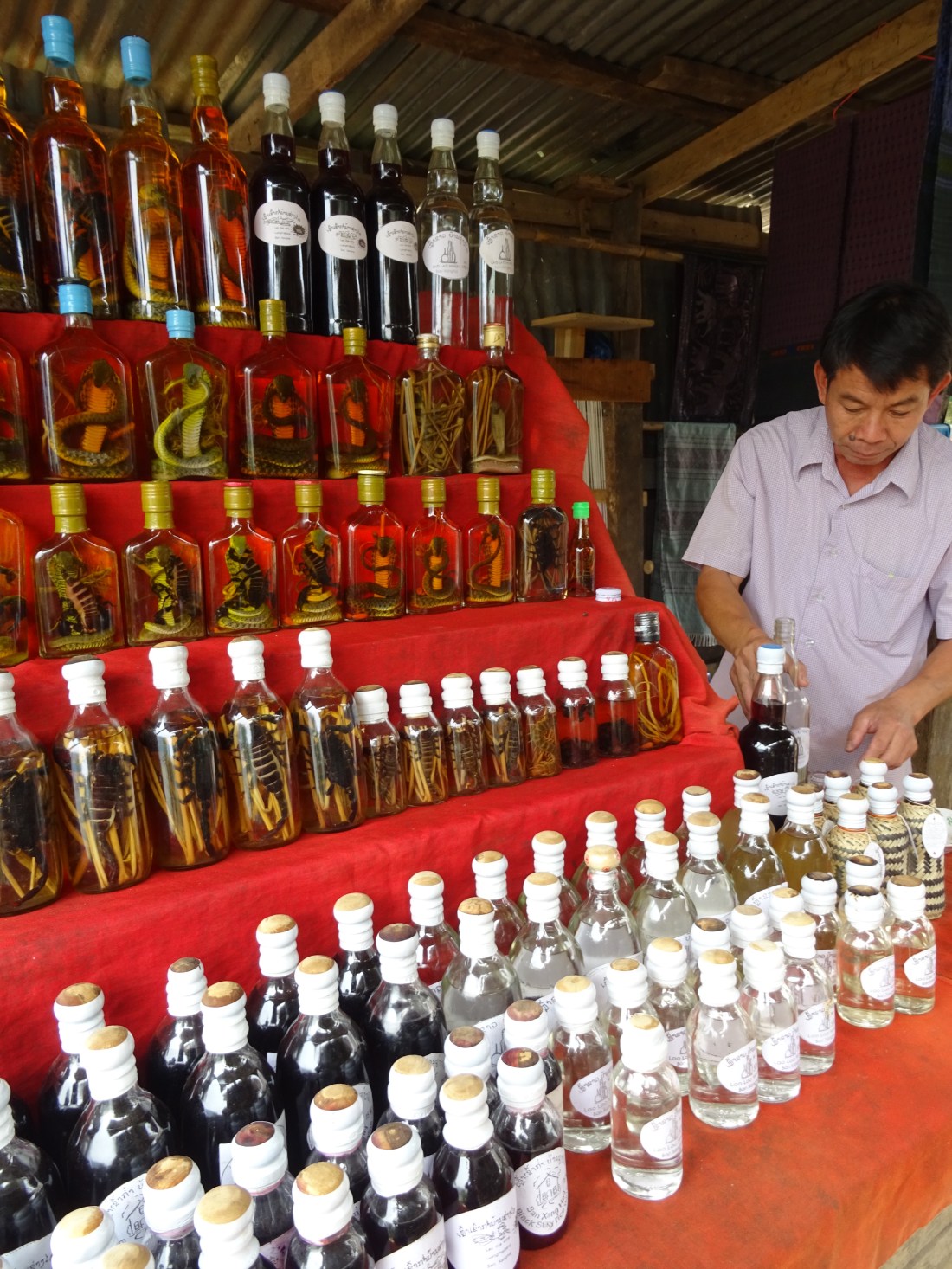
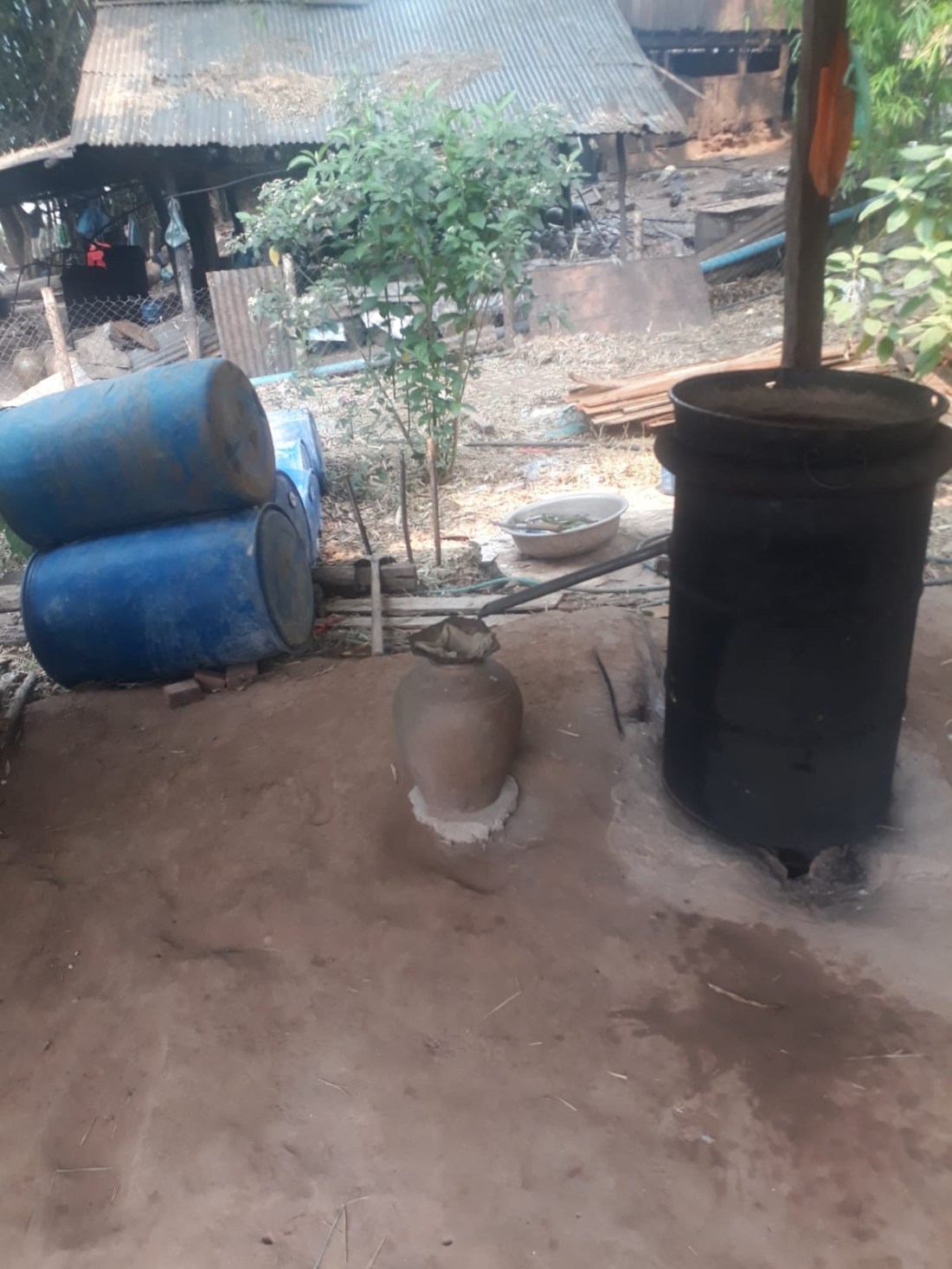
Boy does that stuff blow your head off! More of a ‘Mekong moonshine’, it was labelled as being about 50% alcohol; how he knew that we don’t know, as the process of making was more than a little rudimentary – see photo!
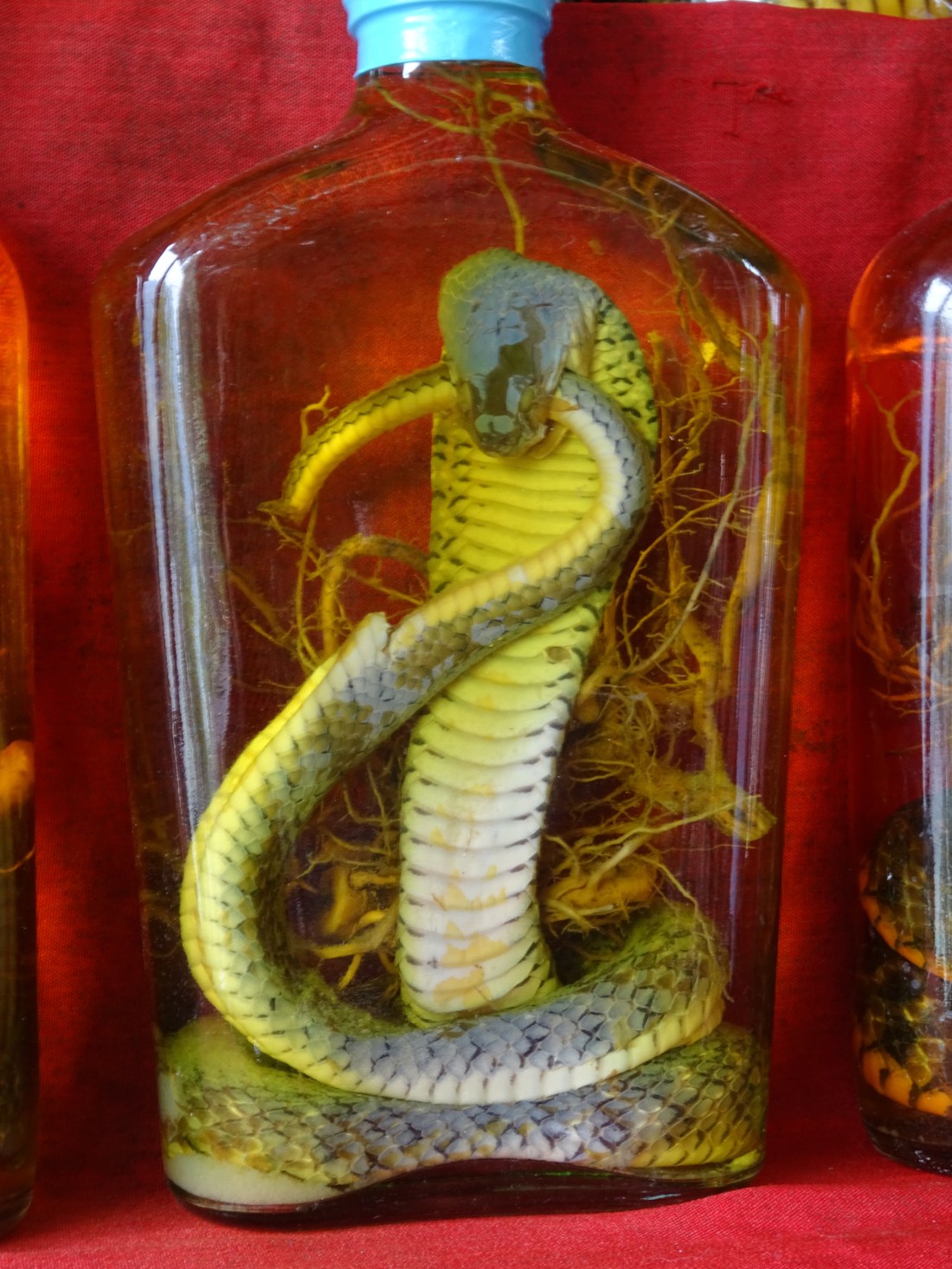
After an extra shot for good luck we purchased a little bottle for about 60p. Needless to say it wasn’t the variety with snake or scorpion in it…
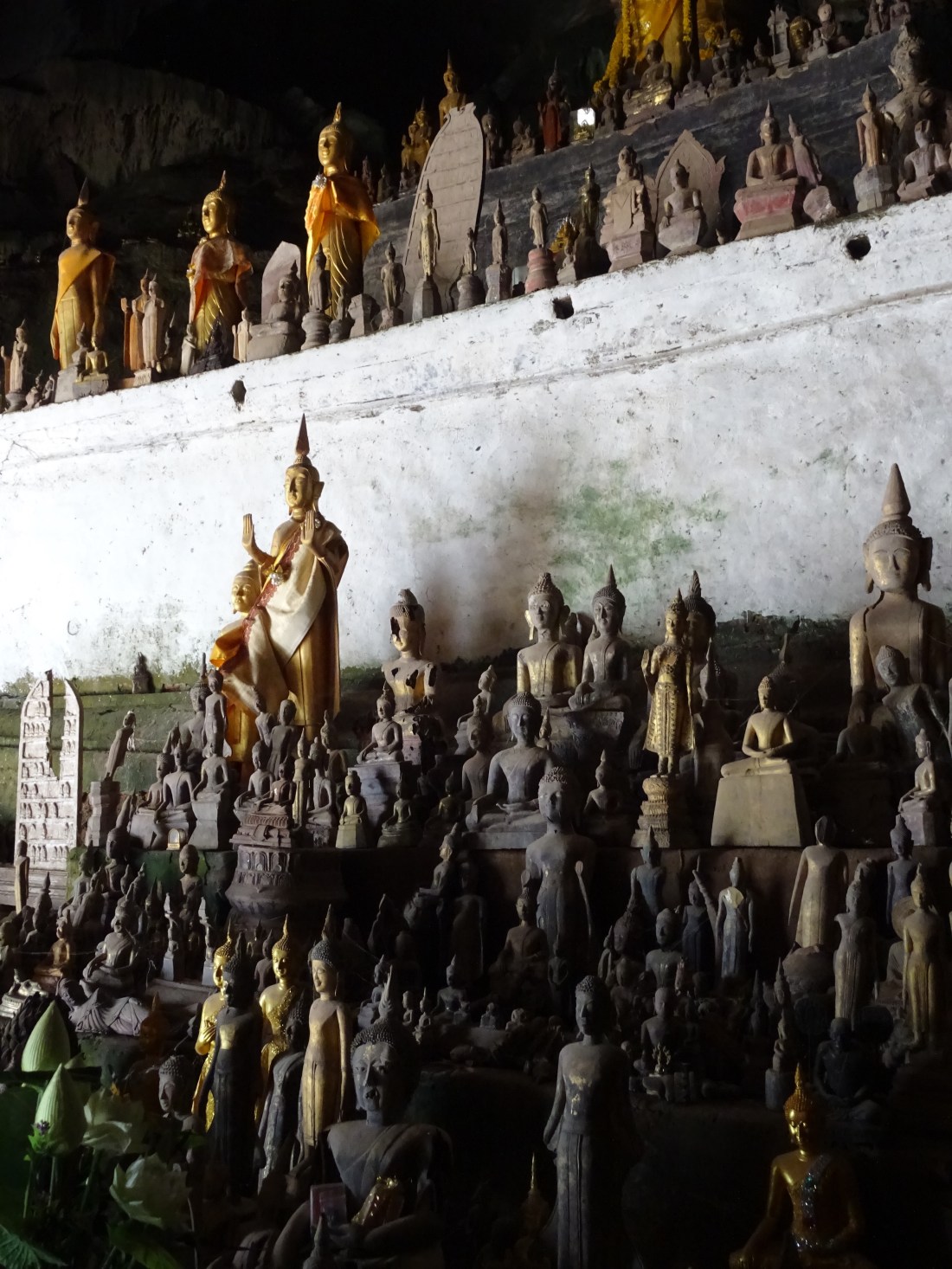
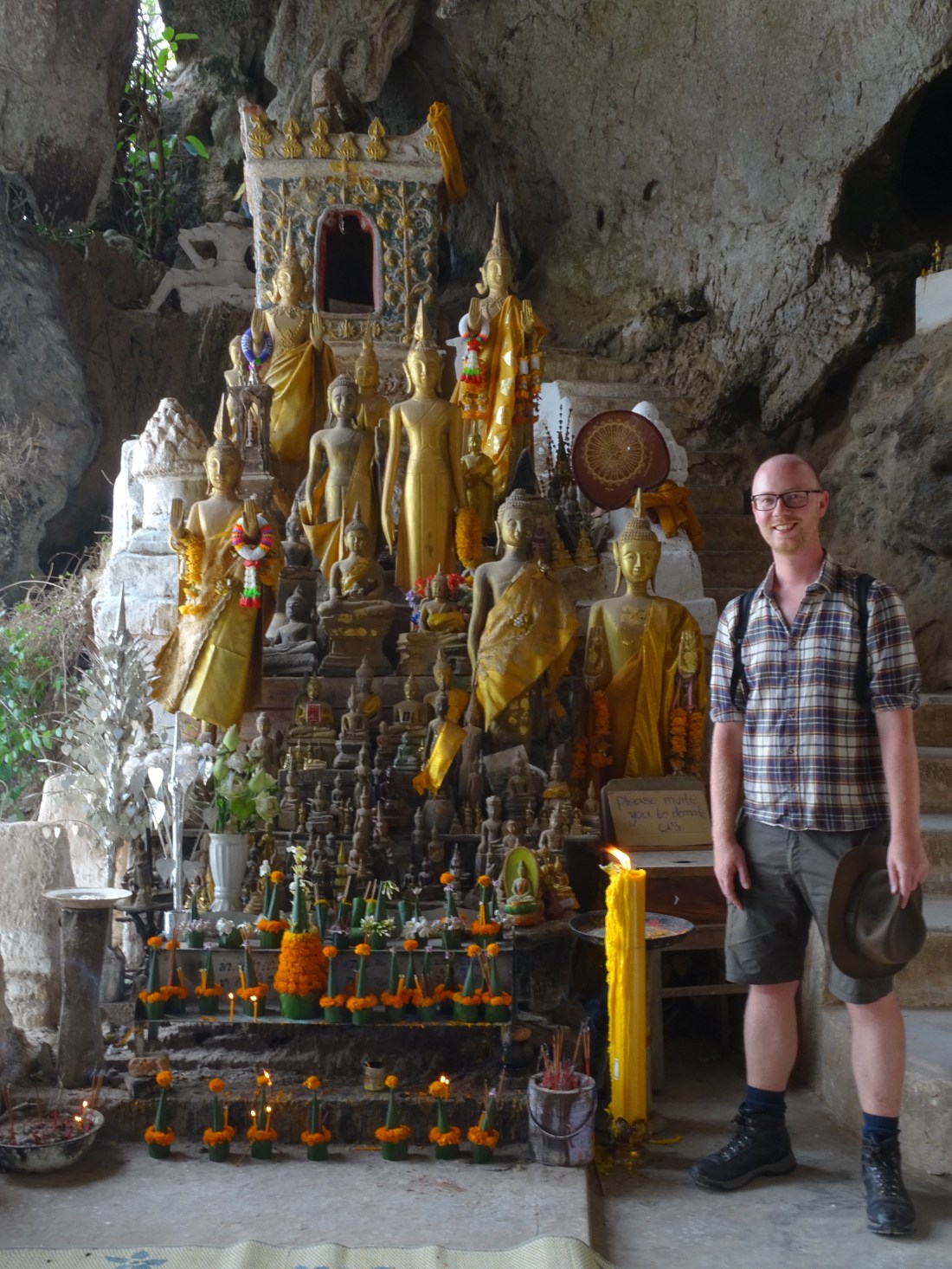
Next up were the Pak Ou caves, noted for their miniature Buddha sculptures. We slogged up the steps in the heat and were welcomed in by the coolness of the air in the bigger and darker upper cave, Tham Theung. Buddhas, buddhas everywhere! It wasn’t the most impressive cave we’ve ever seen but as each of the Buddhas, hand carved from wood or moulded from tree resin and finished in gold leaf, had been placed there by worshippers, it obviously had real importance to the people of Luang Prabang as a place to honour Buddha.
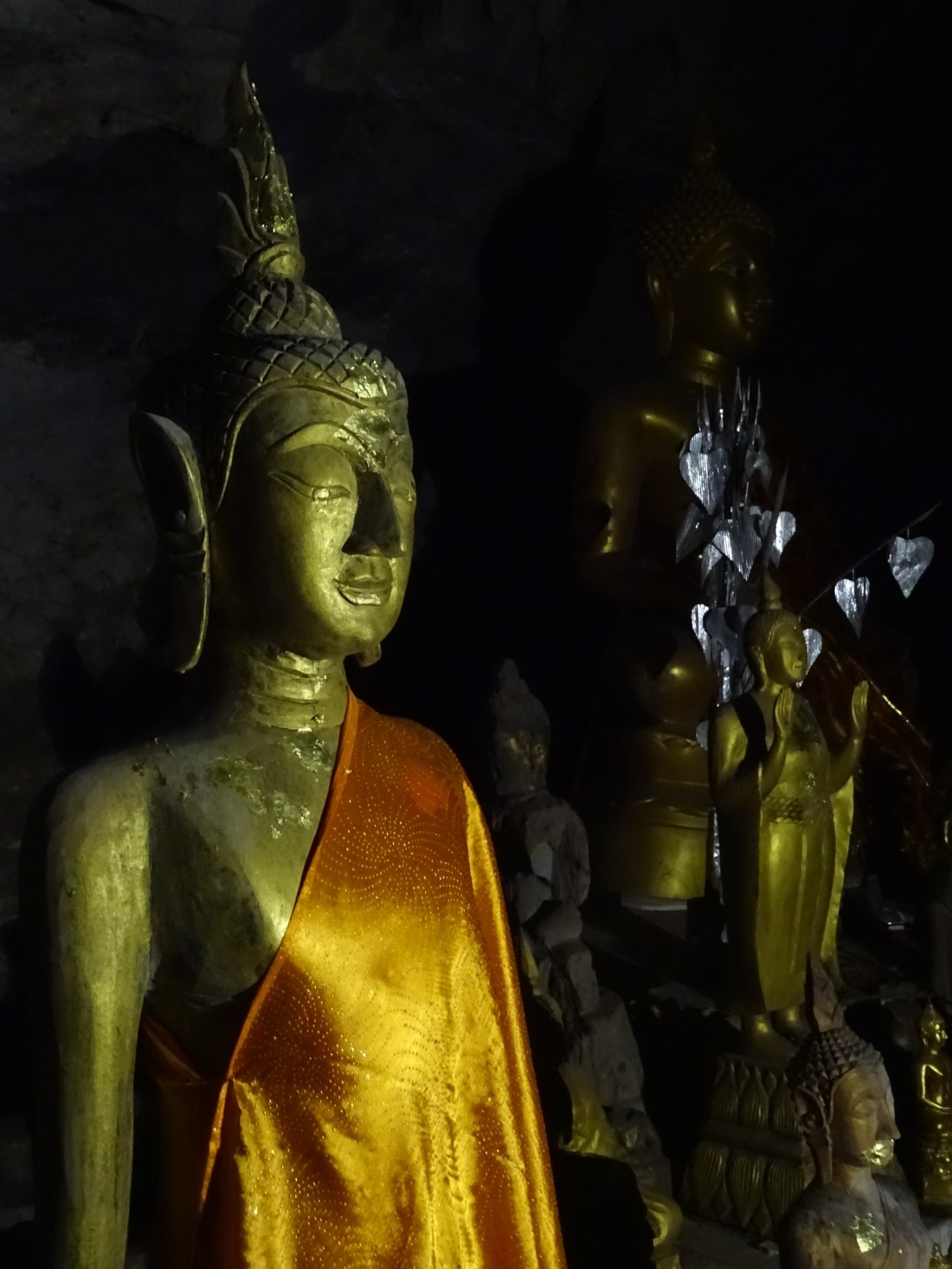
The caves received royal patronage from the 16th century until 1975, where the people and the King would make a visit to the caves as part of the New Year observances. The upper cave certainly looked kind of magical in the torchlight with the statues’ shadows dancing across the walls.
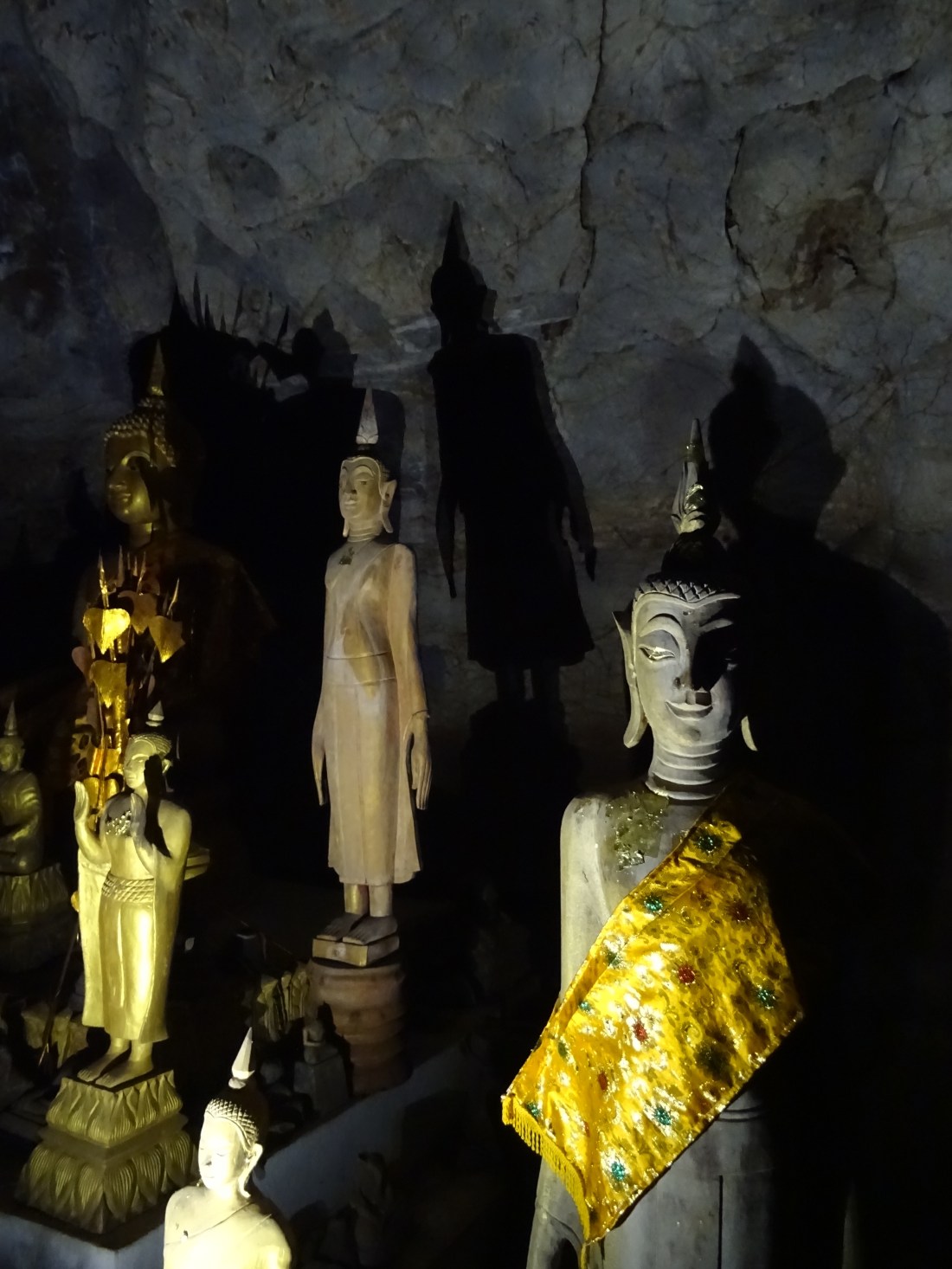
The lower cave, Tham Ting, was considerably smaller, but packed with 2,500 buddhas, more than the upper! A variety of different sized but mostly damaged wooden Buddha figures were laid out over the wall shelves, taking largely 3 positions which depict some of the most important stages in Buddha’s life, including “calling the earth to witness”, “meditation” and “calling the earth for rain.”
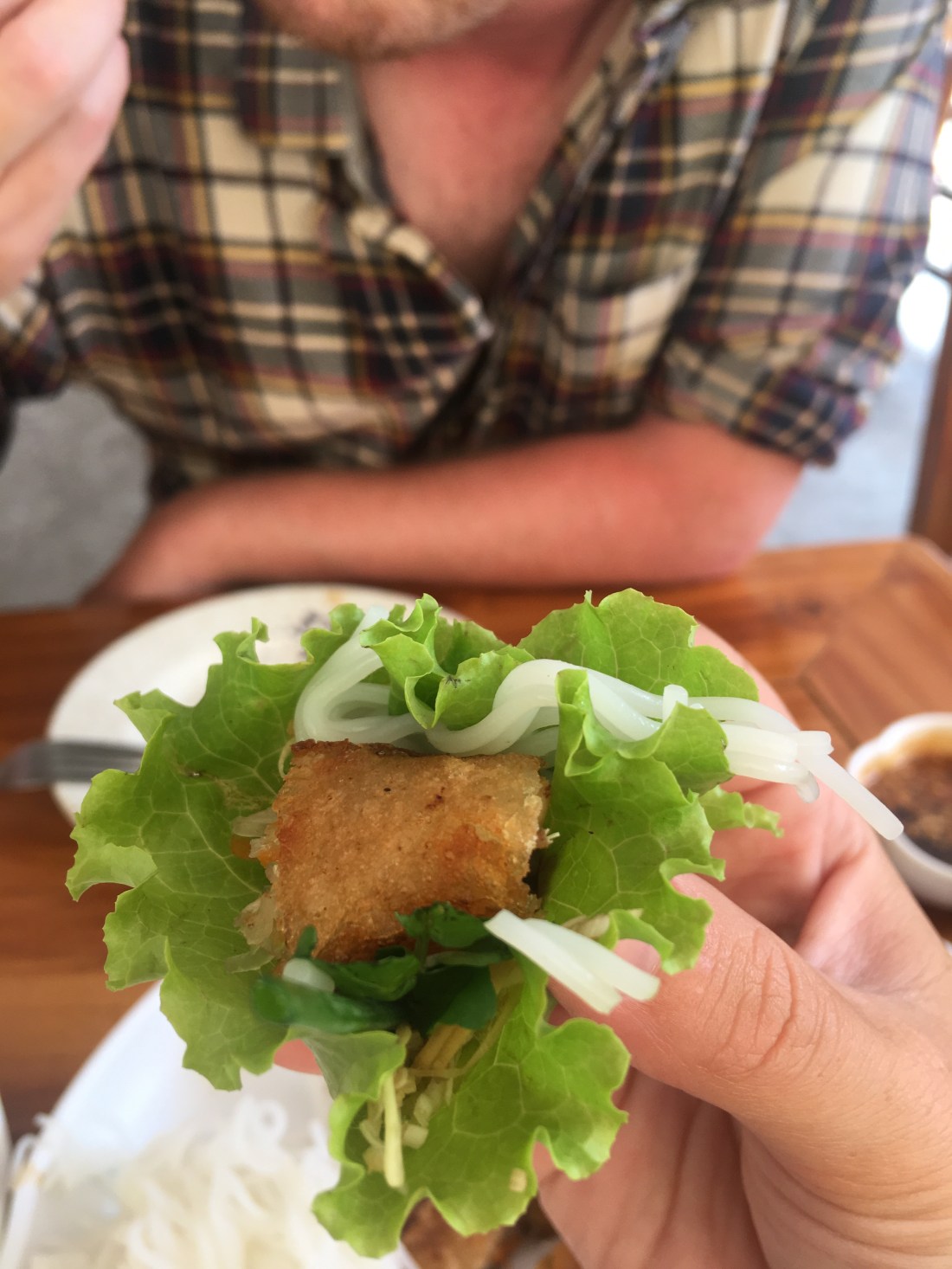
Soon we were back on board and slowly sailing up river back to Luang Prabang, a journey of just under 2hrs. We are pleased to report no breakdowns this time! We were pretty hungry when we got back so went straight to a humble cafe called Phon Hueng to try some more traditional foods. Ged had Pad King, a bit like Pad Thai but different, and Rach ordered the spring rolls, which came with a huge pile of lettuce leaves and an array of things to stuff them with.
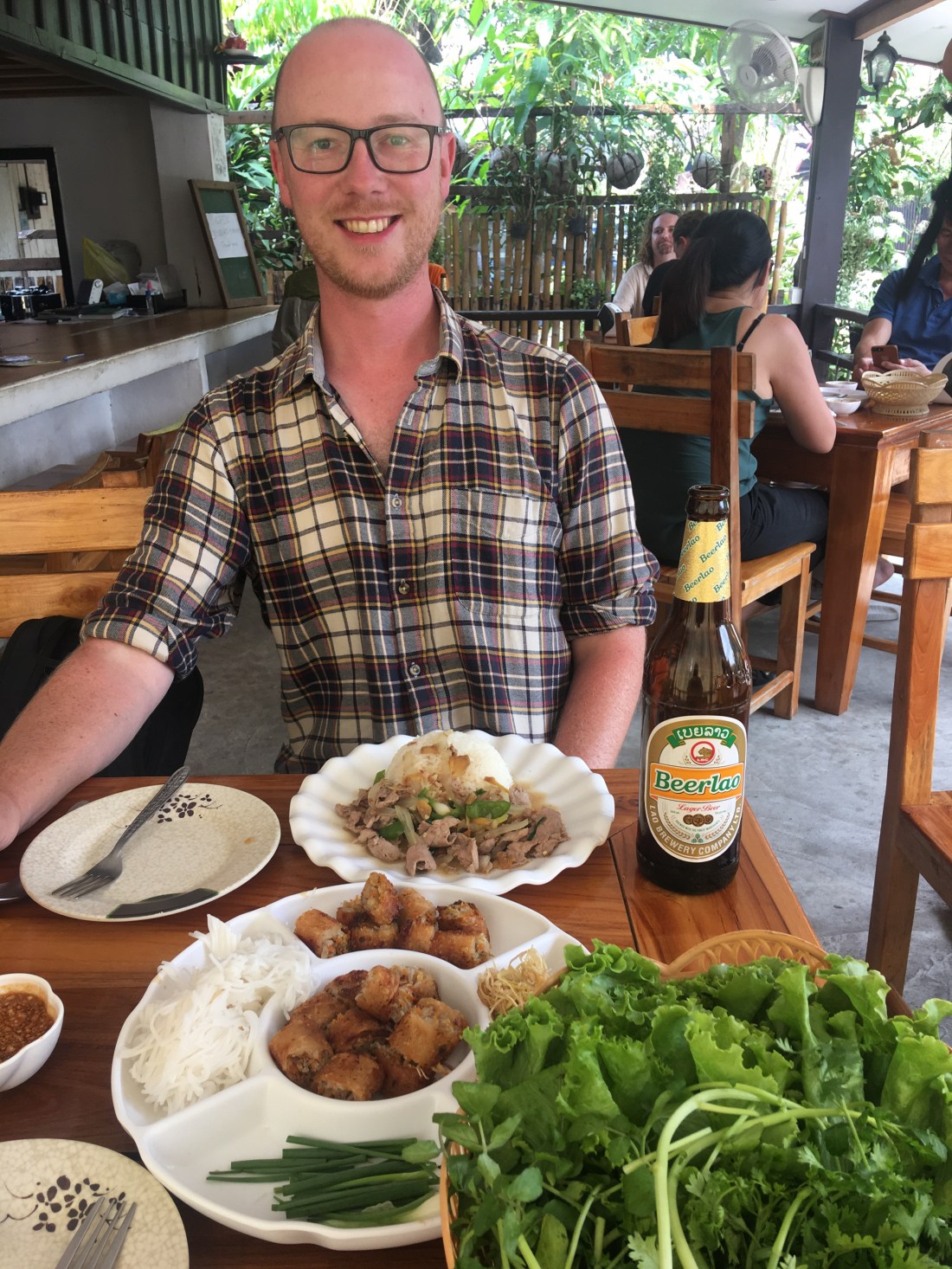
There was something a bit like ginger, vermicelli noodles, spring onion, then a small piece of spring roll, all rolled up into a delicious mouthful dipped in a rice wine vinegar and chilli dipping sauce.
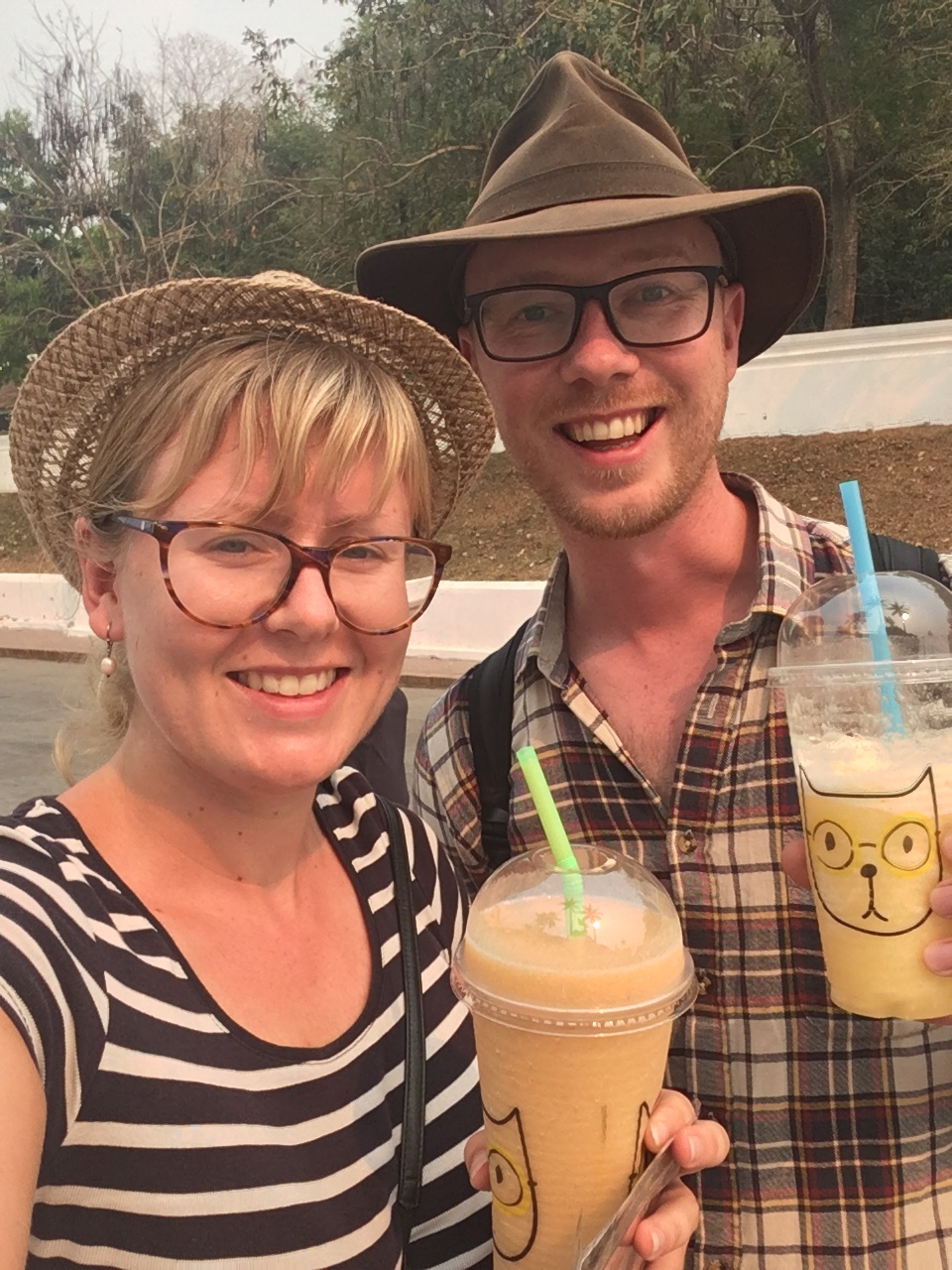
We finished up by grabbing a fresh juice from a stall on the main street for 10,000 kip each (£1!) Rach was adventurous and chose the one with ‘sapodilla’ in it – a potato shaped fruit which is in fact a berry common in Malaysia, Cambodia & Thailand, with a malty flavour. She liked it!
After cooling off in the room we returned to the night market for a second time. This time around Rach meant business! She wanted something for the house, and had eyed up a few beautifully woven table runners the night before. After much deliberation due to the countless sizes, colours and patterns on offer, she settled on one that had the best of both worlds – multiple colours but long and thin, so as to be easy to fit in her already bulging backpack. 3 woven cushion covers to match and she had spent a total of 170,000 kip – around £17. What a steal! While Rach was agonising over what to buy Ged’s eyes were caught by something we hadn’t seen yet – it looked like a piece of ivory or maybe an elephant tusk at a distance, and it was priced to match at 400,000 kip (£40). On closer examination it was nothing of the sort, thankfully, rather two water buffalo metatarsi (foot bones) pinned and glued together and then polished into a point at one end.
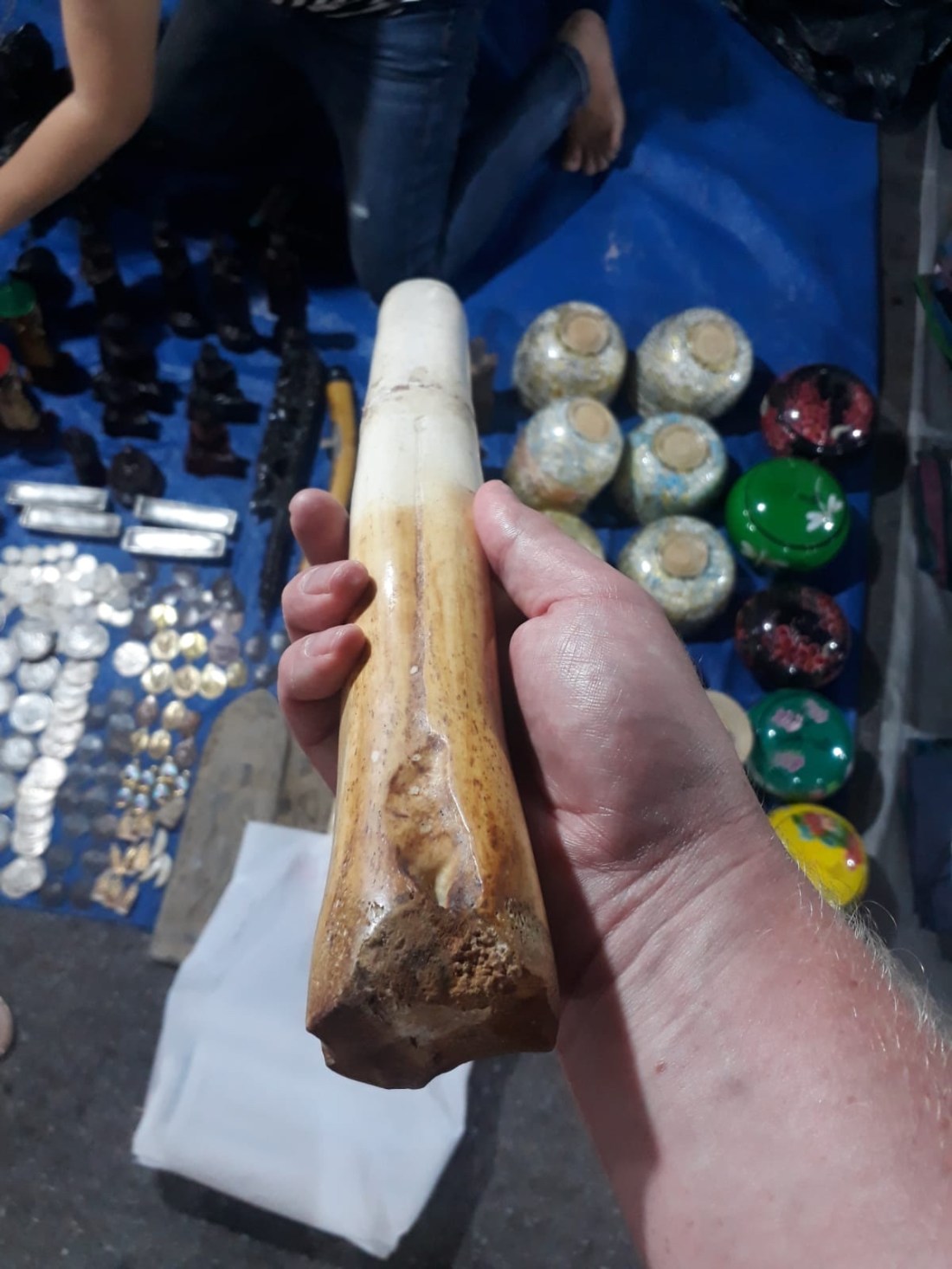
Even to Rach’s eyes it was obvious this was a swindle, but on the bright side this was the only one we really encountered in Laos.
11 April
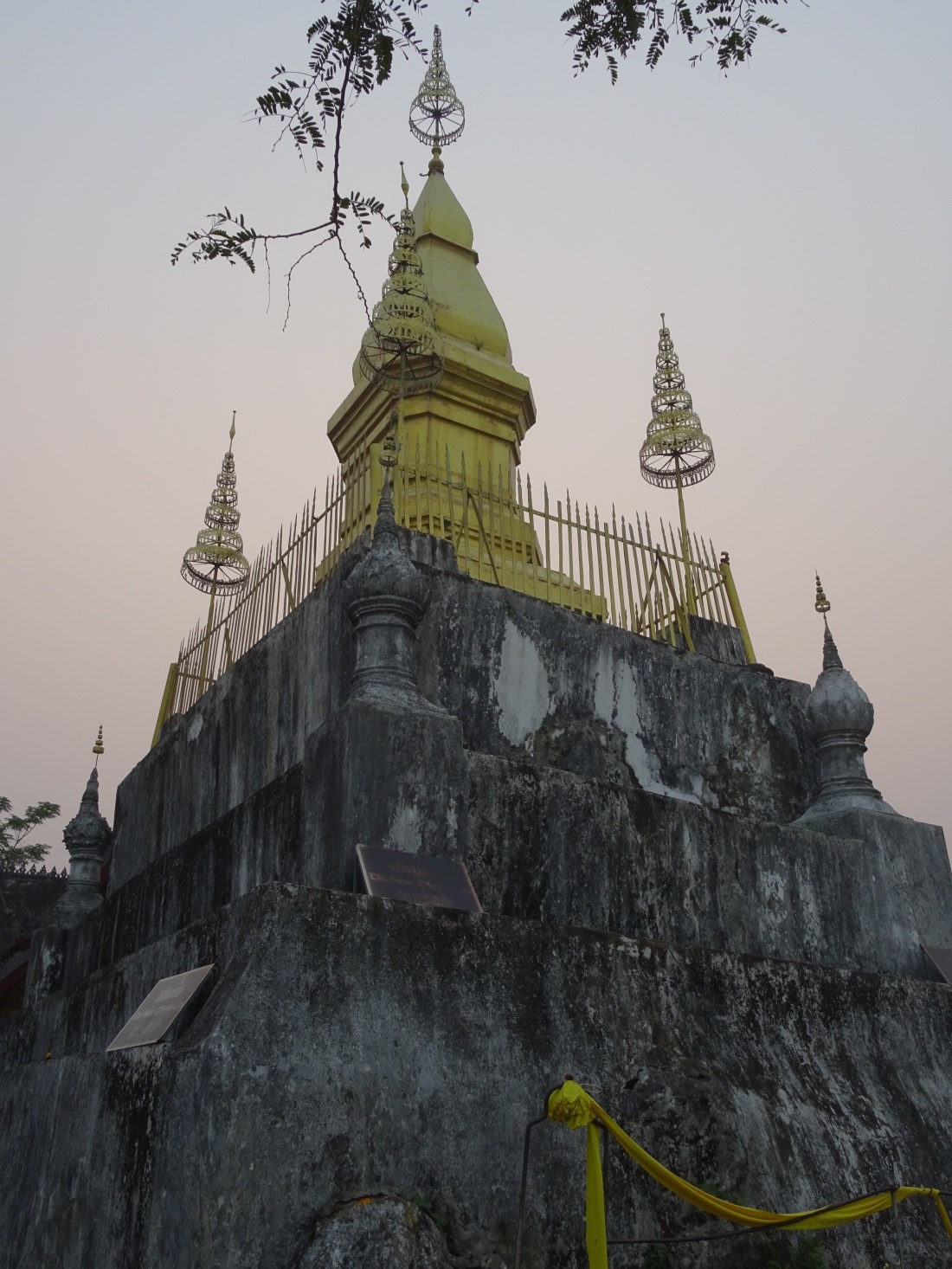
We’d avoided it all week but the best time to go up Mount Phousi is sunrise (sunset too if it weren’t for the ‘speed tourists’ Angkor Wat style – aka loud Chinese). We’d left it to the last day but we weren’t leaving without going! We climbed up the steps on the Nam Khan river side, nearest our hotel, passing buddhas and small altars along the way, until we reached the top.
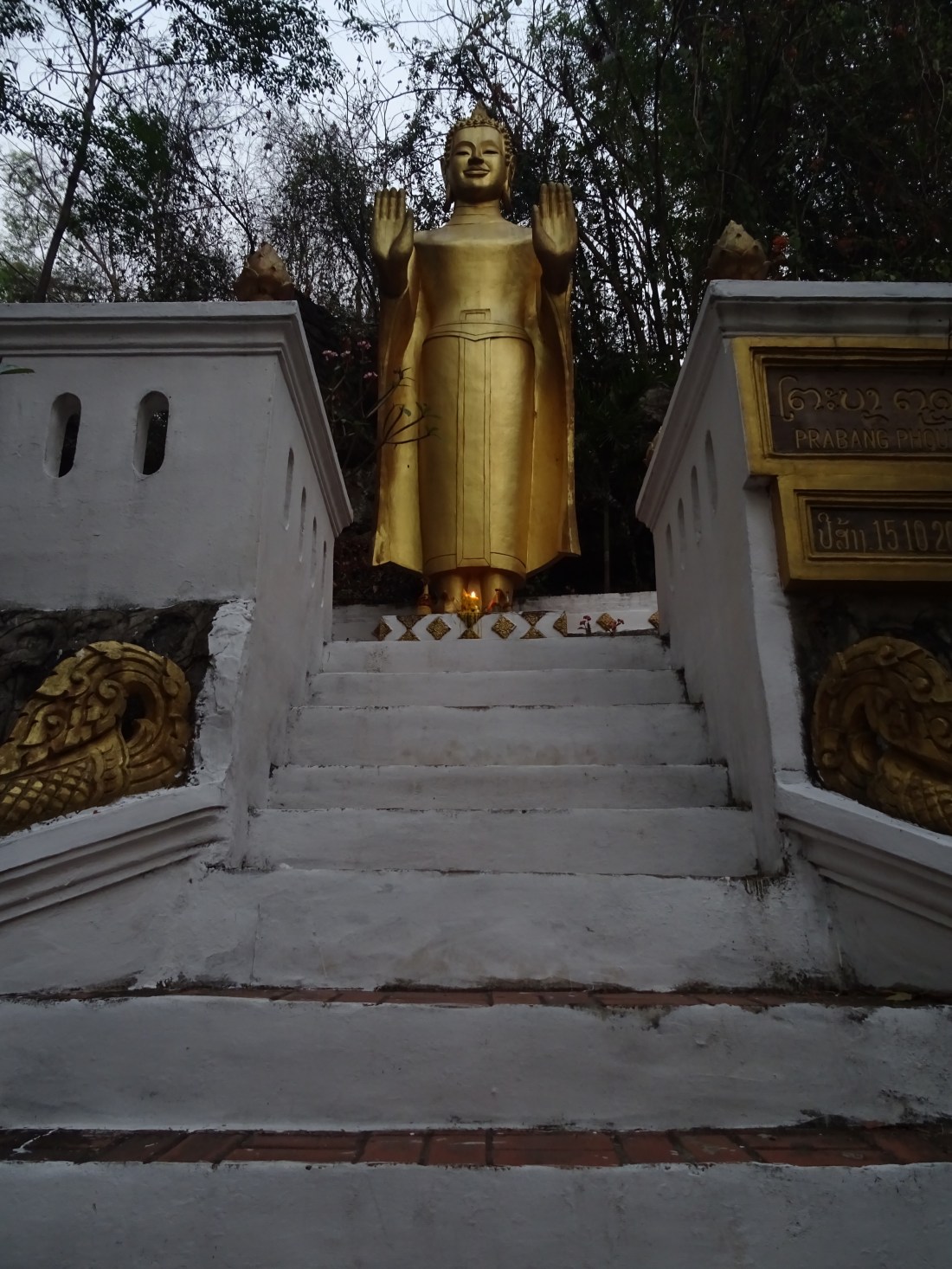
Wait, the sun was up, and it was light enough, yet it was nowhere to be seen! Sadly it was another hazy day in Luang Prabang so not quite the views we were hoping for. Still it was nice to get a birds eye view of the town and sit for a while in the quiet (Chinese tourists aside) of the early morning.
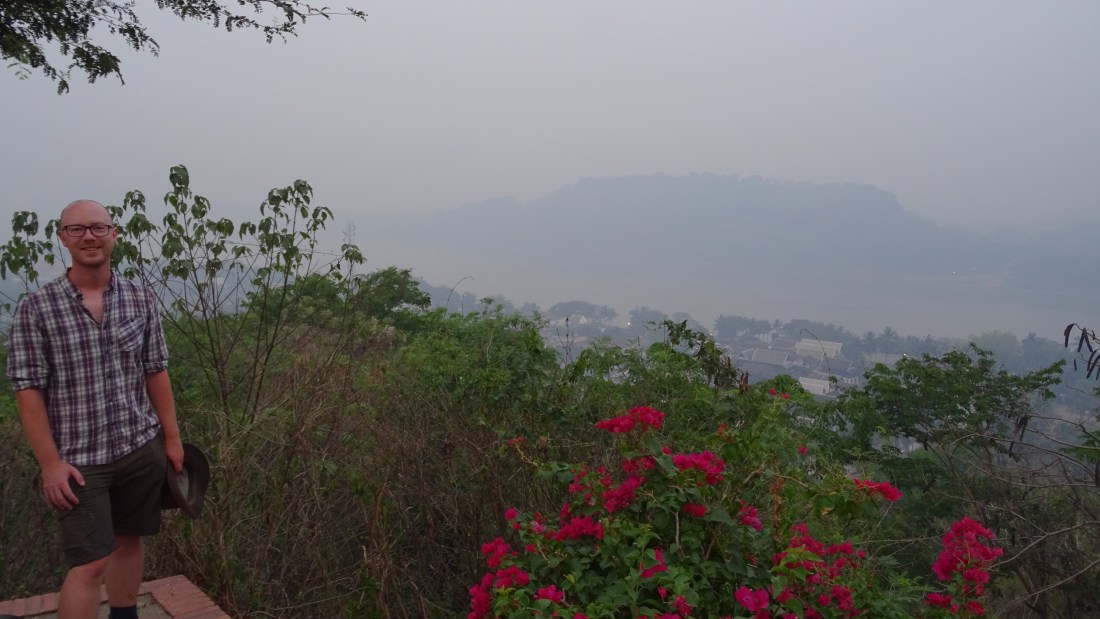
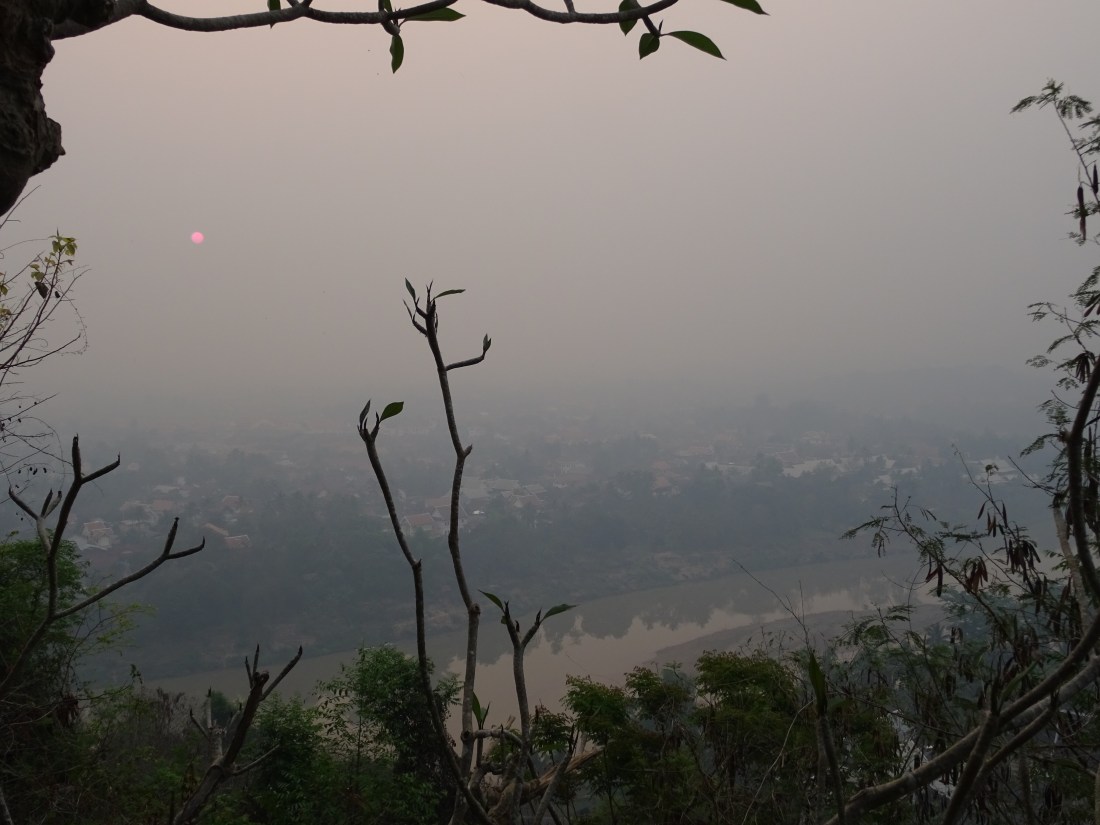
We made our way down the opposite side of the hill and got a great view of the Royal Palace Temple Haw Pha Bang from the steps.
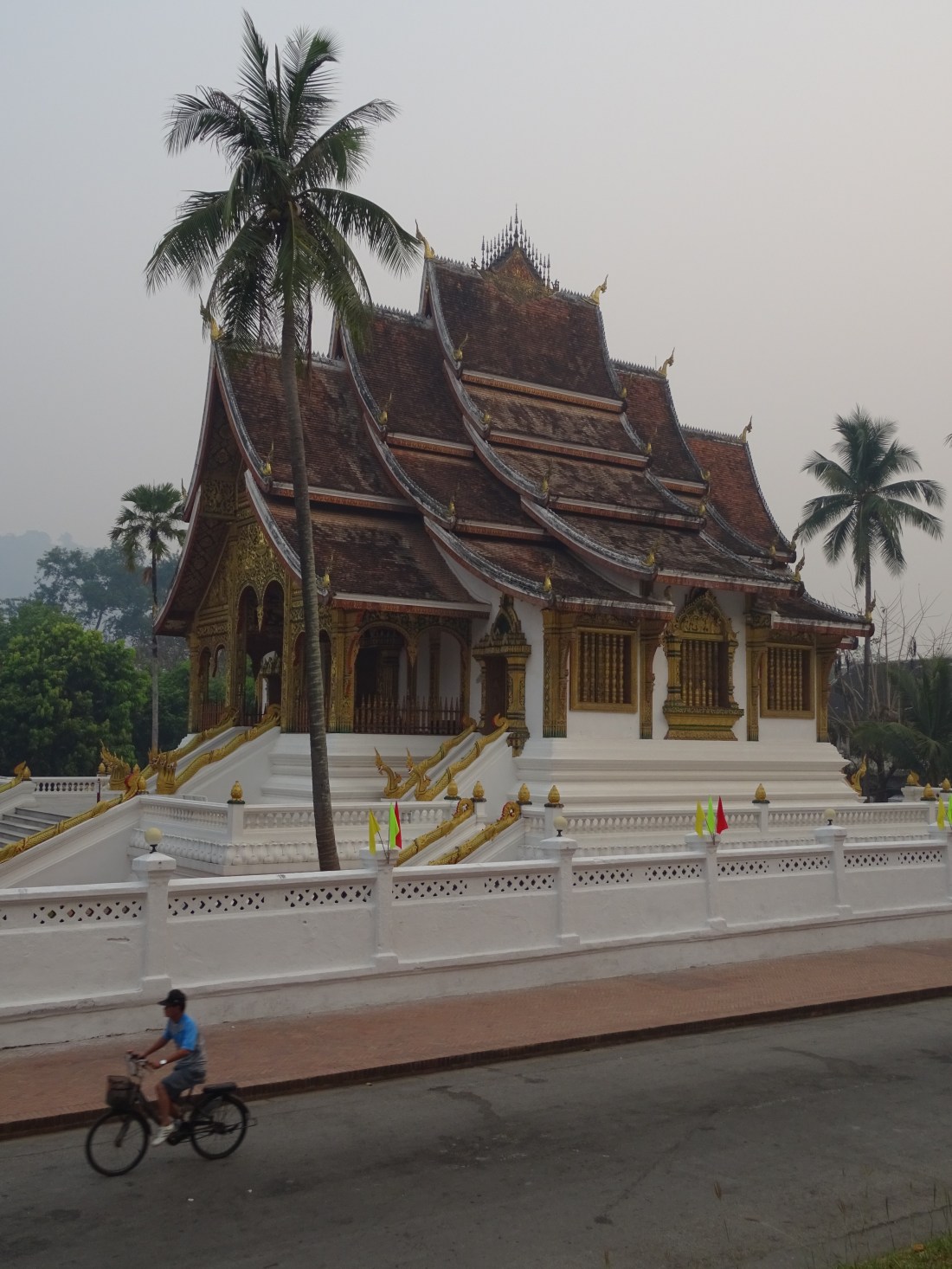
The gate to the palace complex was ajar so we snuck in and took some lovely photos of the temple, which we had all to ourselves.
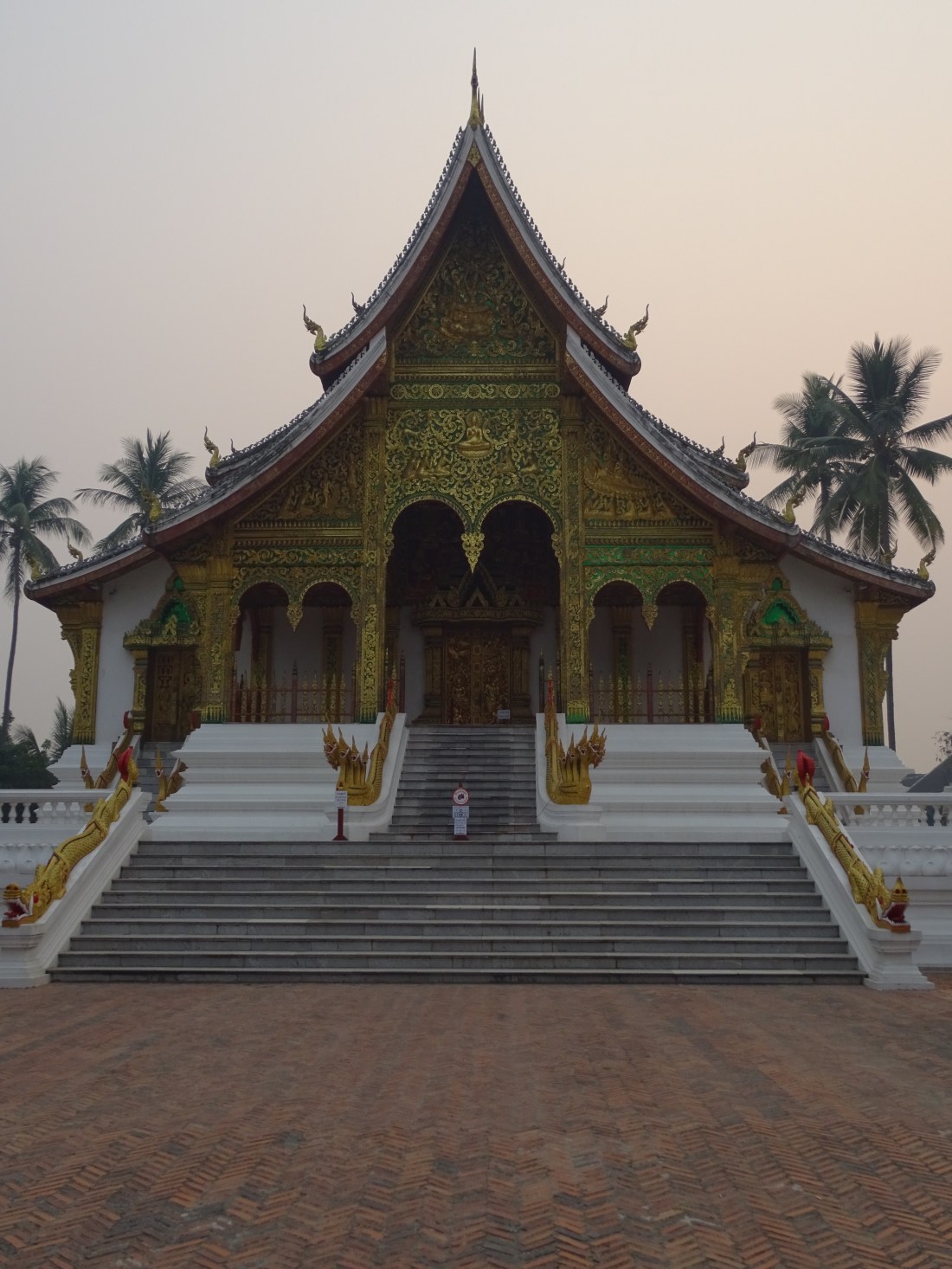
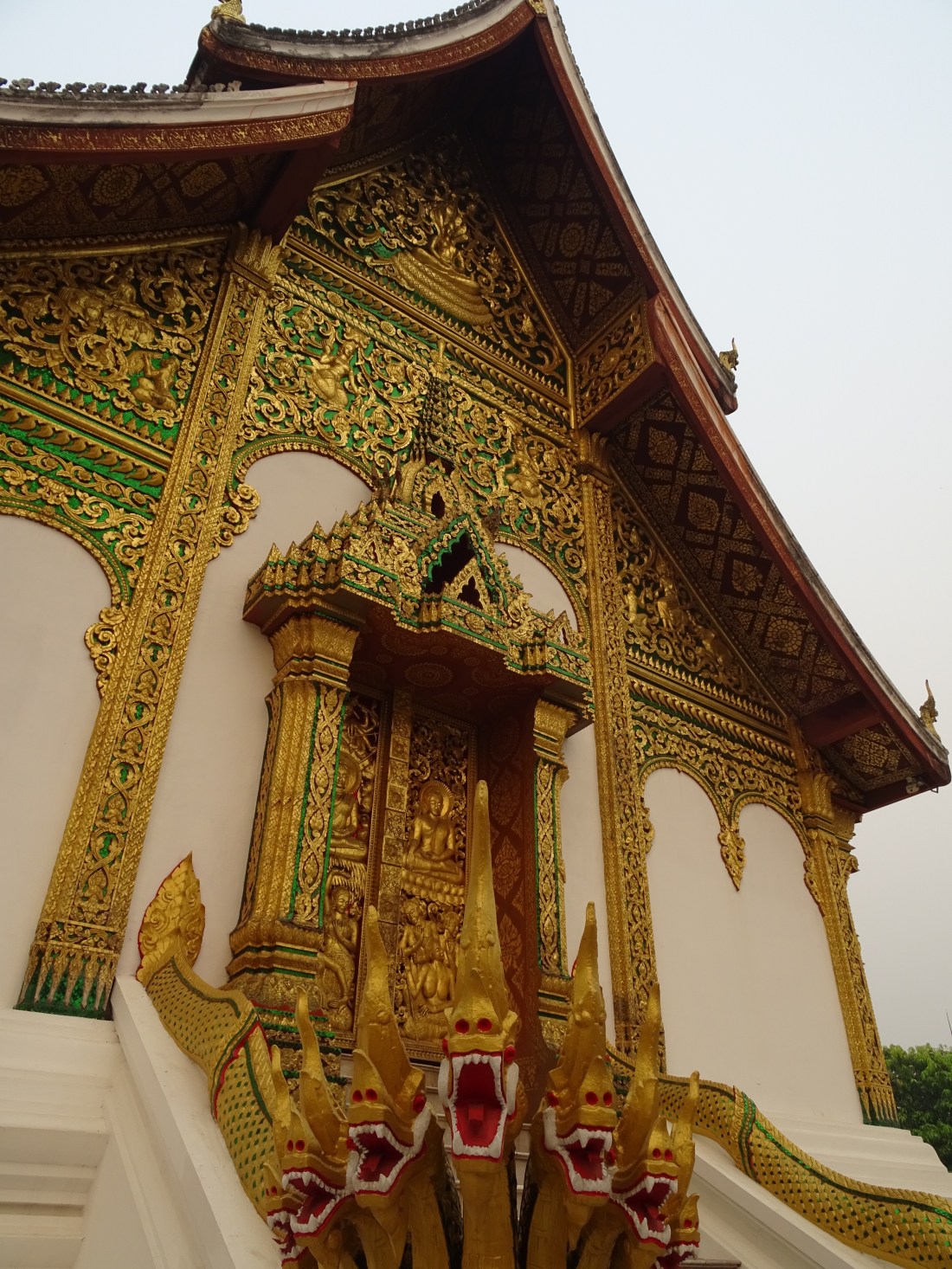
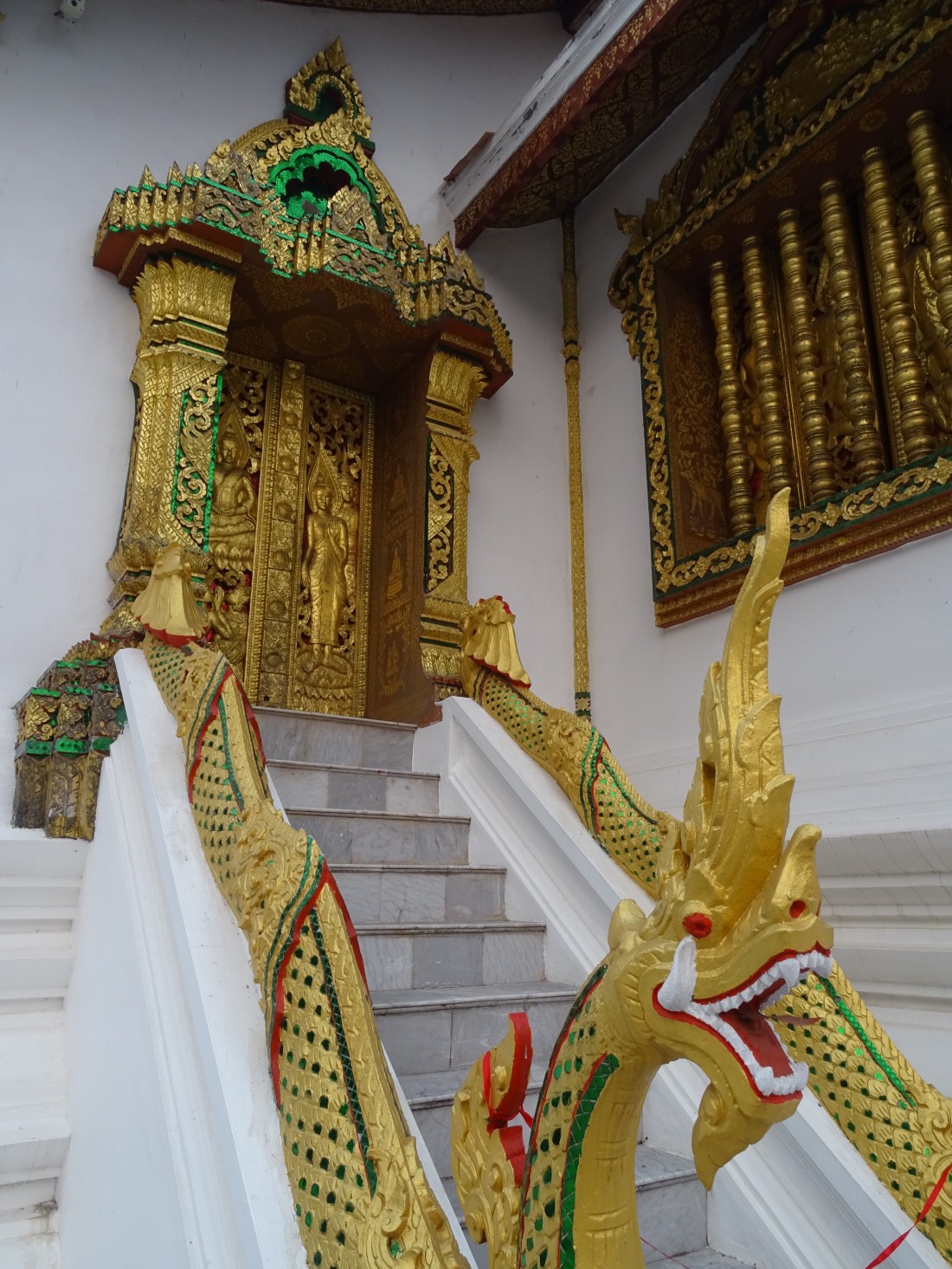
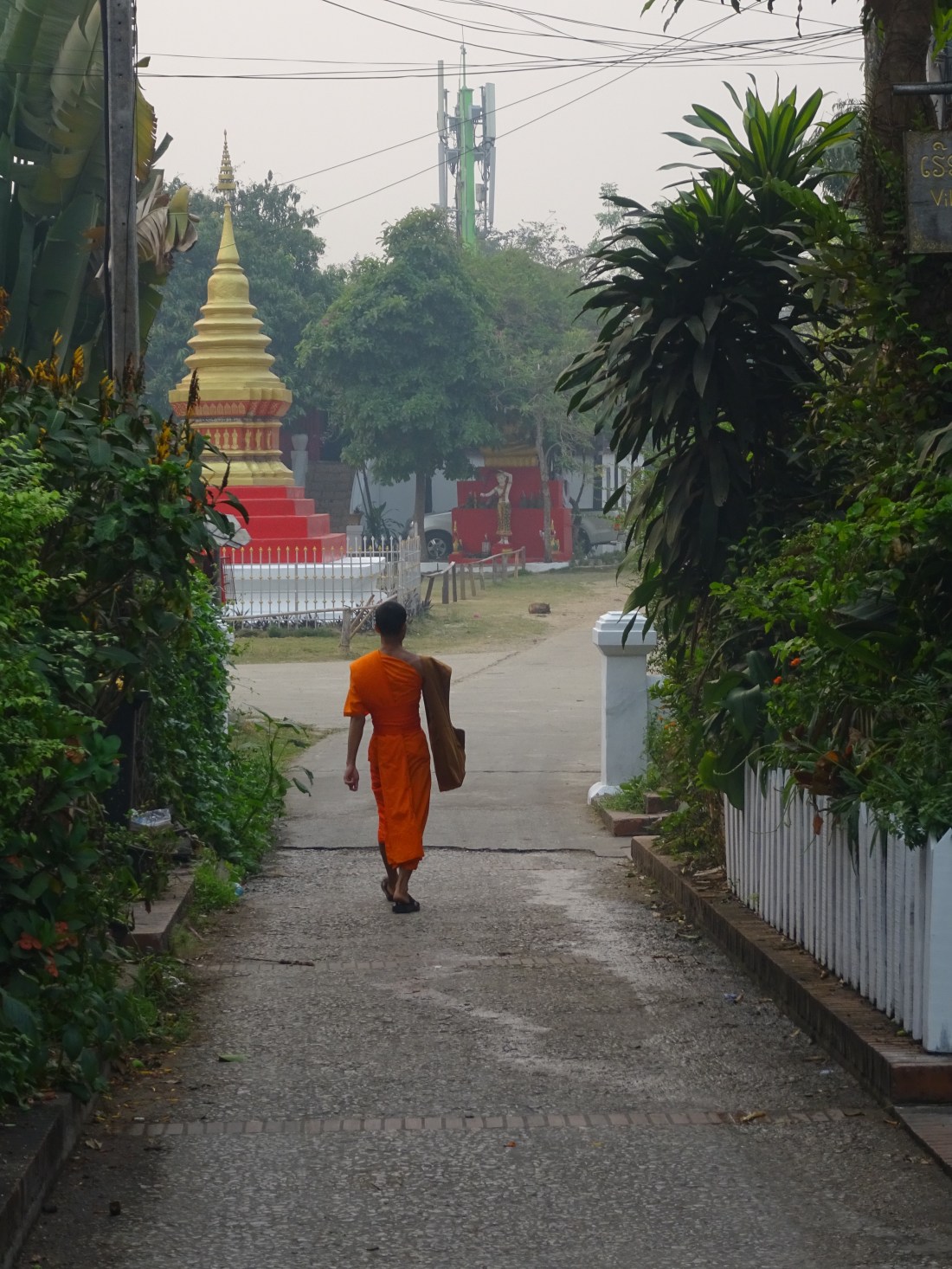
As we left the day was brightening a little and we saw life slowly starting up again for the day (alms ceremonies aside).
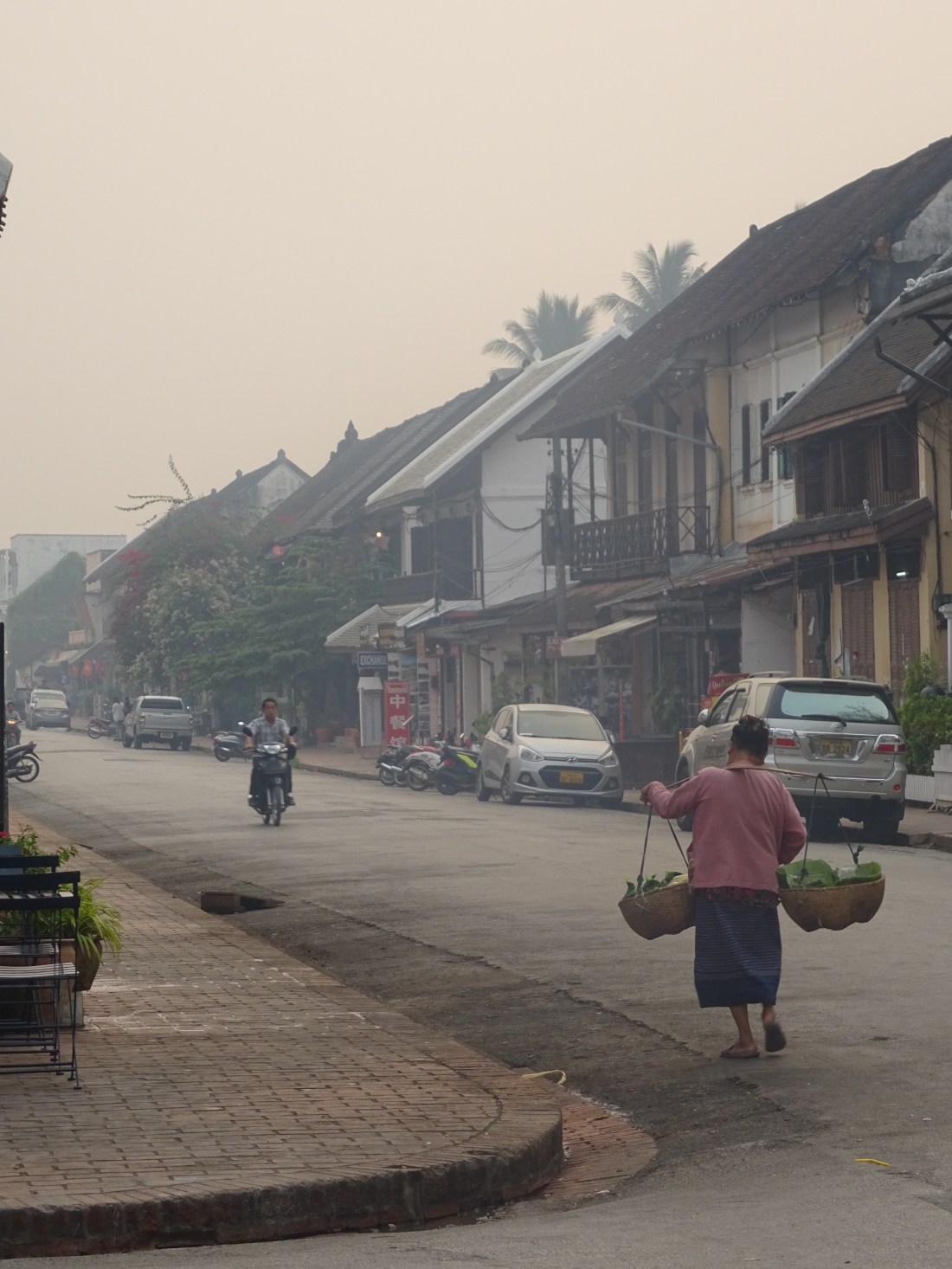
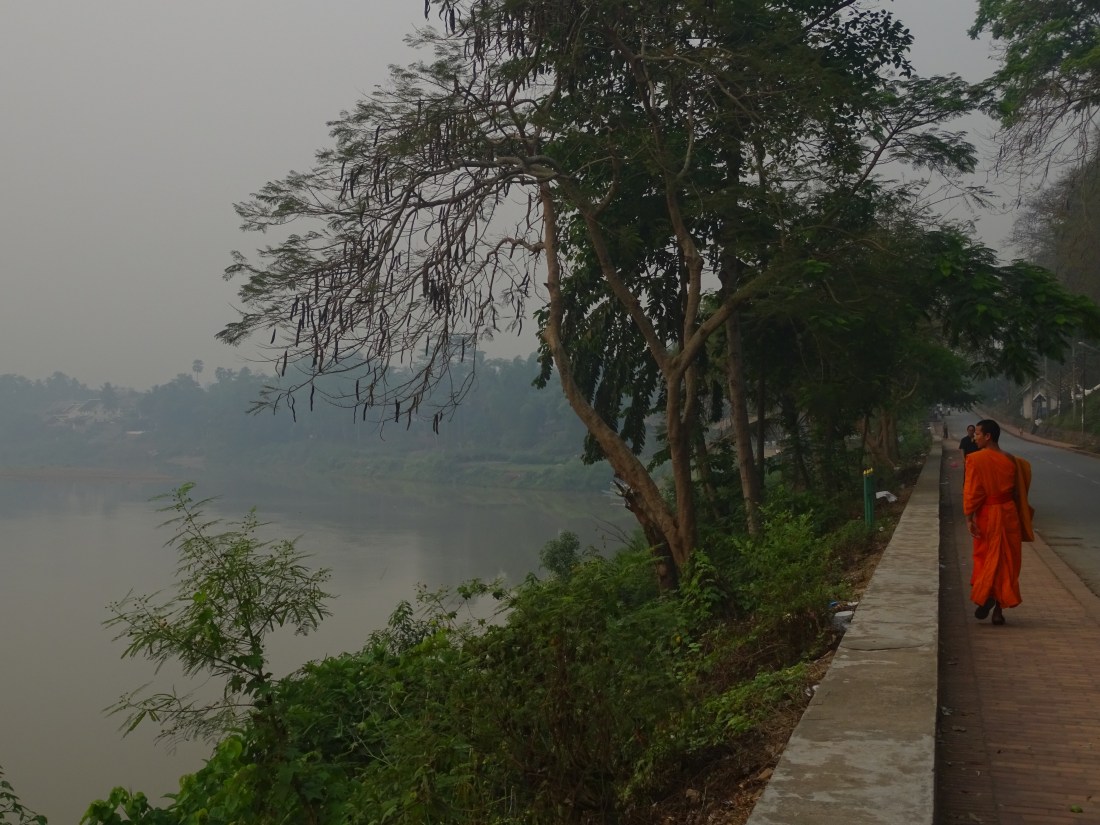
Today was check out day so we were back to the hotel for brekkie and packing. Our plan was to pass most of the afternoon’s heat at Utopia (those fans were a godsend) before we had to leave for the airport, aside from visiting our last, but arguably most importance place on the list, the UXO (unexploded ordinance) visitor centre. We left Utopia around 2pm and spent around an hour at the centre’s small but very eye-opening exhibition about the ‘secret war’ that took place in Laos. If you didn’t know this already, Laos is the most bombed country per capita in the world. Over 2 million tons of ordnance were dropped on Laos between 1964 and 1973 by America in the Vietnam war (or American war, if you’re from Laos or Vietnam), over a total of 580,000 bombing missions – equal to a planeload of bombs every 8 minutes, 24-hours a day, for 9 years. Just re-read that again, if it’s the first time you have heard it. Incomprehensible.
The bombing was a strategy by America to isolate Communist North Vietnamese forces, and is referred to as the ‘secret war’ because of both America’s denial at the time and seeming public indifference. But it was no secret to Laotians, where countless innocents were dying day in day out.
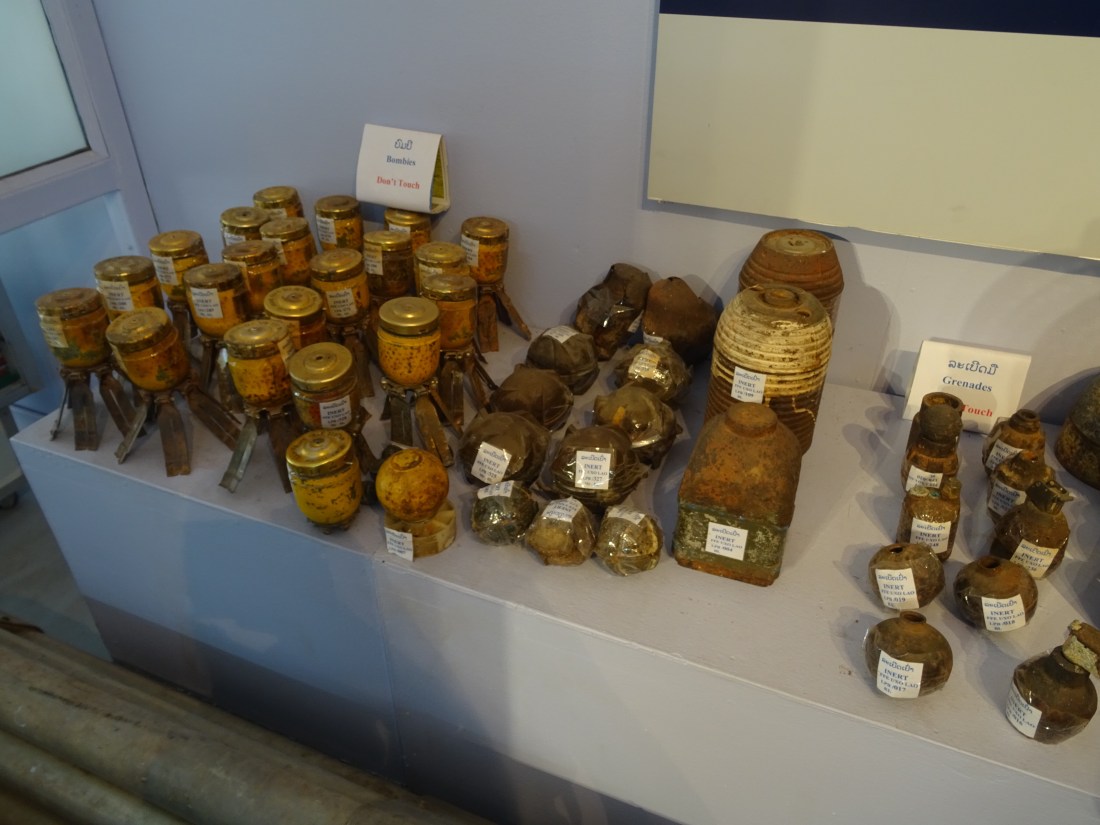
The long term impact on Laos has been immense. Up to a third of the bombs dropped over this 9 year war did not explode, leaving Laos contaminated with approximately 80 million unexploded bombs. Since the bombing ceased over 45 years ago, some 20,000 more people have been killed or injured by UXO in Laos; almost half are children. Aside from loss of life, it has severely affected the economy, poverty and education in Laos, particularly among the poorest who attempt to get by by farming UXO-ridden land.41 out of the 46 poorest districts in Laos still have UXO contamination.
Cluster sub-munitions or ‘Bombies’ (as they are known locally) are the most common form of UXO remaining and the most deadly, as they lie uncovered in fields and villages ready to explode at any moment.
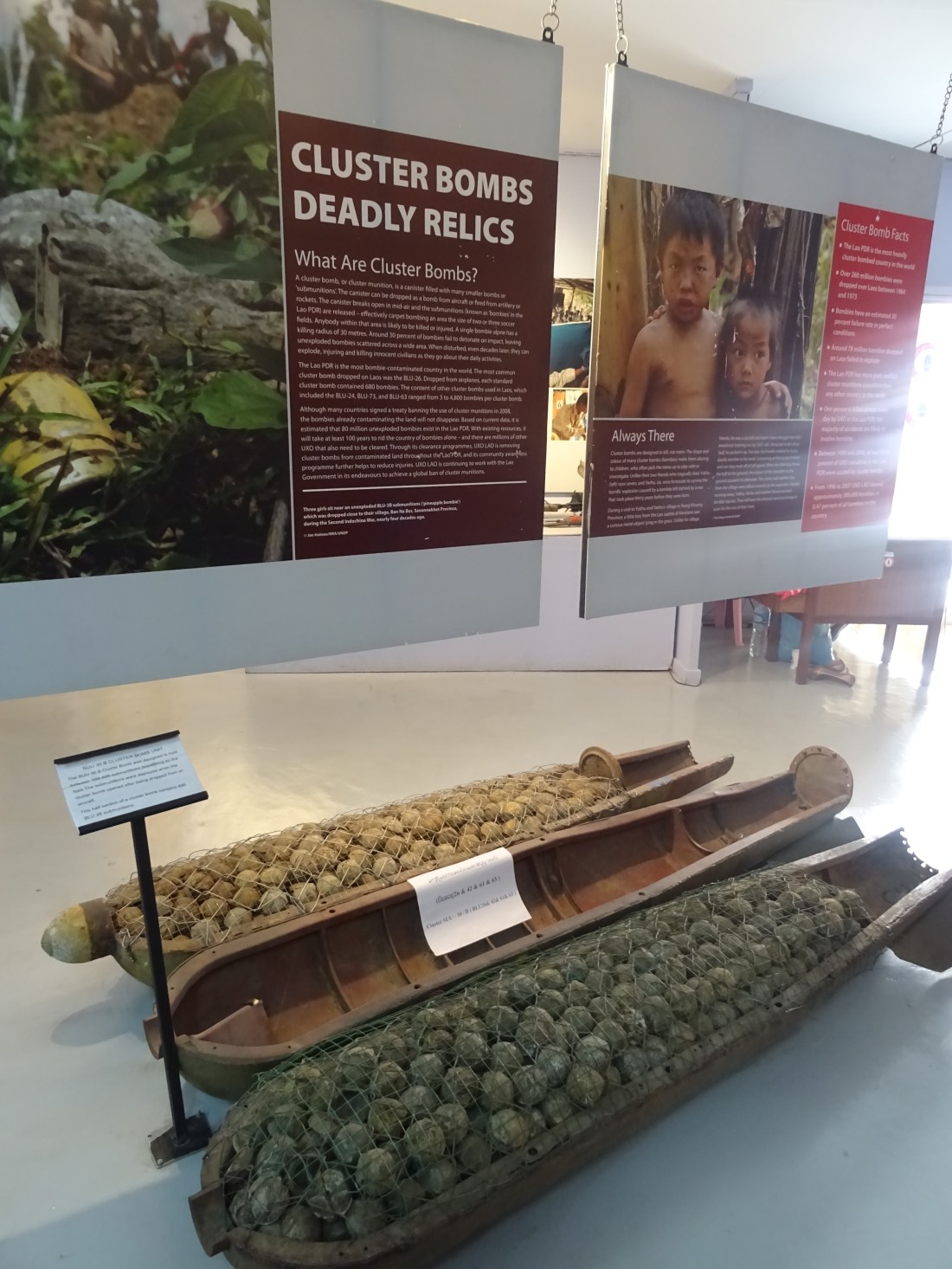
Many children have been killed or injured by accidentally setting them off when they find them, as they look a little like toys. We watched a really harrowing documentary in the visitor centre featuring 3 children and teenagers who have been disabled by explosions, losing parents, siblings or friends who were even more unlucky than they.
Needless to say we were pretty disgusted at the human race. Has the US taken responsibility? Here are the clean up stats – between 1993 and 2016, the U.S. contributed on average $4.9M per year for UXO clearance in Laos. Compare that to the $13.3M spent per DAY (in 2013 dollars) every day for nine years bombing Laos. That means the US has contributed less money in 24 years to saving further loss of life than they spent on 10 days worth of bombing over 9 years. You can read more about what went on in Laos, and a visit President Obama made to the country in 2016 in this BBC news article
UXO Lao works in the nine most heavily UXO contaminated provinces in the country, searching out, disarming and disposing of UXO safely and educating communities on the dangers of UXO including extensive work in schools. They’re doing as much as they can but have only scratched the surface – by 2007 they had only managed to clear around 0.47% of UXO in 10 years. Our humble donation felt meagre at best. For the people of Laos, the war goes on.
Back on the road to the airport we were putting what we’d learned at the visitor centre into the context of our 6 days spent here. Laos has been both serene and sorrowful, enchanting yet holy, carefree yet troubled, but above all utterly captivating. We certainly want to return to explore more of Laos and venture beyond the sleepy, soulful streets of Luang Prabang. We hope we’ll be able to someday. “La Gon” Laos – it was a pleasure to be in your company.
 Around the world in 140 days