
Author: Both
Photos: Rach
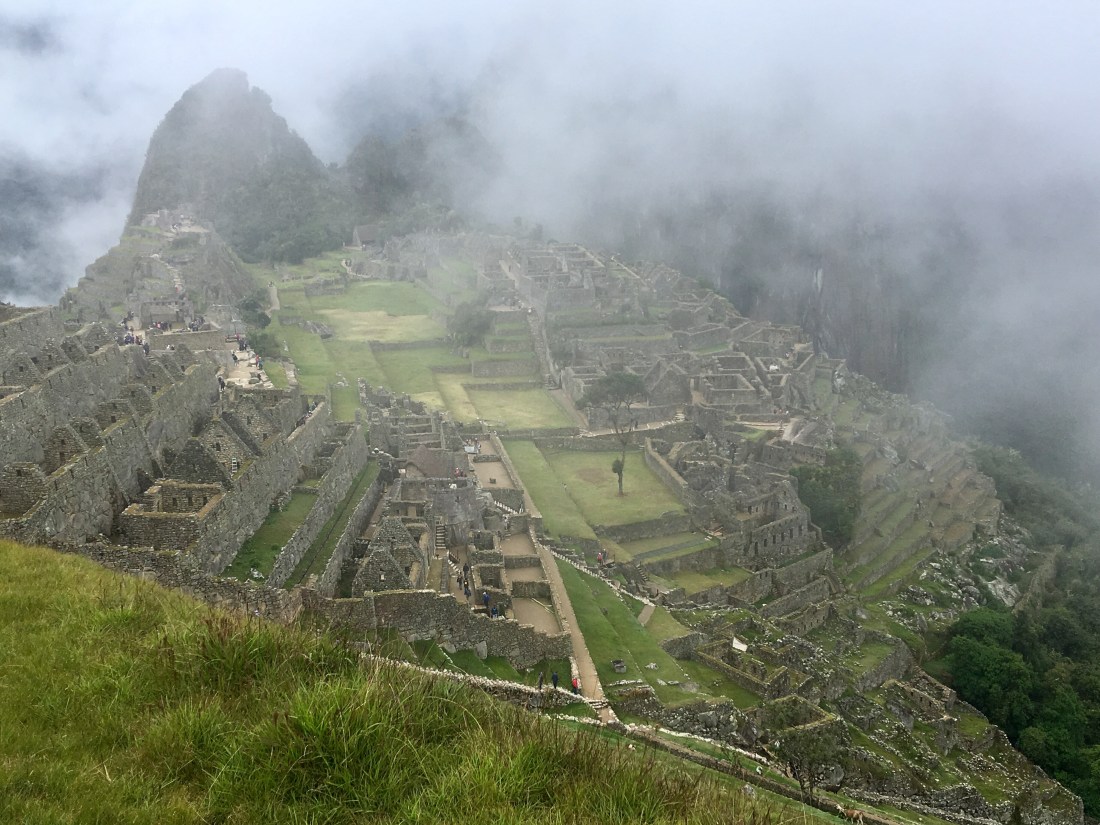
4 days and 44km dragging tired feet through misty mountain ranges and rainforest, traversing countless steps and surviving the oxygen and energy-draining ascent in altitude to 4200m. Machu Picchu has felt like a big tease, hidden away waiting to reward those willing to make the physical and mental effort to get there. But as the mists gradually parted as we descended the final steps of our trek, the effort became most beautifully justified.
Trek day 1
We woke on day 1 of the trek in Ollantaytambo – beautiful little town near the starting point of the trek, ‘km82’.
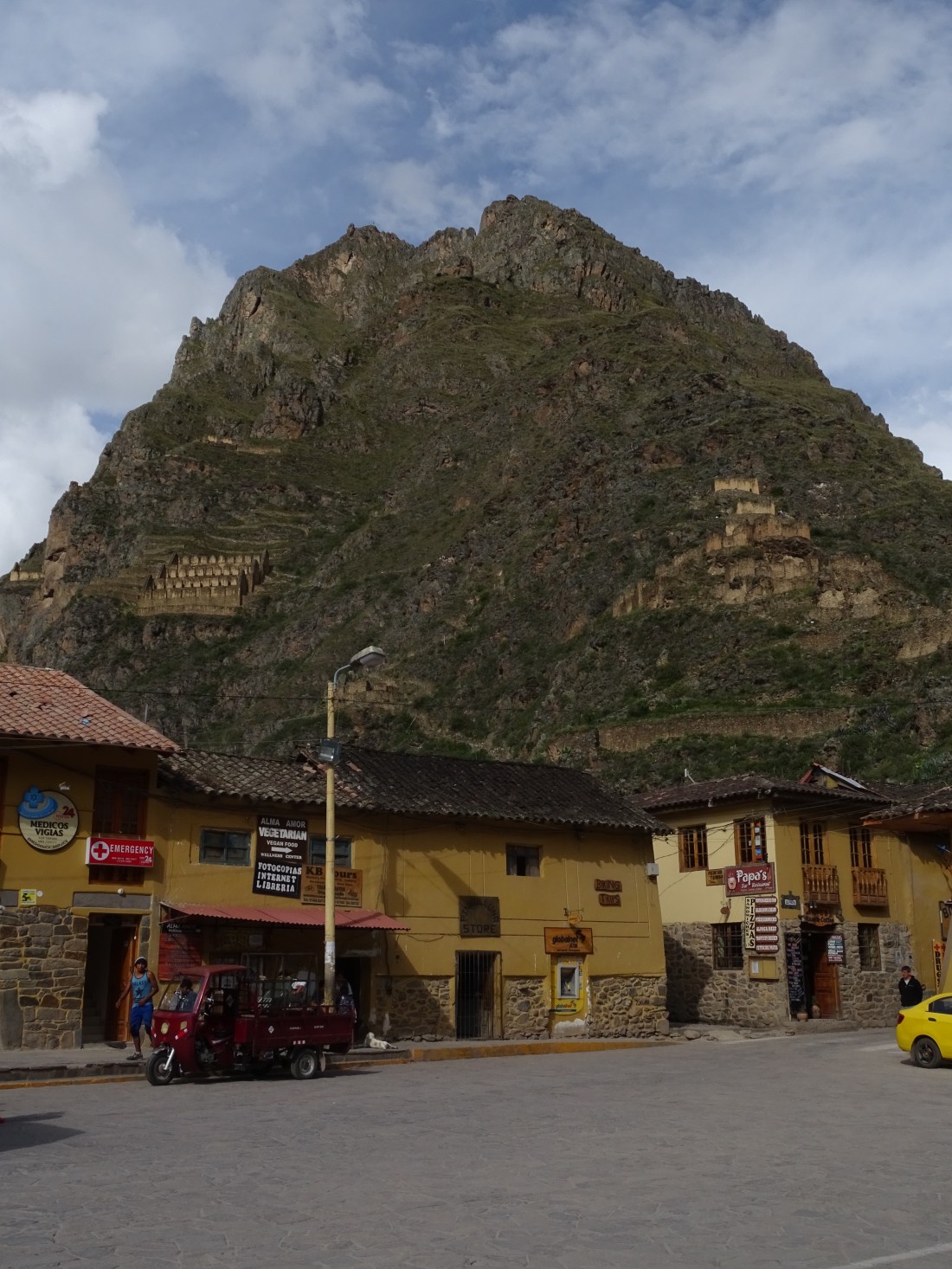 We’d had a trek briefing in Cusco a couple of days earlier in Cusco, so we had left our big backpacks in the hostel and travelled with our provided trek duffle bags, which we had packed as carefully as we could – you are allowed no more than 6kg, which has to include your sleeping bag and sleeping mat – and got our day bags ready with water, camera, snacks, the usual. It was to be a long 3 days of hard trekking, so no place for hair products (no hot showers) or too many changes of clothes! We left the hotel early and took a 30 min bus ride to the starting point where we first understood the necessity for a 6kg limit. Our group of 18 people were suddenly joined by a hoard of 26 porters. These men would carry 25kg EACH on their backs the entire way. Everything we needed would be carried by them – beside our bags this included tents, kitchen equipment and food. Many of these guys were much older and much shorter than you’d imagine would be best for carrying such a mammoth weight on their back, but these guys would soon put us all to shame.
After entering the trek at the first check point and a quick photo at the start of the trail, we were off!
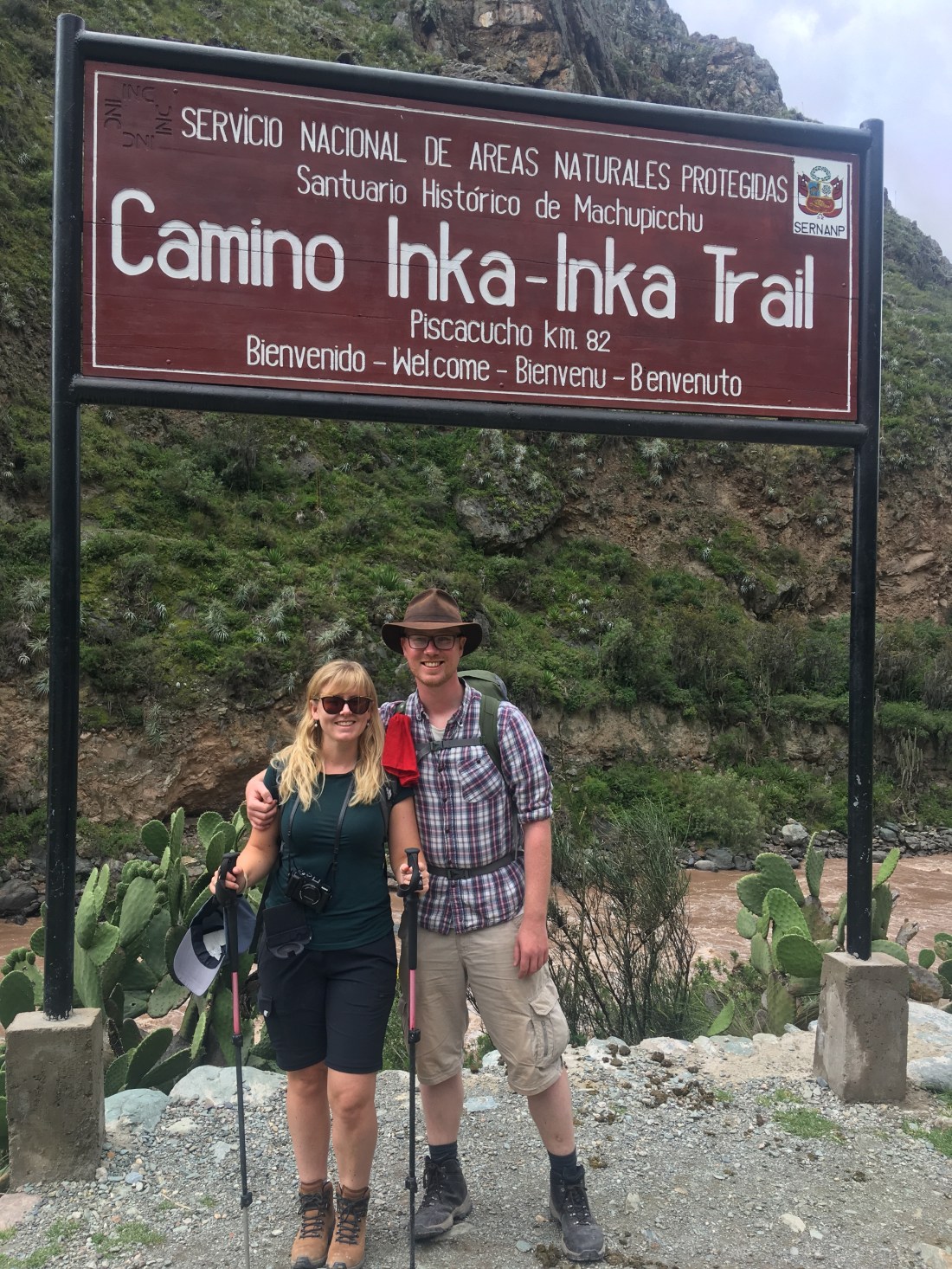
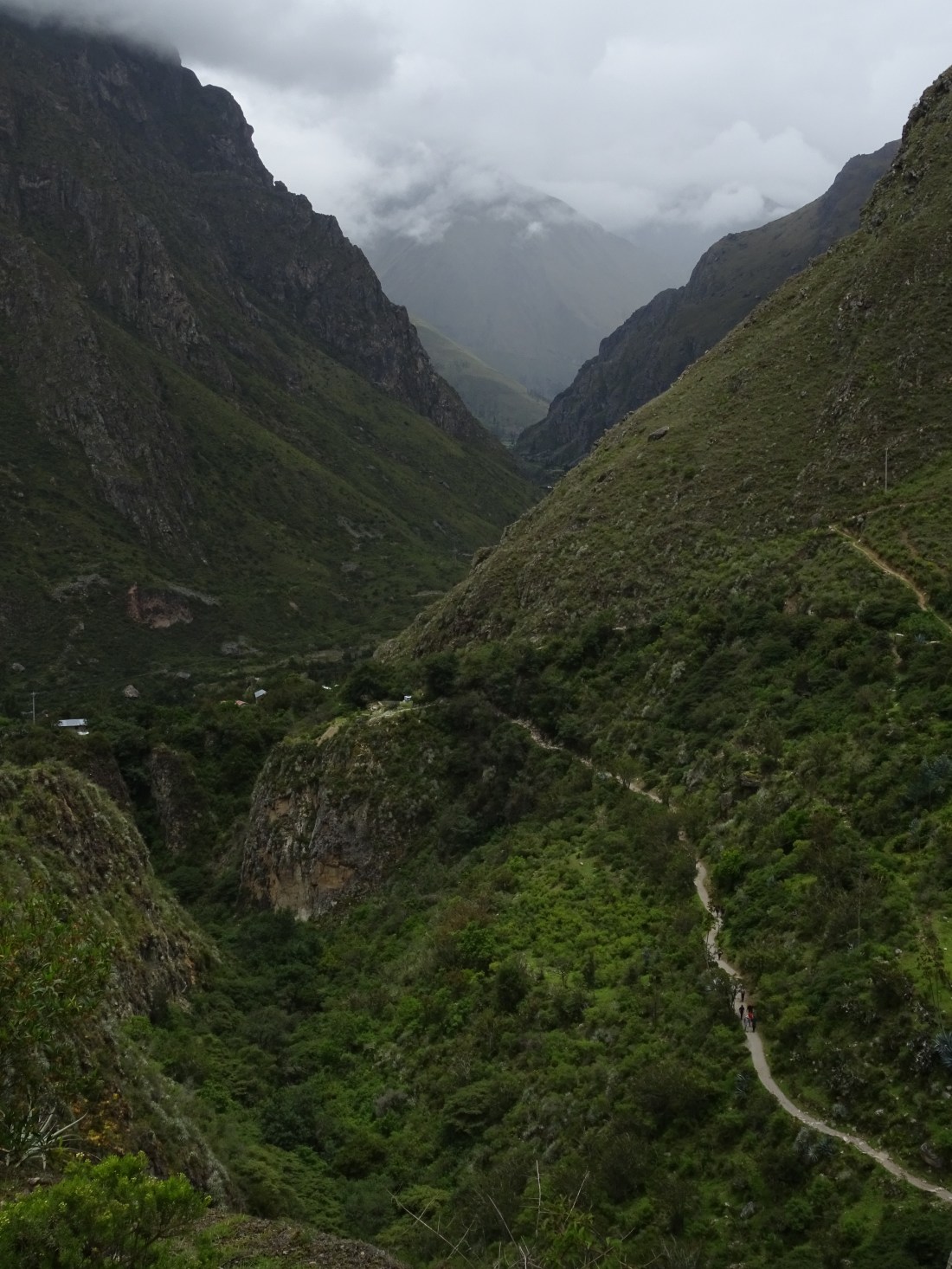 Our head guide was ‘Charlie Brown’ supported by assistant guide Março, who top and tailed the group as they led us through day 1, the easiest day – an altitude gain of 350m over 11km to our campsite at Wayllabamba at 3100m above sea level, lower than Cusco city!
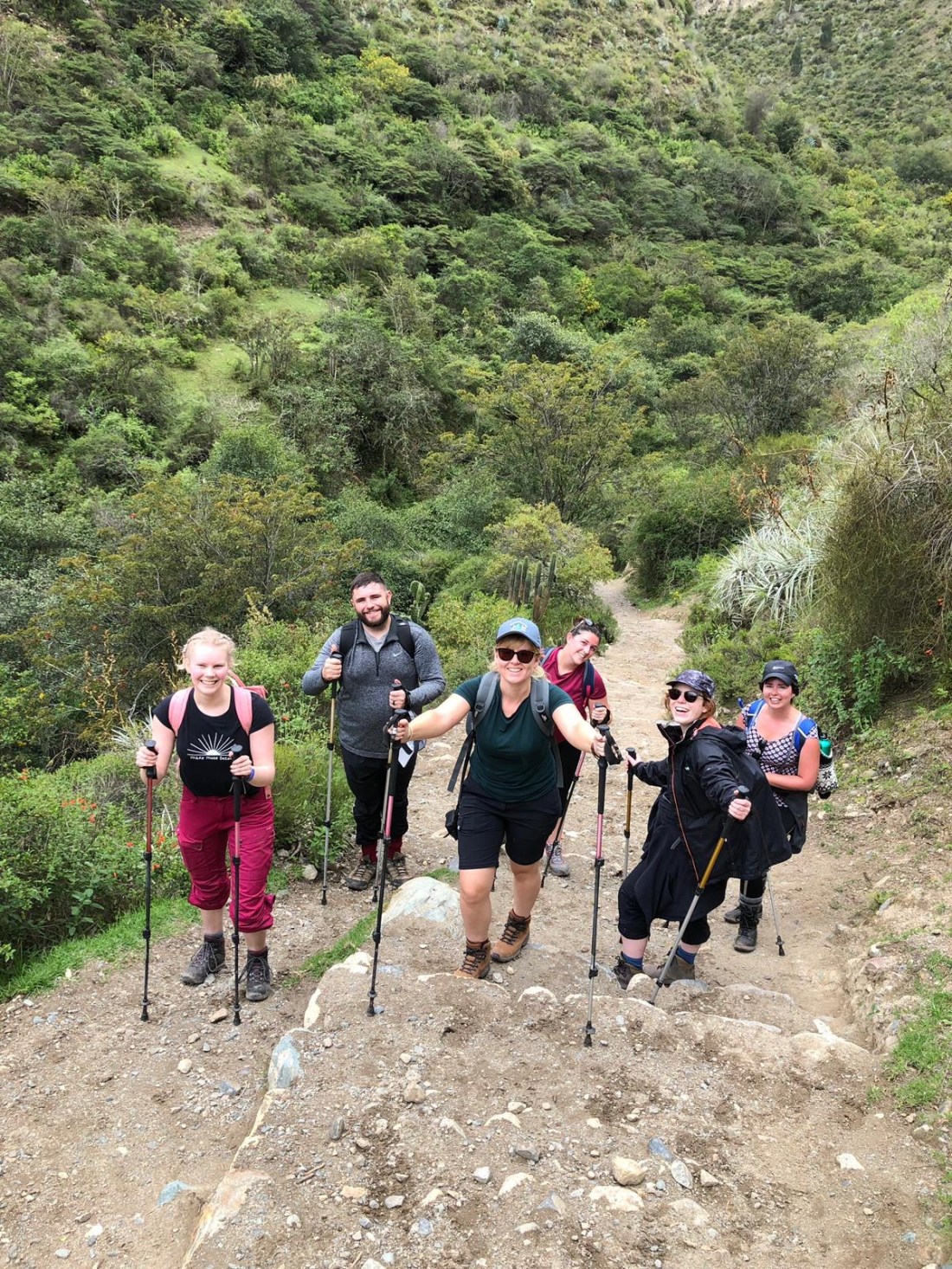
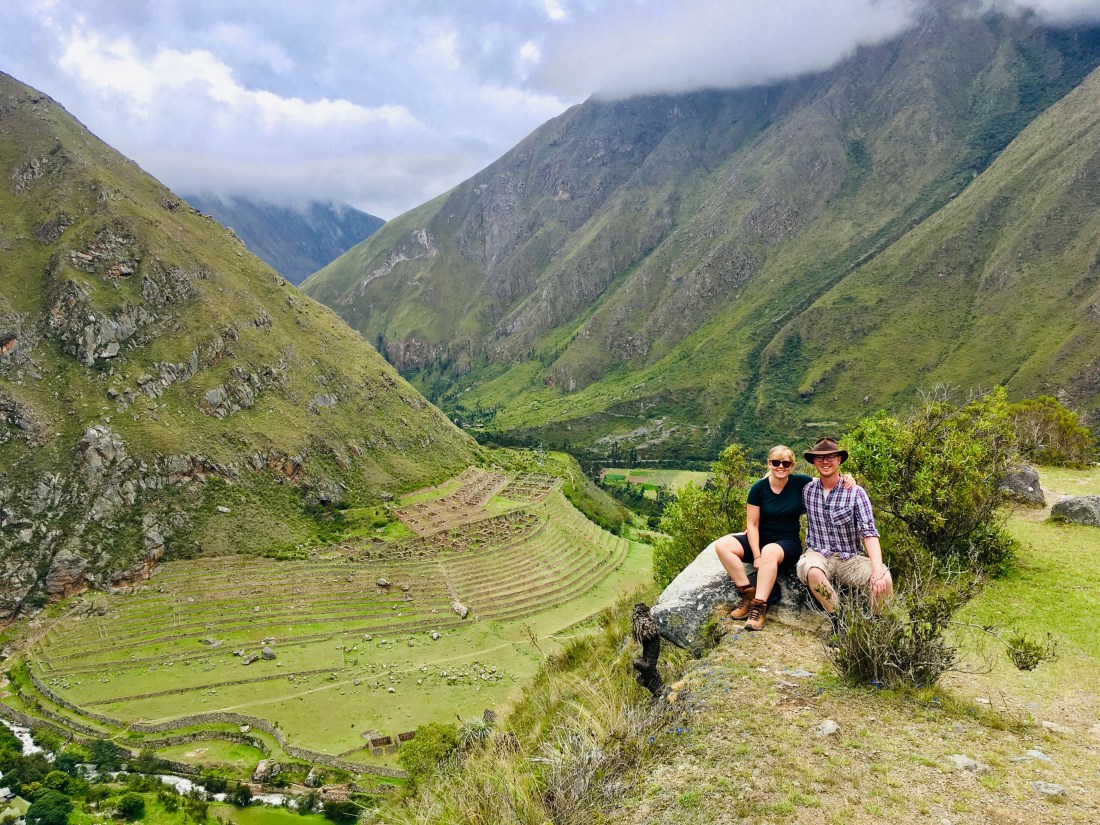
We encountered our first few Inca sites on day one, and learned about the American academic and explorer Hiram Bingham and his discovery of the trail a few years after discovering Machu Picchu itself, in 1915. The first site was a sort of check point for those wishing to trade on the journey to Machu Picchu and the second was a farming community where people lived and worshipped the gods. The farming terraces were still clearly visible and the site was outlined in the shape of a snake, mimicking the river, which was a sacred animal to the Incas, representing wisdom.
Trek day 2
Day 2 had a challenging elevation gain of 1115m taking us to around 4215m above sea level. This was a 12km walk but MY-OH-MY was it tough. It was a relentless heave uphill through jungle-like woods and then open slopes and stairs with the misty mountain tops alongside us.
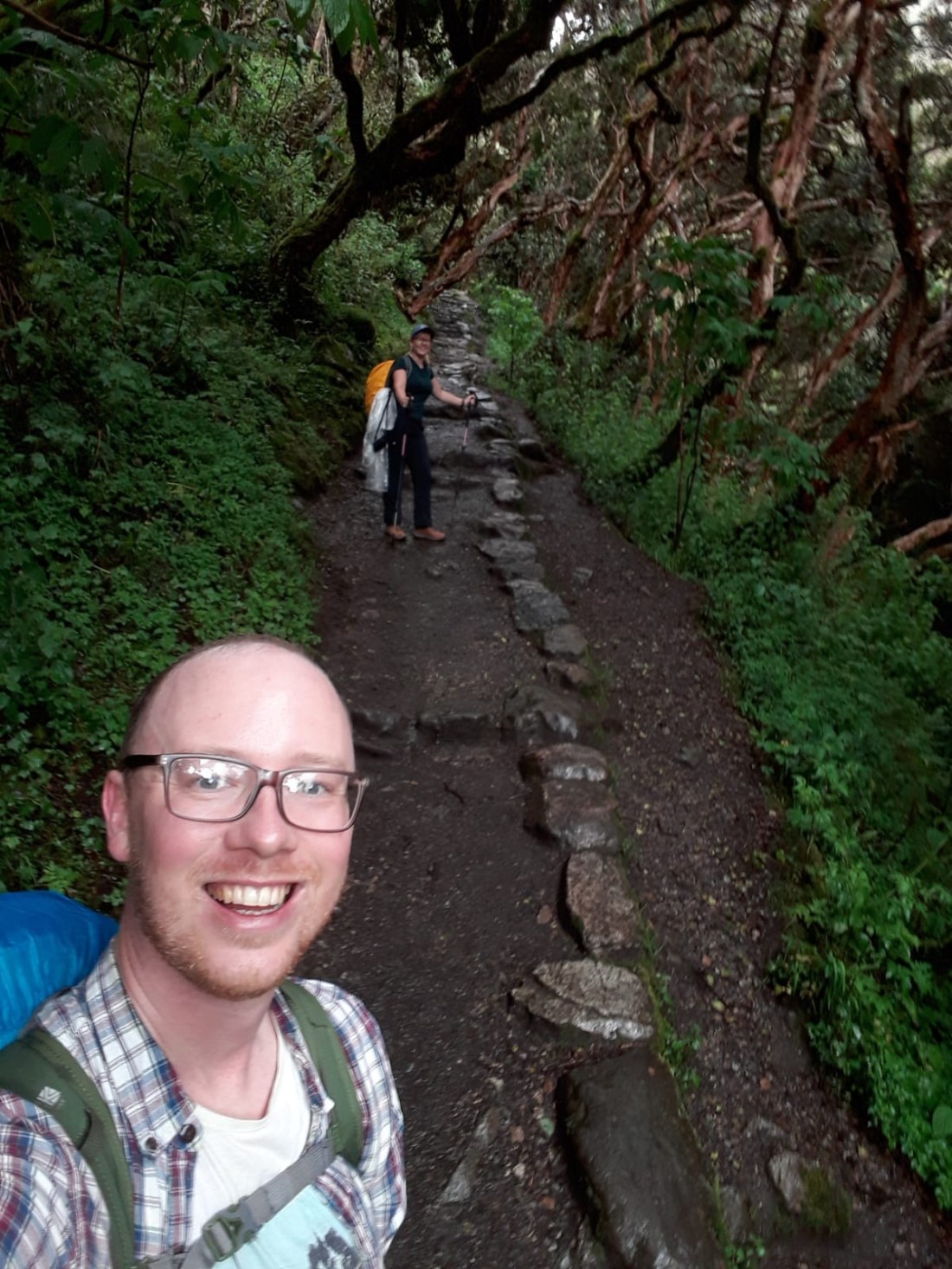
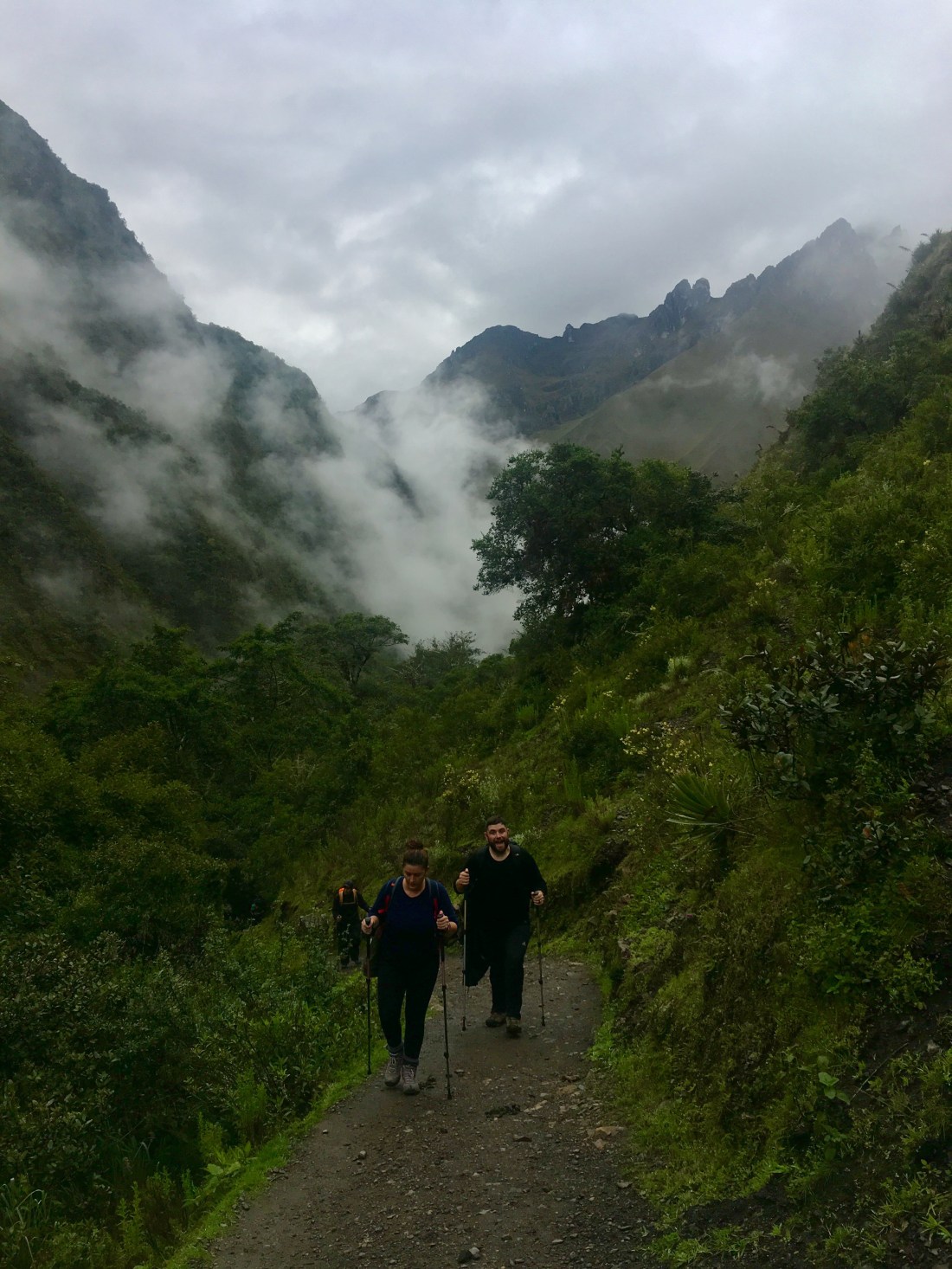
We became increasingly challenged by the lack of oxygen as the altitude increased to 4200m and then over Dead Woman’s Pass (the theory goes it was named either after the shape of the landscape between the two mountain tops, which does look like a woman’s face, or because of the mummified women Hiram Bingham found there when he first discovered the trek).
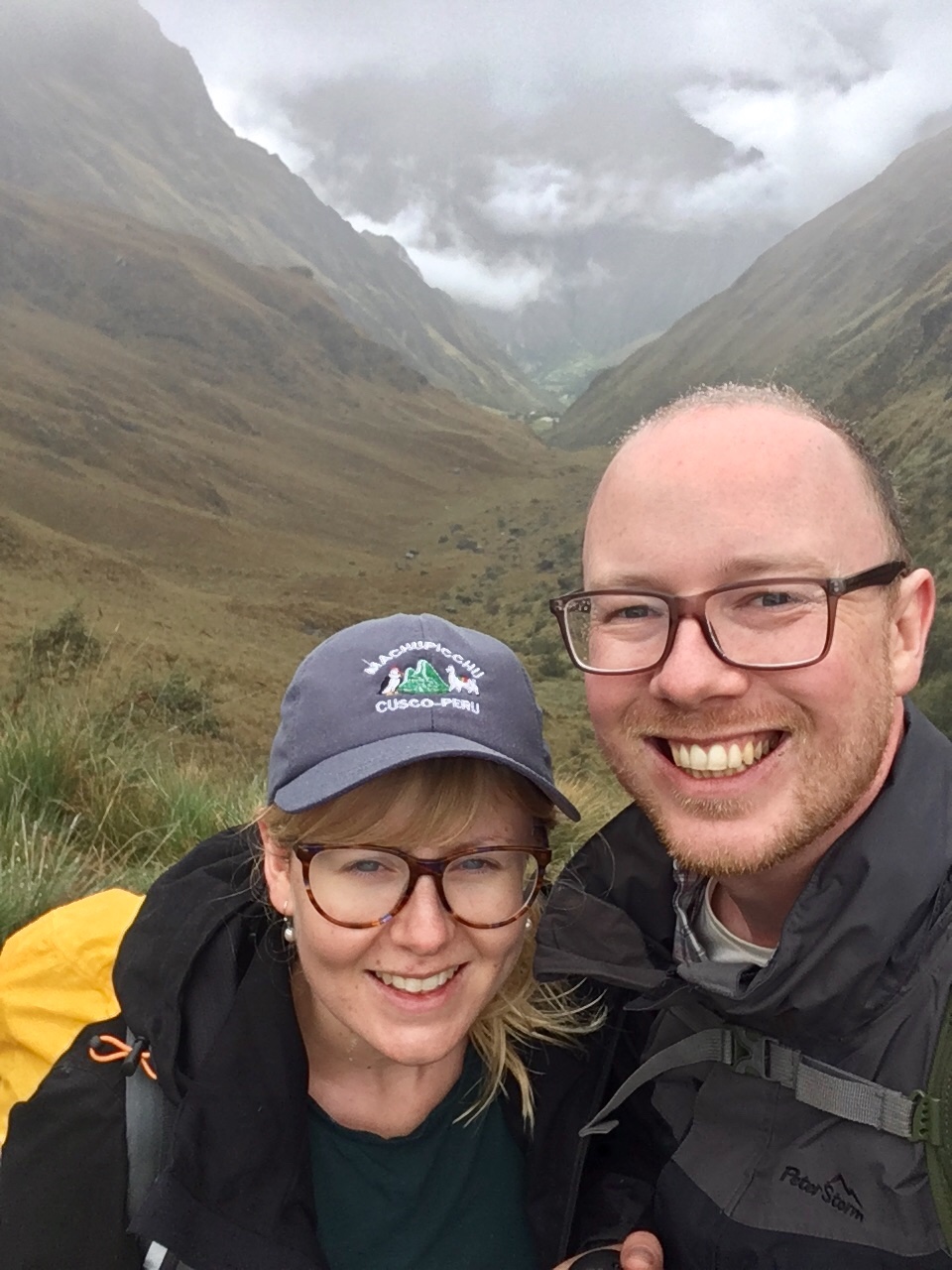
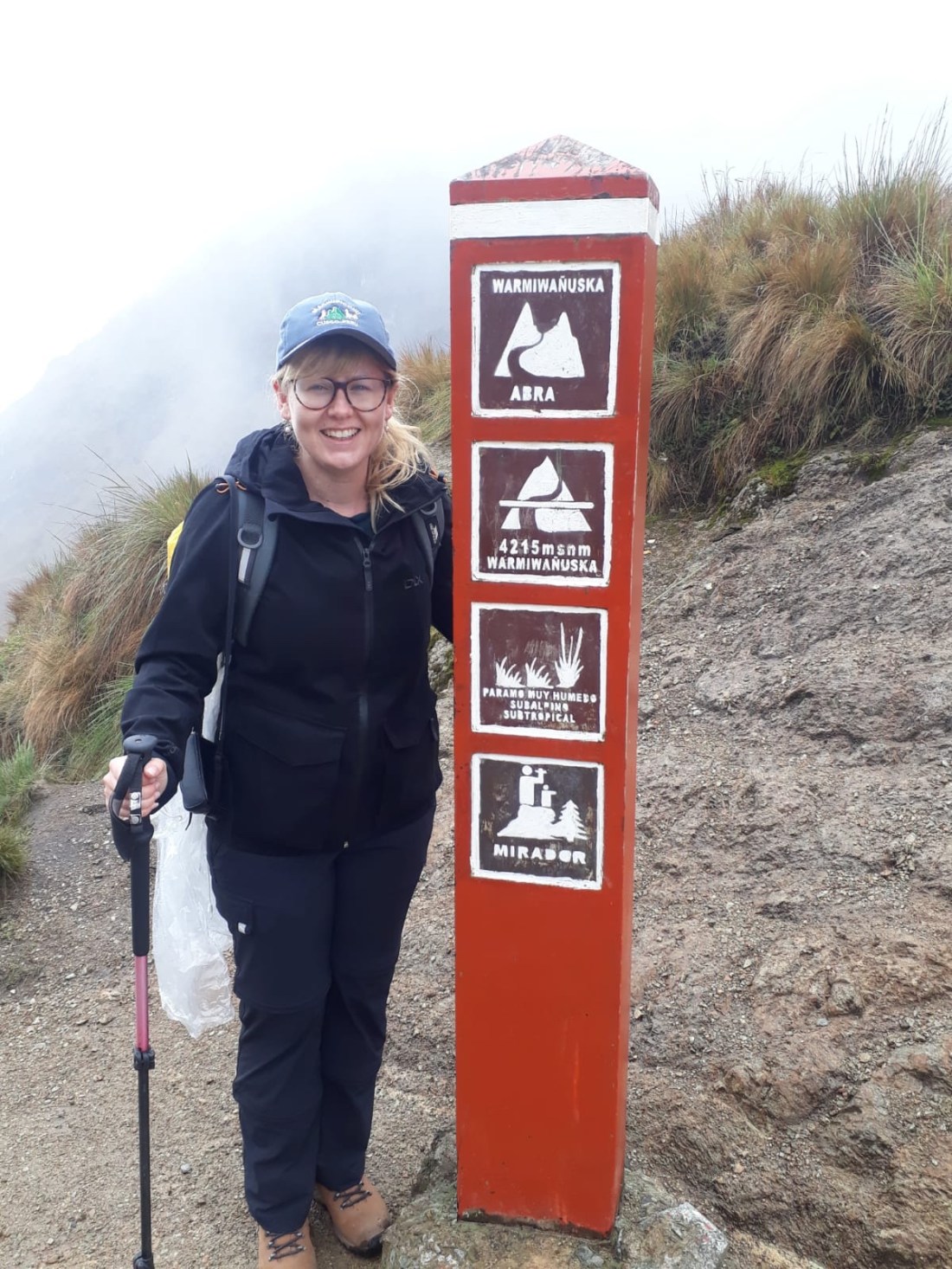
As we dragged ourselves over the summit the cold rain blew harshly at us as we began what felt like the longest descent ever – several hours sharply down steep rock-formed stairways, punishing on the knees! We finally stumbled into camp at Paq’aymayu 7hrs after starting out, around 2pm (average time) but totally exhausted and very wet through. I almost thought I wouldn’t make it! This is when we discovered some of our group (the two Norwegian girls who are used to mountain running) had proudly reached camp by 11.30am, much to the surprise of the porters – this was extremely fast! Alike the porters they had run down the descent. We had been marvelling at the porters all day, their huge packs saddled onto their backs yet niftly flying past us on the ascent. They were nowhere to be seen by the time we reached the downhill section! Luckily for us a nice bowl of hot soup was waiting for us, as we attempted to hang our clothes to dry a little (my poncho hadn’t totally kept the rain off!) and we had a hearty lunch, before resting in the tent before dinner. It was there that we discovered that Charlie Brown had taken ill (an infection) and the decision was taken the next morning that he would have to be evacuated. Sadly for him there’s no such thing as a real ‘evacuation’ on Machu Picchu – no helicopters or stretchers – you either walk back the way you came or the poor porters have to carry you.
Trek day 3
And so on day 3 we met our new head guide Joseph, who immediately was renamed Johnny due to his uncanny resemblance to the Irish rugby player Johnny Sexton!! Check him out here posing with a photo of Johnny Sexton on Shane’s phone after the trek!
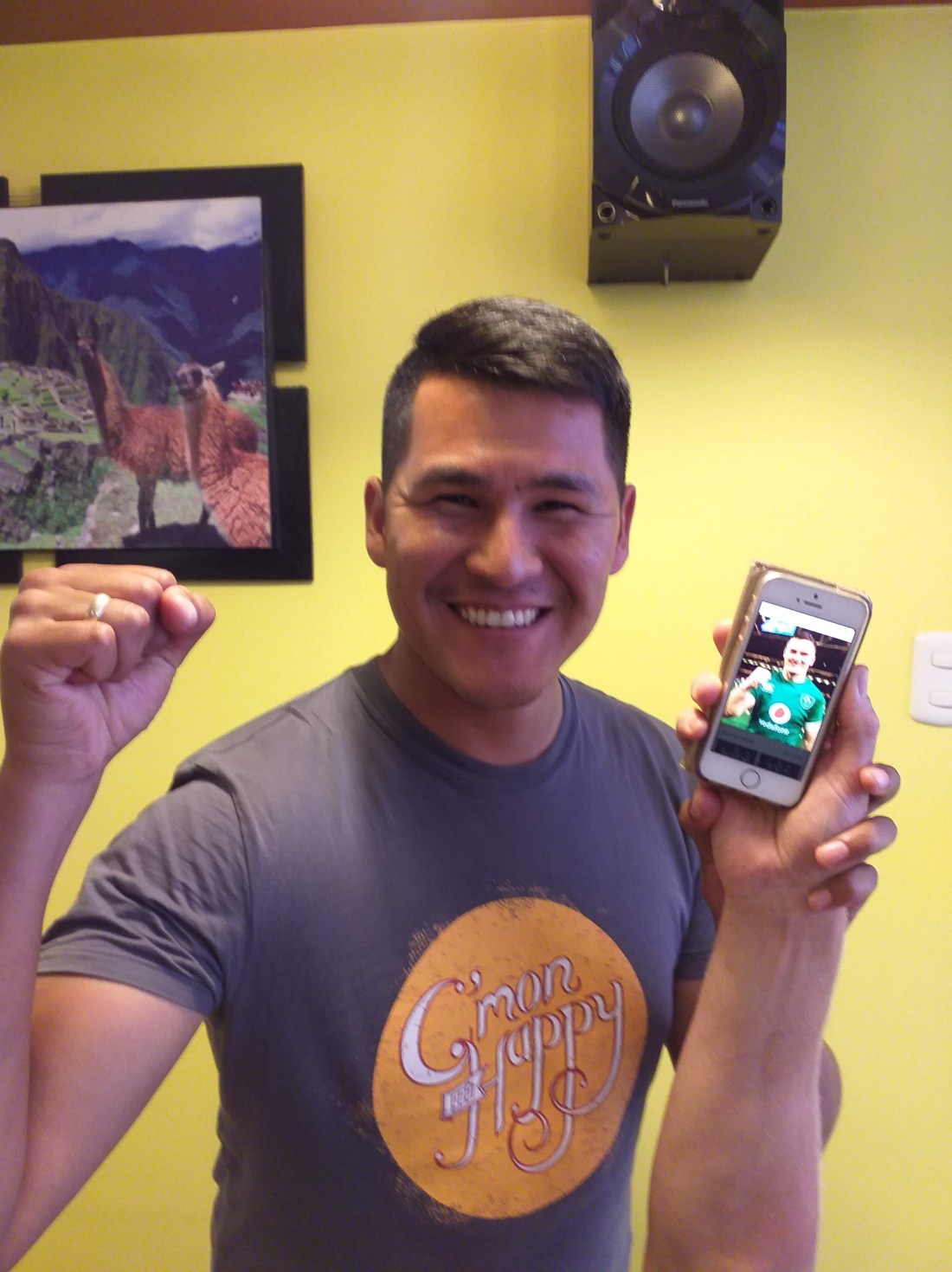
Johnny turned out to be a fab guide, always with a warm smile on his face, although we spent most of our time with Março as he had the job of rounding up the group at the back.
Day 3 would turn out to be an easier and more interesting day, though the longest of the lot at 16km. The promise of getting to our camp at Winaywayna, behind Machu Picchu mountain kept us going though! After yesterday’s descent we were once again to go up, but this time only 400m or so before coming down for most of the rest of the trek to around 2600m, a much easier altitude on the lungs!
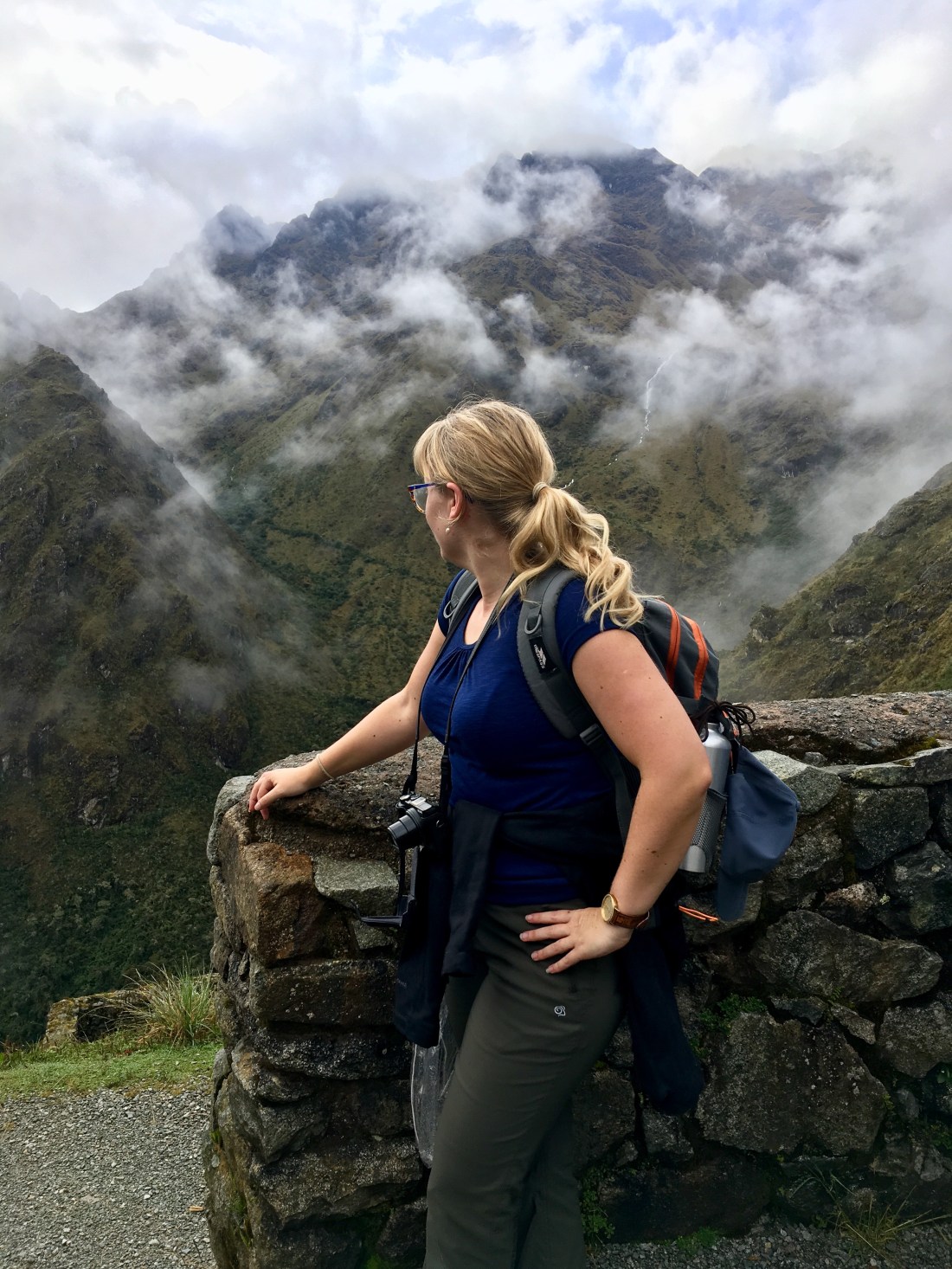
We passed a few more archaeological sites, including one round house. One theory is that it was an enclosure for keeping animals (llama – mainly because the next waypoint is 20km away and llama can walk a max of 20km before needing rest).
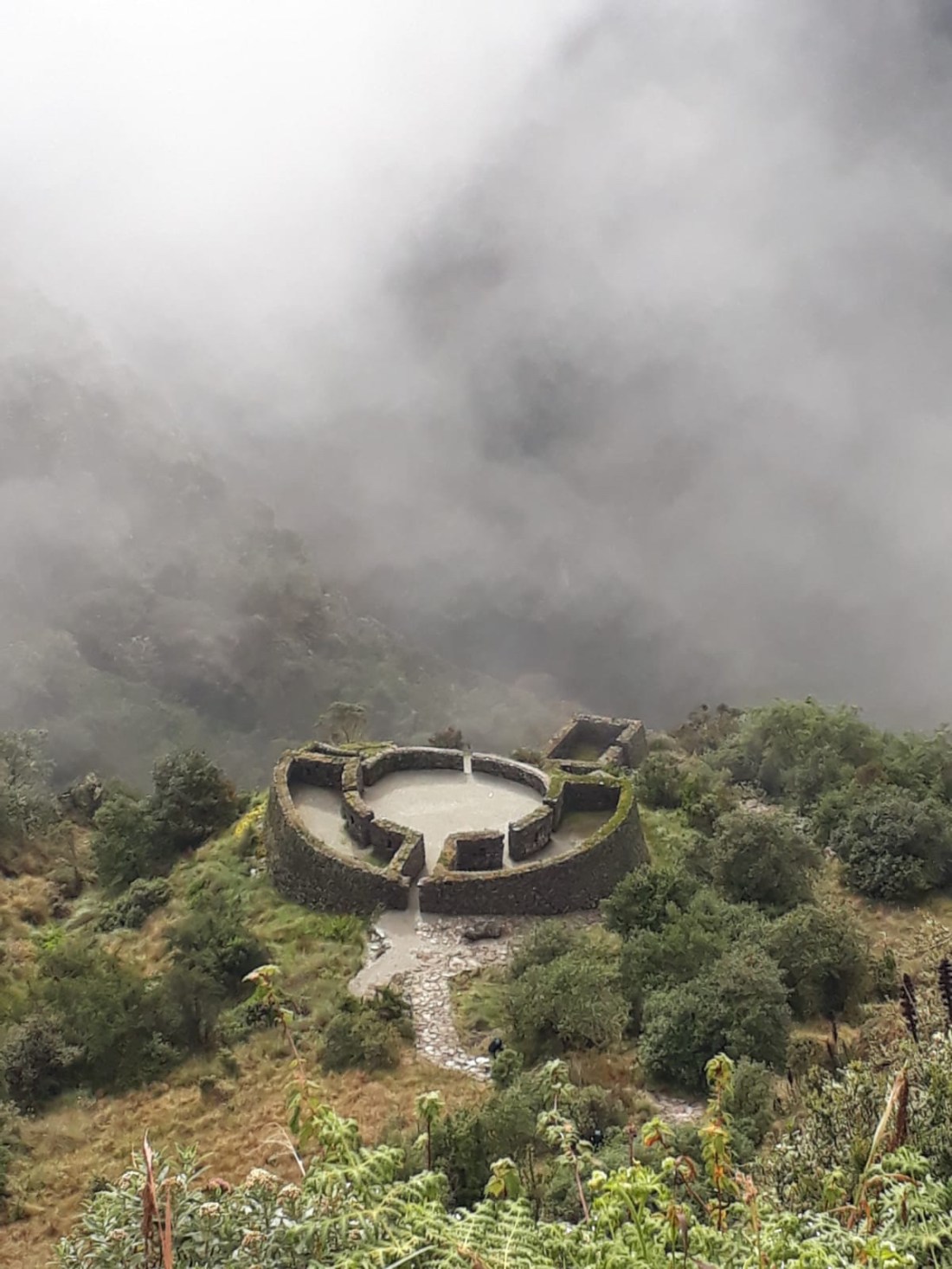
However because the structure was so well built, and because there is no soul analysis to evidence this, Ged thought it may have been used for human rather than animal rest. This is the second theory, that it was a stopping place for messenger runners, who would carry a coded message in the form of coloured strings with knots tied at different points – a form of code that only the elite could read. Around 10yrs ago the Peruvian government commissioned a competition to investigate whether this may have been possible – the winner of the competition (a porter on the Inca Trail) managed to complete the entire trek in under 4hrs. WHAT???
On we trekked through some lovely scenery as the weather improved, the last stretch before camp.
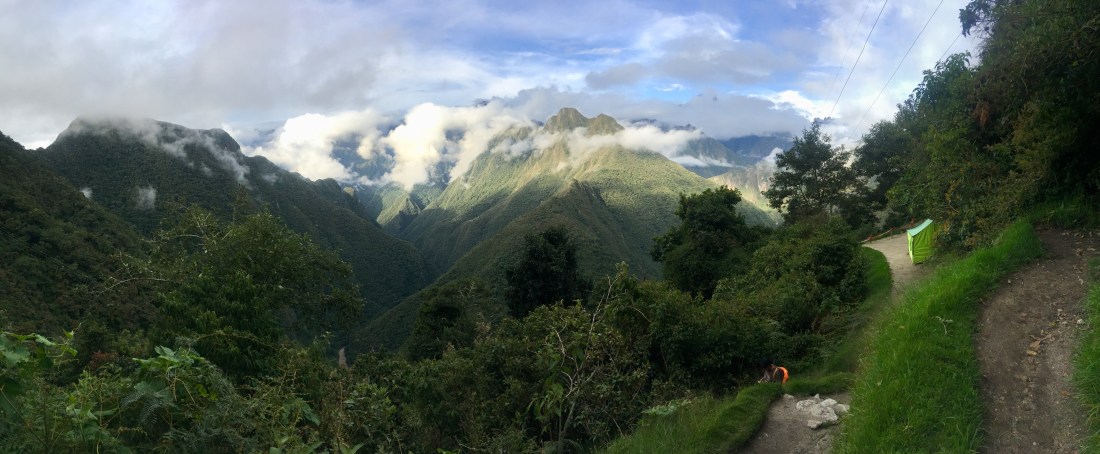
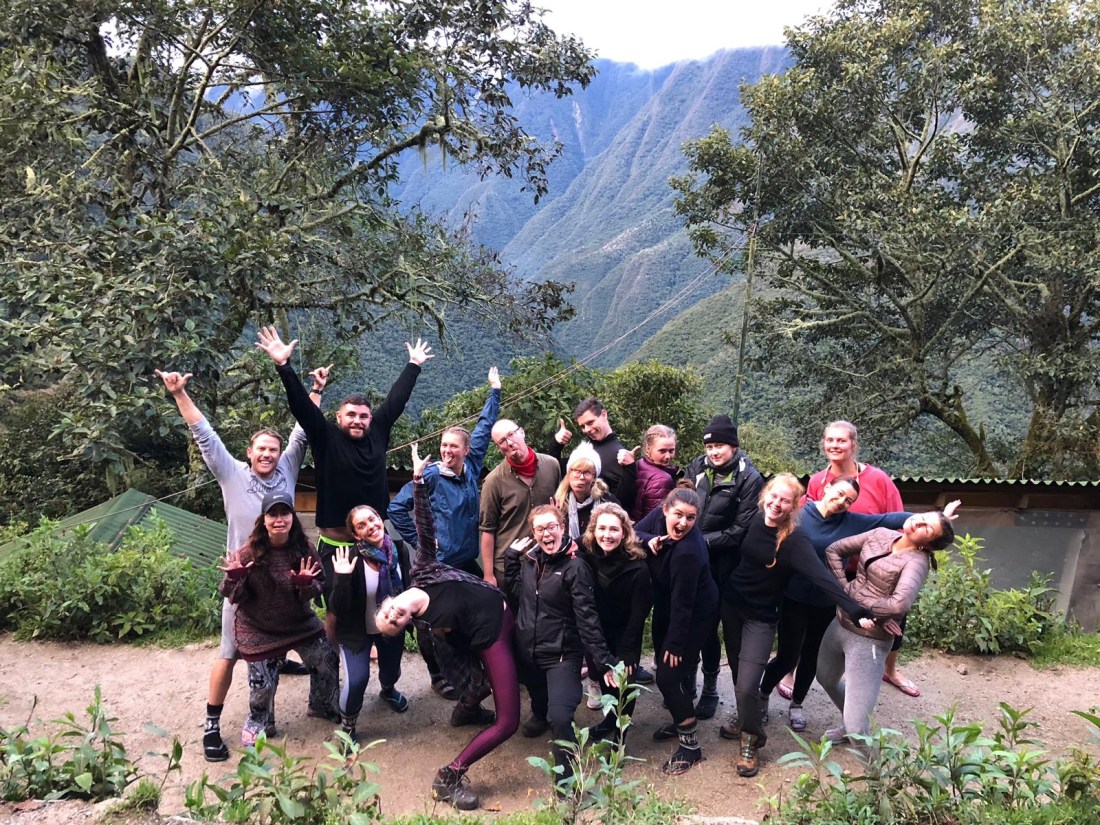
Once again, despite aching limbs and joints, we managed to finish this third and near-final portion in the average time predicted, and without any altitude sickness tablets or a single coca leaf! We had the odd coca sweet but had completed it without relying on coca leaves for the energy and altitude fix they grant if you chew away, which we were quite proud of. We had made it!
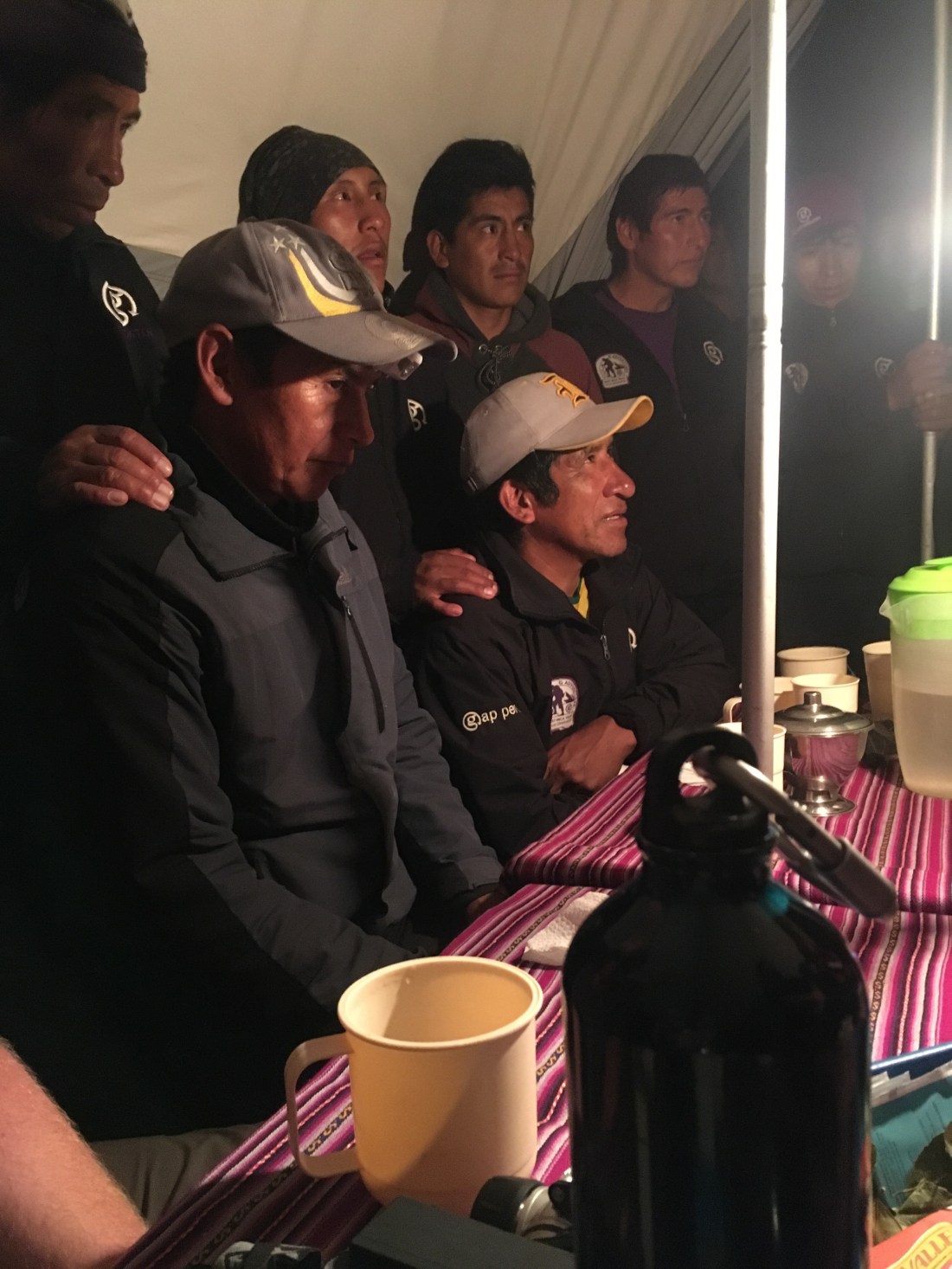
At dinner we had a big round of applause for the porters who all tried to pile into our food tent to hear our heartfelt thanks via a speech from Shane…
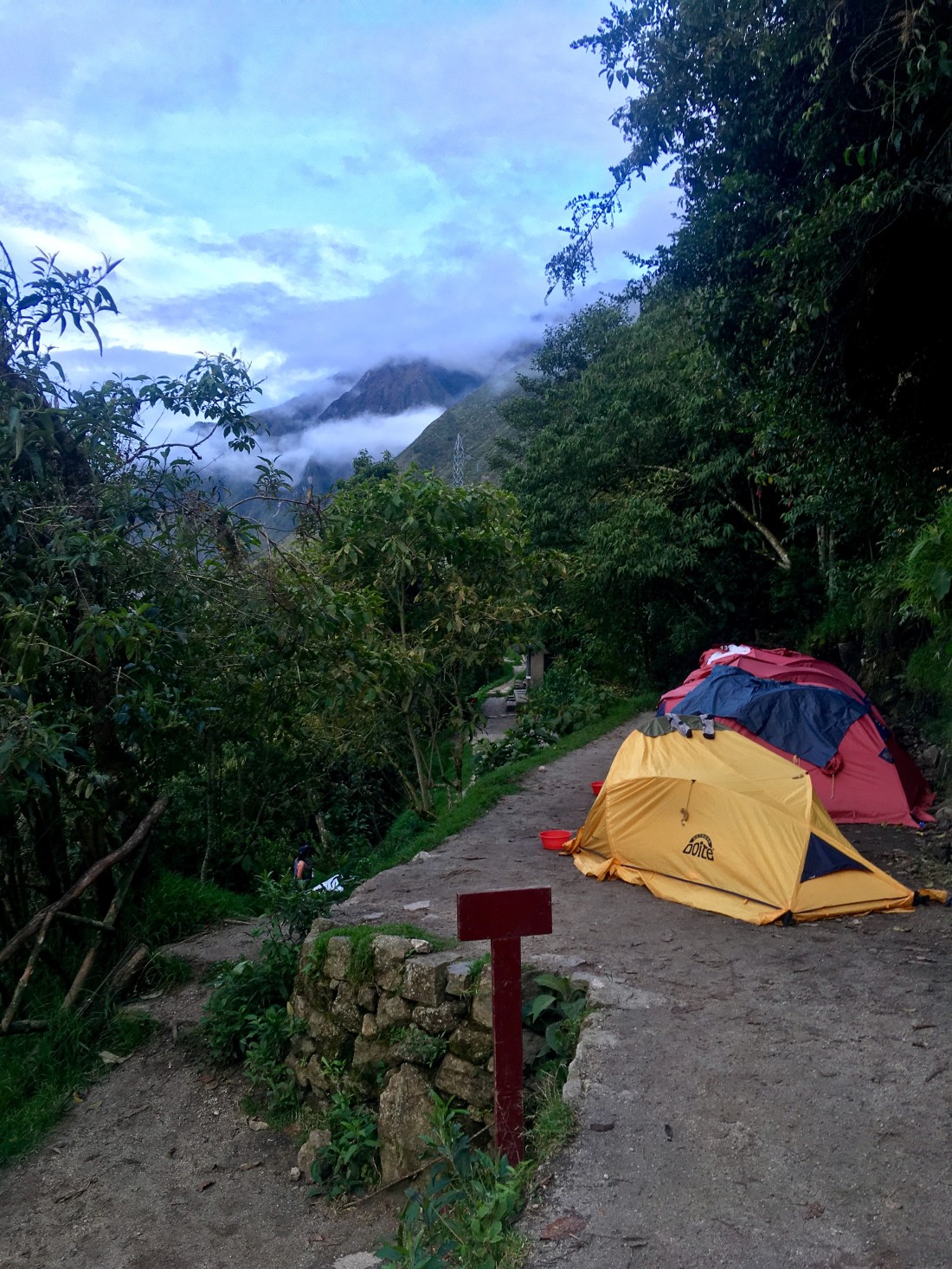
.. and then we headed to bed early in this beautiful spot as the sun was setting, ready for the main event the next day.
Trek day 4
Well. This was the big one. The day we had been waiting for. The day that would make the effort of the last three days worth it. We woke at 3am to the sound of rain tapping on the roof of the tent. Not a good sign. A quick wash, a light breakfast, and a final check of the camp and we were ready. 18 eager souls lined up ready for the climb to the Sun Gate and Machu Picchu. We set out into the darkness about 4:10am not knowing what to expect. 20 minutes in, we were called to a halt. A check point…… that didn’t open until 5:30am! Sigh. We were pumped and ready to go so the hour seemed to drag on forever. Just as the first hints of light washed over the forest canopy, the checkpoint opened and we were off. The path was narrow and slippy from the rain. Head torches illuminated the path; solid rock to the left of us, thick cloud to the right. We had no idea what lay beyond the path to the right, but it turned out it was a sheer drop of several hundred feet. Some of the group were perhaps grateful for the thick white mist.
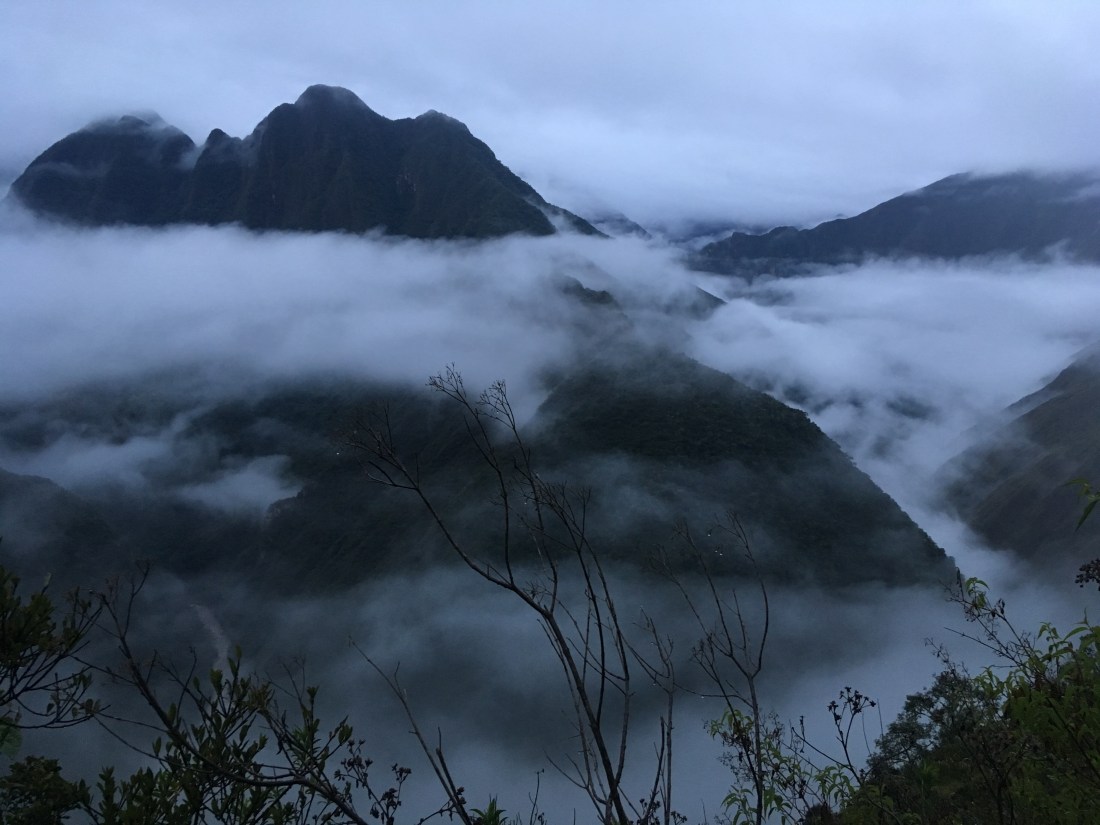
As the sun grew higher in the sky our pace increased. Our aim was to reach the Sun Gate of Machu Picchu by 8am and we were well on target, but there was one final challenge ahead. A near vertical set of stairs known as the “Gringo killers.”
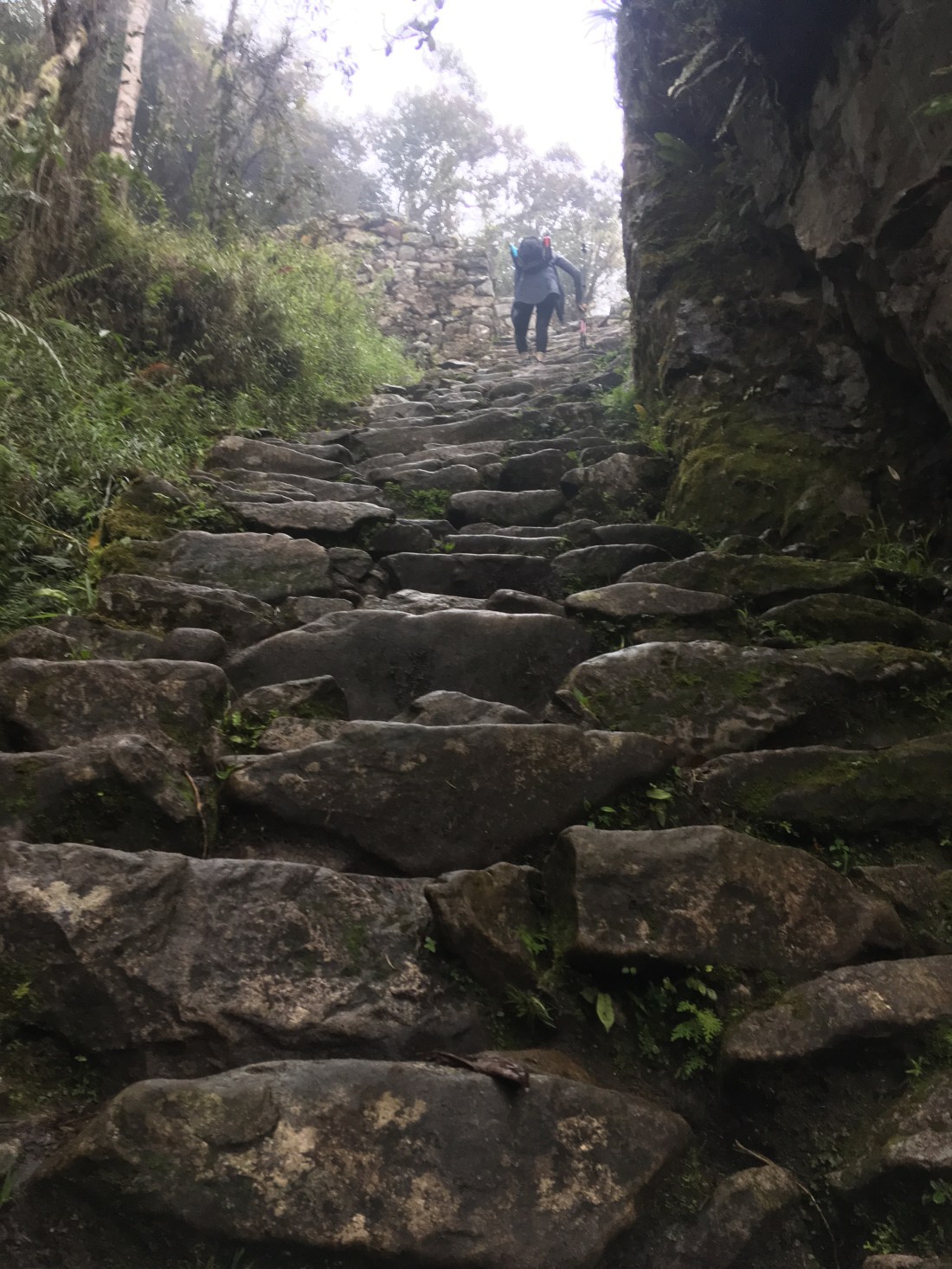
Our guide explained that at normal altitude these should not be a problem, but with lower oxygen, a full day pack, and fatigue from the last few days, these stairs were usually a challenge for Inca trail trekkers. Eventually we met these stairs wondering what we would make of them. It turns out our guide may have been having a little joke at our expense. We quickly scrambled up the 50 steps on all fours and reached the top wandering what all the fuss was about. This was the final challenge before reaching our goal.
For a lot of people turning the corner in the Sun Gate it is the first time they see Machu Picchu in all its glory. Bathed in sunlight and majesty. The reward for walking for so many miles in the mountains. We knew this was the view we all wanted and we nervously turned the corner to look accross the valley. Total whiteout. Disaster. Visibility was about 30 yards with no hint of the Inca ruins in front of us.
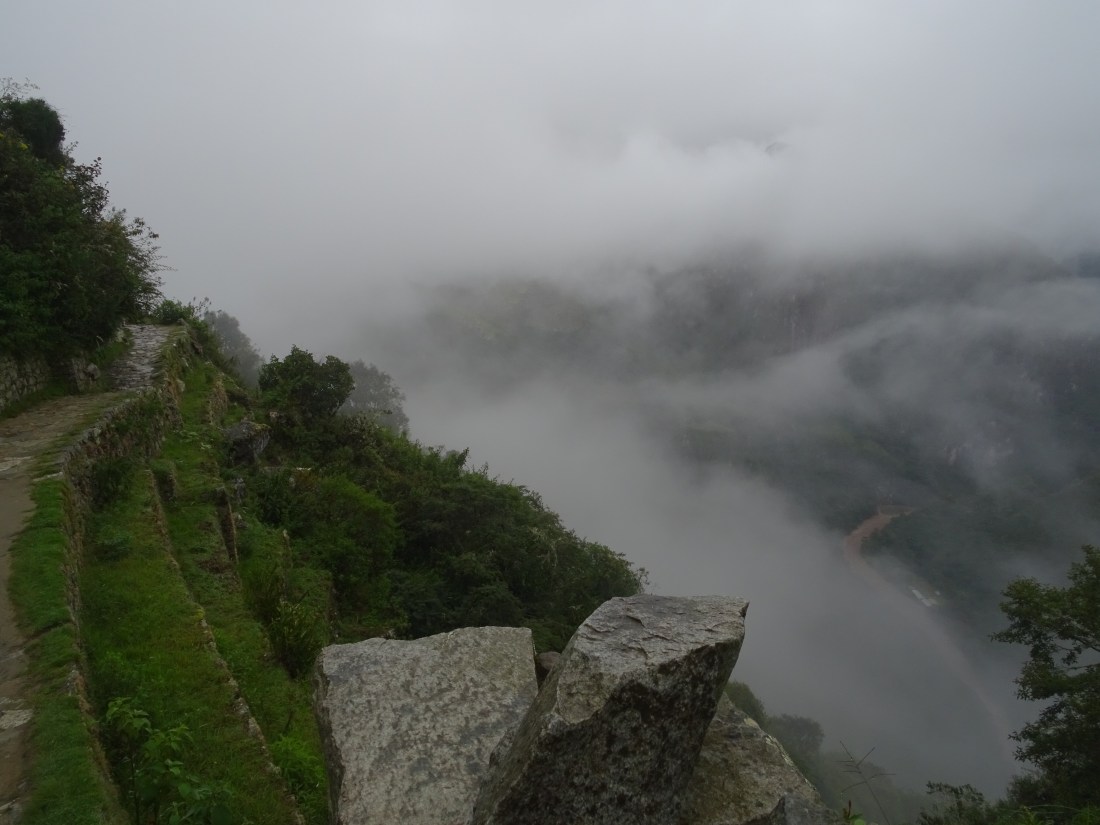
Glumly we sat to see if the cloud shifted and ate our second breakfast (cereal bars followed by chewing coca leaves). The cloud showed no signs of shifting so we set off again after about 20 minutes. On the way to the main site we passed various ruins and our guide explained the rituals that may have taken place at each location. At one of the main gates he explained that there was a sacred rock that travellers normally make an offering at: Three coca leaves left under a rock to give thanks for safe travels. We continued on the path and started to encounter people coming in the opposite direction. We hadn’t seen this in three days. These people were clean, well rested, and mostly carrying selfie sticks. We felt strange seeing these tourists on “our” trail. We felt more entitled to be on the path as we had spent days walking to get there, not merely sat on the train and bus. It was an odd sensation, almost feeling better than them for having walked. Nonsense of course, but we did feel a little smug knowing they were walking up hill to the Sun Gate to enjoy the views of the whiteout.
Finally we arrived at the main site of Machu Picchu and could see nothing. We were so deflated. A few in our group were visibly upset. We climbed down to the exit and decided to have a third breakfast in the visitor cafe and wait and see if the cloud broke. Nearly two hours later the sun started to find its way through the cloud and onto our weary faces. Perhaps all was not lost!
We lined up ready for our second go. As we started to climb the stairs from the entrance the sun started to blaze through. Wow was our hike worth it. The view accross the site of Machu Picchu is truly astounding. Pictures cannot do it justice. The beautiful valleys fall away from the site on either side in a deep lush green. The site itself is full of narrow avenues but there is a comforting structure and order to the place. It is impossible to comprehend the lives of the people that lived there but it must have been an amazing existence.
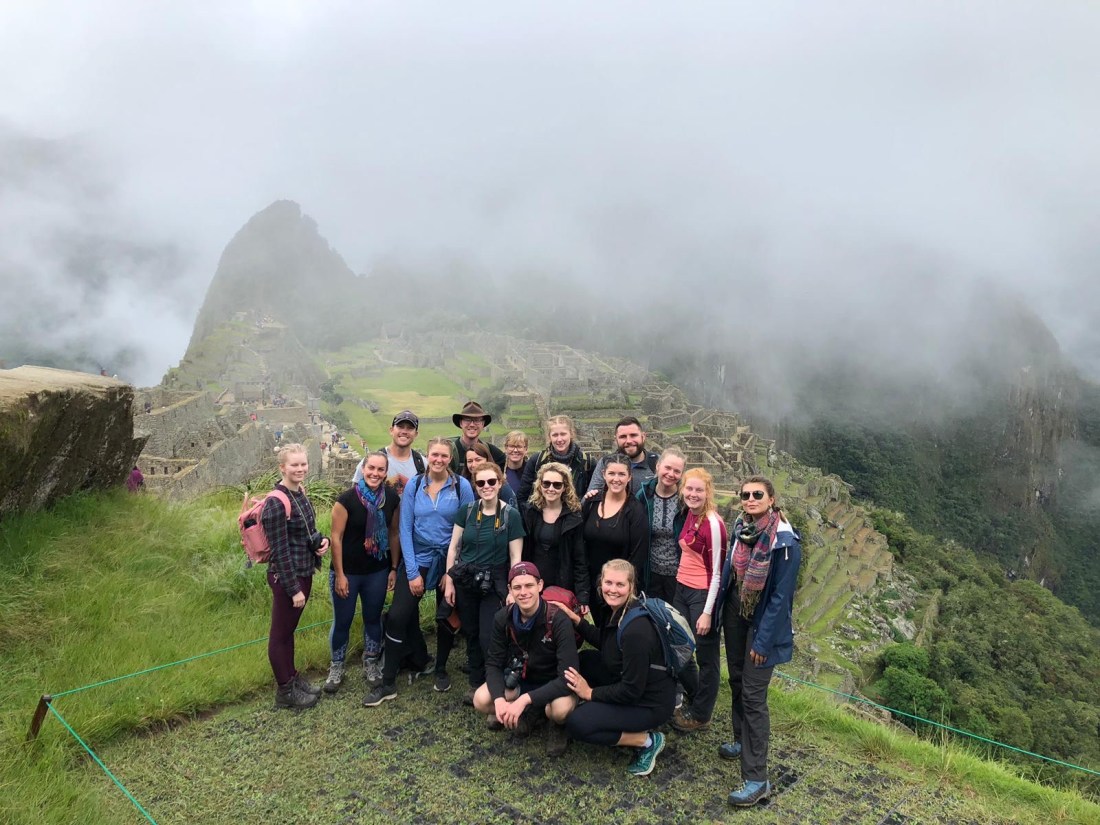
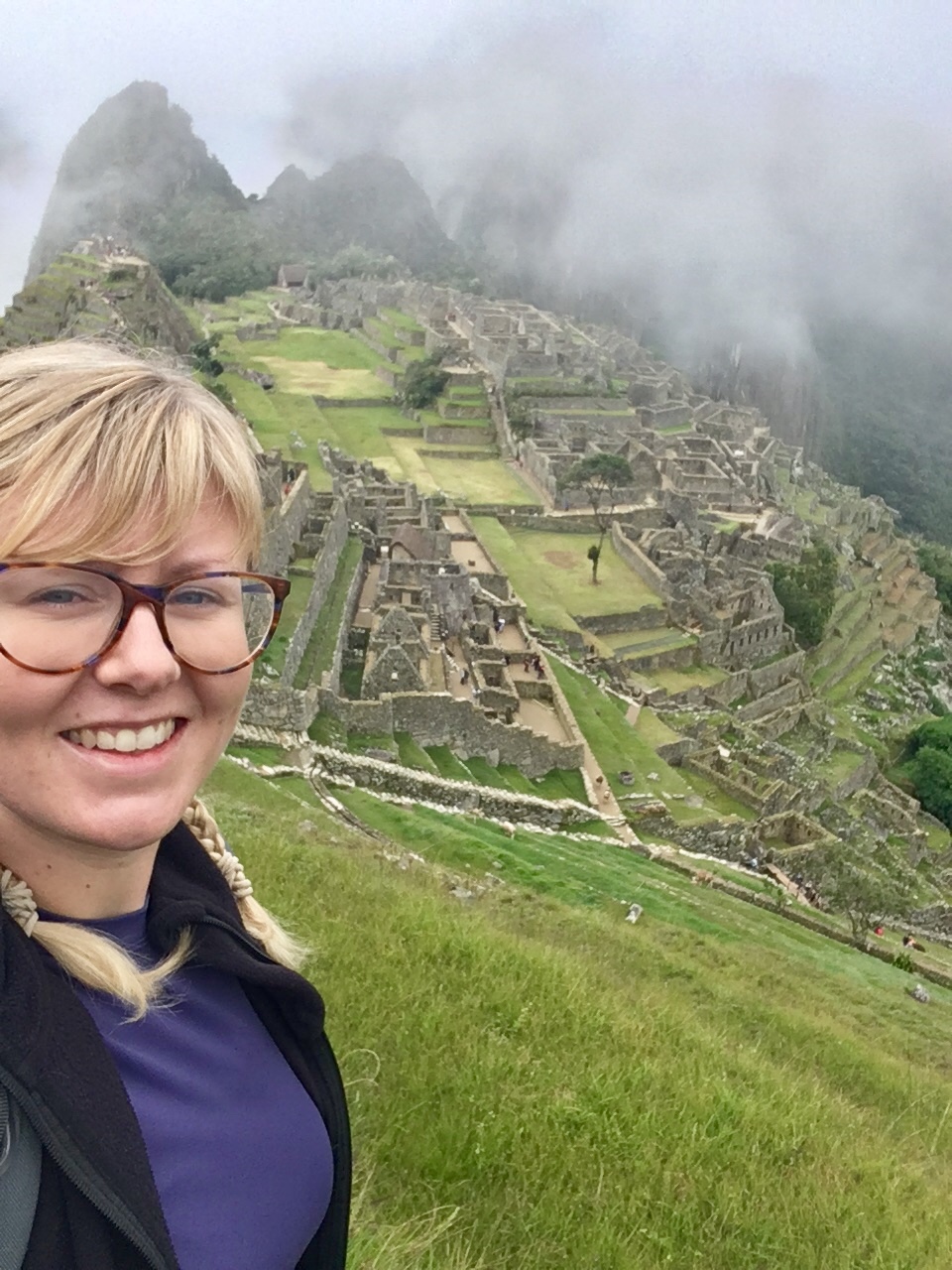
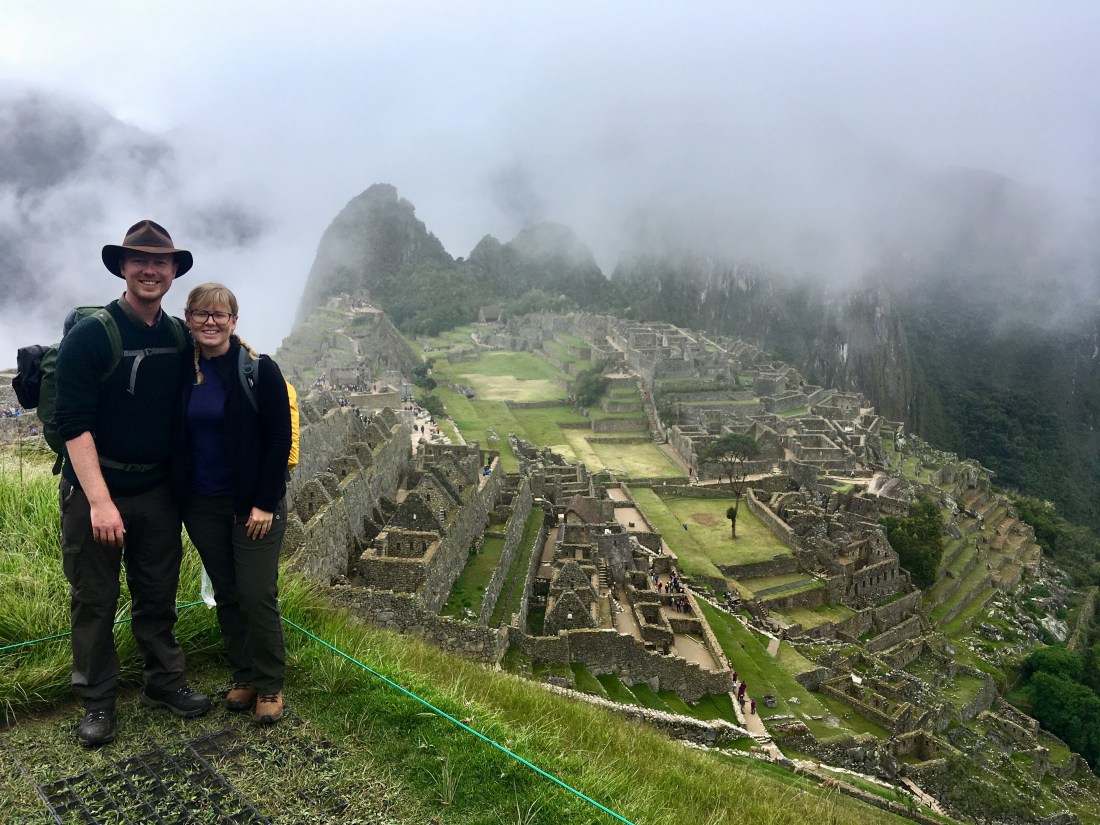 After the obligatory photos to prove we made it, our tour of the site started. We heard how Hiram Bingham found his way to the site after talking to some locals whilst trying to find the last refuge of the Incas. Named after the mountain it sits in front of, this site for the Inca elites dates to around 1450-60 and was abandoned not long after the arrival of the Spanish. The site is built on a series of terraces that were used for both structural reinforcement and farming. The skill of the masons that built Machu Picchu cannot be exaggerated. Three main methods of building were employed: rustic cobbles and mortar for the terraces and domestic houses, rough interlocking stone for the houses of the priests and the elites, and finally exquisite rows of pefectly carved and polished stone for the temples so that the best was reserved for the gods. The walls of the temples blew us away. Carved and polished without metal tools, each block was placed perfectly in line and each row of block slotted together using male and female joints with no mortar. Think lego in stone on a grand scale. But it wasn’t just the way these buildings were constructed, it was the precision by which they were aligned which was amazing. The Sun temple, Condor temple, and the Water temple all perfectly aligned to receive light on a specific day. The time, skill, and genius required to build Machu Picchu truly boggles the mind.
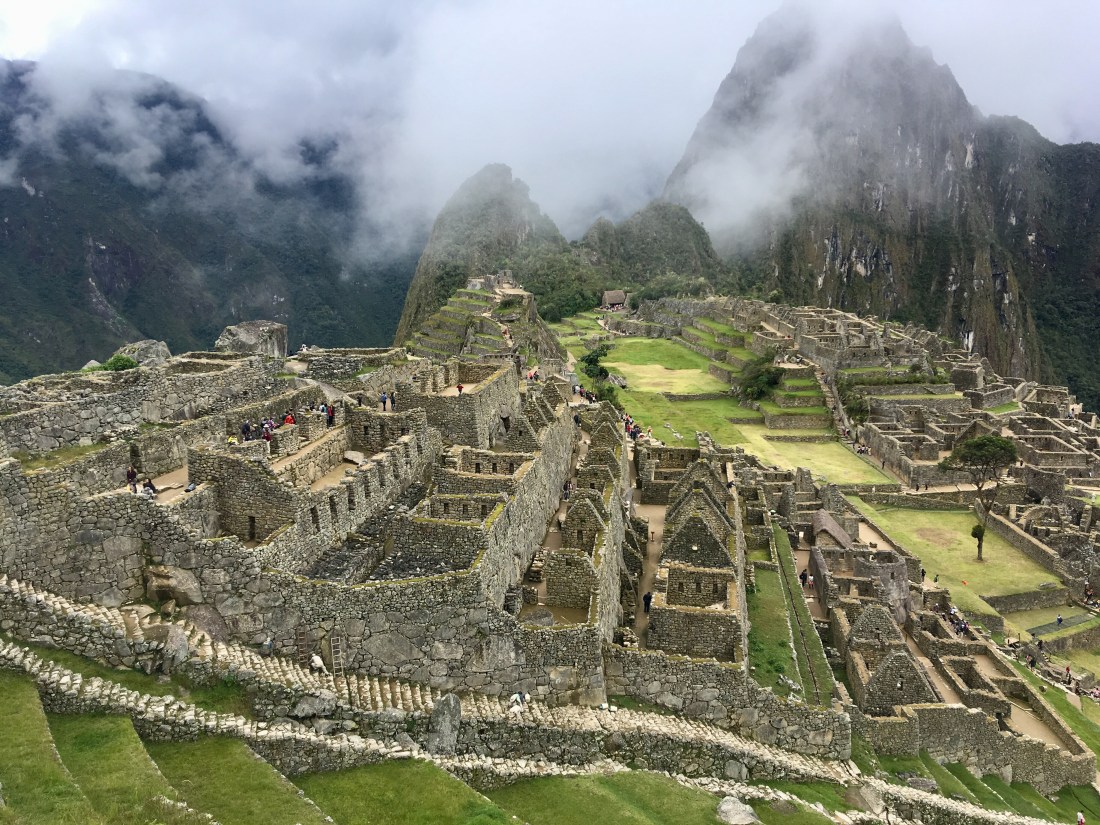
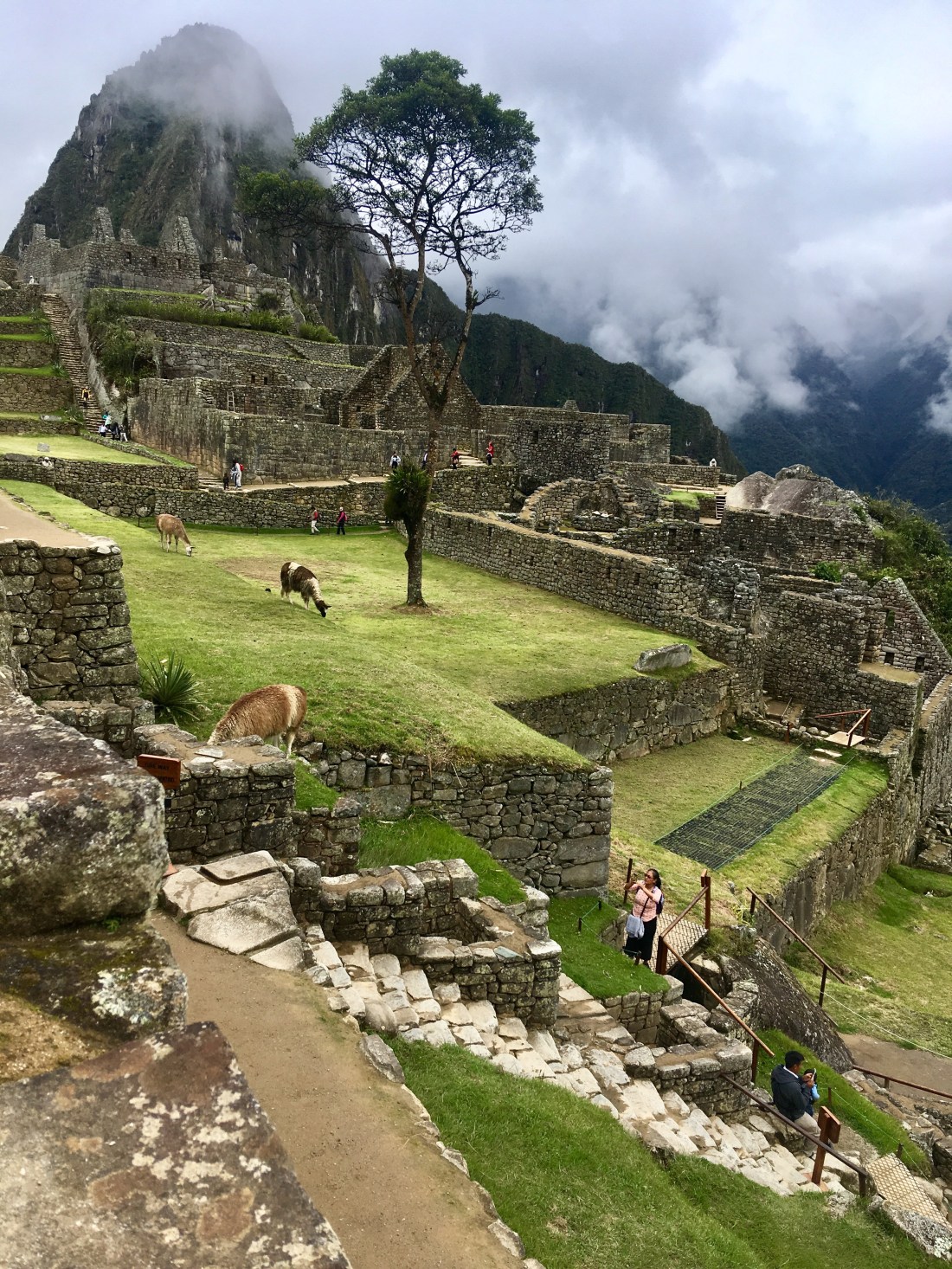
Walking around the site is an almost spiritual experience and it is one we will never forget. Our minds are still racing thinking what it was like to live there.
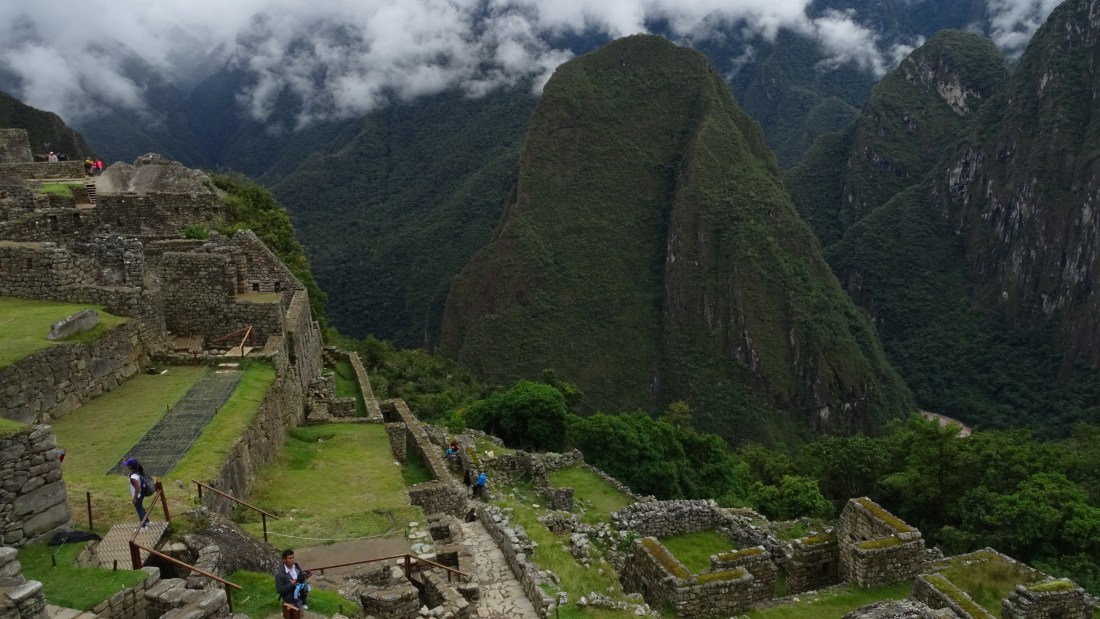
As we continued the tour we learned that the site was unfinished when it was abandoned and we could see the quarry from which the stone of the site was sourced. Who knows what further marvels would have been constructed should the Spanish never have arrived in Peru. One of the last things we learned is that the whole site is actually slipping down the mountain. Who knows how many more centuries, or decades, the site will last unless some drastic work is undertaken to prevent disaster. Our guide said that visitors are actually making it worse and so it may be the case that the site is closed in the future and the only way to see it will be by an as yet unbuilt cable car. We left the site and boarded the bus down from the mountain sad to think that the site may fall and future generations may not be able to enjoy this wonder of the world as we have. In the valley we caught the train back Ollantaytambo and slept as the rain pelted down. From there it was a short bus ride back to Cusco.
Cusco City
We actually spent two spells in Cusco; two nights before the trip to Machu Picchu and two nights after, (27-28 Jan and 02-03 Feb). To make life easier we will lump the two stays together.
We arrived in Cusco the first time early in the morning and were struck by how spread out the city is. We guessed that there were almost no buildings over four floors high due to the threat of earthquakes (later confirmed by a guide) and so the city is built out rather than up. We stayed at Milhouse Hostel for our four nights and had to sleep in separate rooms (Rachael’s first real hostel experience!). This was a really nice hostel with clean rooms, a bar, free breakfasts, and located close to the central plaza. It definitely served us well.
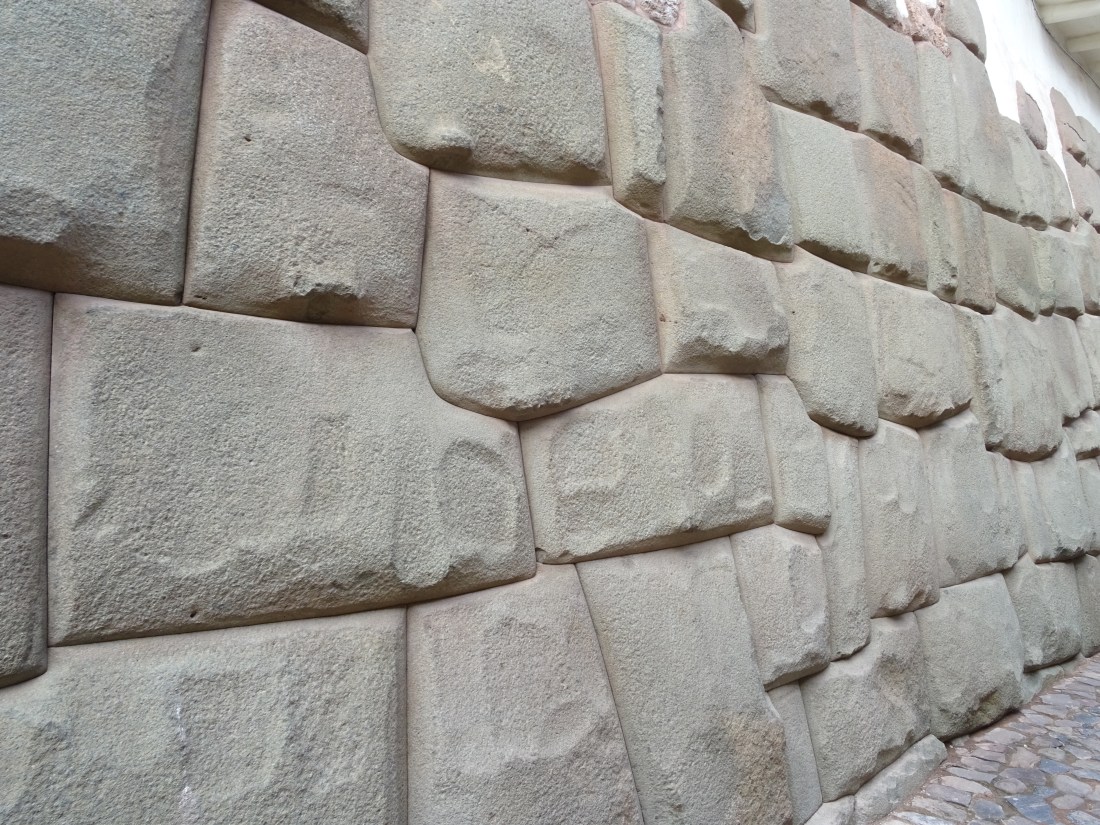
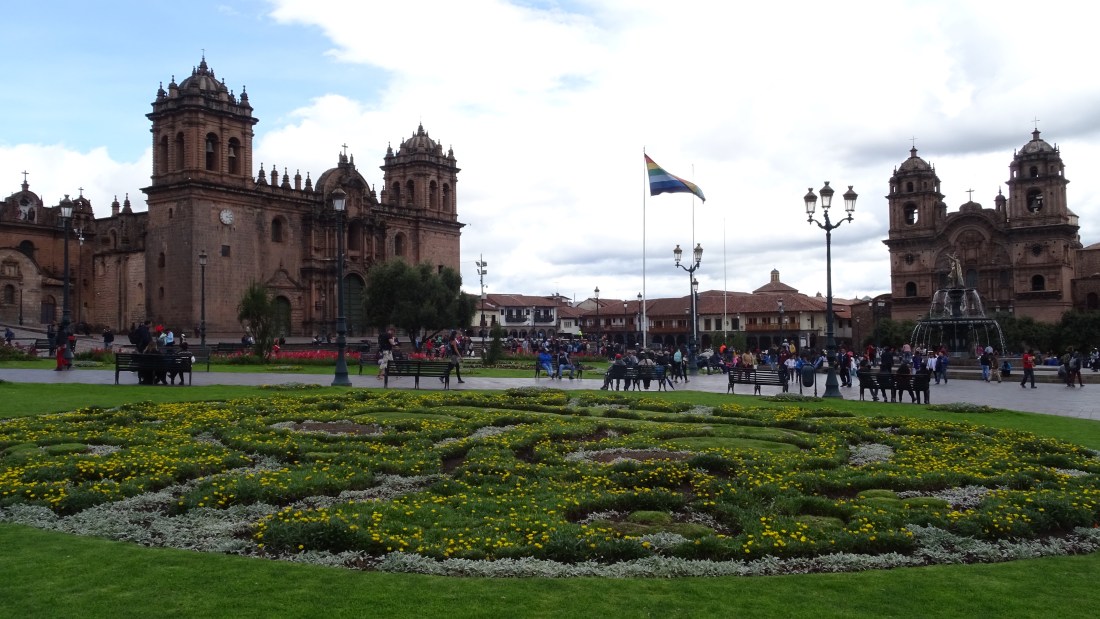
The central plaza and the surrounding streets are beautiful with an odd mix of architectural influences. Most buildings (especially churches) were built on a base of Incan masonry (see pic below) and then followed by a very Spanish way of building. However, there were also lots of wooden balconies that could be from the alps and whitewashed buildings in the backstreets that could easily be from the Greek Isles. In any case the central part of the city was lovely to walk around in and relax (not enough ice cream for Rachael though!)
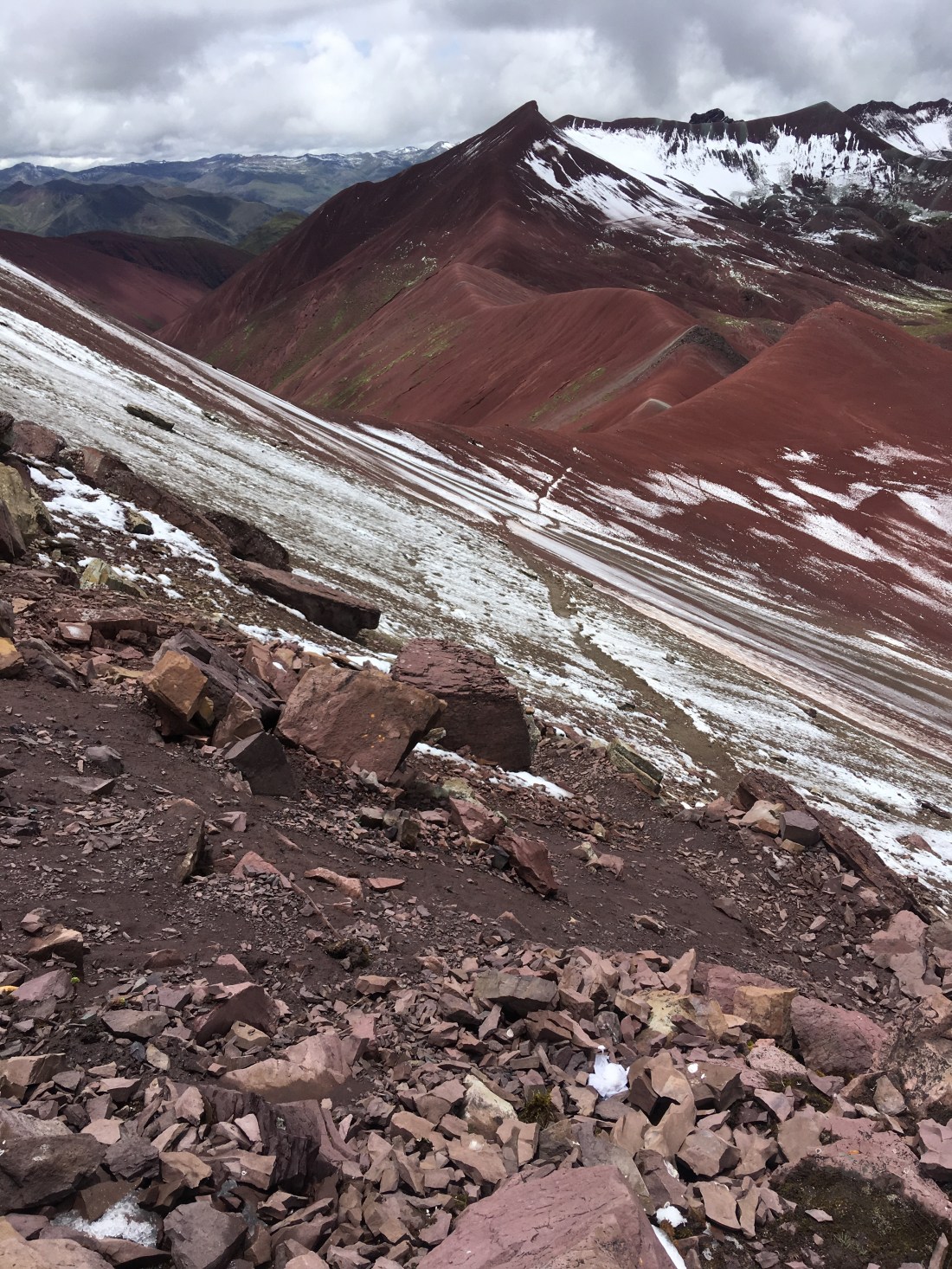
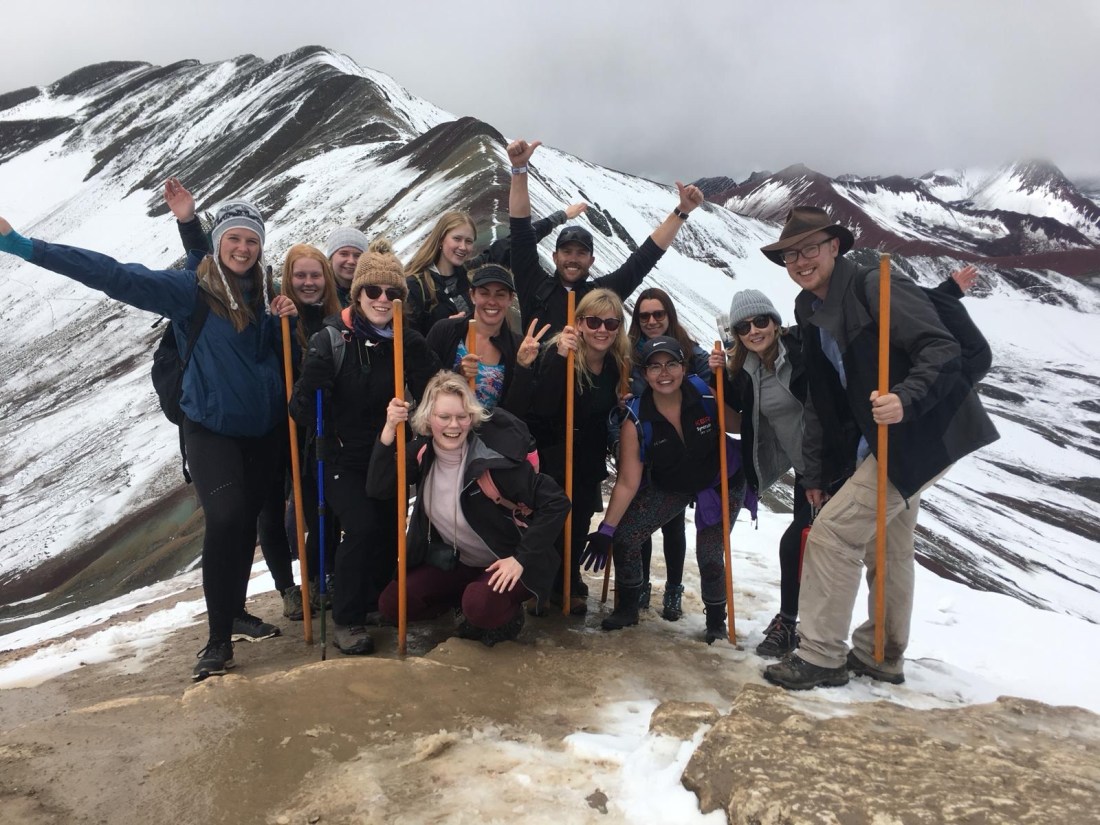
Our second day in Cusco was another early start (typical of this trip so far!) to visit Rainbow Mountain. Its real name in Quechua means ‘mountain of the minerals’ and this was a great opportunity both to see some stunning landscapes and to train a bit for Machu Picchu! We certainly weren’t disappointed. Although it was much tougher than expected (we climbed to over 5000m and had our first serious hit of the depleted oxygen levels) the views made the puffing and panting well worth it.
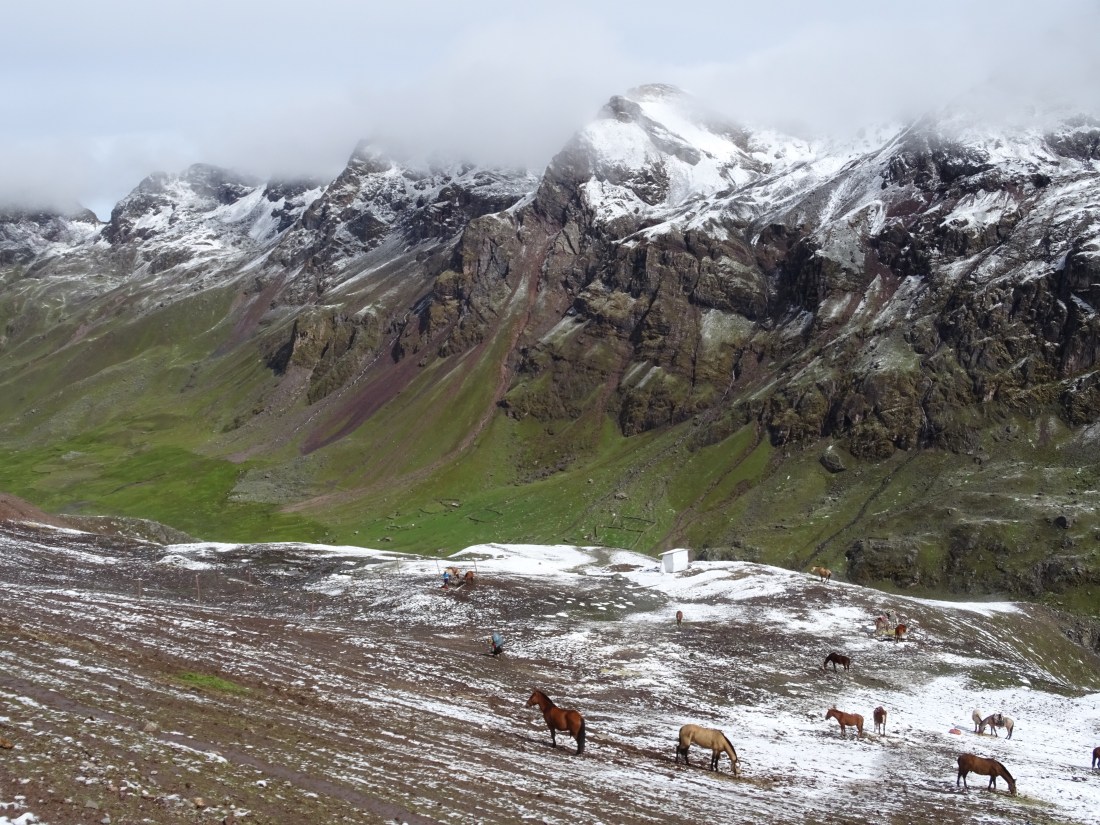
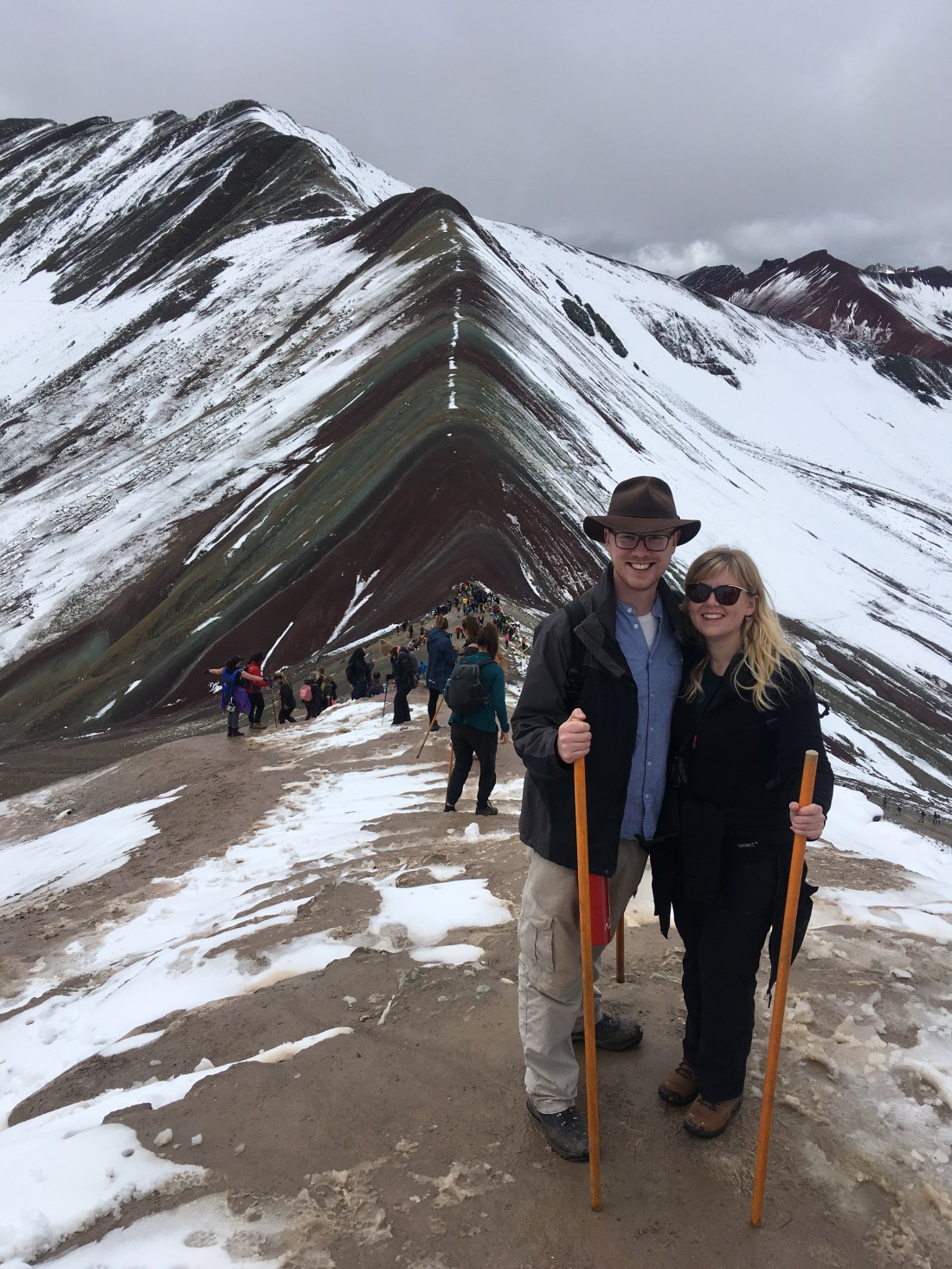
We also extended the walk across to the Red Valley, a privately owned area with more stunning views to boot!
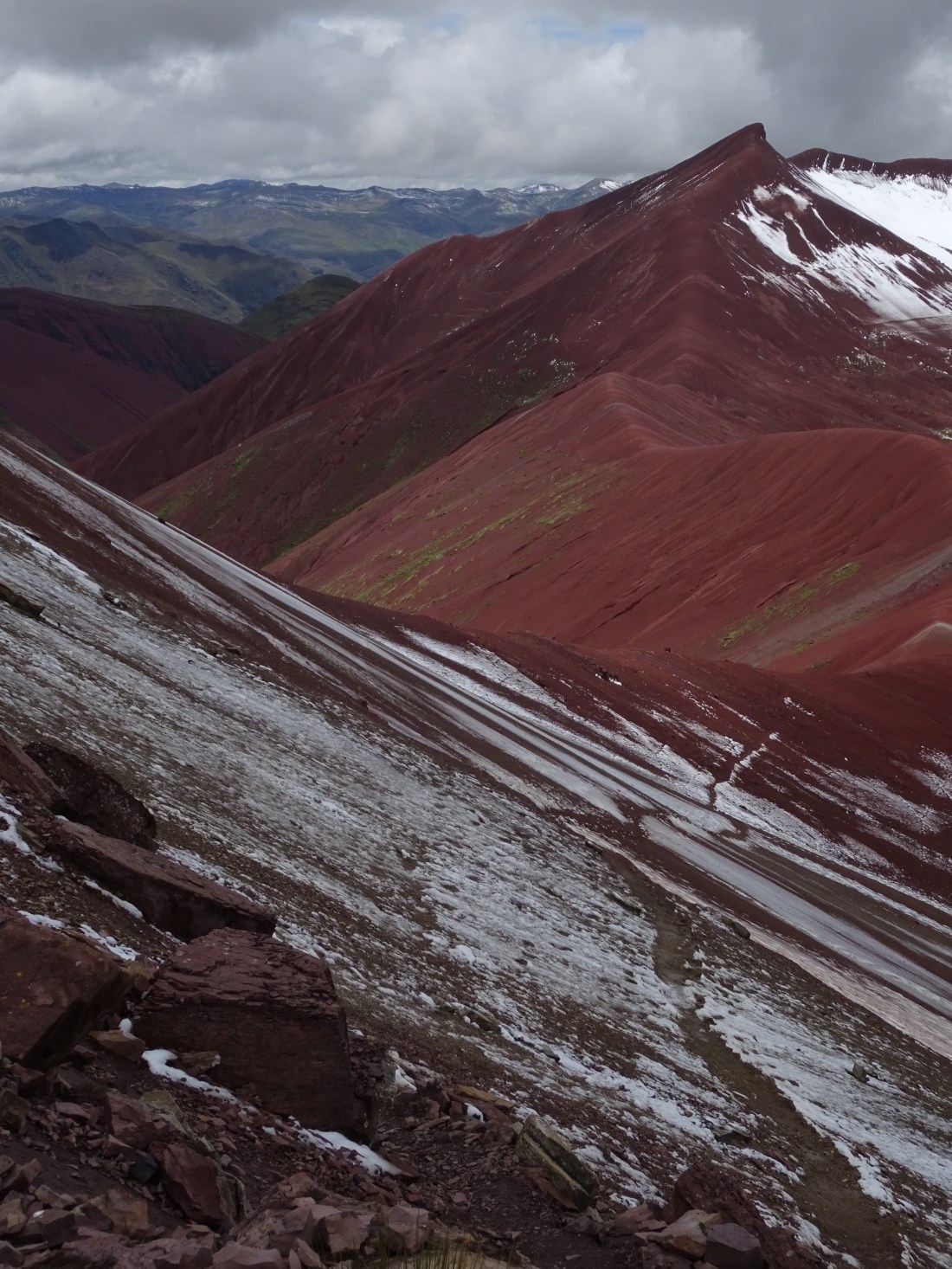
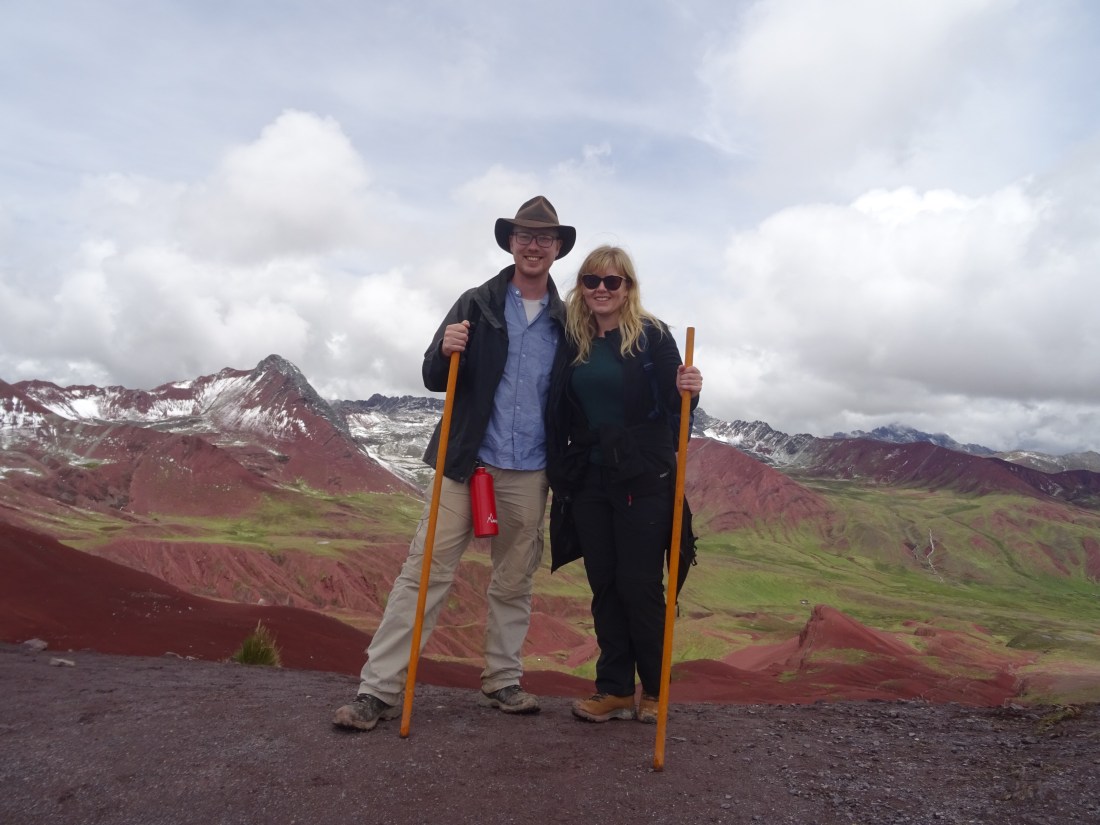
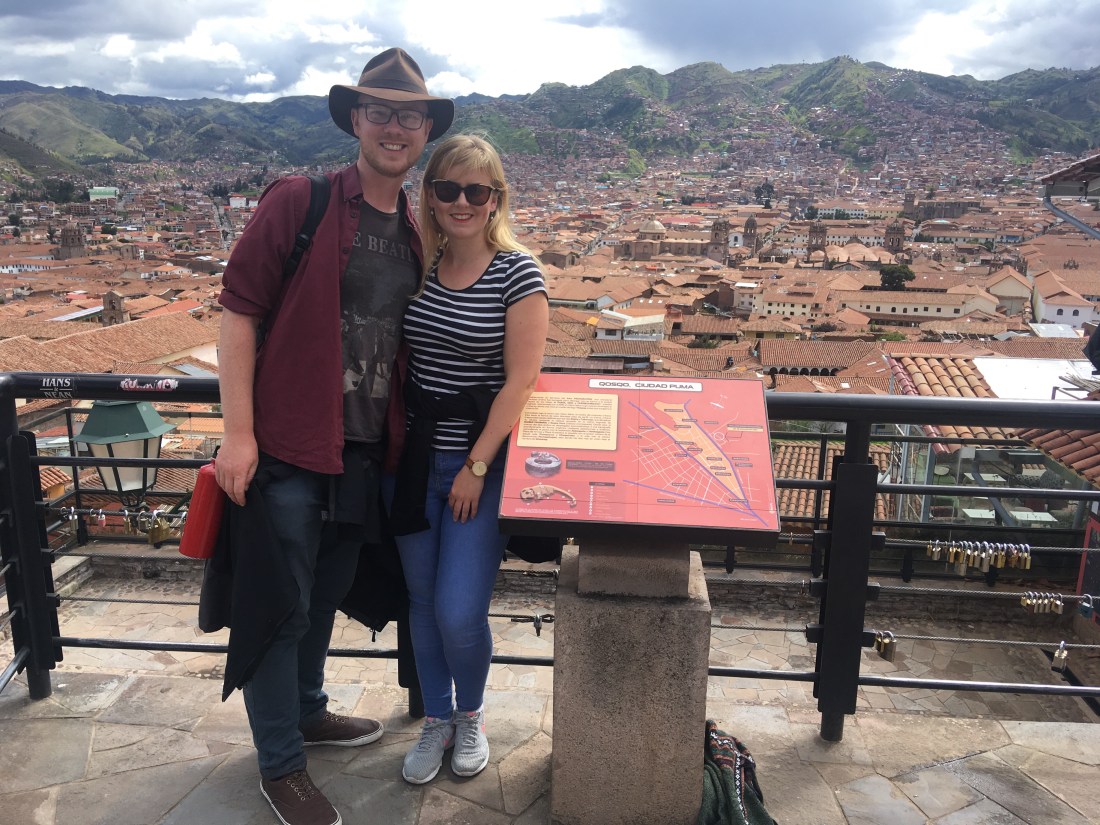
On our last full day in Cusco post-trek we decided to be tourists and do touristy things. After a little lie in we joined one of the free walking tours that operate out of the main plaza. Ours was excellent and we really felt like we learned a lot about Cusco. A UNESCO world heritage site since 1983, Cusco was the capital of the Incan empire. Originally pronounced “Cosco” the name means belly button and was the navel of the world (the city is literally the center of the Incan world). The original plan for the city was in the shape of the sacred puma. The central plaza at the heart, the observatory at the head (the eye actually), and the temples in the genitals…. although as the city has grown it’s not very easy to spot from the viewpoint anymore!
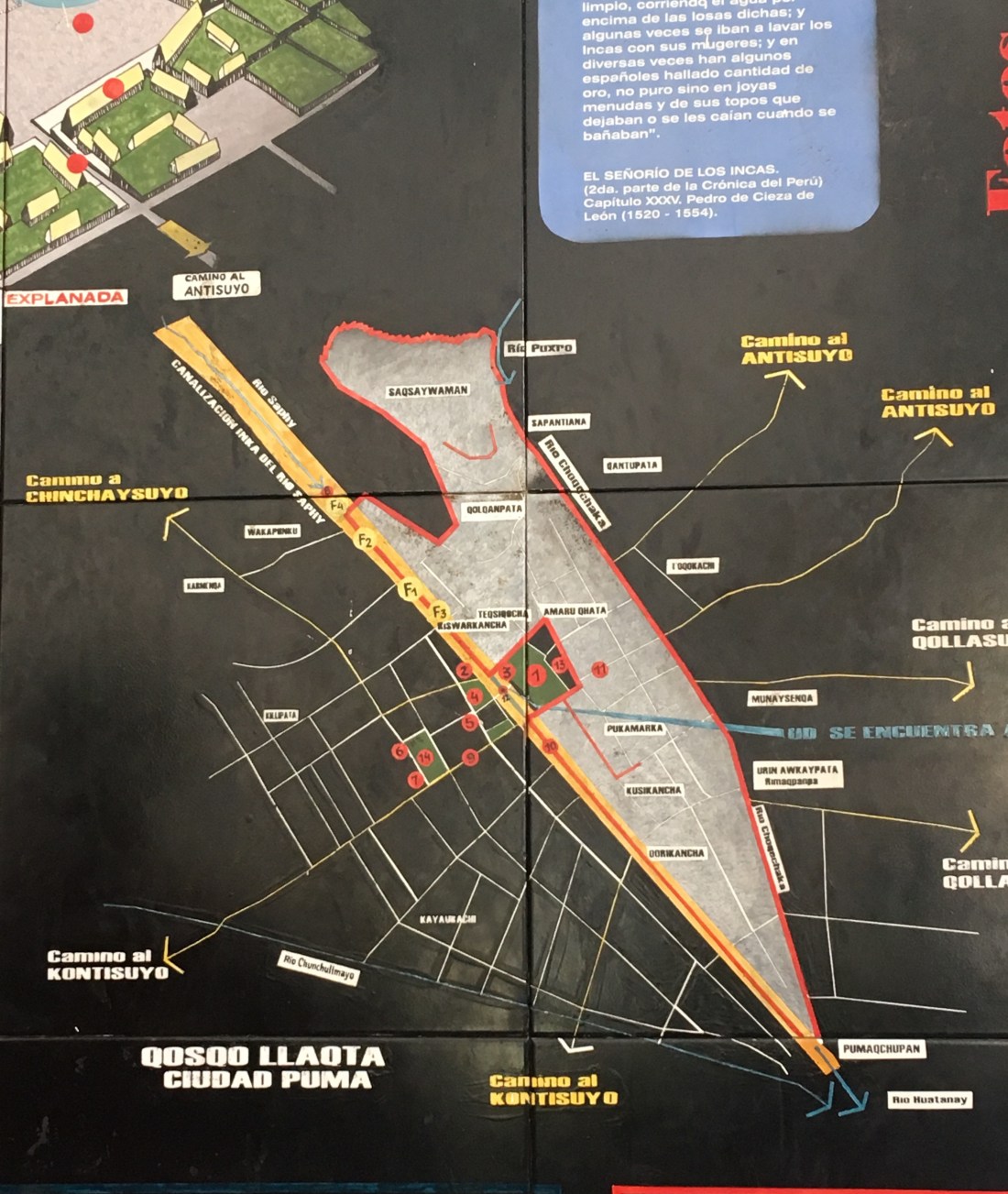 The puma was chosen as it represented power in the Incan world. The Incas were very advanced and had a sort of university. Women and men from around the empire were brought to Cusco and trained in building, textiles, medicine, astronomy, surgery, etc. and then sent them back to their communities to spread their knowledge. They even had a form of anaesthetic made from a special potato soaked in water for 6 months! Incan customs and ideologies are still at the forefront of activity in the city despite centuries of European influence and most people now following the Catholic religion. Mother Earth (Pacha Mama) is still revered, offerings of coca leaves are still made, and Quechua (the language of the Incas) is still spoken by 11 million people in South America. Our guide said that although the last Inca was executed by the Spanish (Tupaq Amaru – he was pulled apart by horses tied to each limb in the main plaza of Cusco in 1781) the Incas were never truly defeated as their customs live on. Our guide explained that almost 1/3 of living Peruvians alive today are completely descended from the Incas, although they mainly live in small communities in the highlands. Satisfied we had learned something we joined some of our group for a drink in a rooftop bar we had spotted during the walking tour.
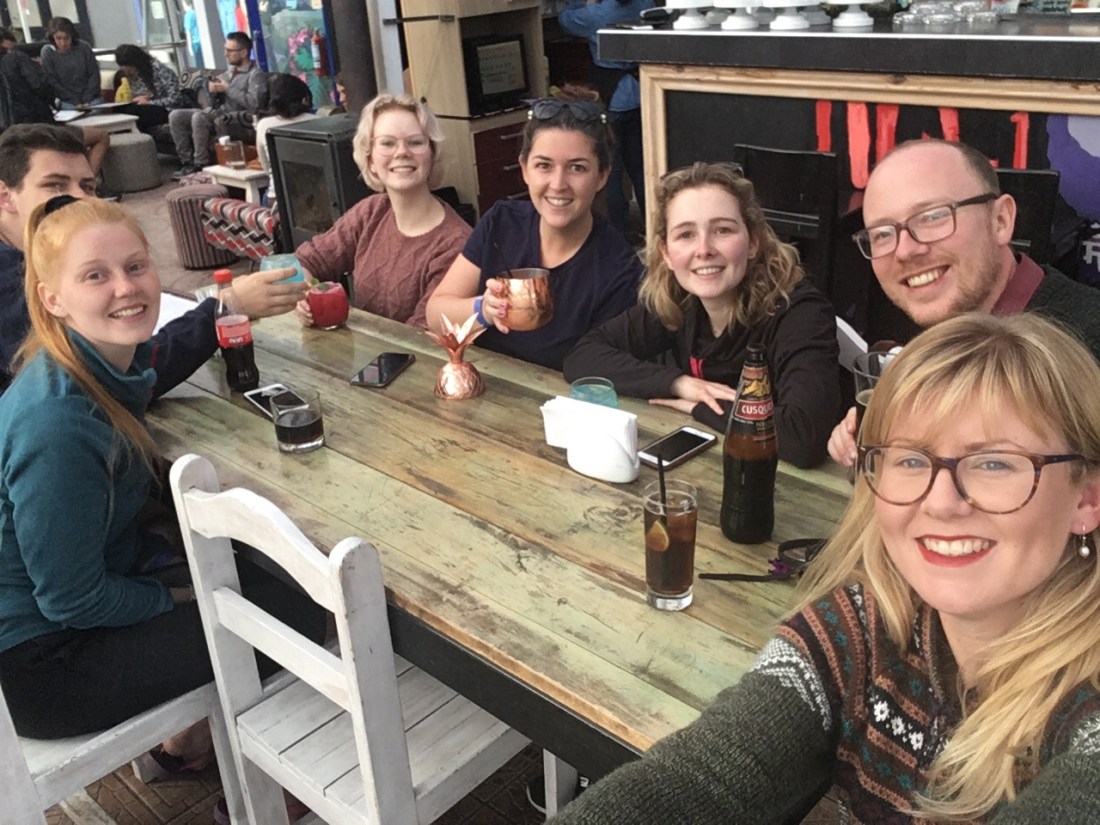
Lumbia was a great place to hang out, enjoy a cocktail and watch the city change from day, to dusk to night time.
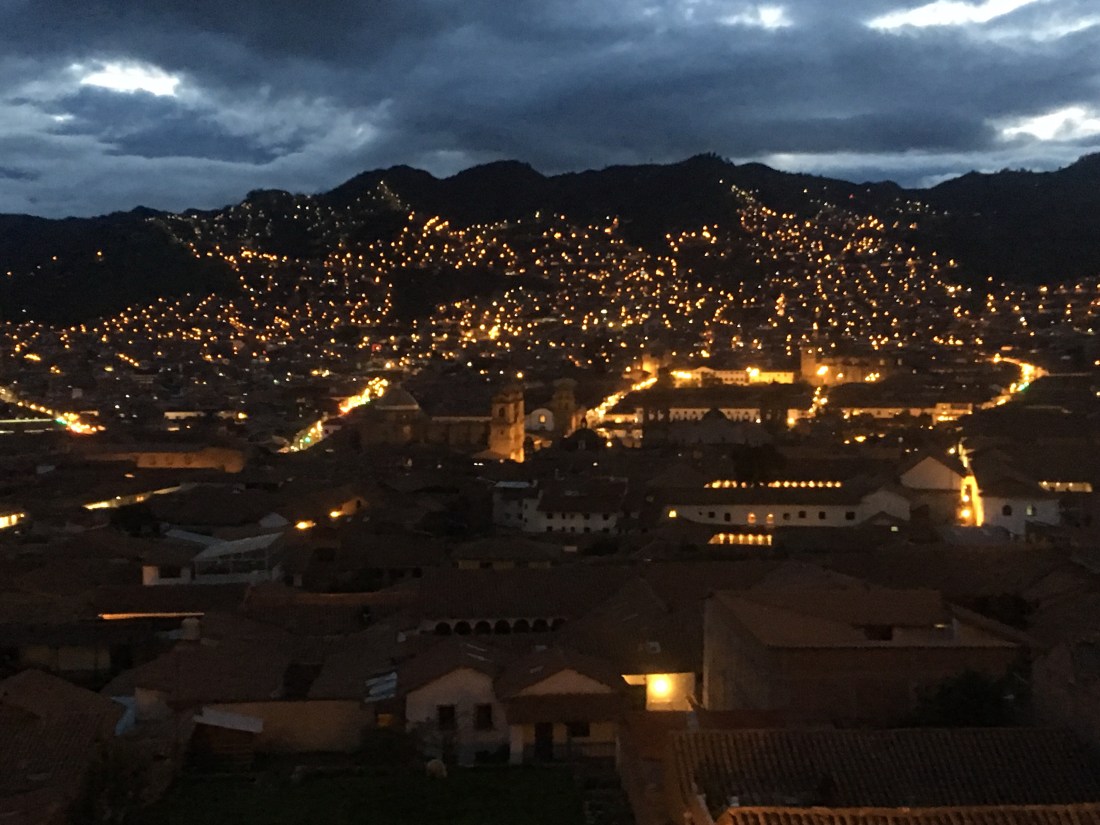
After the sunset we realised how hungry we were and needed to eat pronto. We said good night to our group and headed out with one dish in mind. Cuy, or as most folk probably know it, guinea pig. Determined to try this local dish at least once we went to the Pacha Papa restaurant. This was a lovely setting with candles, nice wine, an outdoor oven, and roasting rodents……. we weren’t totally confident in ordering but we went for it. Eventually our meal arrived, teeth, claws, eyes, and all!
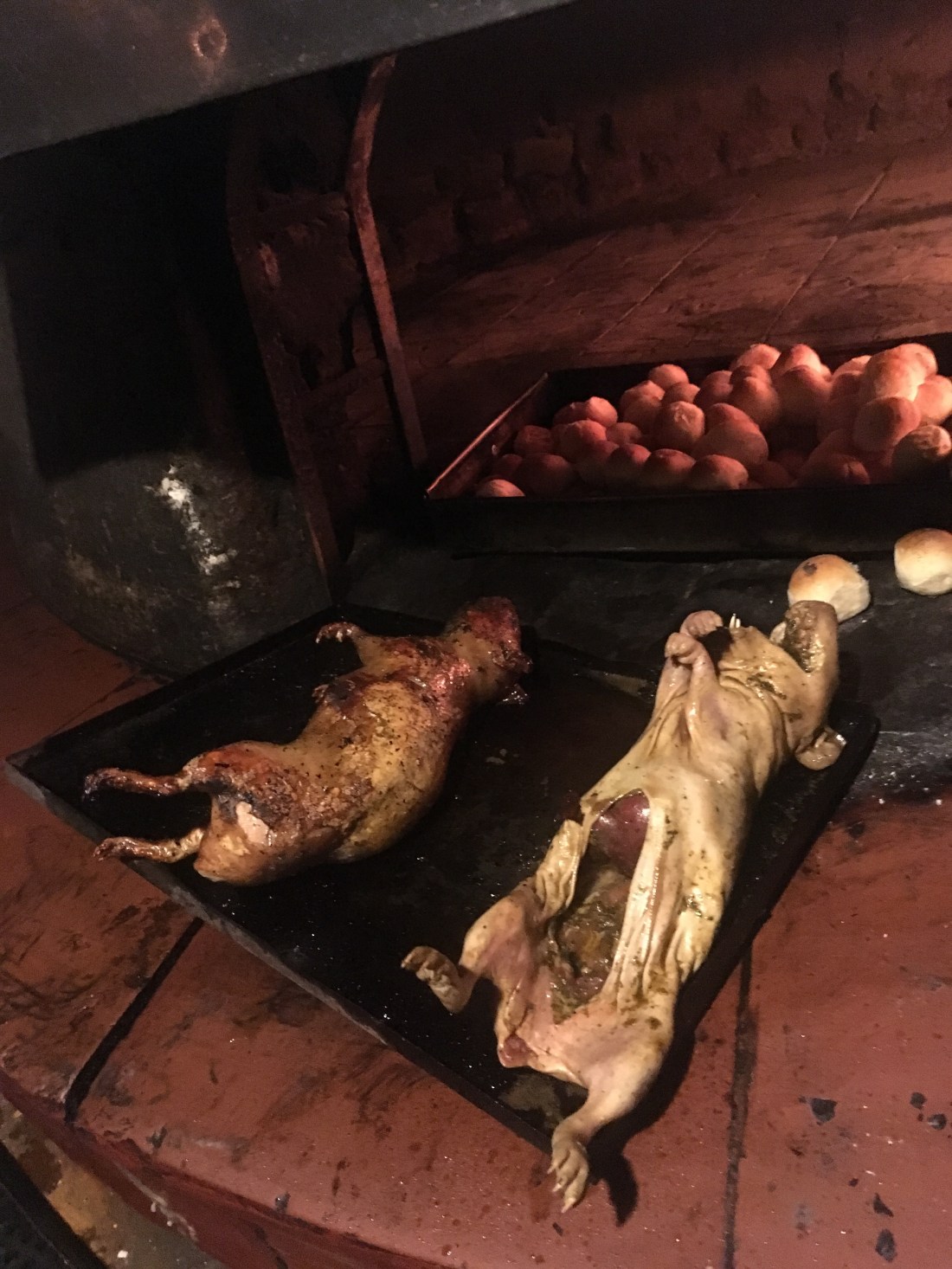
We were about to dive in but the waiter stopped us suddenly. Apparently they serve it that way as a joke and don’t expect anyone to just get stuck in! He took the dish back and returned it quartered without the head and feet. Now resembling a skinny chicken we tried our first cuy. The meat (what there was of it) was pleasant enough and had an almost sweet flavour to it. The minty Andean herbs that had been roasted with the guinea pig really went with it and we would say it was pleasant to eat overall. However, its not likely we’ll be trying it again as there isn’t enough meat and we had to order a pork dish as well to make sure we weren’t hungry. We had an early bus to catch the next day so we sauntered back to the hostel via the craft shops to get an early night.
And so we left Cusco and the majestic Machu Picchu behind, weary but full of gratitude for all we had seen and experienced that these incredible people called the Incas had achieved in their short rule. The next day our adventure continued on, as we headed for Puno, Lake Titikaka, and then eventually Bolivia!
Finally, a few tips if you are planning on doing the 4 day Inca Trail hike to Machu Picchu:
- Pack your day bag as light as you can. You’ll soon regret those toiletries you don’t really need!
- Rach hired walking poles, which were a god-send both for the uphill and the downhill. The paths aren’t smooth and these not only help with balance on slippery loose stone but are great at taking the weight off your joints on the steep sections. We spent 30 soles hiring 1 pair (around £7.50)
- Take a plastic poncho. Trust us, you’ll be so glad of it.
- Pack some sugary snacks, cereal bars etc. You’ll need to eat more than you think en route!
- You need thermals. Don’t hope you’ll be fine without them! Take a hat, gloves and scarf too.
- Obviously there is no electricity on the trail at the camp sites, so make sure you have battery packs, spare camera batteries and that everything is fully charged before you leave.
- Some people did the trek in trainers. We are still not sure how! Our recommendation is sturdy walking boots, which served us well.
- Zip off trousers (I know, not the most fashionable, but very useful for keeping the packing light!)
- Make sure you have a high factor sunscreen. You can burn through the clouds very easily at that altitude!
- Finally, take your time and go at a comfortable pace. It’s a tough trek and the altitude is punishing. Go slow, drinks LOTS of water and chew coca leaves / take coca sweets – they’ll give you a boost when you need it!
 Around the world in 140 days