
Author: Ged (BA & Mendoza days 1-2) and Rach (Mendoza day 3)
Photos: Rach (unless specified)
Buenos Aires Day 1
Our group landed in Buenos Aires around 1:30pm and jumped on a bus next to the world’s widest river, the Río de la Plata (at up to 140 miles wide in places we certainly couldn’t see the other side!) Our hostel was a Millhouse hostel, the same as in Cusco, just off the main road of Avenida de Mayo, so we knew it was going to be a great place, even if lads and lasses were separated. So our first afternoon was spent taking in the “Casa Rosa,” the Museo Casa Rosada behind it, San Telmo, and the main cathedral (the current Pope’s home cathedral), and all for free!
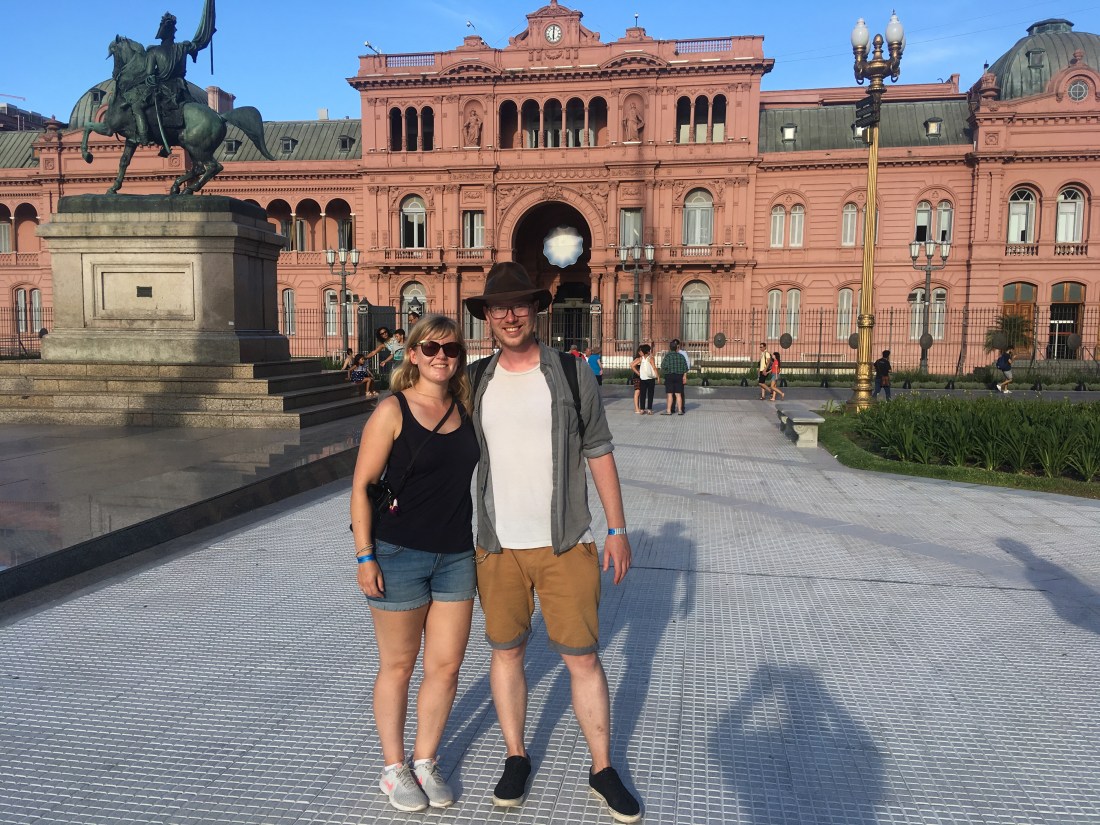
The area is beautiful, full of history, full of current unrest, and full of life. Days could be spent here but alas we only had a few hours. Our last meal as whole group was in San Telmo at a restaurant we can’t remember the name of but it was heavy with the smell of grilling steaks (Ged had lost count of how many he’d had by this point). It was a happy and a sad meal. We said goodbye to the excellent Flor, our G Adventures guide, and several of our group, not knowing if our paths will cross again. We’d had a lot of laughs together, and who knows, maybe we will again someday! The world is a small place. After, we decided to have a few more drinks at a hostel to say goodbye properly. Not too many, just enough. We were sensible and all were saying goodnight by about 1:30am. Well….. Ged and Shane snuck out after this to have a pint at the bar on the corner and Rachael and several of the other girls also separately snuck out to a karaoke bar to sing the night away. All would have gone to plan if Ged and Shane had sat inside the bar instead of outside and hadn’t waved at them in the street as they realised they were spotted! All had a good night and joined forces again about 4am (we think) to say goodnight proper. Jolly night had by all.
Buenos Aires day 2
Eugh. Getting in so late and having drank so much meant we woke late and packed with seconds to spare before checkout. We needed grease and salt. Bacon cheese burgers for breakfast. Nothing else would do in the absense of a full English (or full Irish for some of our companions!) Afterwards we grabbed our bags and headed to our new hotel: Hotel Costa Rica. This was the first place in 34 nights we had chosen! A quiet place in the peaceful/bohemian neighbourhood of Palermo. No rest for these travellers though as it was straight back out to visit the Evita Museum. This place charts the short life of the well known wife of former President of Argentina (Juan Domingo Peron). Eva Maria Duarte de Peron started from humble beginnings, became a radio and film star, married a rising politician, and became a prominent figure in her own right despite never formally holding office. The museum discusses her life, shows her clothes, shows the social policies she put her name to, and briefly describes the mutilations her body suffered after her death. The museum is very one sided in discussing the Peron era of Argentina, but it is certainly a must visit if you are in Buenos Aires.
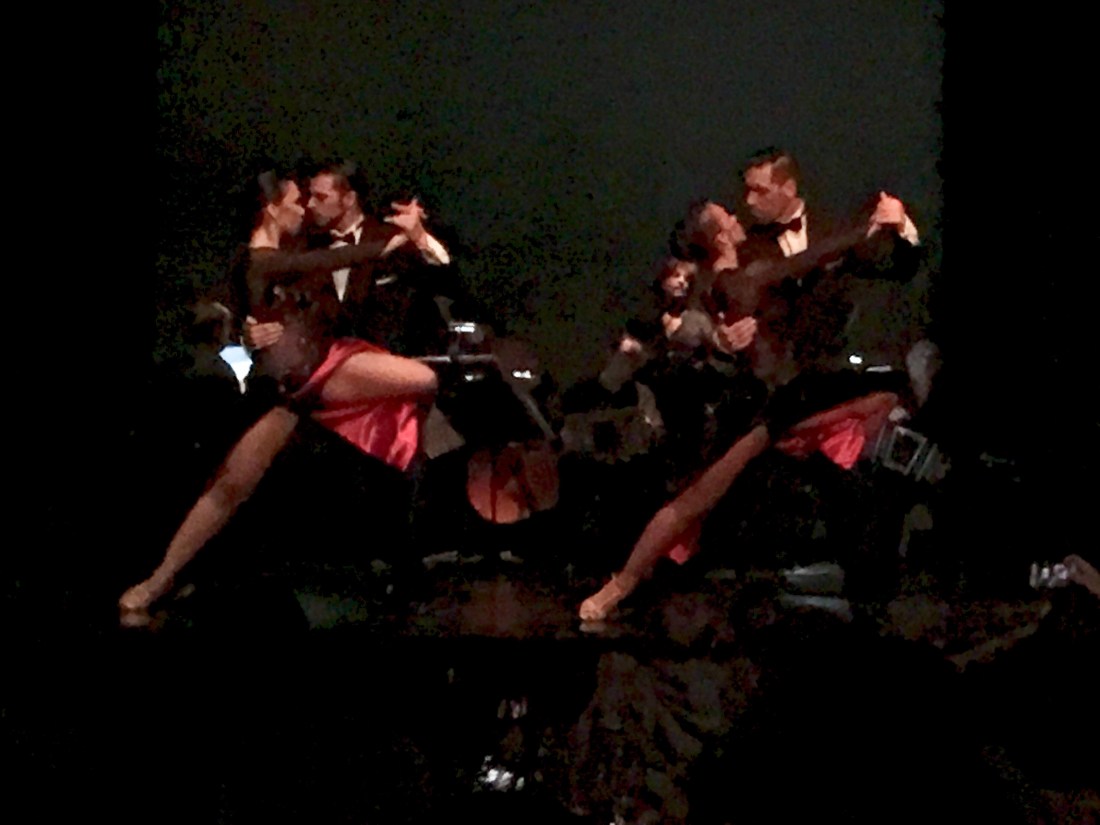
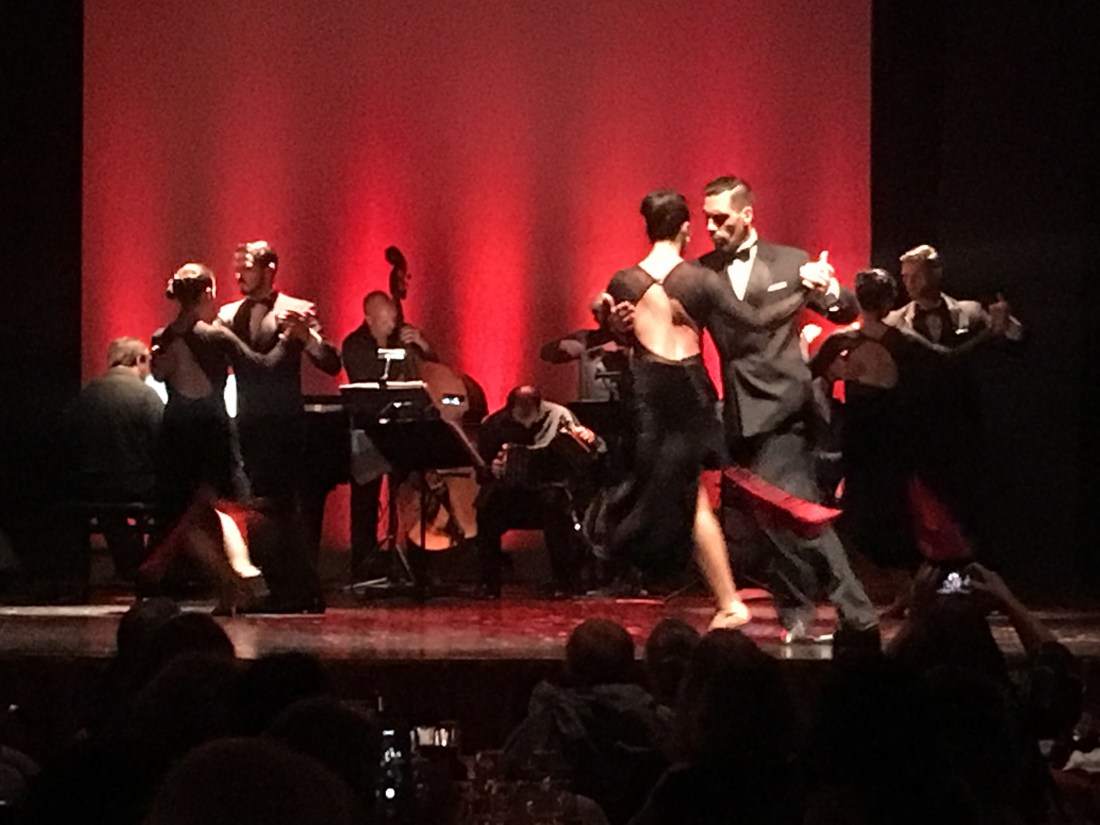
After the museum we took a stroll around nearby peaceful Jardín Botánico. We bumped into some friends from the G Adventures trip and laughed about the odds of such an occurance in a massive city. Small world indeed. No time to chat though. We rushed home to change for an evening of steak and tango. However, disaster occurred. We hadn’t had chance to book the restaurant we wanted to go to (Don Julio) so had to settle for a Mexican place nearby that was abysmal. Ah well, at least there was the tango ahead. We had prebooked a night the Piazzolla Tango and it was amazing.
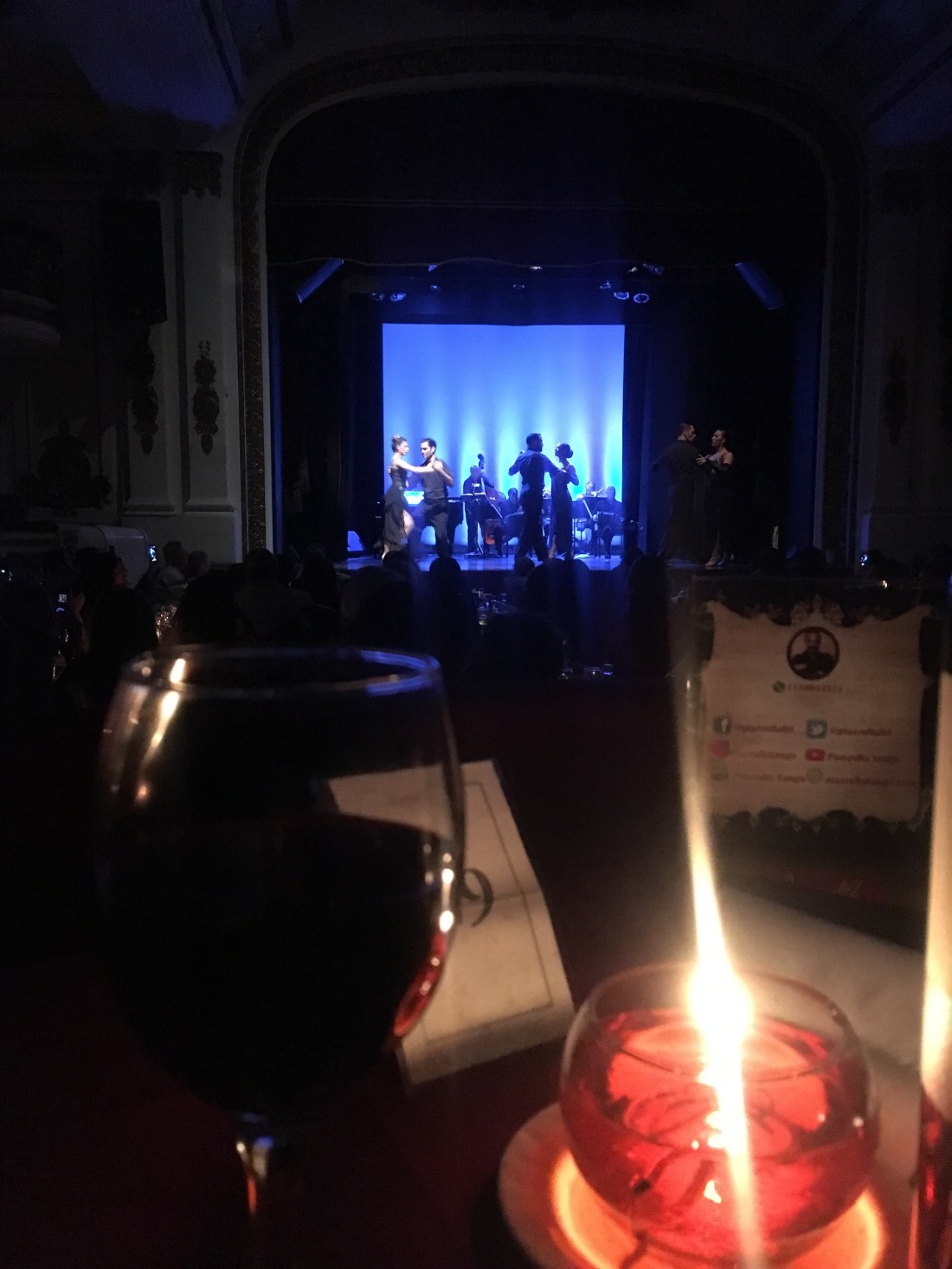
Smaller than some of the other shows, the theatre is intimate and really showcases the music and the dancers. Other shows may have bigger productions but Piazzolla’s music is so envigorating and is for many the true sound of tango, and perhaps Buenos Aires. We loved the show and headed home in the torrential rain, bellies full of Malbec and smiles on our faces.
Buenos Aires Day 3
Our last day in Buenos Aires started with a great breakfast in the oldest cafe in the city, Cafe Tortoni. This really was the last meal with the group and it was more than a little tearful for some. Some fellow travellers were going home and some going on for many more months. We all finally parted in the drizzling rain and we headed to catch the open topped tour bus.
The tour was not nearly as good as Ged remembered and a lot more expensive. It seems they had re-recorded the English audio since Ged’s last visit with a truly annoying narrator. The English pronunciation was ridiculous; “The peaple of dis neighbarhoowed did not owen der owen hoomes.” Surely a native English speaker could have been found for the recording! Nevertheless, the bus tour took us to the main parts of the city and it was likely the quickest way of seeing the place. Our first hop off point was La Boca, the birthplace of the tango. The colourful buildings, the murals, and the dancers in the streets all make the place feel lively and there is constantly something to look at.
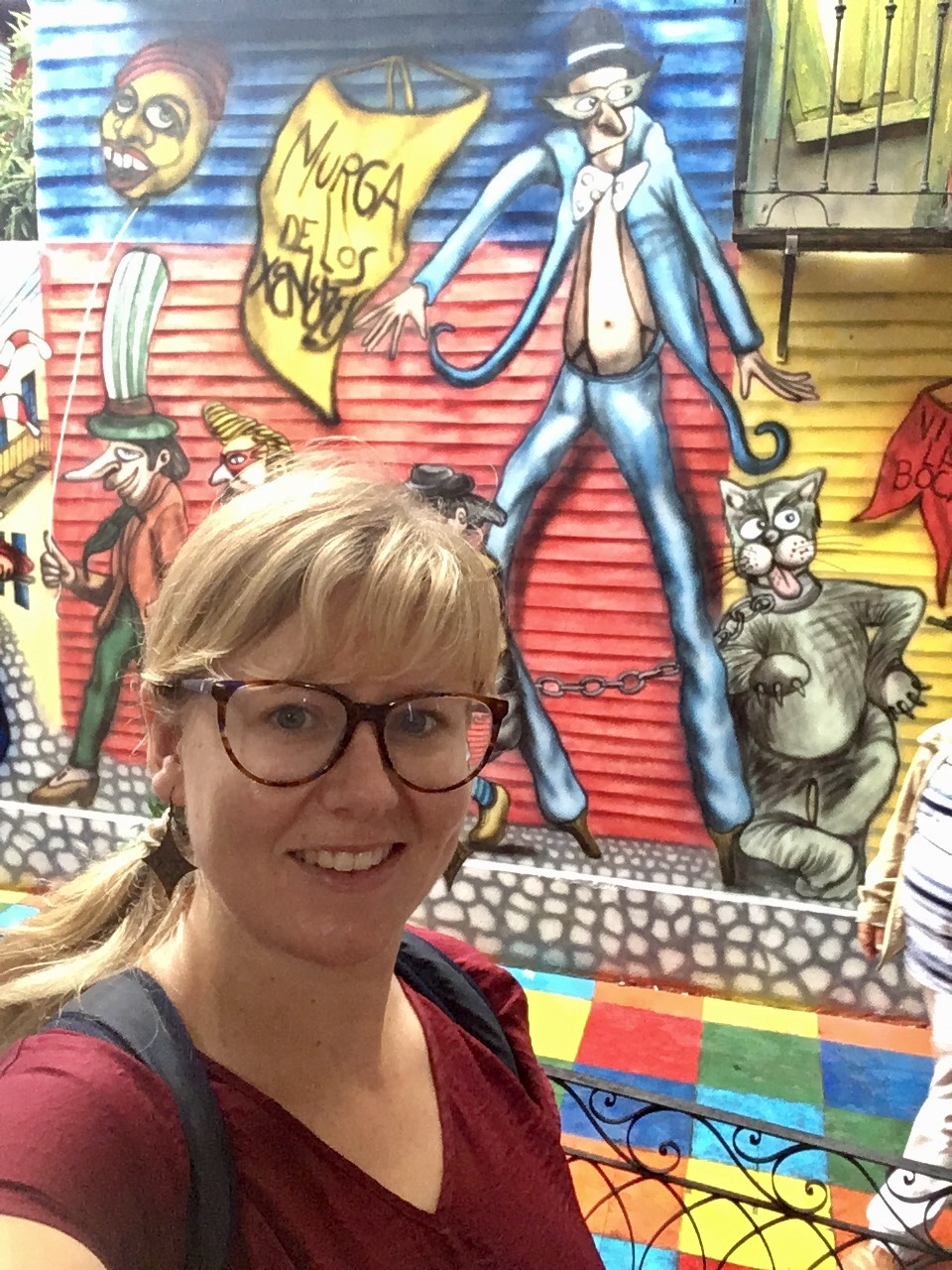
However, the sheer mass of the tourist tat shops and street hawkers has spoiled the area somewhat. This may once have been a cool cultural spot for music, dance, and art but now it very much is a tourist trap. We watched the street tango dancers for a while and left to hop back on the bus. Our second hop off point was the Recoleta area to visit the famous cemetery.
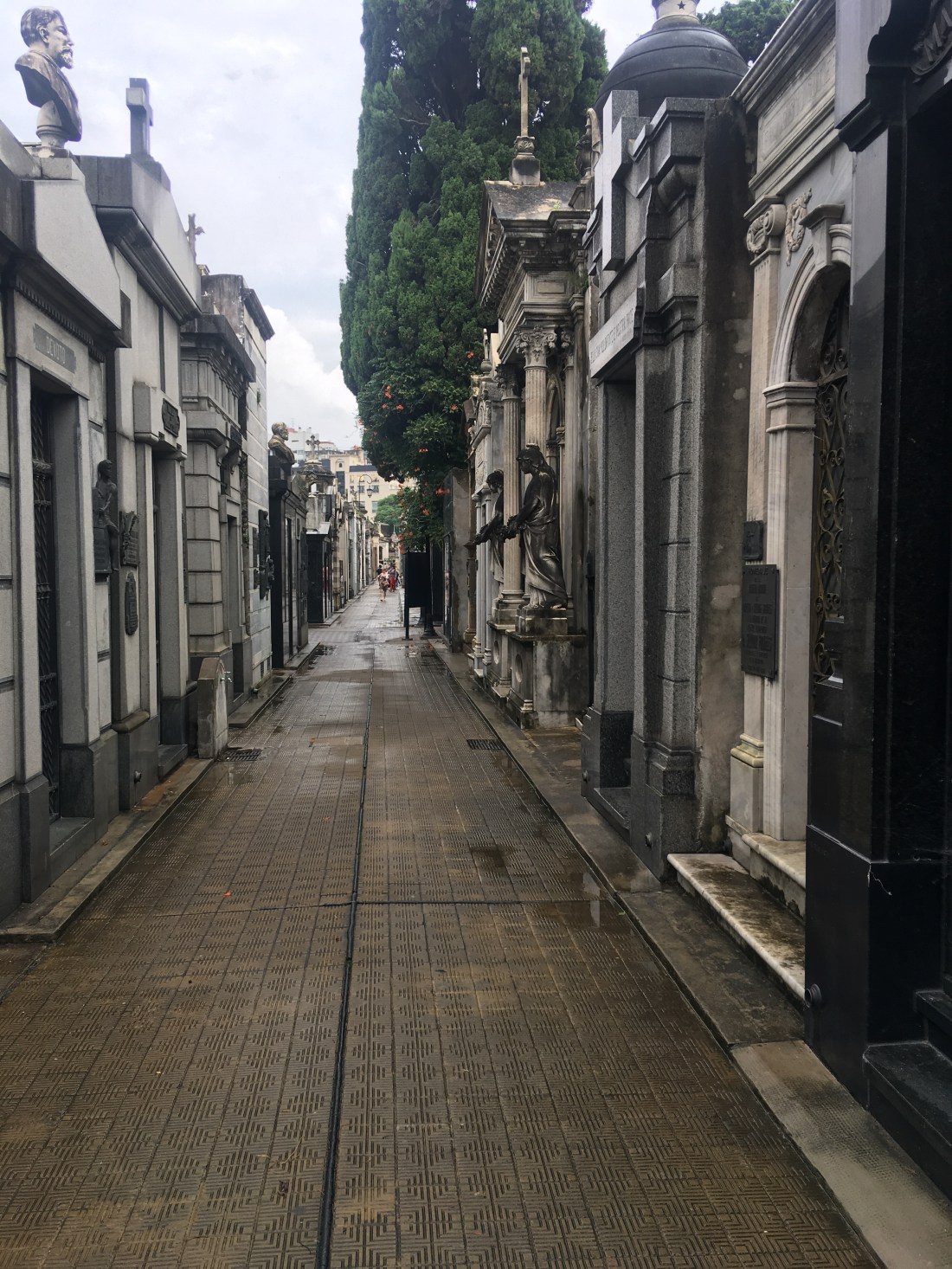
Many tourists come here simply to see the tomb of Evita, but the cemetery is so much more than that. Now a nationally protected site, this is the resting place of some many of the main families of Buenos Aires and includes Presidents, poets, scientists, generals, merchants, and clergy. The sheer range of styles and quality of carvings of the tombs mean that it is unlikely that you will ever see anywhere like it in the world.
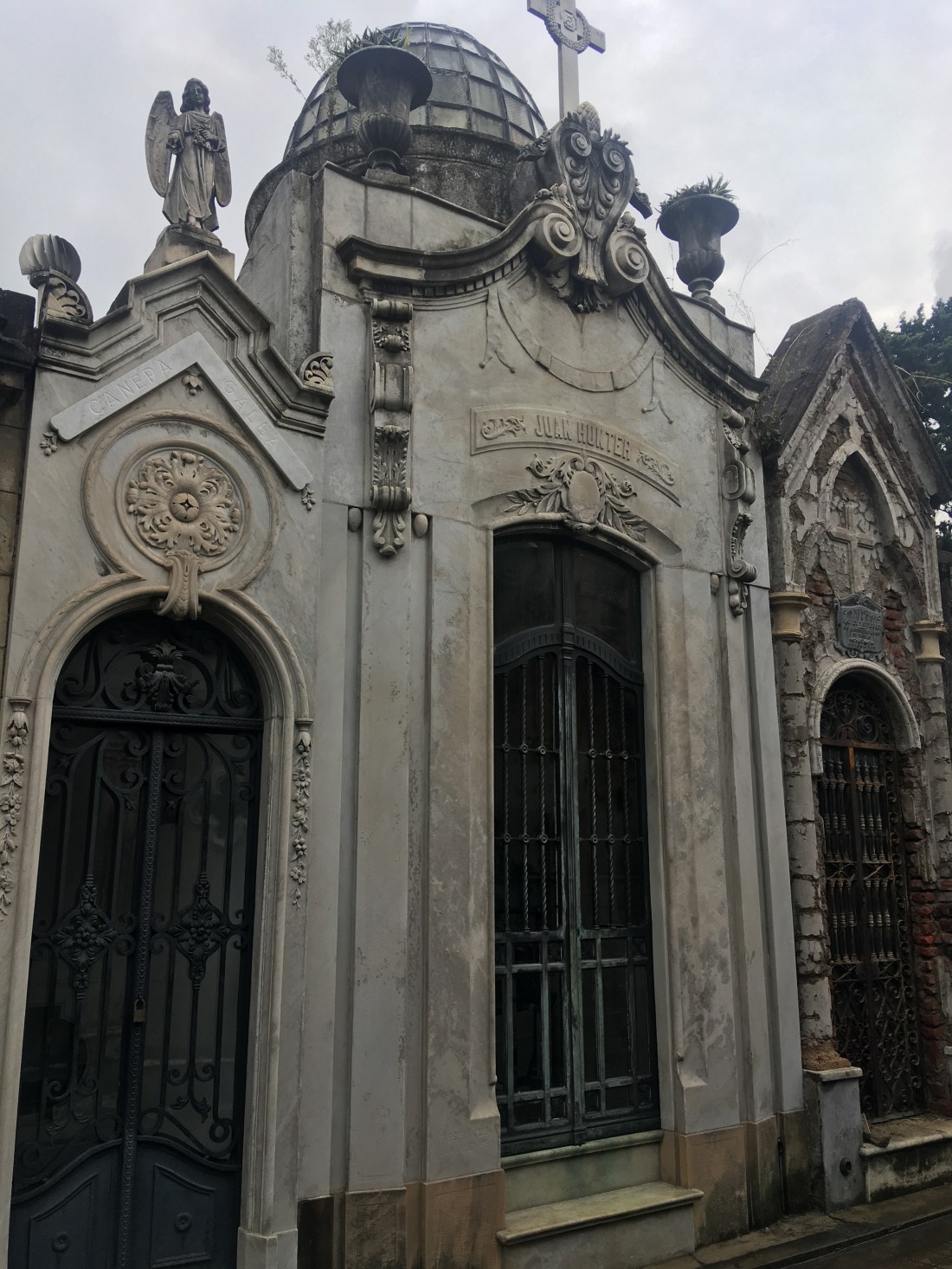
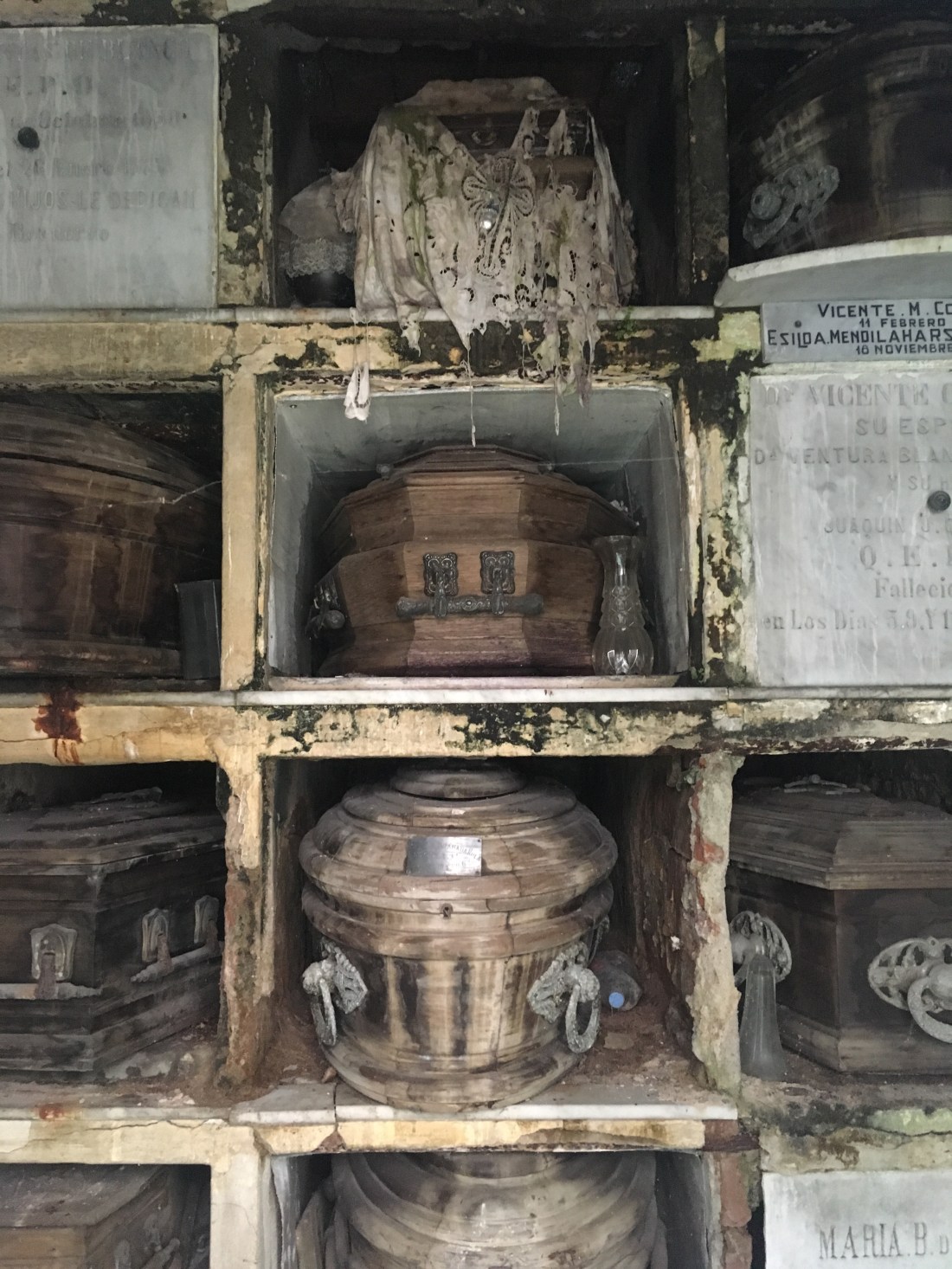
It is easy to spend hours walking the avenues of this city of the dead. Pictures of the deceased are framed within the windows of some of the tombs, reminding us of the people the tombs were built for. As each plot is the sole responsibility of the family however, many plots have fallen into disrepair and many have their windows or doors broken with caskets lying just inside – creepy!
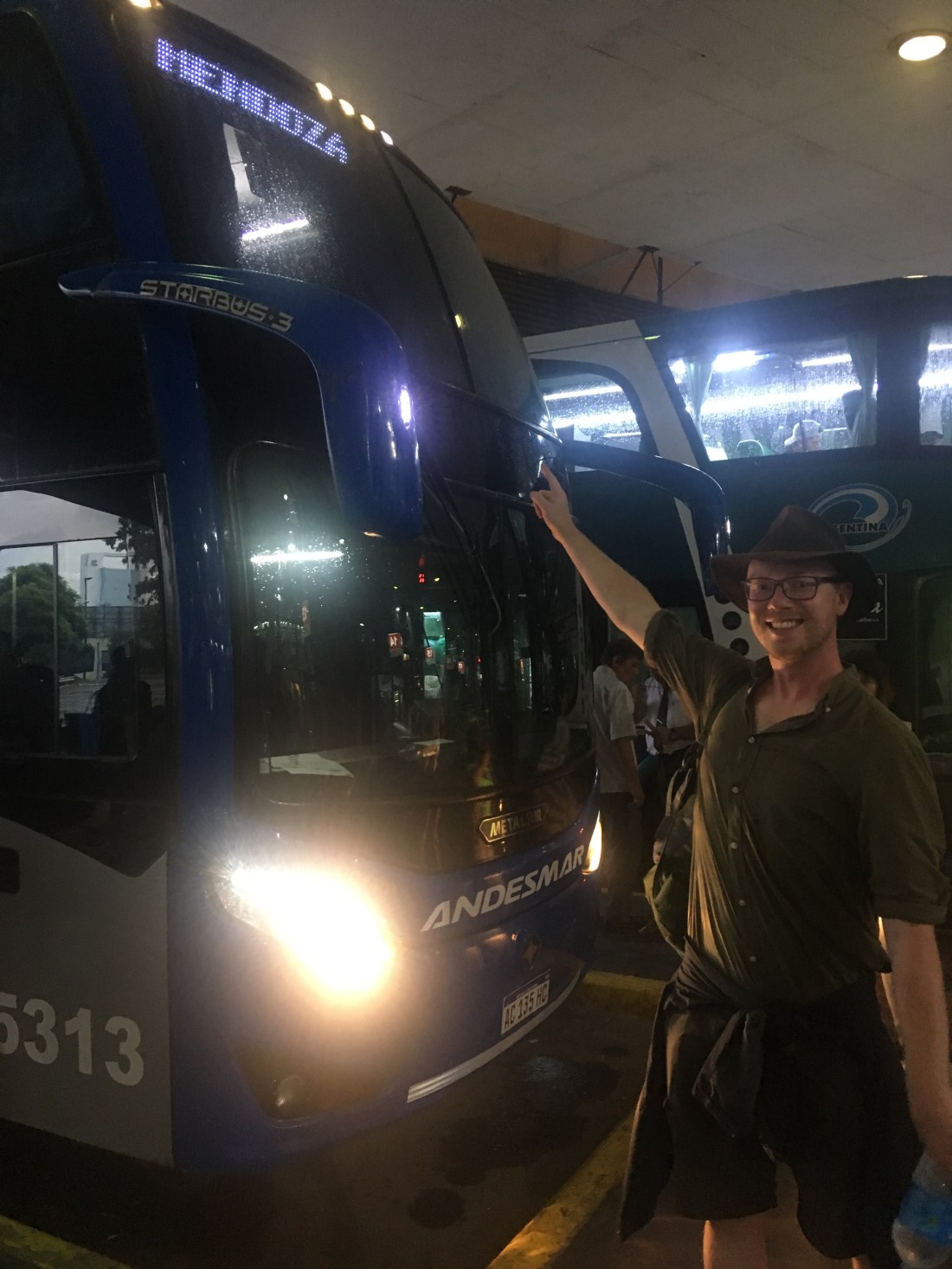
After the cemetery we strolled through the craft market in the park opposite and grabbed some awesome and cheap empanadas on the way home (57p each!). We didn’t have too long when we got back but we did manage a quick pootle around Palermo and bought a picnic for yet another overnight bus. We needn’t have bothered. This was the best night bus yet! Our ride to Mendoza included bingo, a film, a hot meal, breakfast, pillows, blankets, and seats that reclined far back. All for the low price of £11 with Andesmar for a 14 hour ride! Rachael was unconscious for most of it so the time flew by and we were soon in Mendoza city the next morning.
Mendoza Day 1
We arrived into Mendoza just in time. Kick off for Manchester United versus Liverpool was in half an hour and we were 20 minutes walk away from Pub Liverpool.
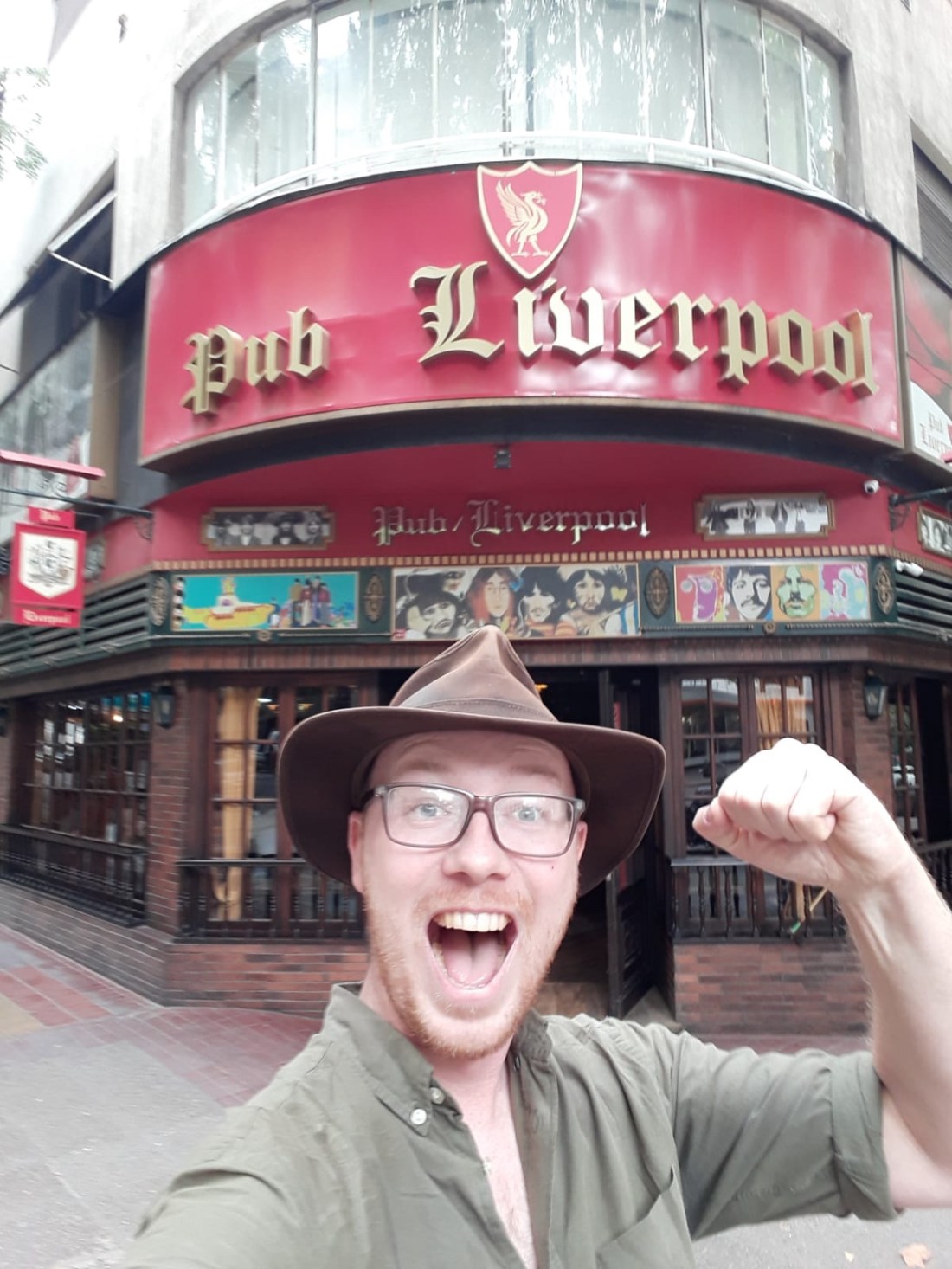
0-0 wasn’t the result we wanted but it was good to have a pint and watch the match near folk in Liverpool shirts (well for Ged anyway).
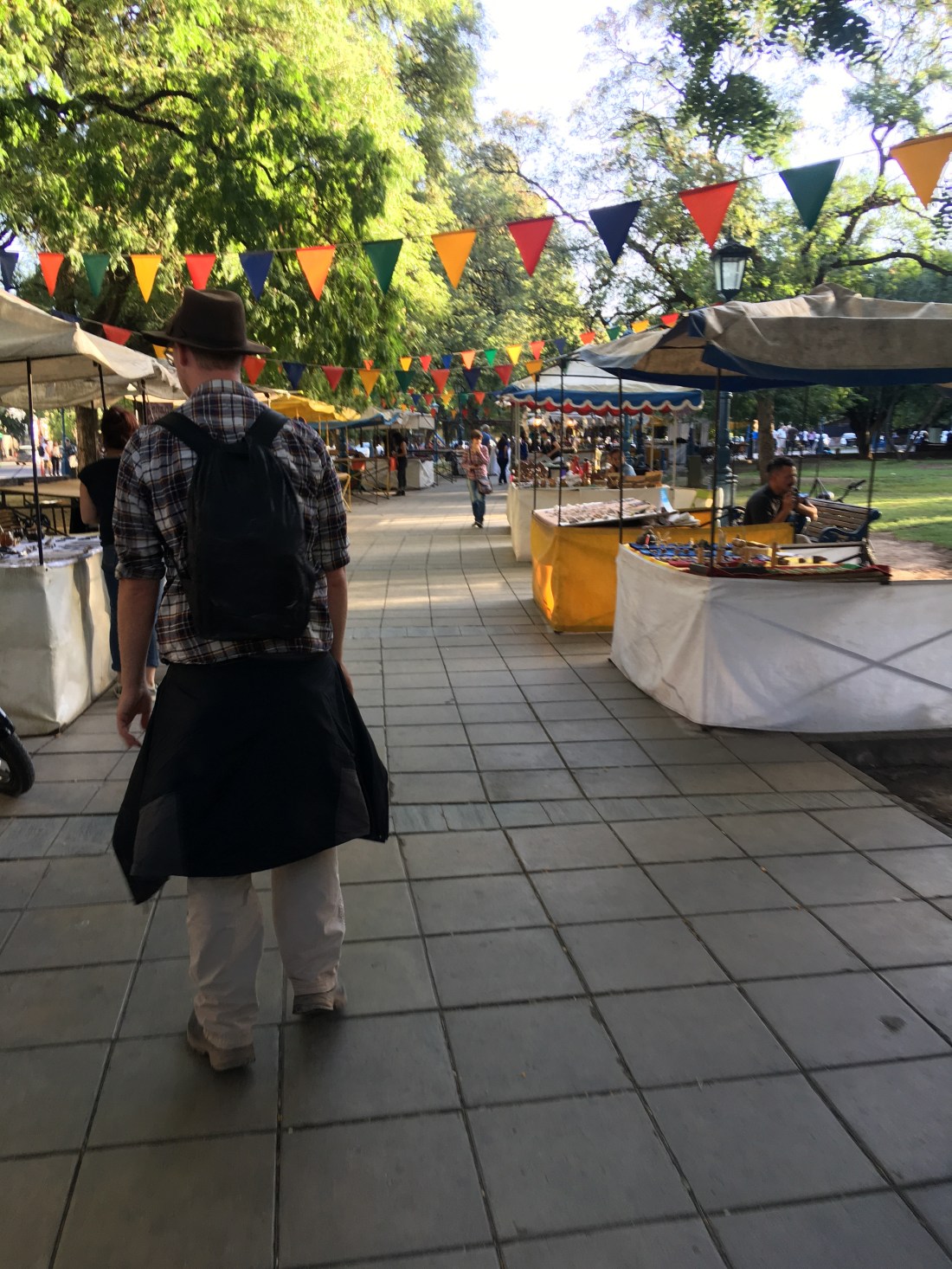
Our AirBnb accommodation was a little walk away and right on the main square. You couldn’t get a better location really. We threw our bags in the flat and went for a walk. It seems that a lot of Mendoza is being rebuilt. For example the art museum and the central area of the main square have been knocked down so it was a building site rather than a place to relax. A shame really, but we hadn’t come to Mendoza to see the city itself. And still there was a little market on!
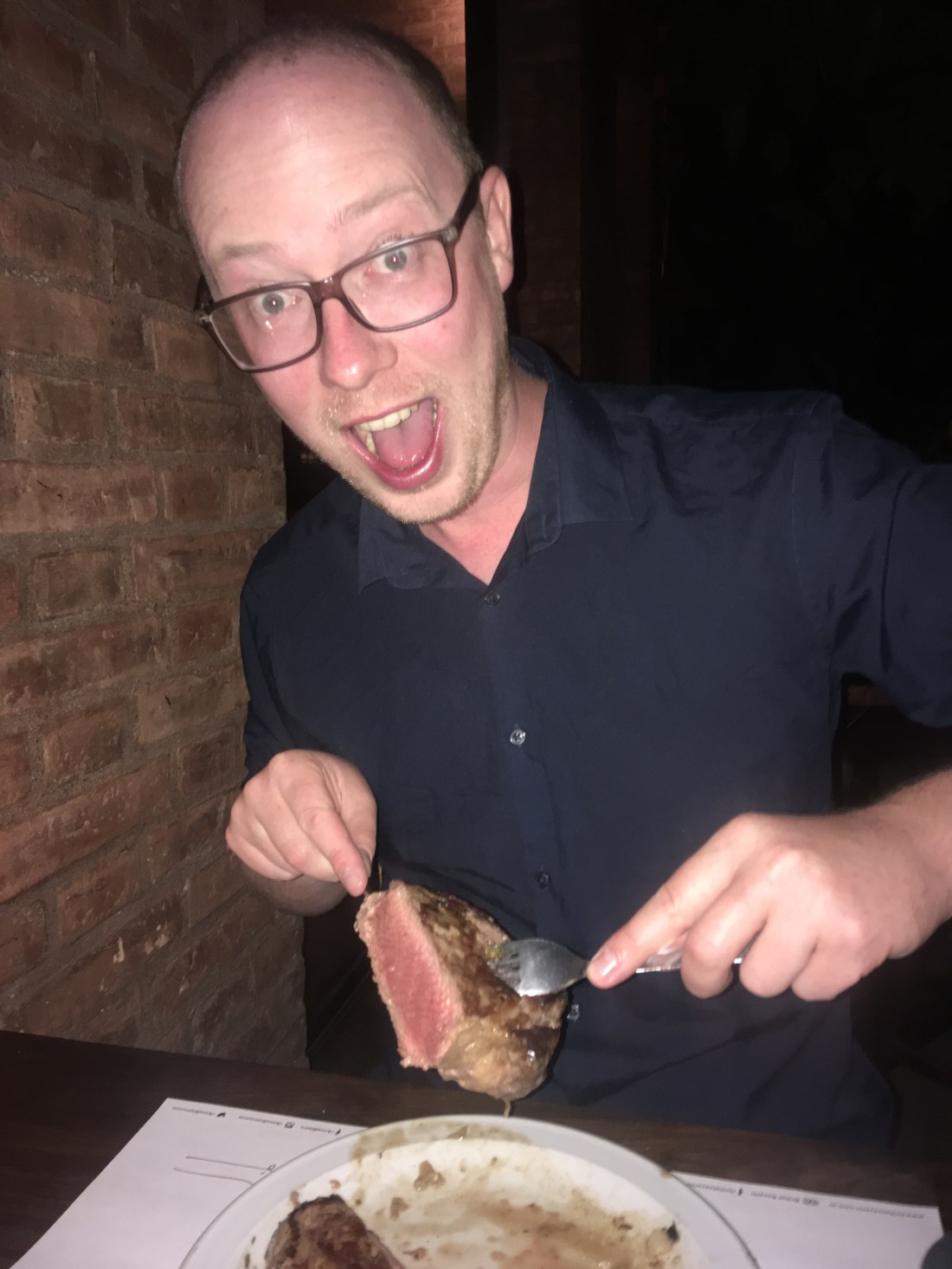
We grabbed some ice creams and made a reservation at Anna’s Bistro, a restaurant Ged had been to last time he was in Mendoza. After a lazy afternoon reading in the sun we headed to the restaurant. Both of us ordered rib eye steaks with a local malbec and wow were we happy. Easily the best meal of the entire South America leg; the steak was perfect, the wine delicious, and the garden setting was gorgeous. It was almost worth the trip to Mendoza just for this meal. Go if you are ever in Mendoza.
Mendoza Day 2
The next day we were up early and put our boots on. Time for more mountains. Our prebooked tour with Kahuak picked us up at 07:30 and we headed out of Mendoza through the vineyards towards the mountains. For $20 (US) we had a full 12 hour day out. We went to a beautiful resevoir, saw South America’s highest mountain (Aconcagua, with an elevation of 6,960.8 metres or 22,837 ft), followed the old railway line to Chile through beautiful canyons, drove up to the old border crossing with yet another Christ the Redeemer statue (they bloody love them in South America), saw Inca ruins, and a natural mineral bridge made from sulphur deposits known as the Inca bridge. It was a pretty full on day and we saw a lot of stunning scenery.
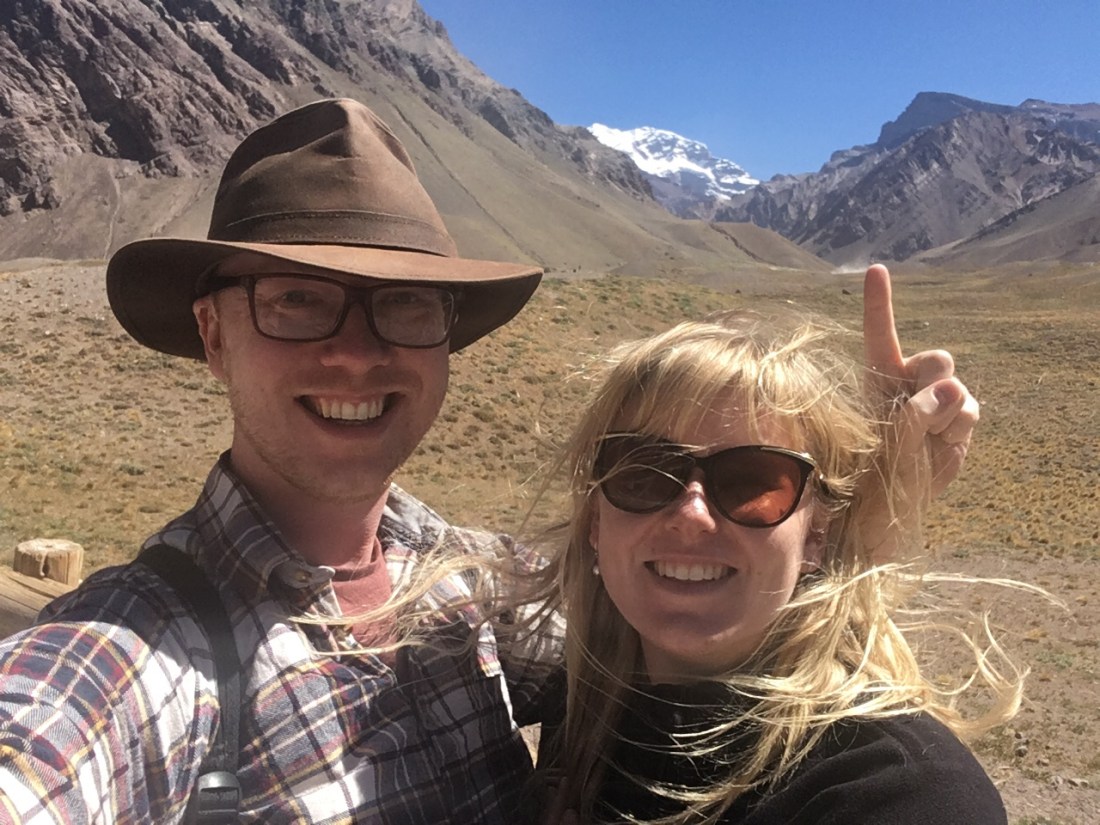
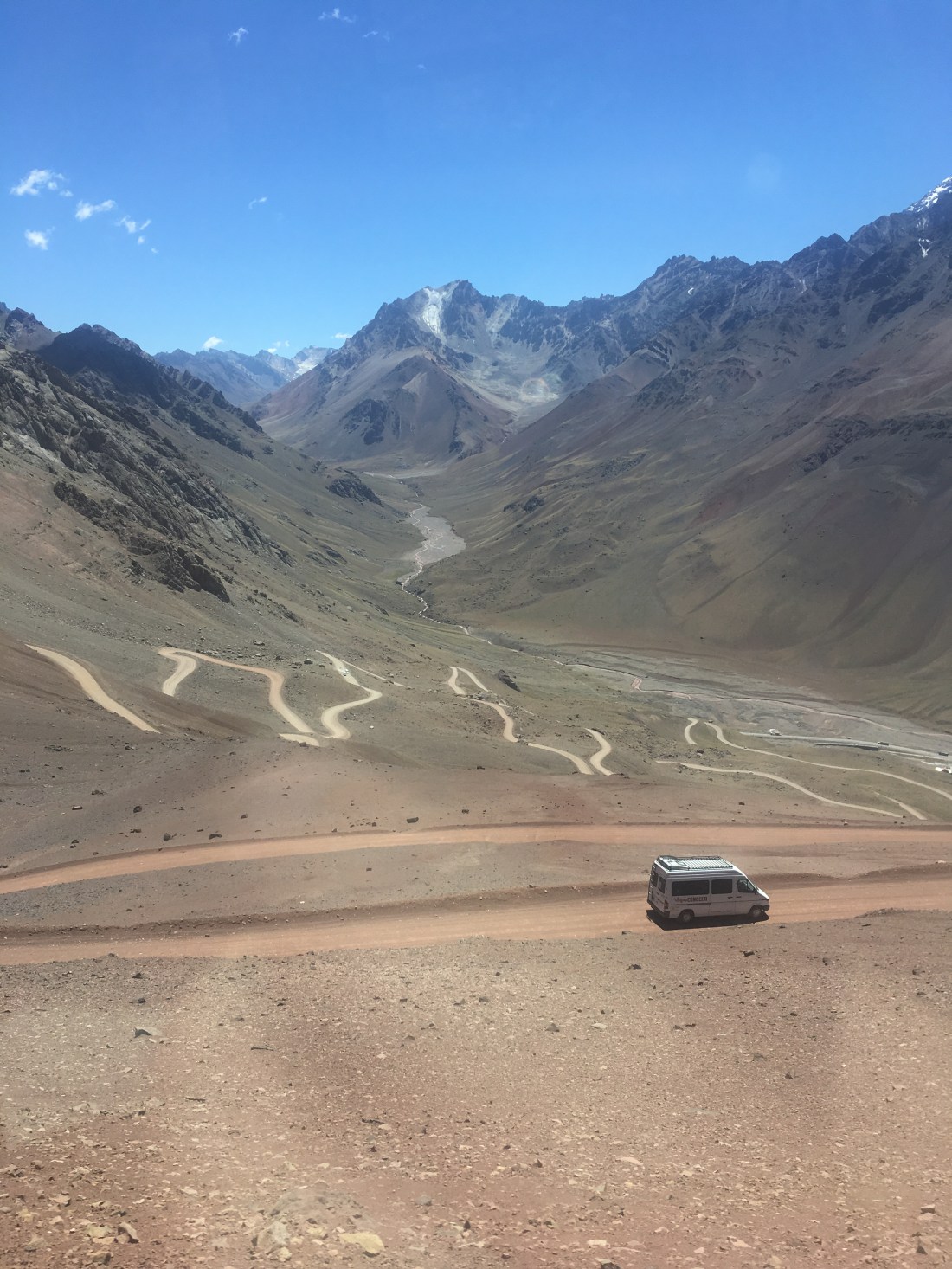
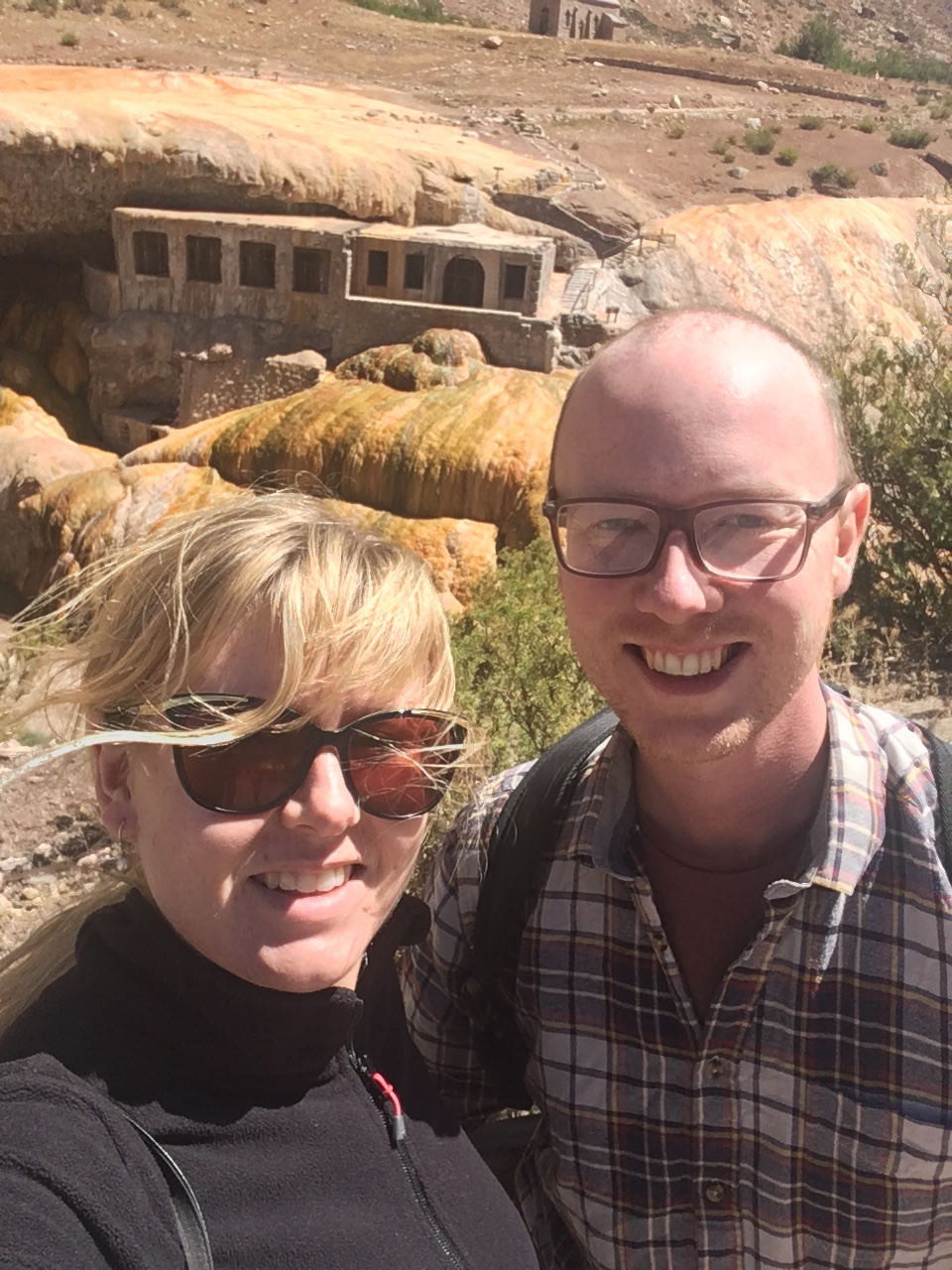
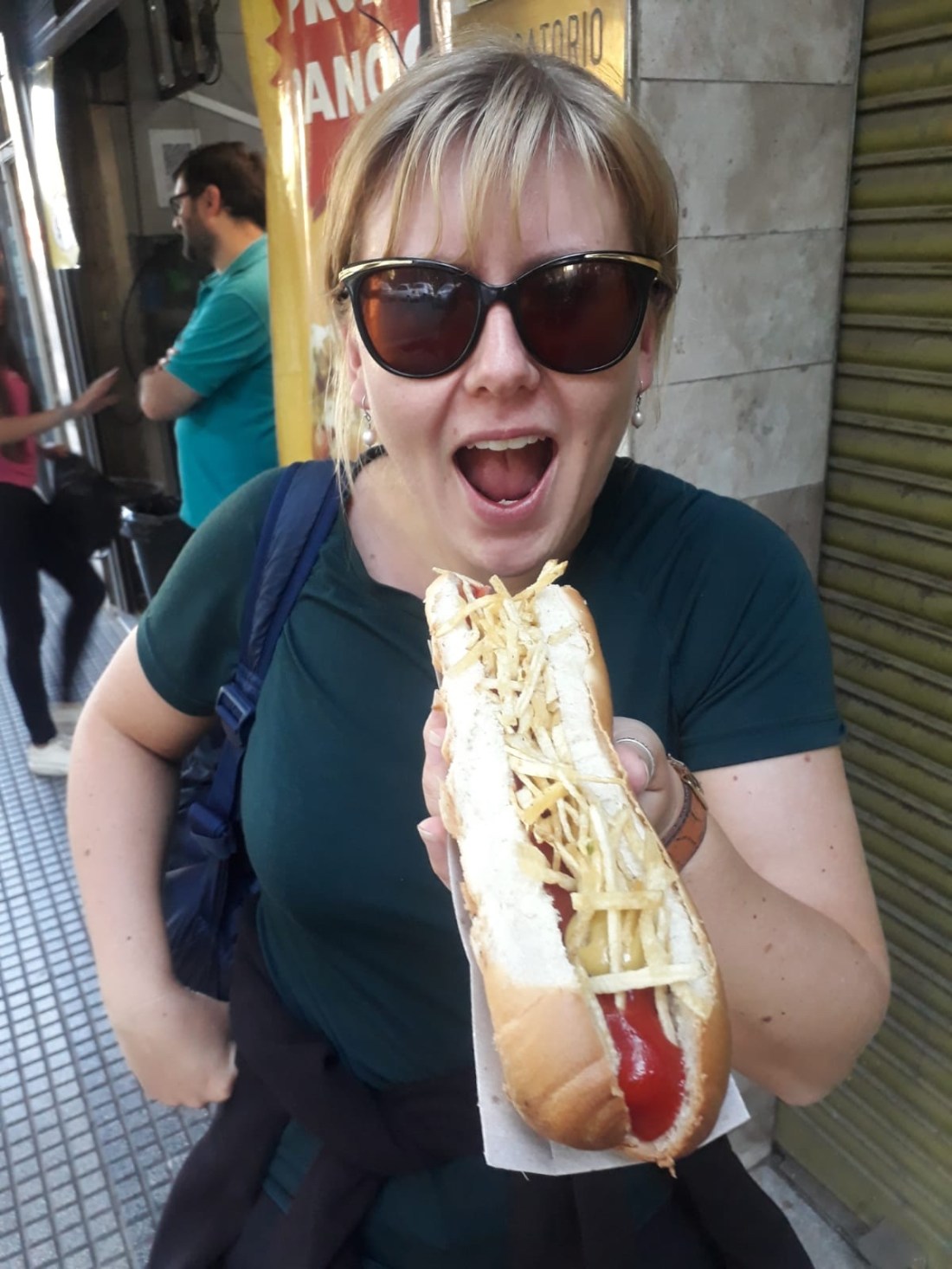
Ged had been here about four and half years earlier and was amazed by how much thigs had changed, mainly the view of the mountains being snow capped last time he was there – a big contrast to our view of them! Ged asked the guide if it was because of the time of year and the guide said no, it was because it hadn’t really rained in four years. There should be snow but there isn’t. The local ski resort doesn’t run the lift anymore because there’s no point and the hotel survives on bookings from climbers of Aconcagua, which can be climbed more easily now because of a lack of snow. The landscape was full of evidence of landslides caused by the melted mountain snow and the guide had no idea if this was how the mountains were always going to be now. His stories of avalanches flattening hotels in the 1930s seem impossible when you look at the landscape today. However, the area is still daftly beautiful and the different colours of the rocks were picked out spectacularly by the sinking sun on our drive back to the city. A quick pancho later for Rach (see pic!) and we were cooking for ourselves in the flat for the first time in over a month!
Then we quickly turned in, knackered from the 12 hour tour we’d just had.
Mendoza day 3
Our last full day in Mendoza was tough – we had to visit a select few of the 900 or so wineries in Mendoza province!
After a chilled morning sat in the park after check out of our air bnb, we were picked up and taken to our first winery in the Maipú region, just south of Mendoza city. Maipú is home to some of Mendoza’s biggest wine names and produces bright, intense, red wines made from largely Malbec and Cabernet Sauvignon. It’s landscape is packed full of flat vineyards with high-altitudes, which are nourished by low rainfall and cooler night temperatures. This slows ripening and makes possible the varietal character of wine here.
Bodegas Lopez
This family-owned winery, founded in 1898, was an impressive example of small-scale mass wine production – 15 million litres are made here per year (20 million bottles). It was exciting to hear in the tour’s introduction that only 5% of this is exported (wow Argentina!) so we were definitely going to try something we couldn’t drink elsewhere.
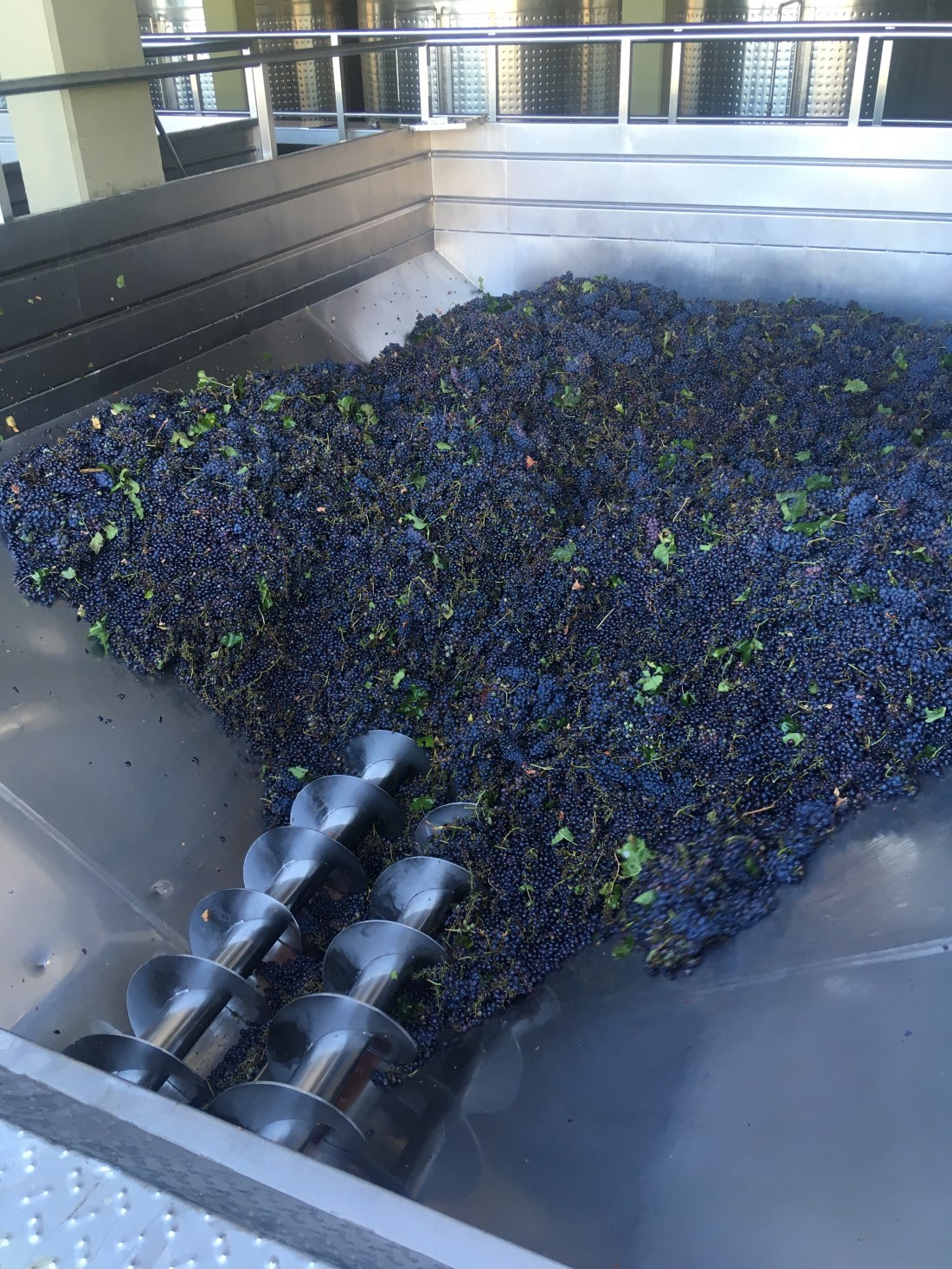
We were given a full explanation of the production process, viewing the equipment as we went (such as this machine that removes the stems from the grapes without crushing them!), and the huge french oak casks they age the wine in that they have working their magic for between 80-100 years on average, the cask tannins bonding with the wine tannins, before replacing them with new oak.
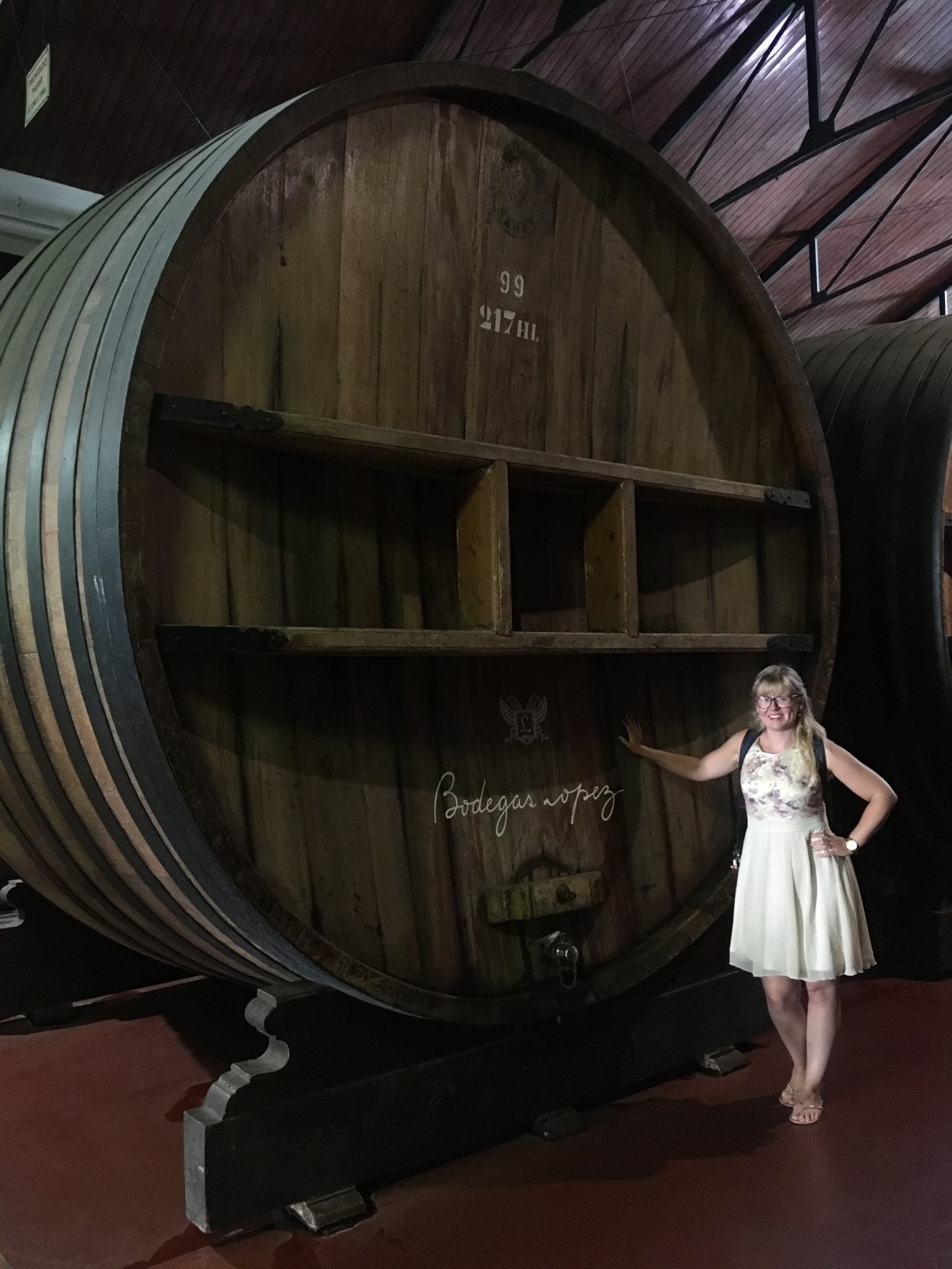
These casks have to be cleaned every 6 years, as crystals form on the inside and block oxygen from entering via the tiny holes in the wood, which is essential for the ageing process. How do they clean them? Well tiny sized men have to go in through the only way there is – the tiny ‘door’ in the front where the tap is (see silver plate on the pic – Ged for size!)
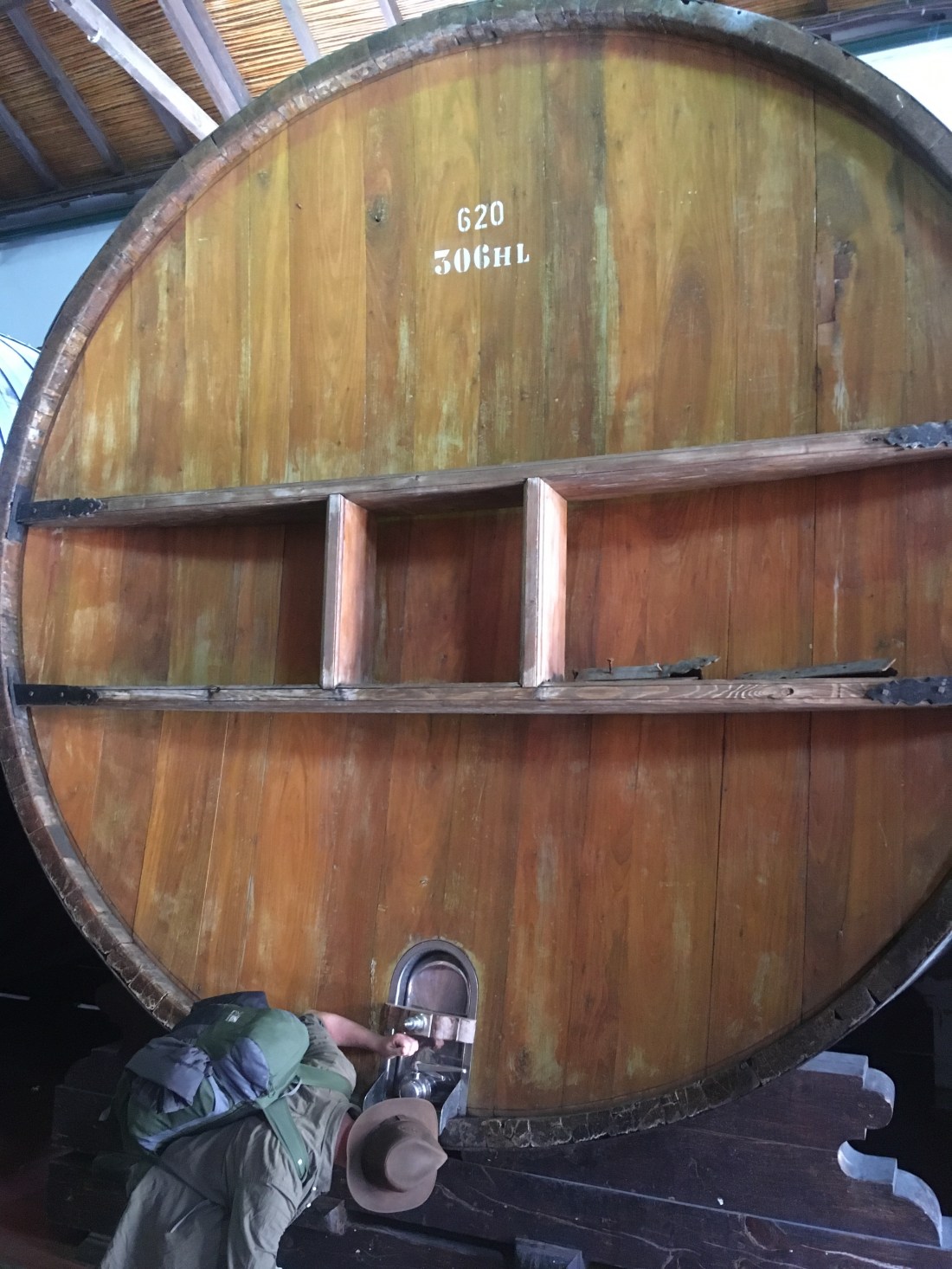
Once they have squeezed themselves in they can only be in there for 30 mins at a time because, despite wearing an oxygen mask to prevent inhaling the pure alcohol fumes, alcohol permeates the skin too! They tag-team to brush the crystals off, sometimes having to climb up ladders inside to reach the top, when the barrels cannot be rolled. What a job!
Soon it was time to taste the wine in the wine cellar and to get our first proper Malbec. What we didn’t know was that Malbec was brought to Argentina in 1852 by a Frenchman, Michel Pouget. Mal-bec translates to ‘bad in the mouth’ as the wine produced from the vines didn’t taste so good in France, but the soil and climate of Argentina vastly influenced the flavour, and so Argentina became the only country to have original Malbec vines of true French heritage.
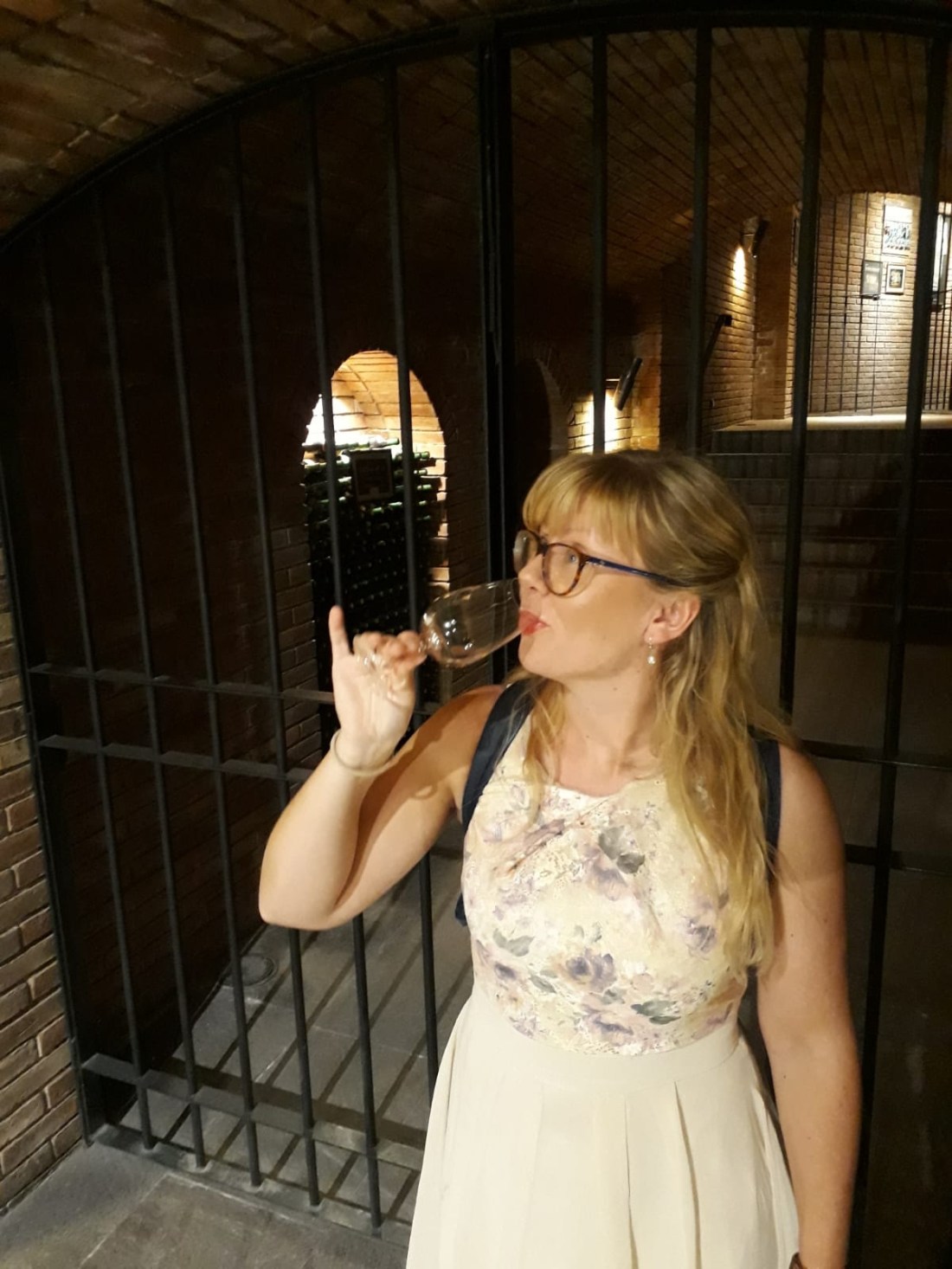
The Malbec we tried was a 100% Malbec, made in 2016, bottled with organic cork to continue the ageing inside the bottle. With a short explanation of how to assess wine – holding the glass over the palm of your hand to see its colour (red wines lose colour as they age, becoming more brown), how to aerate wine and when to (only necessary for wines several years old, etc – we were sipping away. It tasted great – hints of leather, cherry, fruits of the forest and spice.
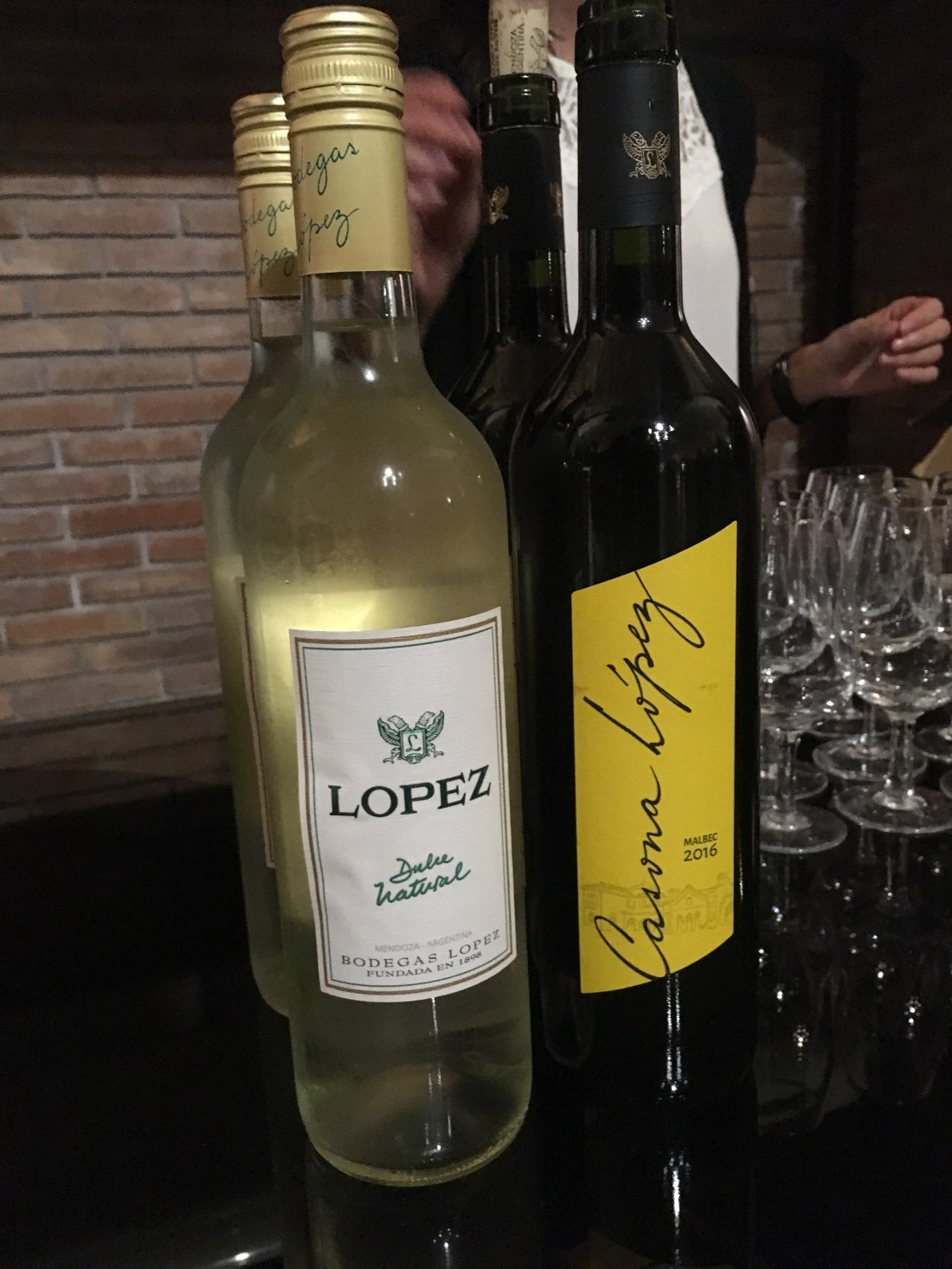
For contrast we also sampled a sweet white wine, which was very easy drinking. A bottle of the Malbec purchased for around 190 pesos (£3.50) and we were off to the next place!
Pasrai olive oil press
Mendoza’s soil is also perfect for olive trees, and we were treated to a change of pace from the wine (and some tasty treats!) at this small olive press started in the 1920s. Who knew that there were over 80 different types of olives! Here they mainly make extra virgin olive oil (the kind with the least fatty acids), and olive oil beauty products, both of which are sold only at the press itself, as each bottle is filled and labelled by hand!
We’ve got to say that the oil was delicious, some of the best we’d ever tasted. Gerard particularly enjoyed the garlic-infused variety, and Rach the rosemary-infused, as we worked our way through the different flavours drizzled over bread with yummy toppings such as hummus, beetroot and black bean.
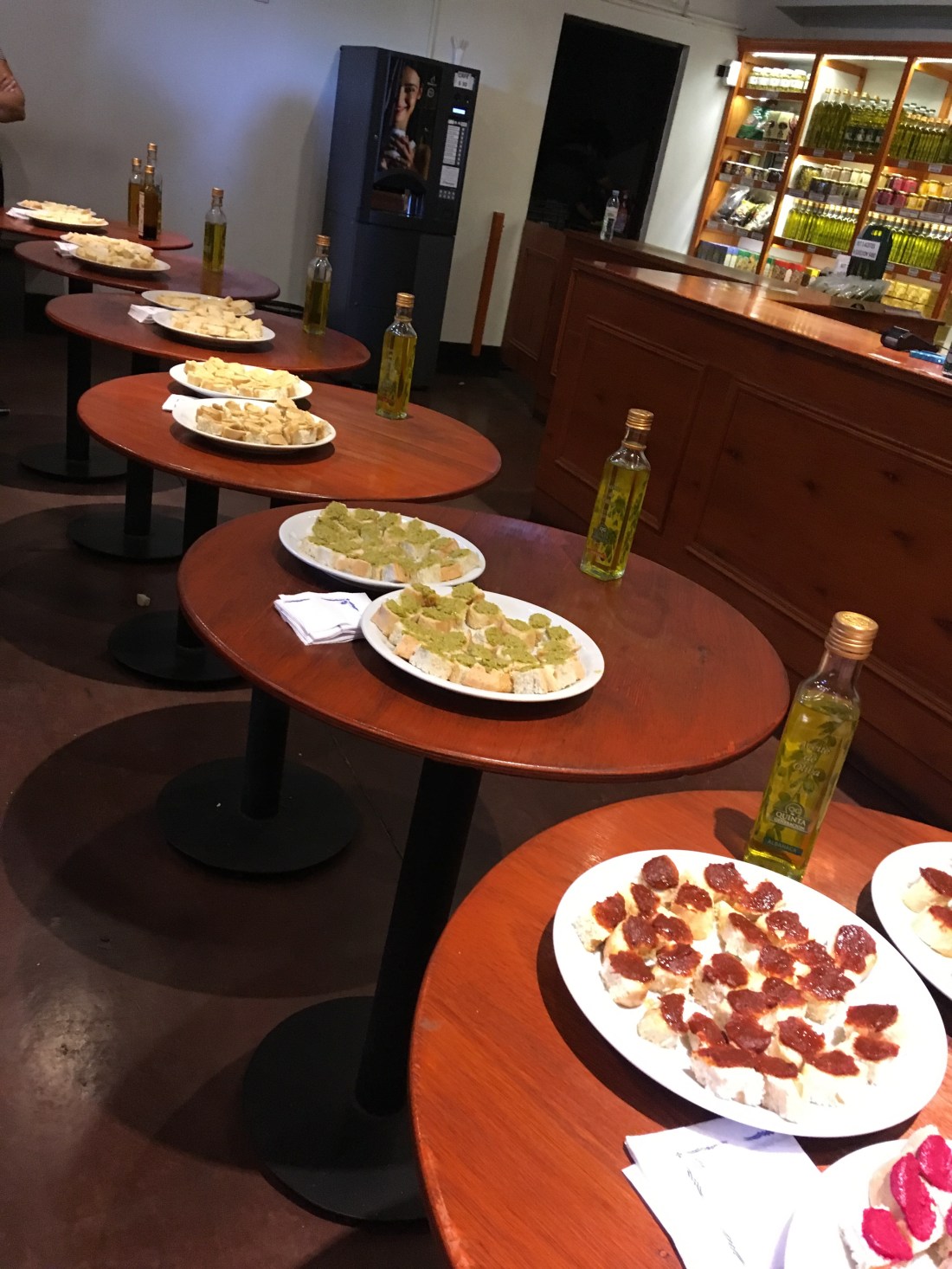
Back in the minibus again we heard more about what makes Mendoza province so perfect for growing wine. 300+ days of sunlight a year make this a stomping ground for grape-growing, and as a result the wines here are a little stronger (around 14%). They plant the vines from north to south to take advantage of these sunlight hours, and use the water from the Andean mountain snow as irrigation. We had driven past the dam that stores this water, divided into drinking water and irrigation water by channels into Mendoza, on our mountain tour the previous day.
Cavas de Don Arturo
Our second and last bodega of the day was this smaller & quainter family-run winery. They harvest their vines by hand between March-April, beginning a 6 month process to make their wine. Here we got to see the irrigation channels (they water the vines every 8-10 days) and a fermentation set up of tanks filled to 70% capacity before the yeast from grape skin is added.
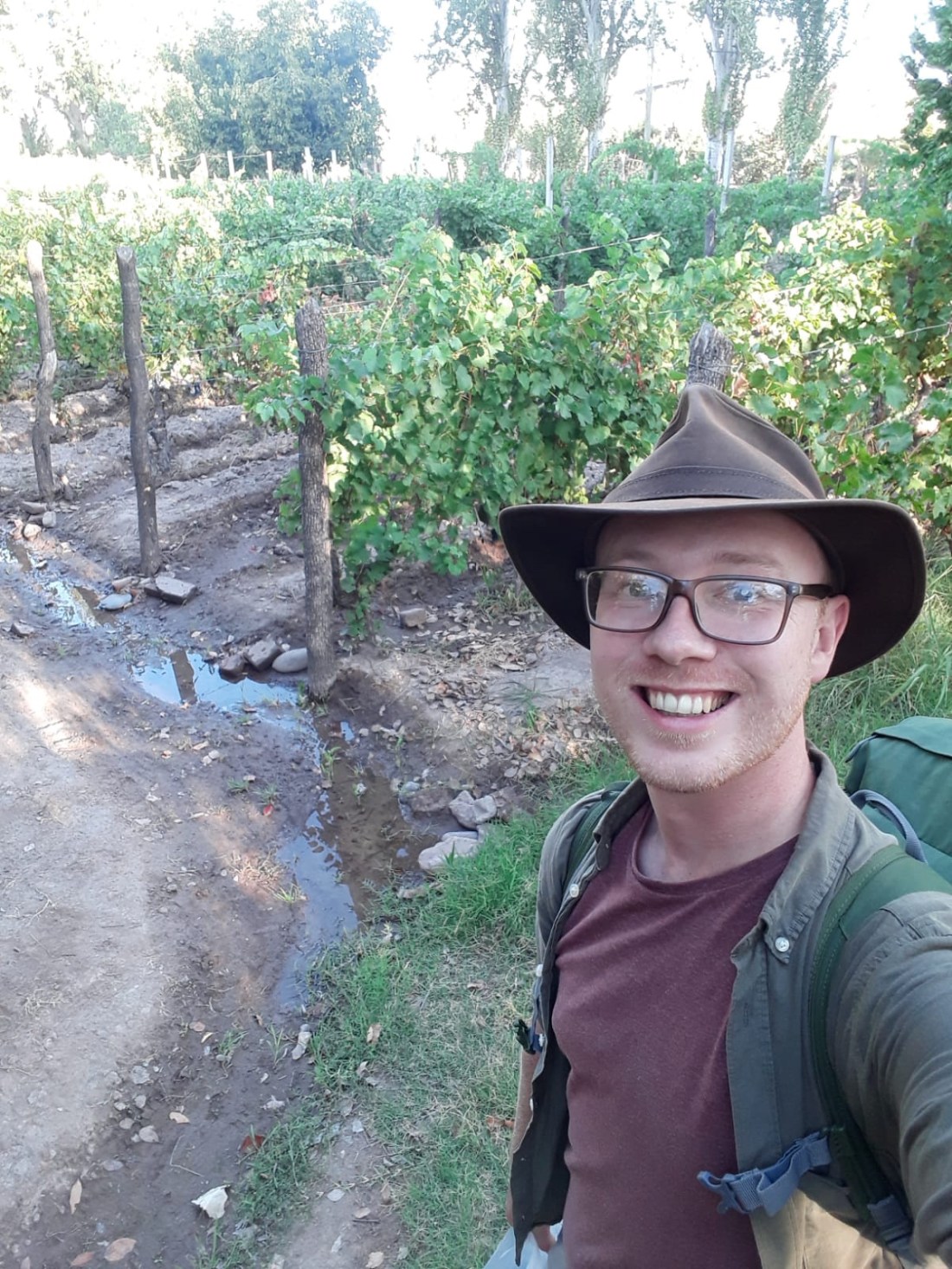
They also used french oak barrels to age the wine, but very differently they shave them once a year, clean them every two and change them every four, which we thought led to better tasting wine when we got to the tasting room!
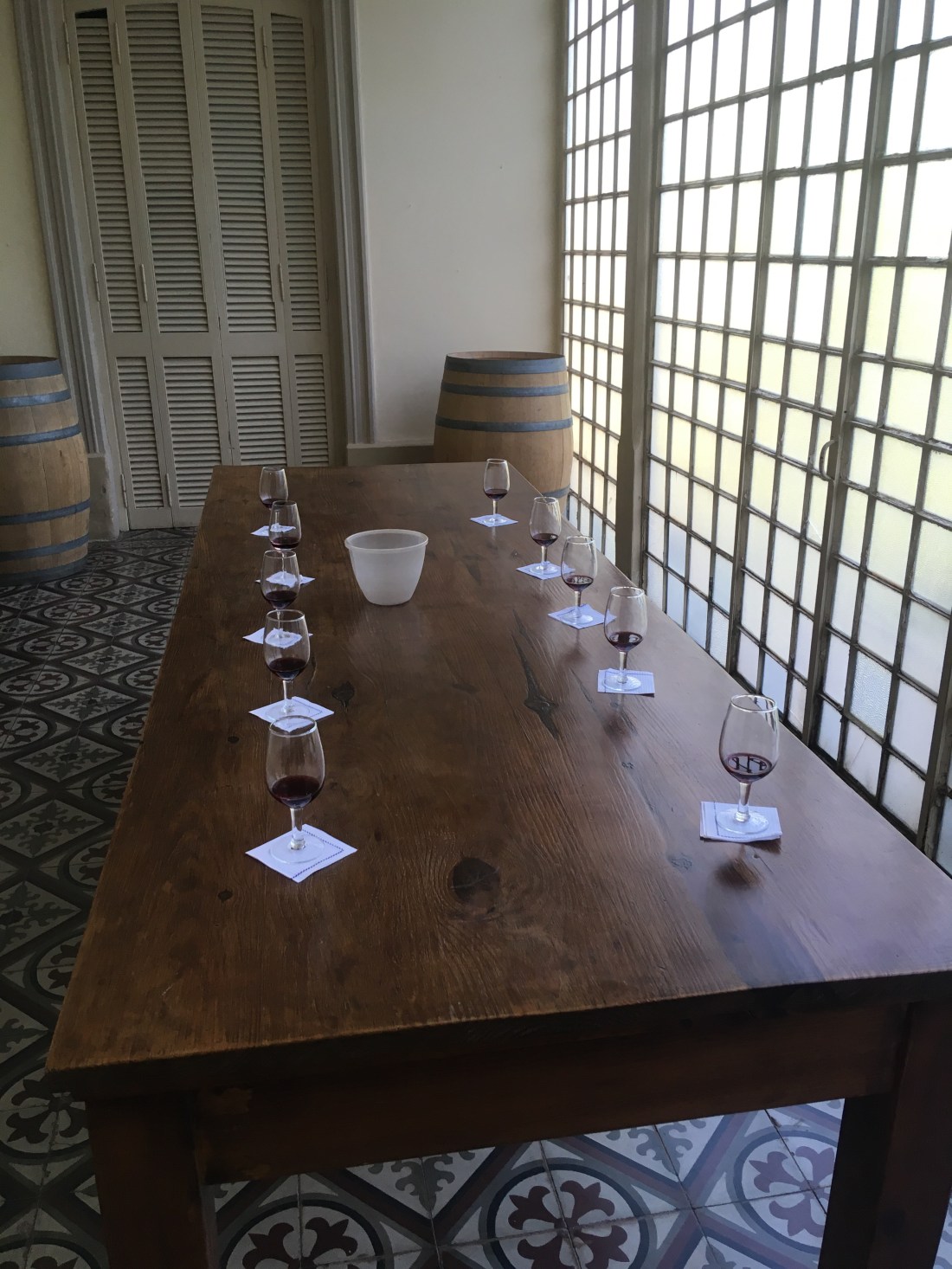
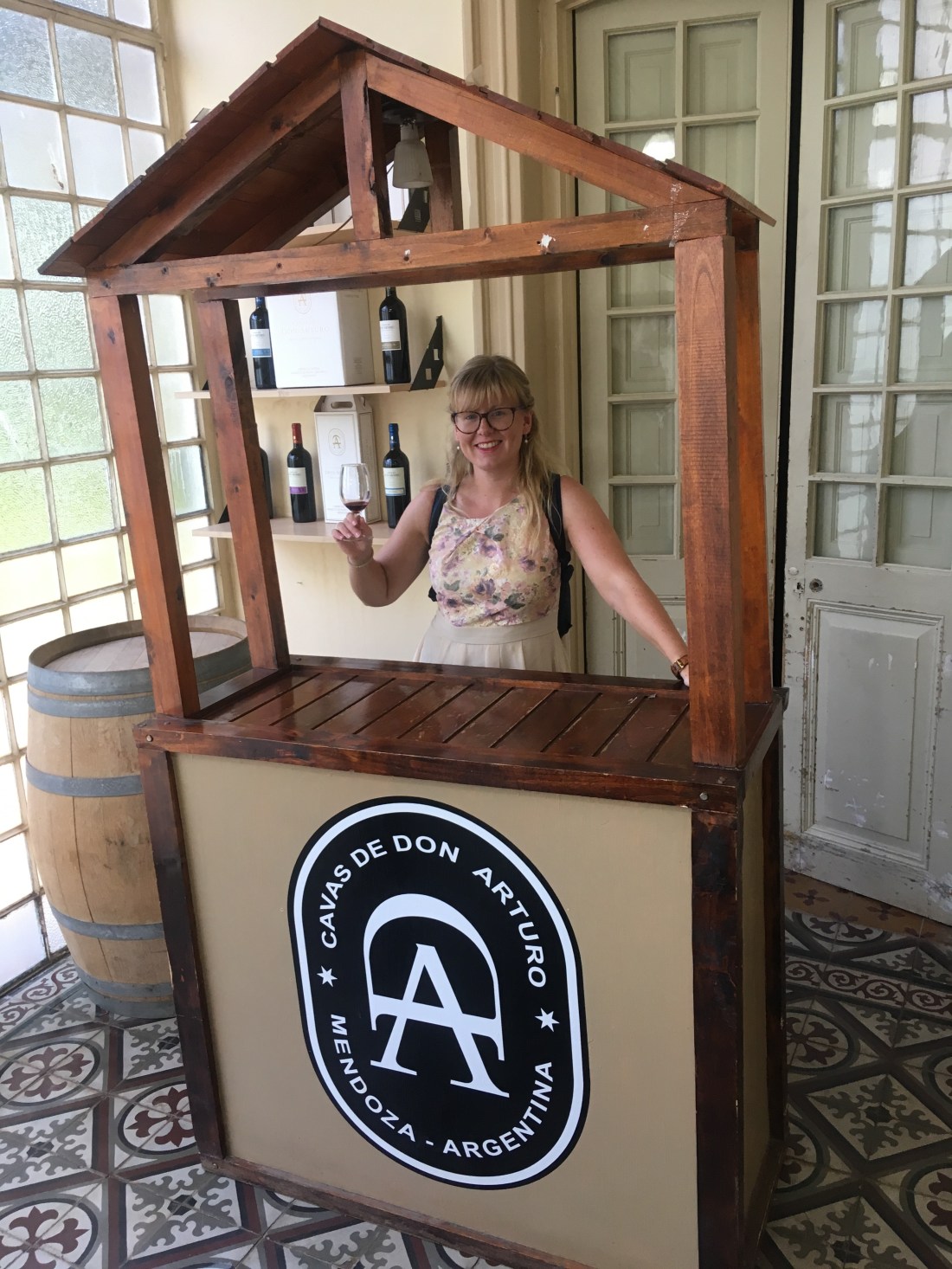
It was great to visit this smaller, more handmade wine production bodega (1,700,000 litres per year – around 7-8 times less than the previous winery). Here they don’t export at all not sell to supermarkets, but from the site alone by reputation. We bought a 2013 Malbec as a gift for our NZ hosts, aged for 9 months in french oak barrels and then 5 years in the bottle.
Some things we learned about wine during our wine day:
• To age a wine properly keep it at 45 degrees, not 90, to keep it in contact with the cork (which has small holes for air), and rotate it every month
• Red wines like to be stored in dark and humid conditions (around 16-18 degrees)
• The reason why red wine goes so well with steak? The tannins in red wine remove grease from the tongue left by meat, acting as a palate cleanser!
• Dark chocolate and cabaret Sauvignon is a good combo!
Before we ended the day we paid a quick visit to a church honouring the Carrodilla Virgin, patron saint of the vineyards. She was reputedly chosen as such as she was celebrated in a church that survived an earthquake in the wine region, so she is thought to have blessed the vines. Now there is a grape harvest festival every year, where she is taken among the crowd and worshiped so that she guarantee a good harvest every year for all the people in Mendoza.
What a day! Time for our final night bus for a while – we’re off to Chile again, but this time it’s our final destination in SA. Hola Santiago!
 Around the world in 140 days