
Author: Ged (28 – 30 Mar) and Rach (31 Mar – 2 Apr)
Photos: Rach (unless specified otherwise)
28 March – Landing in SE Asia
We checked in at Christchurch airport at about 11am on the 28th and mentally prepared ourselves for the 27hr slog of a journey to Phnom Penh in Cambodia. Our first flight was about two and a half hours with Quantas and passed quickly. Ged’s tactic was to get in a merry state for the trip and enjoyed a couple of double Jameson’s washed down with a couple of Australian beers. Rach had a similar tactic but prefered a mix of beer and wine. One has to take advantage of free booze on planes. We landed in Melbourne with only an hour between flights so ran to the next gate to start queuing to board the next flight.
Eight hours later we landed at Singapore, our second stop, at 10pm with a much more lengthy stay. Time to get comfy until our next leg at 6am! But we needed our bags. We went to the information desk to ask if we had to go through immigration to get them and then check in again or if we could go through transfers, given the airline was different for this leg of the journey. The woman on the desk confidently (with a big smile) told us we could just go to our next flight and our bags would follow us to the gate. This didn’t seem right so we quizzed her further (massive smile never leaving her face) and she said our bags would be put into lost and found if we didn’t collect them tonight and our new airline would go and find them once we tried to check in at the gate the next day. This seemed even more unlikely so we decided to ignore her advice and go get our backpacks! Bags collected and sofa found to sleep on, ironically next to lost and found, we were so glad we did. No one came to collect the suitcase that had just been sitting next ours at the carousel (someone had clearly taken the woman’s advice but it was still there when we left five hours later), and there was a steady flow of travellers at the desk complaining that their luggage had not arrived at the gate despite being told the airline would collect it from lost luggage, at least eight people in a couple of hours. The staff at the gates apparently had said they knew nothing about collecting lost luggage and to go to the lost luggage desk. The staff at the desk knew nothing about their luggage but perhaps it had been sent to the gate. Lets just say there were some very angry and fed-up looking travellers that were hopelessly trying to describe their luggage.
Rach didn’t witness any of this though as she was asleep. Ged let her sleep first as she was particularly tired (we were going to sleep in shifts, one of us watching the bags at all times). So tired in fact that there was no waking her. Turns out 1am is a good time to do building work in an airport and some fellas got to ripping up the floor about 40ft away from where we were camped. Rach literally slept through jack hammers shaking the floor next to her.
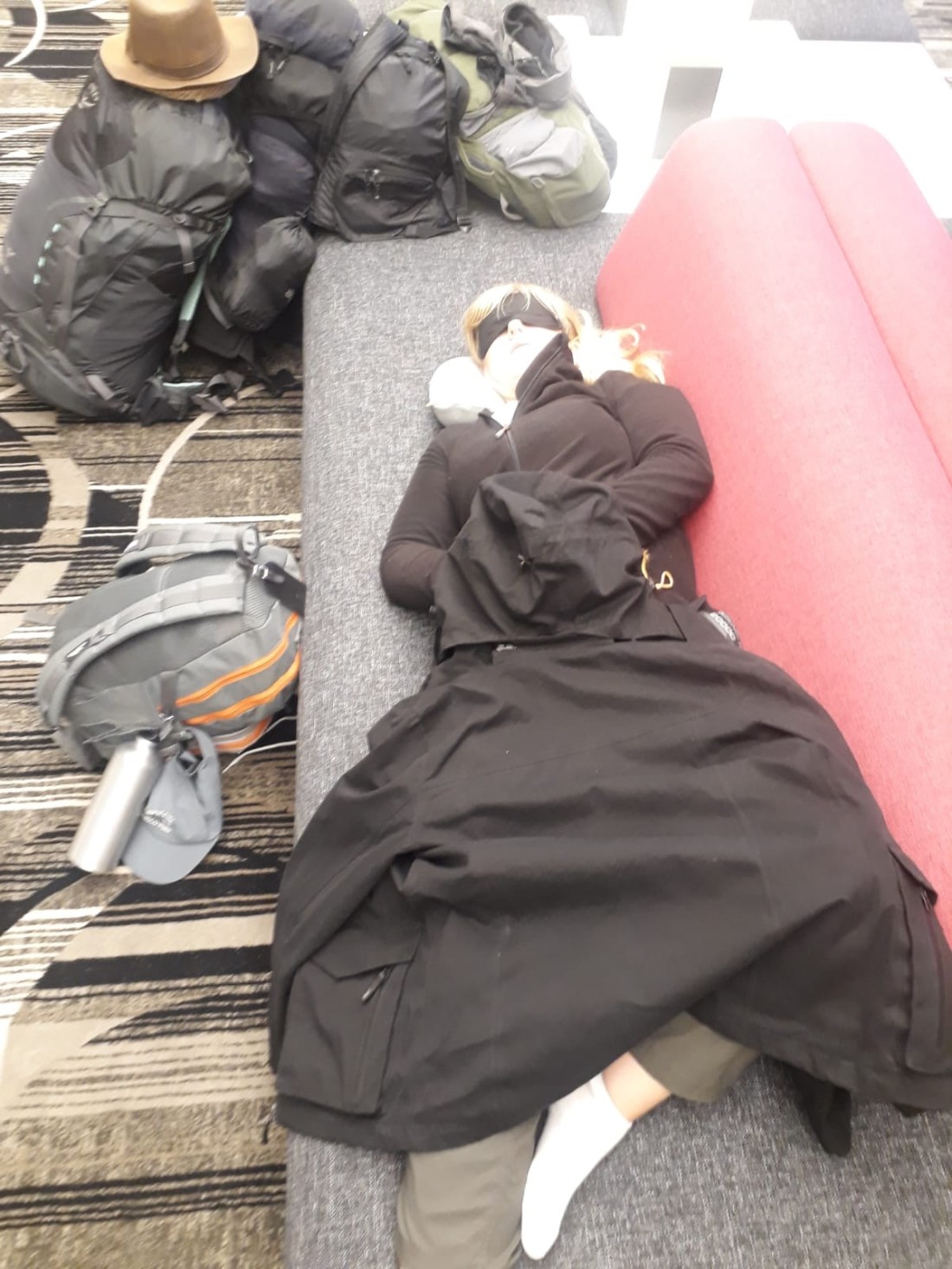
Ged decided to let her sleep if she needed it that badly and then 15 minutes before check in got Rach up and lifted her pack onto her back. Groggily we marched towards the pick up point for the shuttle bus to terminal two. The worst part of the journey to Cambodia was over.
29 March – Phnom Penh
Neither of us could sleep on the third leg of the journey, this time to Kuala Lumpur (KL to the locals) so we arrived in Malaysia famished and properly shattered. The airport catered to neither of these states, with all the food outlets beyond immigration for some reason! With more shops selling Rolex watches than food, we had to content ourselves with a highly questionable tuna buttie from a coffee shop. Finally the time for our last leg of this mammoth journey came around and we landed in Phnom Penh. Cambodia was our first South-East Asian country!
Being in a big city, especially one such as Phnom Penh, was a culture shock after the fresh air of New Zealand. We bought a sim card from the Yes Mobile stand just outside the arrivals door for US$10, giving us unlimited data for 10 days, and booked a Grab ride to our hostel. Grab seems to work in exactly the same way as Uber, but you can book tuk tuks on it as well.
Driving through Phnom Penh we got our first taste of Cambodia – manic tuk tuk horns, crazy driving, street sellers as far as you can see and crazy pop music blaring on the street (insane guitar solos a plenty). Such a sharp contrast to New Zealand, except for the moment we passed a lime green Toyota Hiace van, cruelly reminding us of Goldilocks – sniff! After the reasonably straightforward journey through the sweltering city centre we arrived at our hostel at about 12:30, an hour and a half before check in. Disaster. There was nothing for it but to order two cold beers and sit by the pool, especially as a beer was only US$1! The smell from the kitchen was also intriguing so we ordered food there. Ged got the special of the day (some kind of fried rice with sausage) for US$4 which just so happened to come with a beer. Happy days.
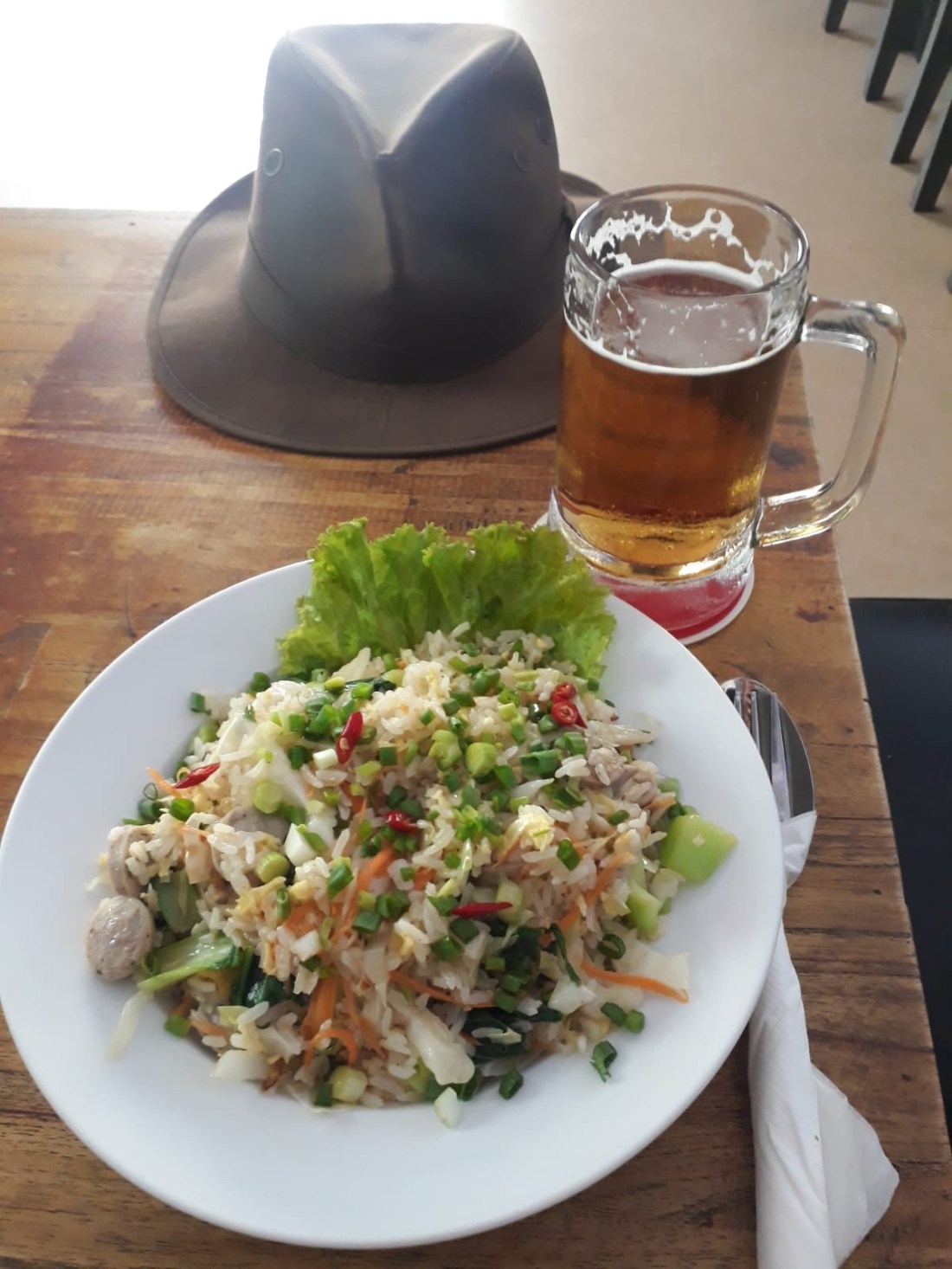
We eventually checked in to our private room and decided to sit by the pool for a few hours. Happy as Larry, we began to think that “Lovely Jubbly” was an apt name for the hostel after all.
As the daylight began to fade we got changed and decided to go for a walk in the direction of one of the main streets to see what we could see. Every shop front, bar, and restaurant spilled out over the pavement meaning we were forced to walk through them or into the road. In Phnom Penh the smell in the air is an odd mix of mouth watering barbecueing meat (its everywhere), exhaust fumes, and occasionally sewage. More than once Ged told Rach that something smelled good only for the grilling smell to be replaced with a stench as she sniffed the air. Bleuh. Phnom Penh is just as lively at night as the day and there are lights and noise everywhere on the main streets. The French influence on the culture is still massively evident with lots of French bakeries, French style buildings, French road names and baguettes being sold everywhere. Even in the supermarket we went to buy beers from we found an odd mix of French and Asian products. A french patisserie counter next to a rack of exotic spices and a fridge with entire ducks (heads and all!). Beers in the bag we headed back to the room and practically passed out when our heads hit the pillows. We would have to wait until the next day to go exploring properly.
30 March – Phnom Penh day 2
We woke the next day relatively late for us and had a pleasant breakfast at the hostel. The sun was already cracking the flags by 10am. Well it would have been if there were any flags to crack. The temperature got up to 34°C as we started our walking jaunt about the city. It felt like an oven compared to the pleasant New Zealand temperatures!
Phnom Penh is currently Cambodia’s capital city (moved from Angkor Thom after a Siamese invasian in the 15th century) and sits on the banks of three rivers, including the Mekong. With a rapidly growing population of about 1.5 million, the city is Cambodia’s economic and industrial centre, although not quite its geographical centre. Massively built up during the French colonial period, Phnom Penh is a mix of Asian and European cultures and is the seat of the Cambodian royal family. This is a place totally unlike anywhere else we’d been to on this trip and is mad. Steeped in history, culture, and sadness; on the one hand you are required to cover your knees and shoulders in many parts of the city but can also book a trip to blow up a cow with a rocket launcher for a few hundred dollars. Madness.
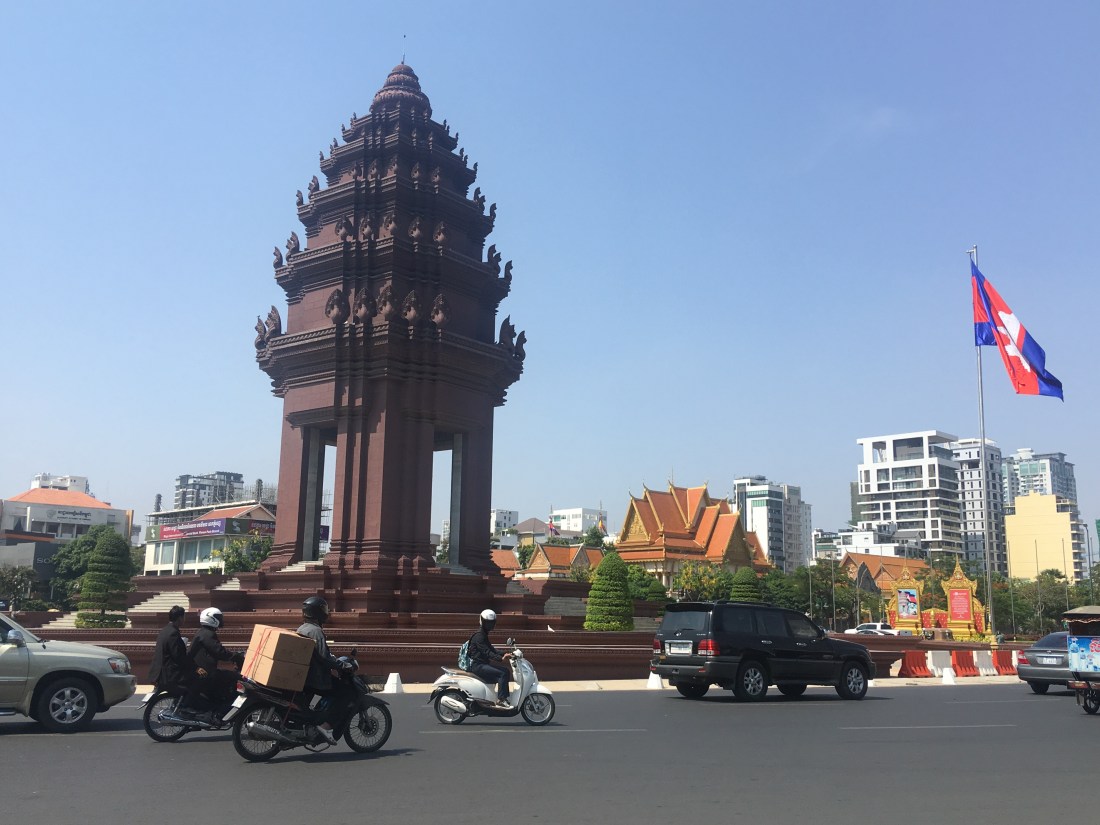
Our walk started with a visit to a number of the monuments dotted about Phnom Penh’s centre, dedicated to both secular and religious events, themes, and ideals. Our first stop was the Independence Monument, which stands proudly in the middle of a roundabout with all its Khmer style pomp. We had to admire the monument from afar as the traffic about it means a closer look is a suicide mission.
The next monument was a very respectable statue of the late king Norodom Sihanouk who was instrumental in bringing independence to Cambodia and was reinstated as King after the brutal Khmer Rouge regime was toppled (according to a tour guide we overheard).
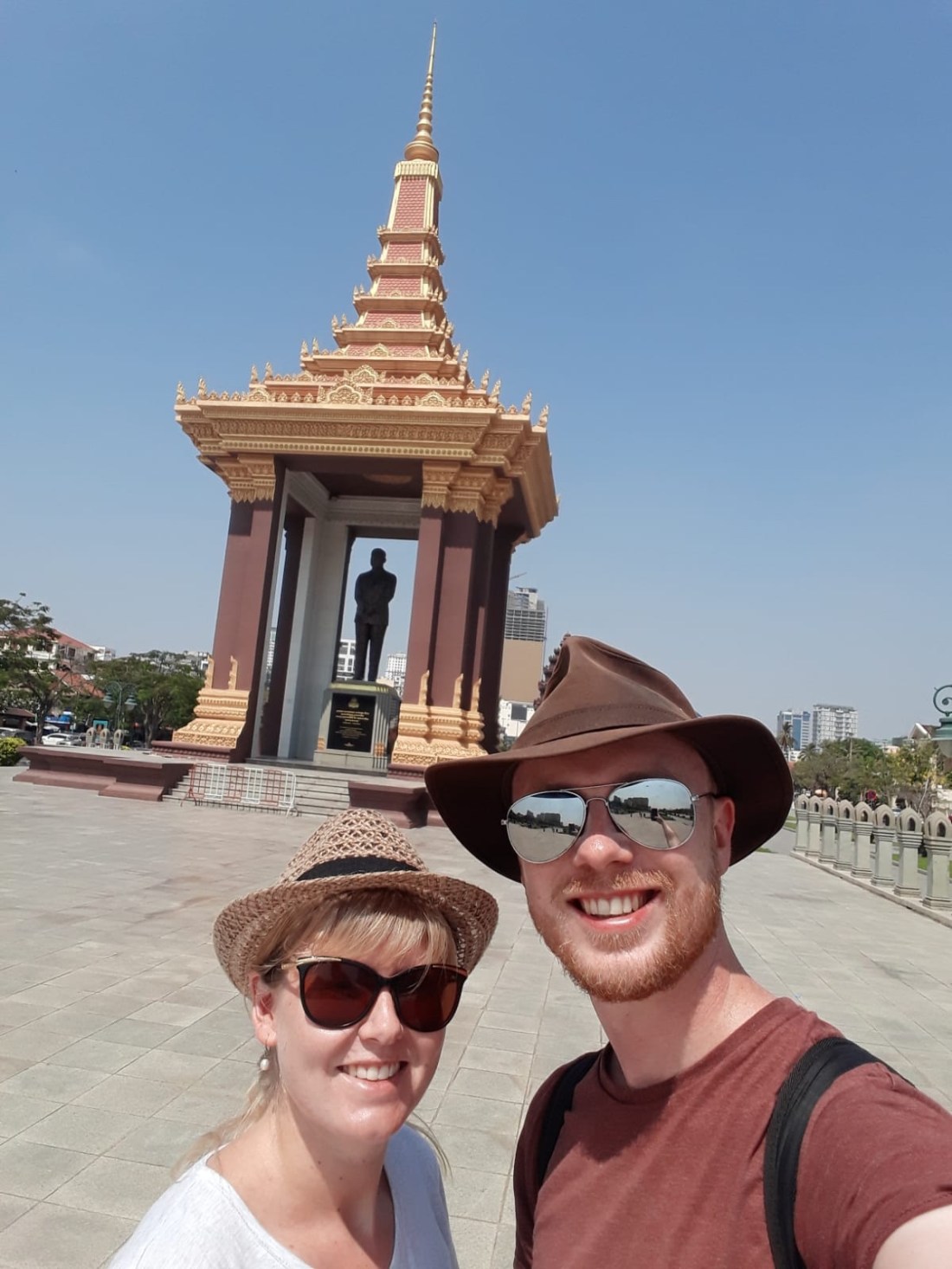
The statue stands in a spacious boulevard which leads to the statue of Samdech Chuon Nath (Buddhist monk who helped preserve the Khmer language) and to Wat Botuk Park (a long square really) that runs perpendicular to the boulevard. This park holds a monument to the friendship between Cambodia and Vietnam. The style of the statue is very much an Asian version of socialist realism, to reflect the modern style of sculpture in Vietnam.
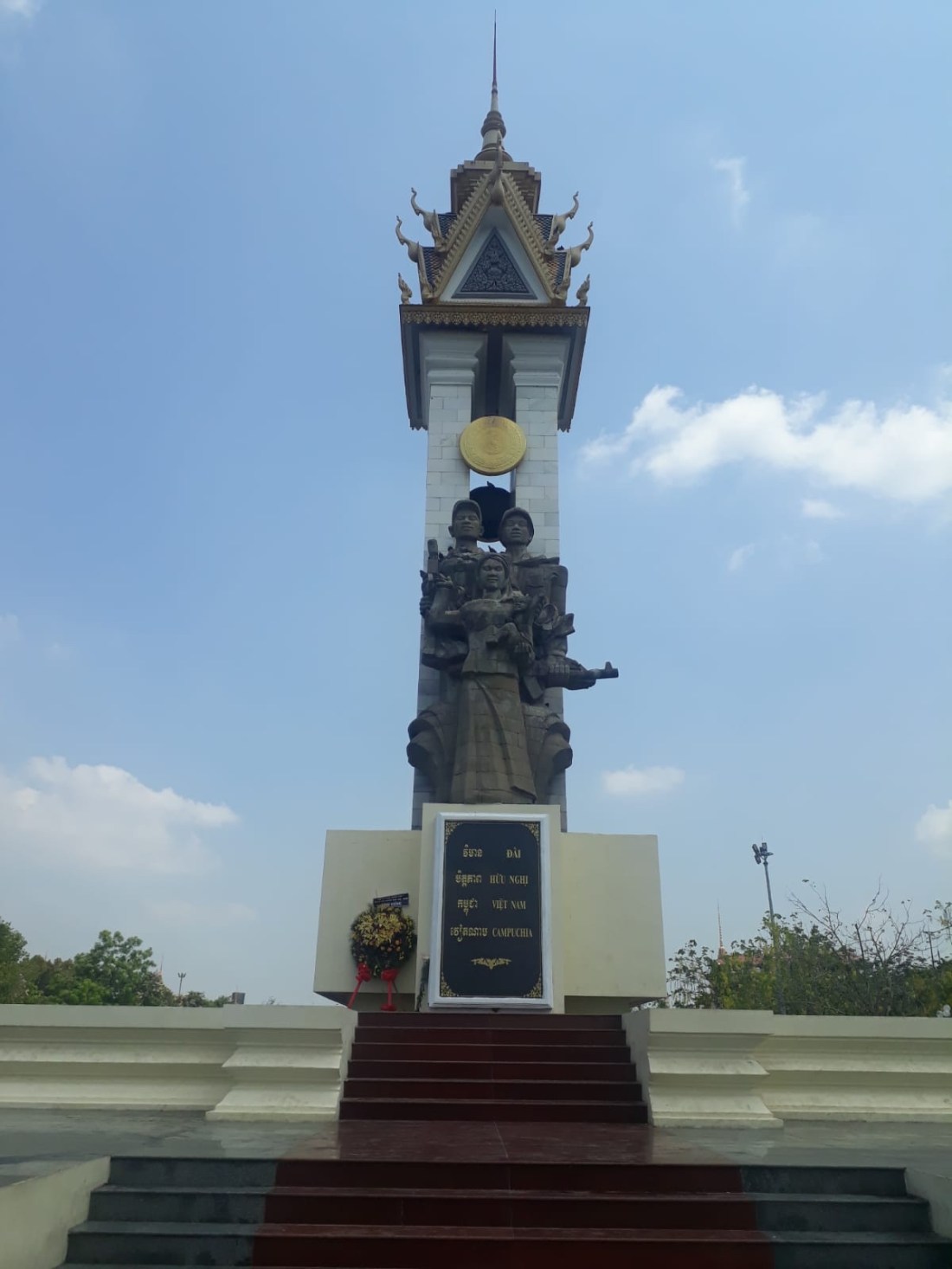
The park runs all the way to the Royal Palace which we managed to arrive at just in time for it to close! It turns out the palace closes every day at 11am – 2pm. Bah, we just hadn’t done our research. We decided to carry on walking and turned to walk down the shore of the Mekong river. This stretch of the river is not too pretty. In fact it is downright dirty, smelly, and filled with litter when you look down.
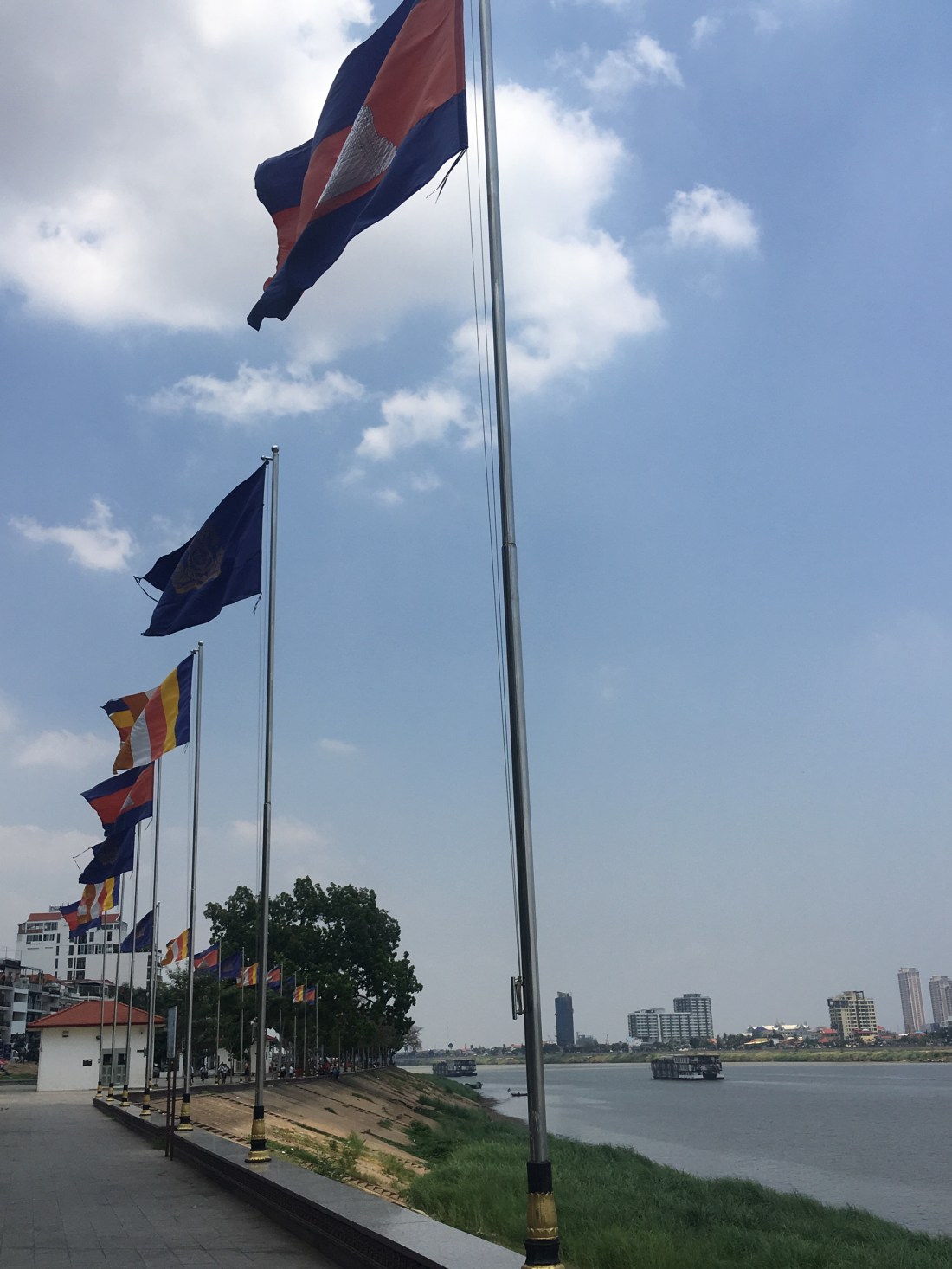
Needless to say we avoided anywhere selling ‘fresh’ grilled Mekong fish. We carried on up the river in a northerly direction and decided it was far too hot so dipped into a bar for a cold beer (at 11:30am!) Our body clock was busted and it must have been 12 o’clock somewhere. No judgements please. Most of the bars near the river north of the palace are cheap, especially during a happy hour when beer can cost as low as 50 cents a glass. However, we did notice that the servers were all young women with very short skirts. We then noticed that most of the clientele were middle aged (or older), white men who were on their own. It did feel a little uncomfortable and from there we began to notice that there were lots of old white guys wandering about the city on their own as a general theme. We never asked a local why so many single men were here – we feared we already knew the answer! Anyway, we quickly finished our beers and set off to see another planned stop; Wat Phnom.
Wat Phnom (literally hill temple in Khmer) sits upon a man made hill near to the banks of the river. The city derives its name from the temple as it is the only hill in the area.
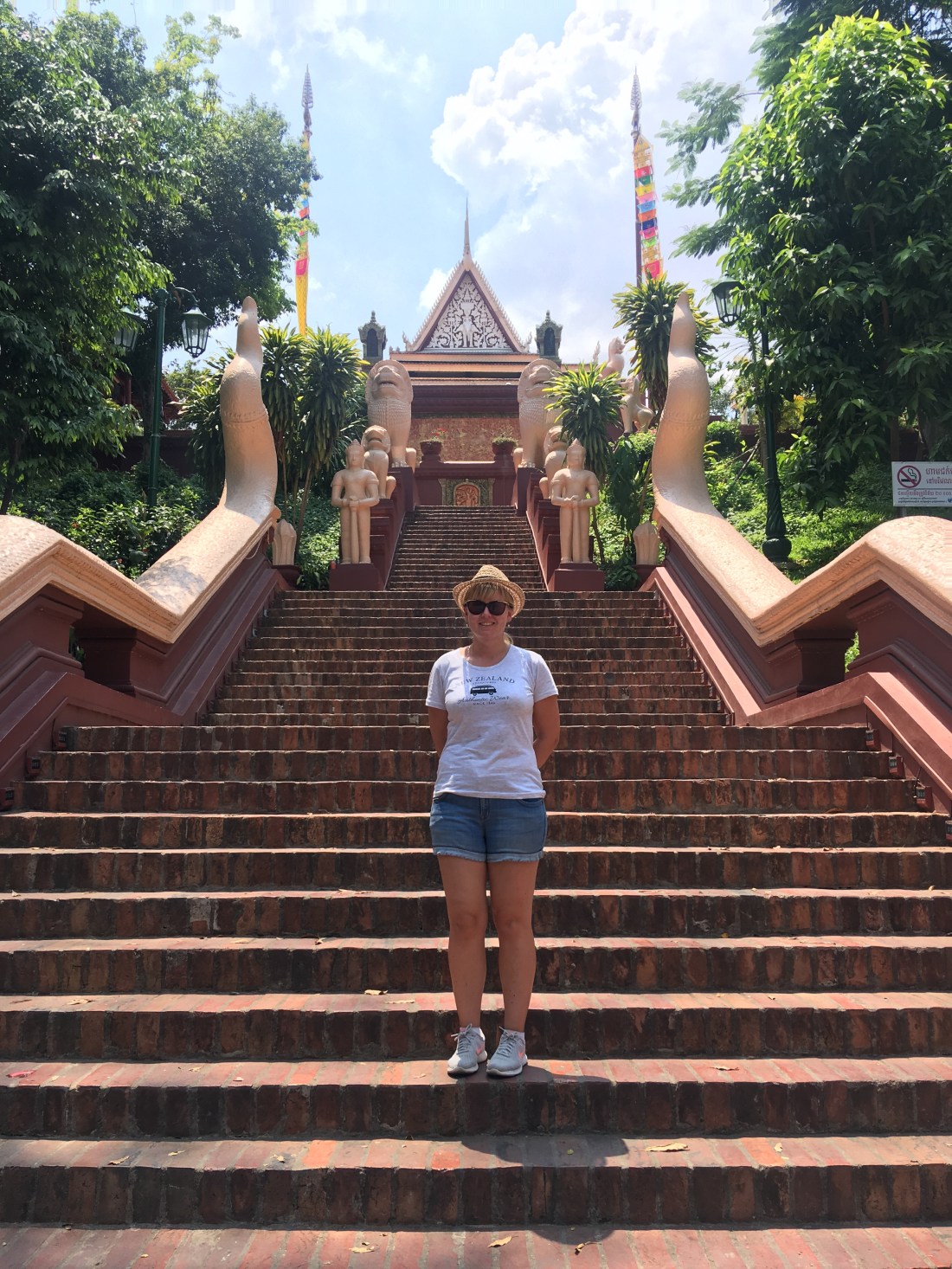
The temple dates back to 1372 when legend has it that a rich woman named Penh found four statues of Buddha floating in the Mekong and had the hill and temple built to house them. The temple itself has been remodelled many times over the centuries and now houses many, many ornate statues of Buddha. It was a lovely spot in the city!
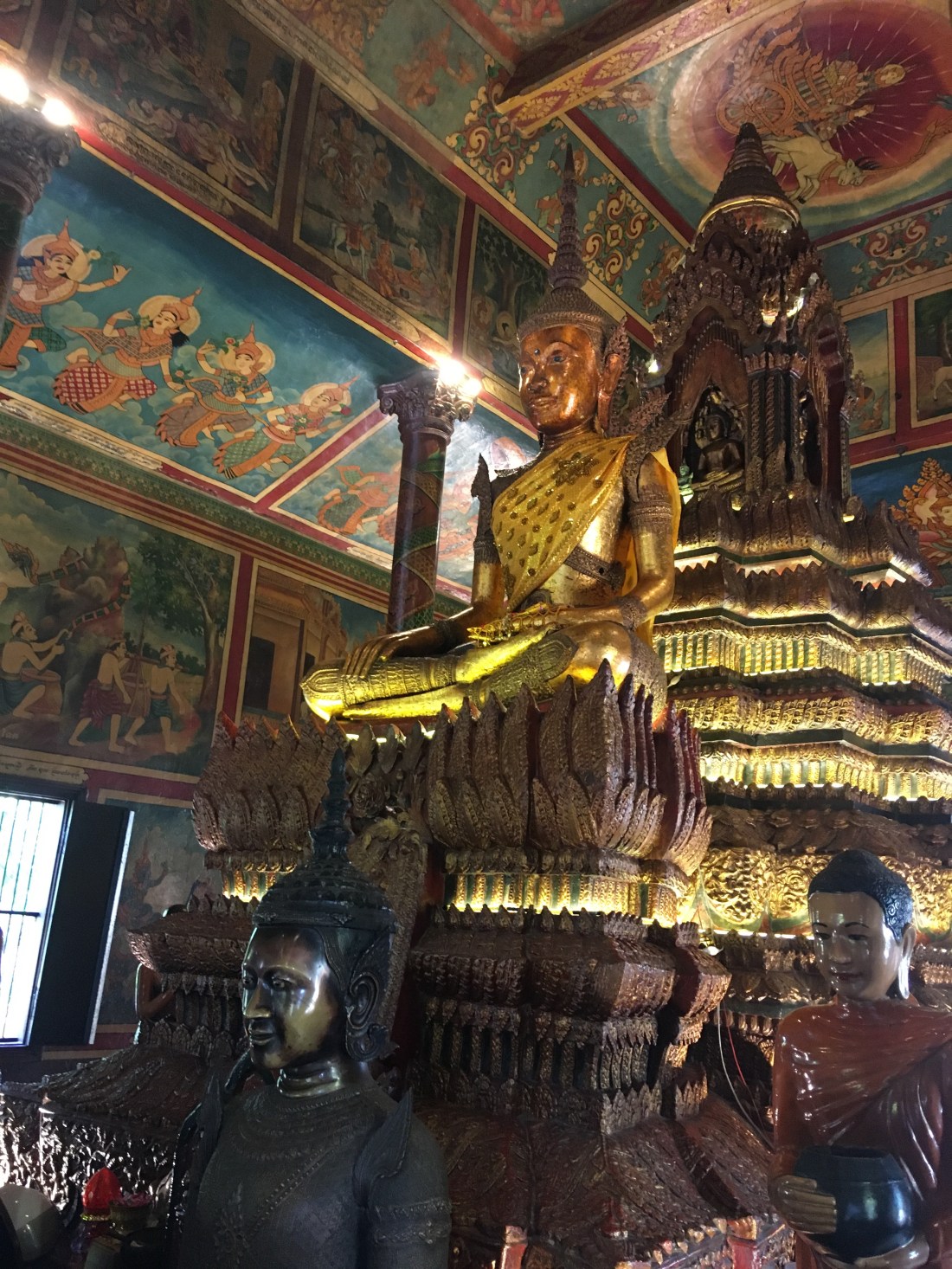
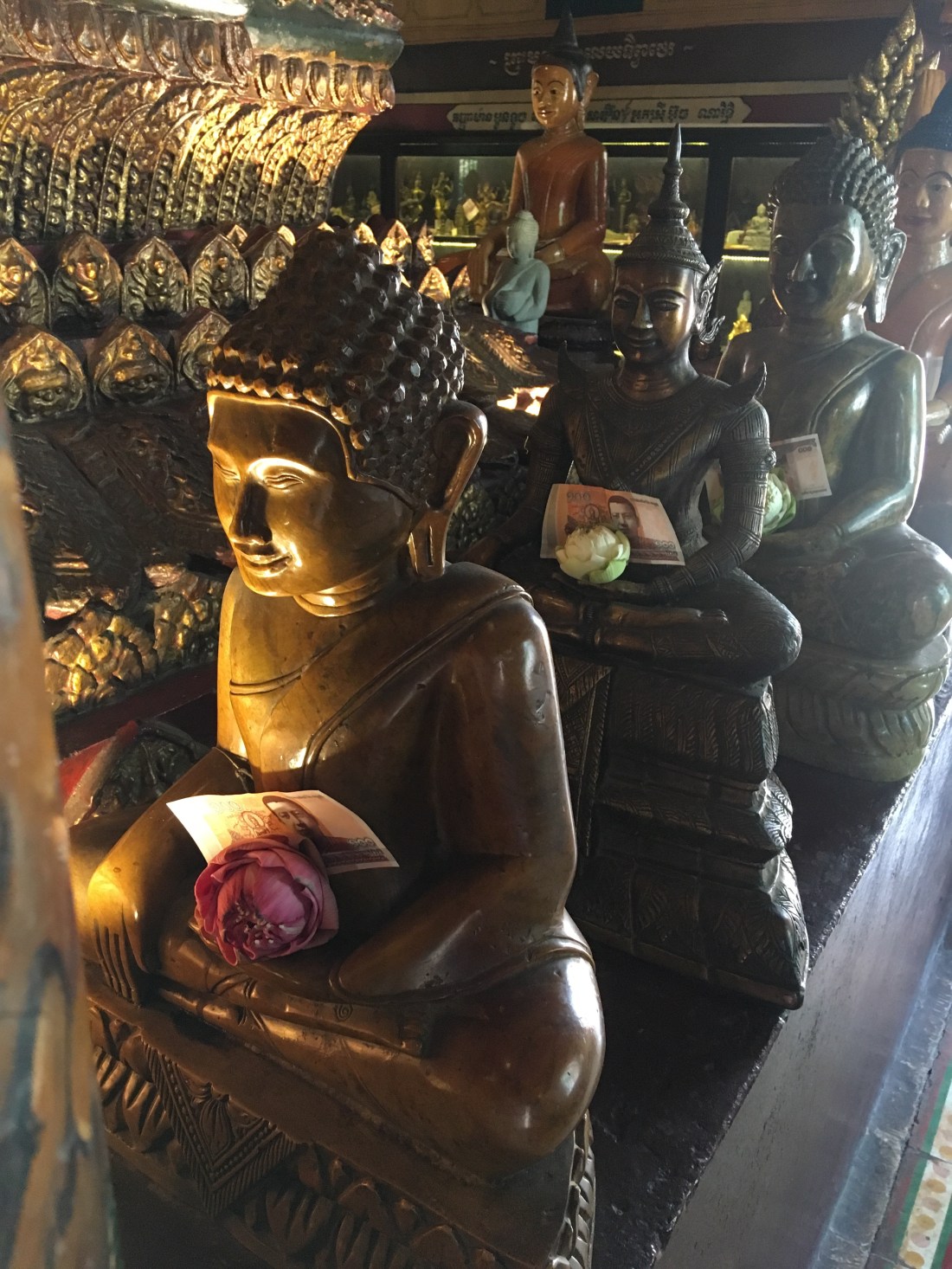
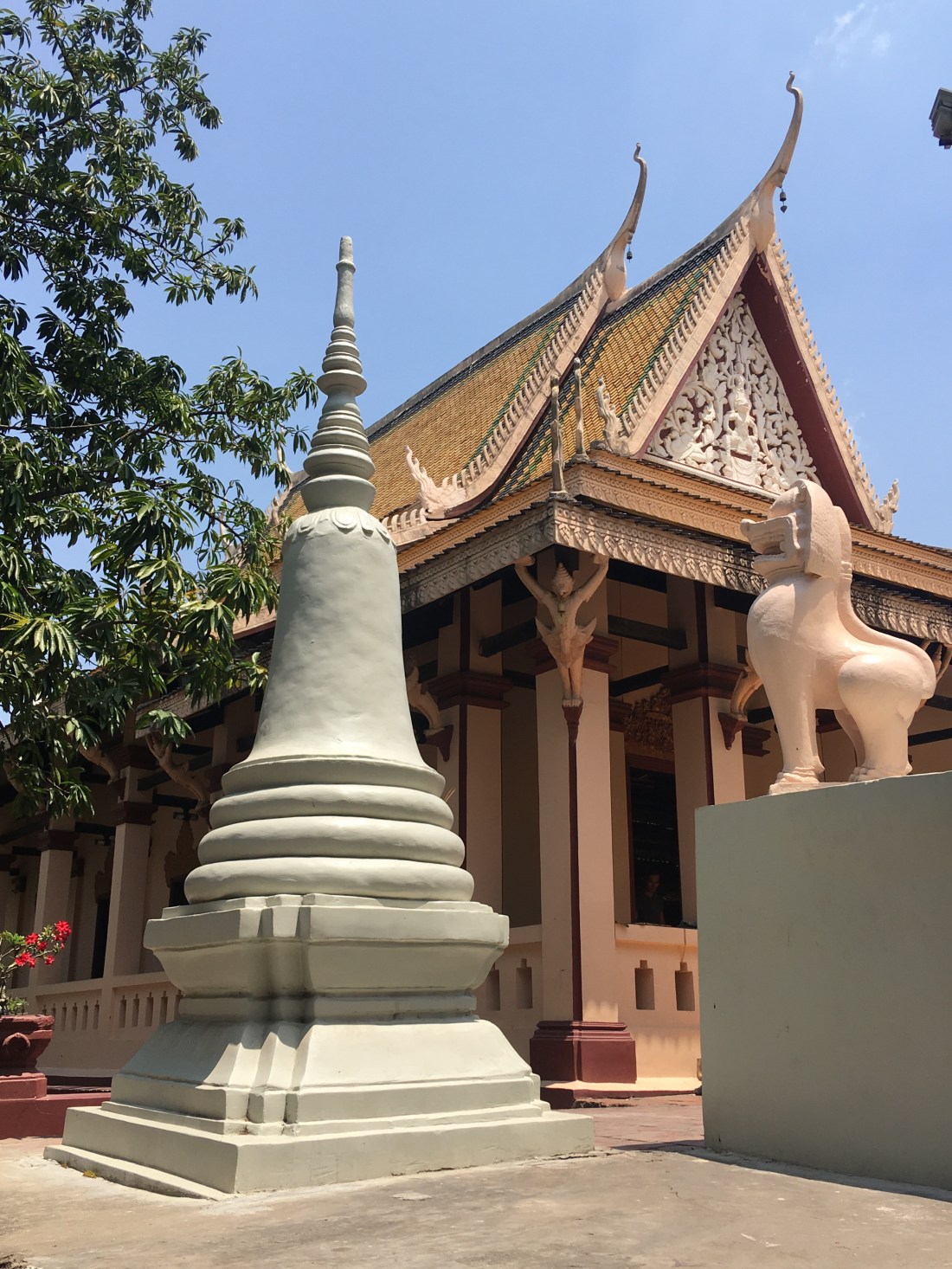
After visiting the temple we visited a centre for Cambodian crafts next door. Products from traditional wood carving, weaving, and pottery were all for sale. The wares were beautiful and what made the place all the more wonderful was that a number of the makers were young people that would not otherwise have good opportunity in Cambodia due to a disability. Rach bought a small mug for a few dolllars that we later found out was made by a deaf potter. Her skill was brilliant for such a young person and she was a shining example of why these types of social enterprises are so important in Cambodia. She would struggle to get a job anywhere else and there is no social support or equality laws like in the UK. The UK is far from perfect, but we are lucky to have the social support in place that we do (we must do better still though!!)
Hungry, we headed to a nearby mall where we understood we could get some authentic, good, and cheap Khmer street food at Nham Central. Authentic and cheap it may have been but this was a meal we wanted to forget quickly. We ordered a noodle soup, fresh spring rolls, and deep fried duck eggs. The soup and the spring rolls were great but the duck eggs were not eggs at all. We received two entire, nearly ready to hatch, ducklings, deep fried. Feathers and all. Ged’s fork went crunch as he broke through the batter and bones of the duckling. We’d heard about these but thought we ordered egg not duckling!! Perhaps we are too Western, but we suddenly lost our appetite and headed out into the heat again.
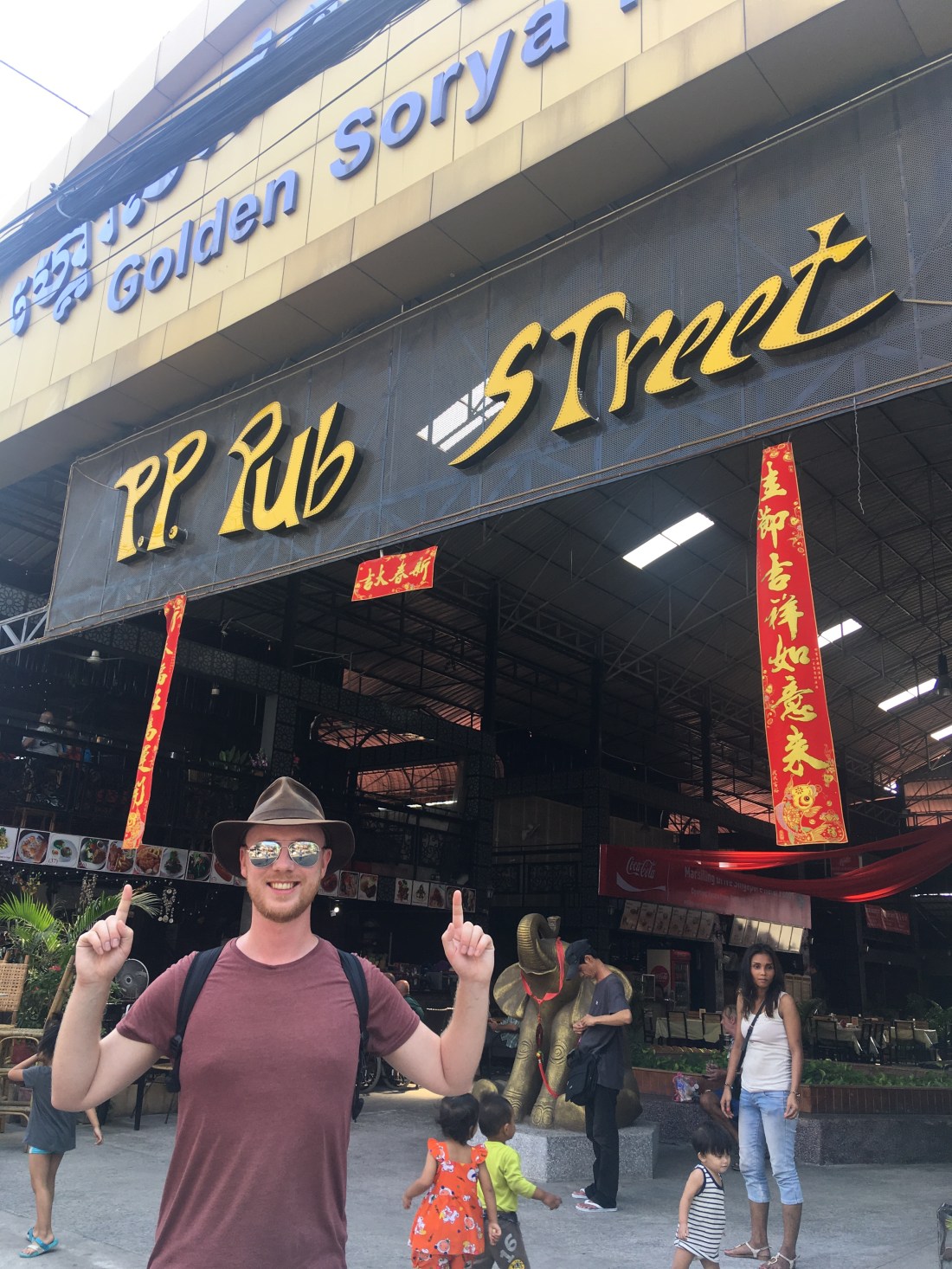
Our walk back to the hostel took us down Phnom Penh’s Pub Street. We had a quick 50 cent beer to cool down but didn’t stay long. Even in the early afternoon the street is a bit tacky and nasty, and filled with what appeared to be less than savoury characters or the early starters of stag dos.
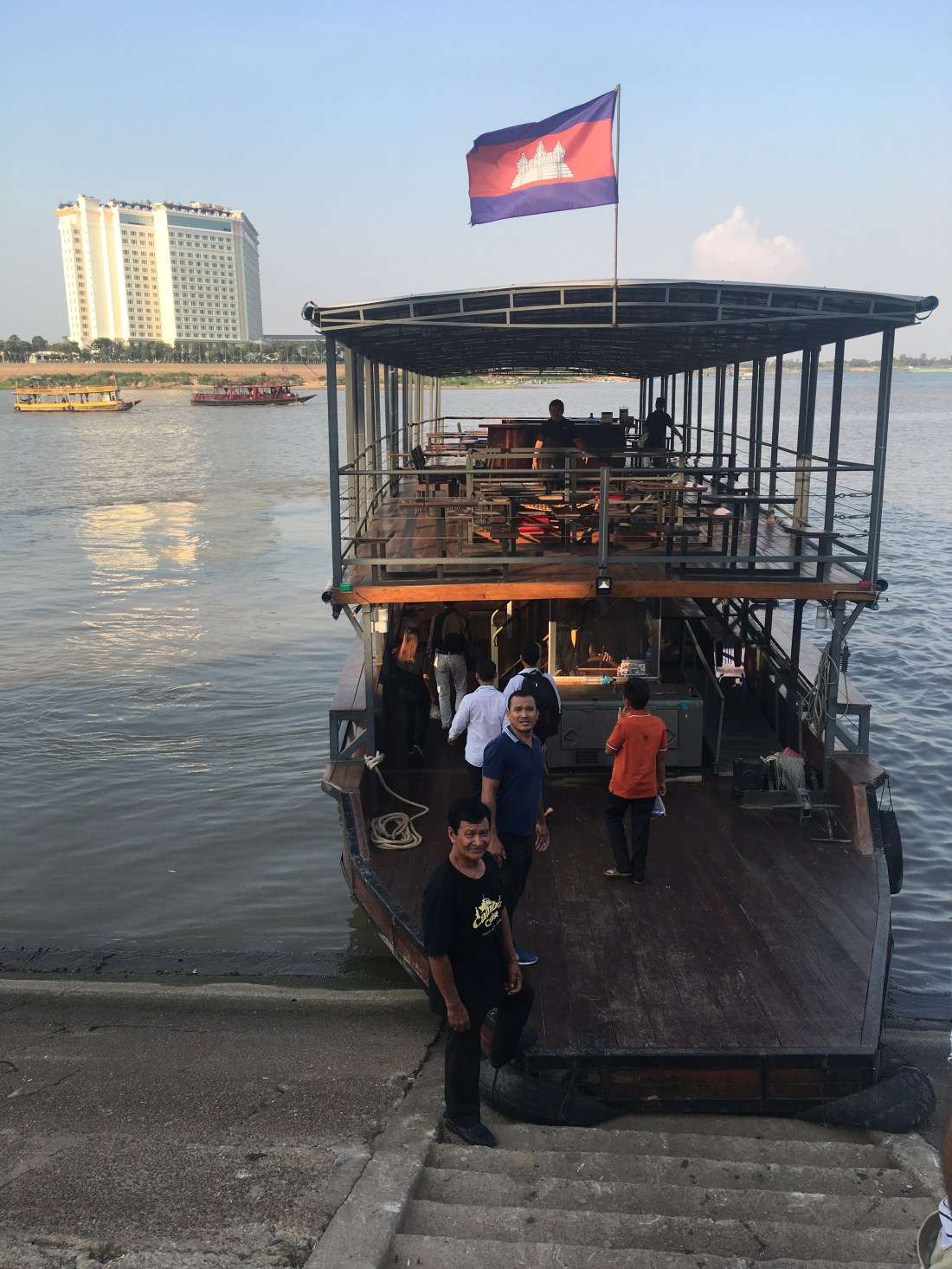
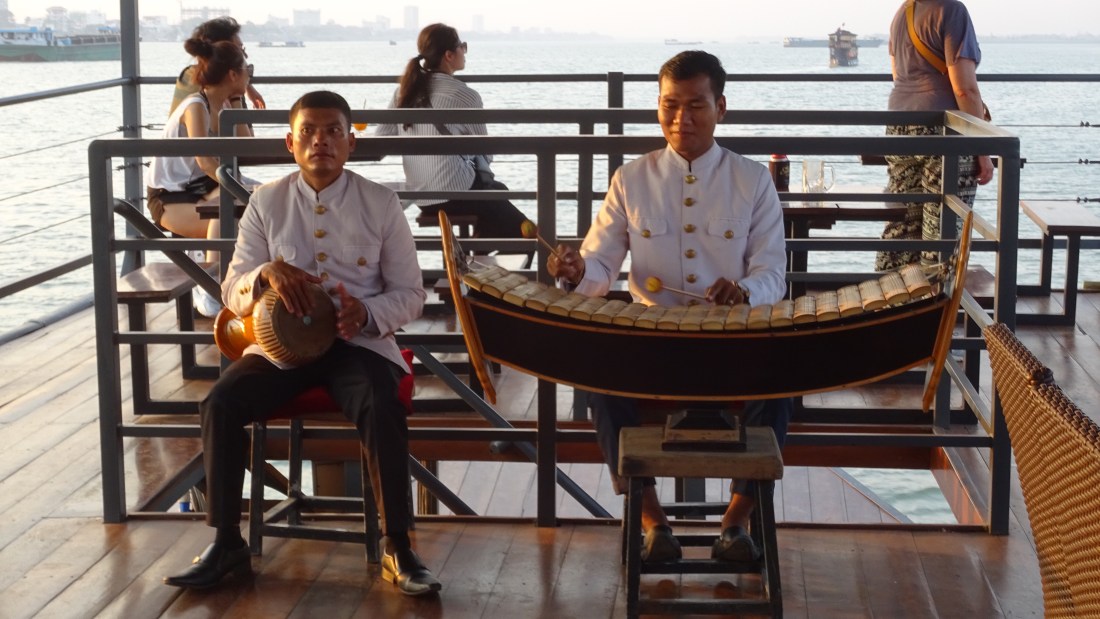
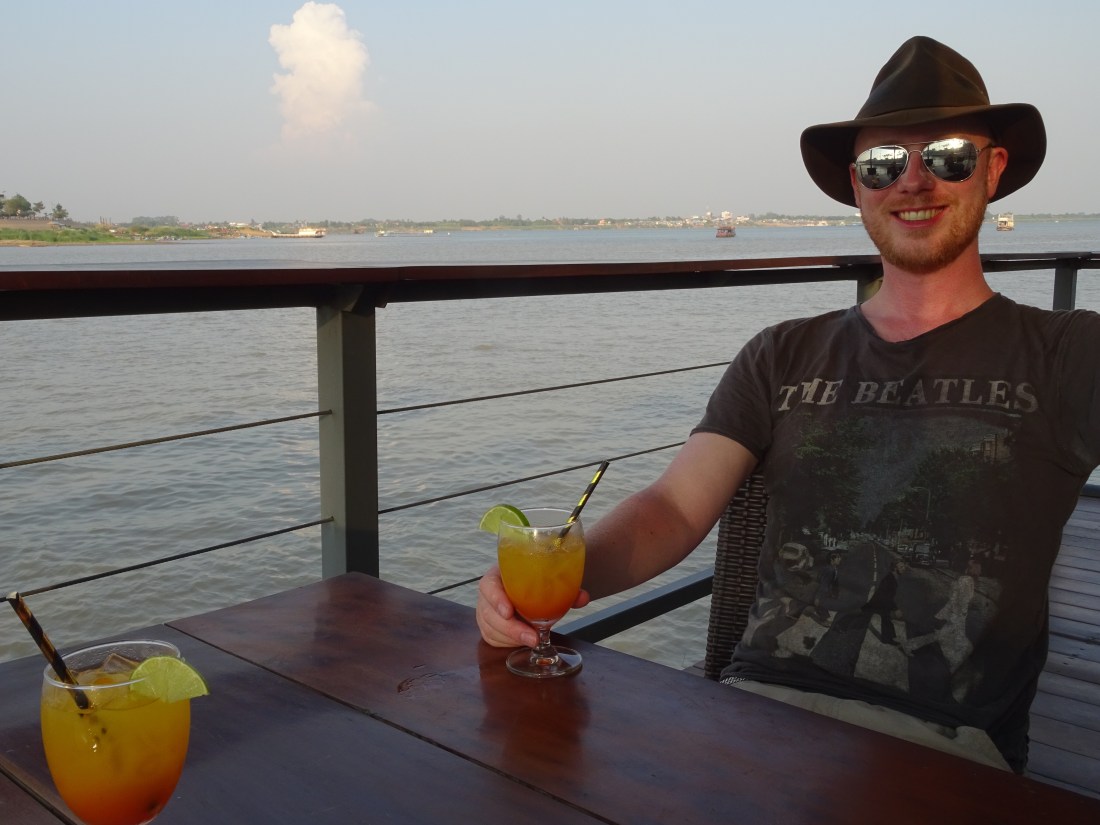
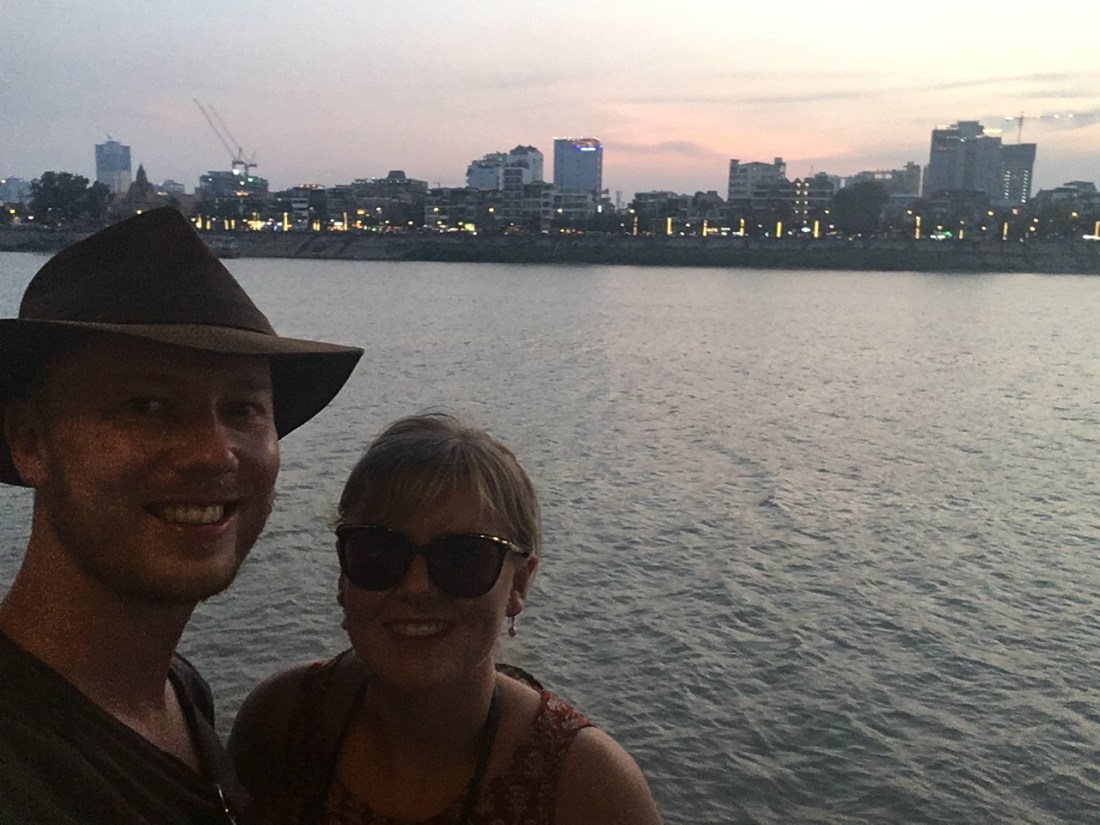
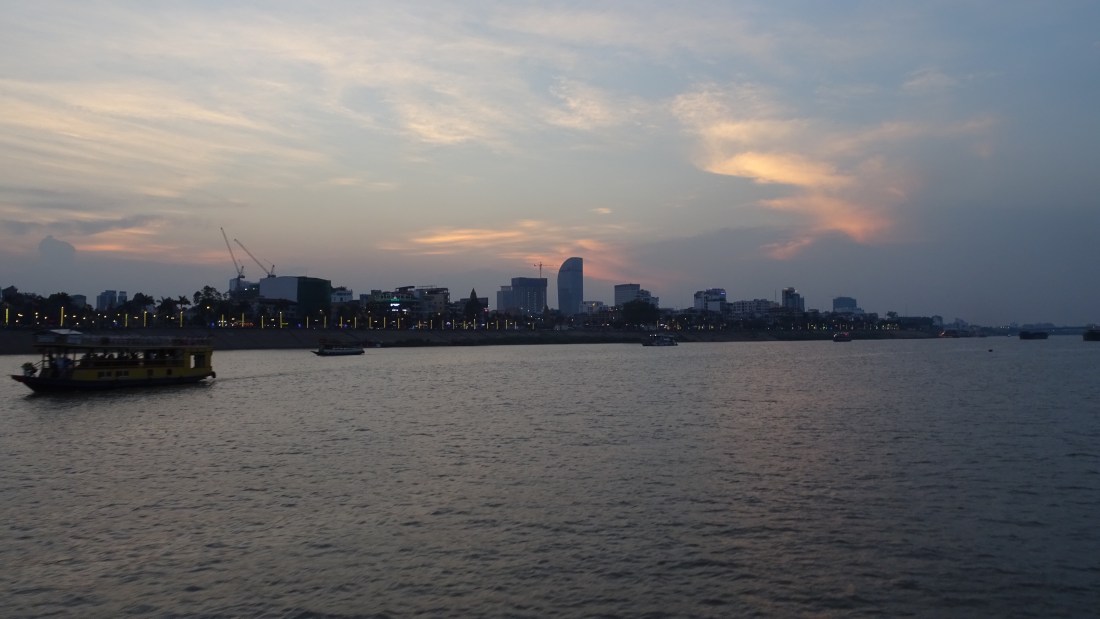
We decided some pool time at the hostel was a better way to spend the rest of the afternoon before going out for the evening. Rach had booked a sunset cruise down the Mekong and a tuk tuk picked us up about 90 minutes before sunset. We boarded the large boat in front of the Royal Palace and were greeted with a tasty cocktail and traditional Khmer music. The boat was comfy and relaxing bobbing on the water as we set off with the xylophone music gently playing.
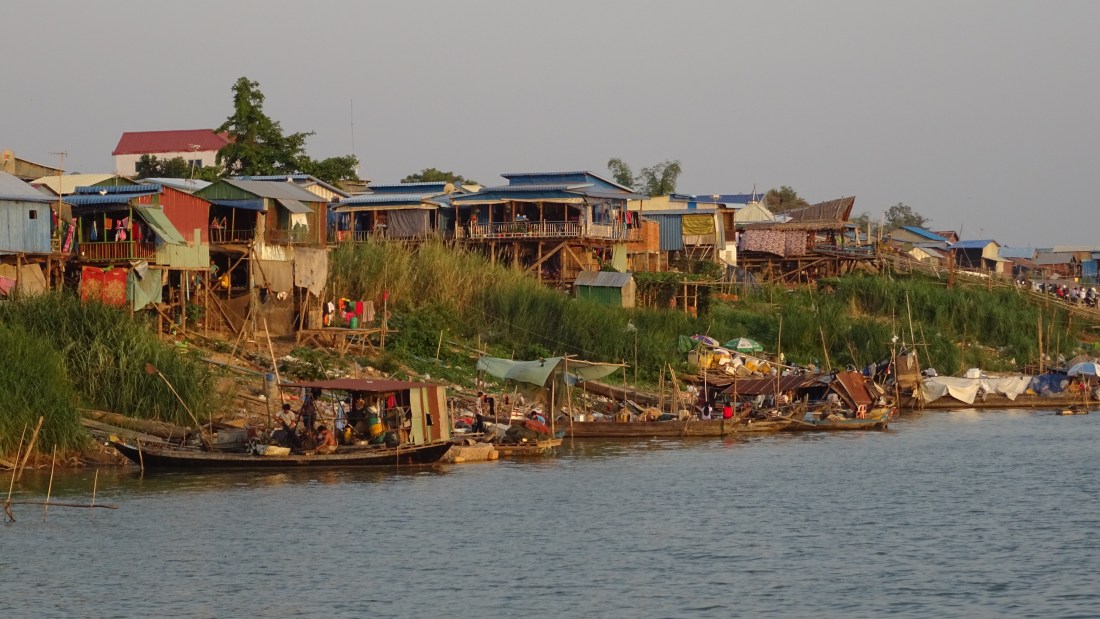
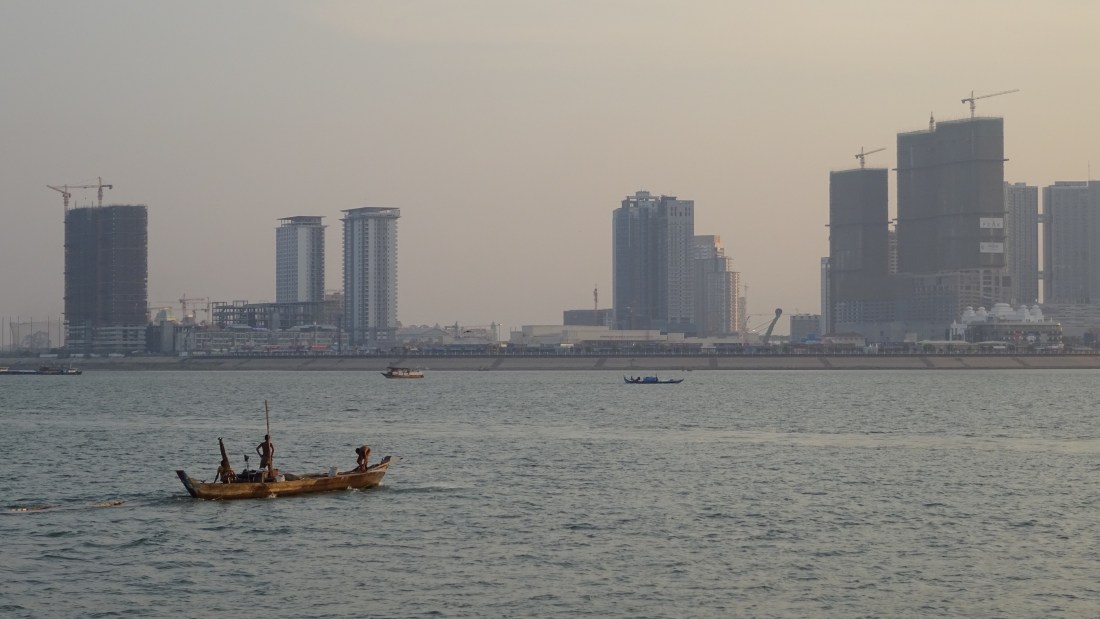
As the sun slipped behind the sky scrapers we saw views of the entire city on the west bank of the river. Phnom Penh is clearly a city going through massive changes and expansion. So, so many cranes and half built sky scrapers seemed to crowd out the older buildings and temples. This city won’t be recognisable in a few years by the looks of it and we wonder what local people think of all the changes. The east bank was a different story. There were some high rise developments but most of the housing seemed to be of the shanty town variety. Poles with plastic tarpaulines, or metal sheeting, and open fires in front of them and people fishing in the last light of day. Such a stark contrast to the west bank.
Eventually the boat turned and the view of the west bank at night was almost romantic with the temples and palaces picked out in lights amongst the shiny new buildings.
For grub that night we went to Kabbas restaurant which had excellent reviews to match its cheap local food with even cheaper beer. At US$4 for a pork curry with rice and 50 cents for a beer you can’t really complain, not that we had any cause to. Ged ordered an Amok curry which is a local speciality (a bit like a Thai green curry) and was made up with it. If all the food was going to be like this we would have happy days indeed!
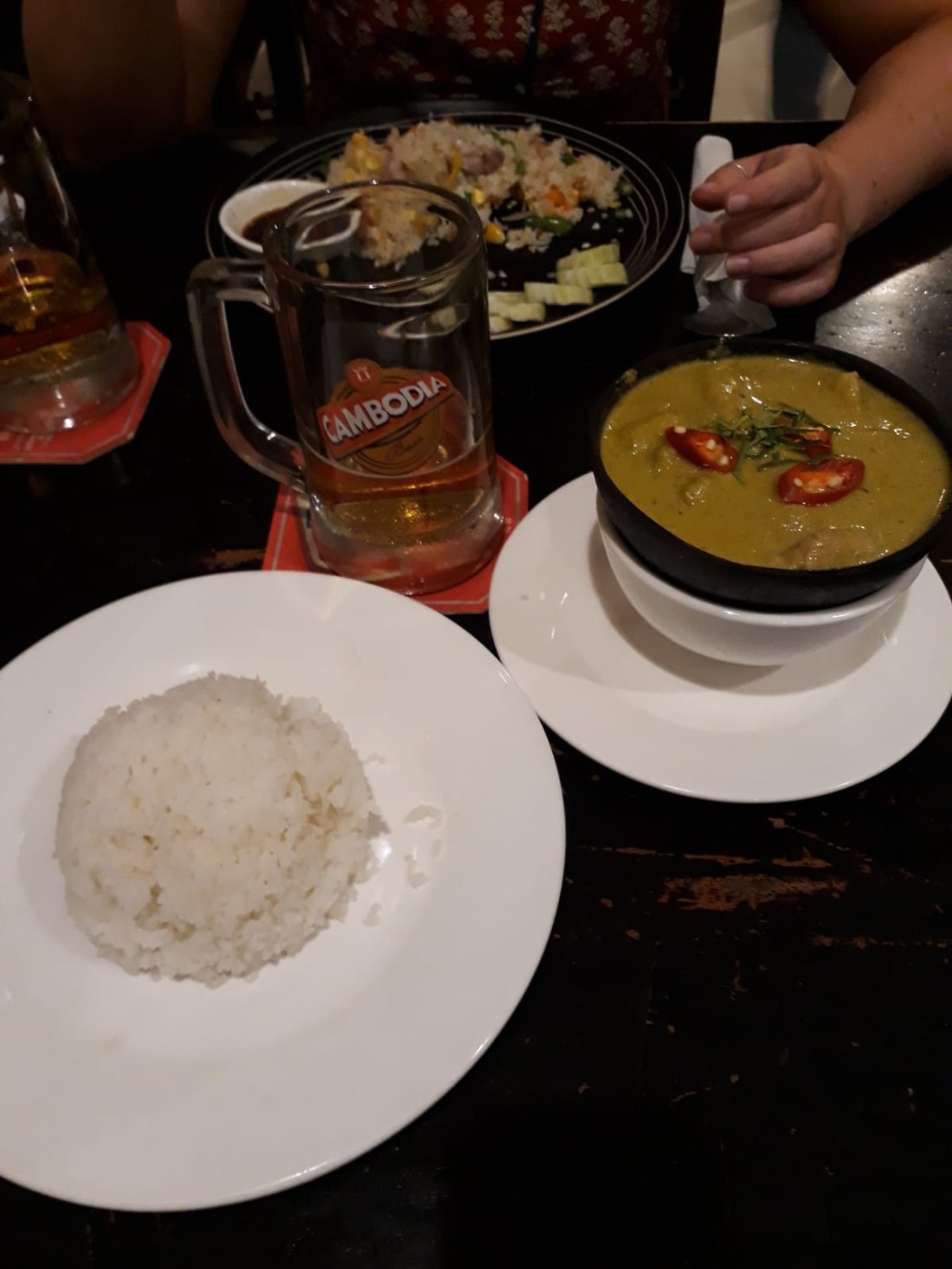
Satisfied with our first real taste of Cambodian cuisine we splashed out on a Grab tuk tuk back to our hostel. We think the 90p for the ride was justified and hit the sack with full bellies. What a different place Cambodia is to New Zealand, but perhaps our first impressions on our first day aren’t the ones to take!
31 March – The killing fields
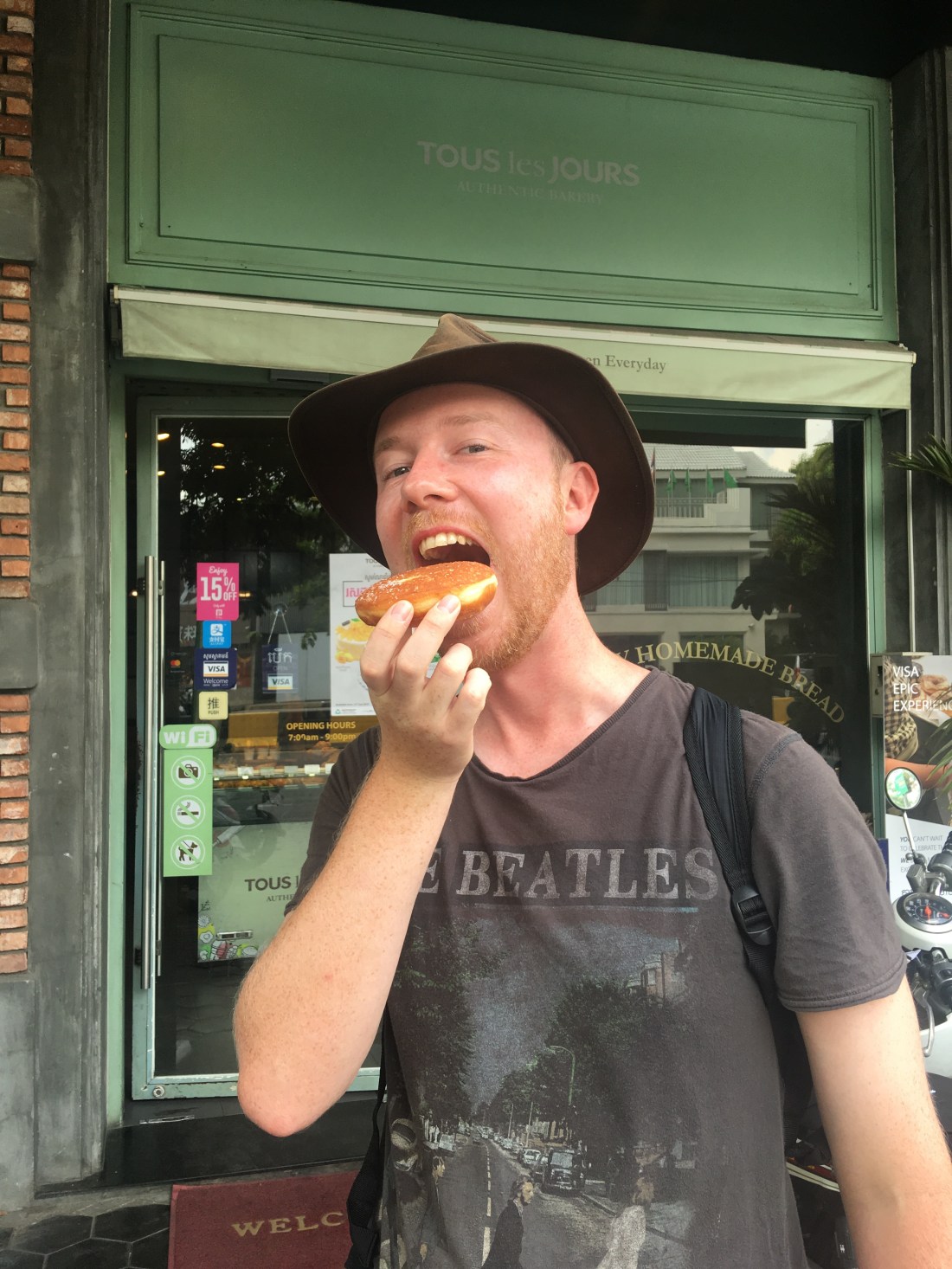
Today was the day we chose to go visit Choeung Ek Genocidal Centre, known as the killing fields – one of the primary reasons we had chosen to come to Phnom Penh. We armed ourselves with a good breakfast at the charming Khmer Surin, one of the top cheap eats for breakfast, to keep us going through the day as we wanted to spend as much time as we needed there to take it all in. Apparently the thing to eat for breakfast in Cambodia is doughnuts (we’re not arguing!) so when, after our Cambodian fried rice / noodle breakfast, we stumbled across a beautiful French patisserie we couldn’t say no to a try!
We used a new tuk tuk booking app called Pass App to get us to the killing fields, which was about a 35-40 min drive. It’s similar to Grab but is slightly cheaper and you pay cash not card. On arrival we paid our entrance fee of $6 USD, which includes a very good audio guide. Headphones on, we followed the map, ready to learn about one of the world’s most heinous atrocities committed at the hands of the Khmer Rouge.
One of the first things you see is the memorial stupa built in 1988, centred in view at the end of the entrance path.
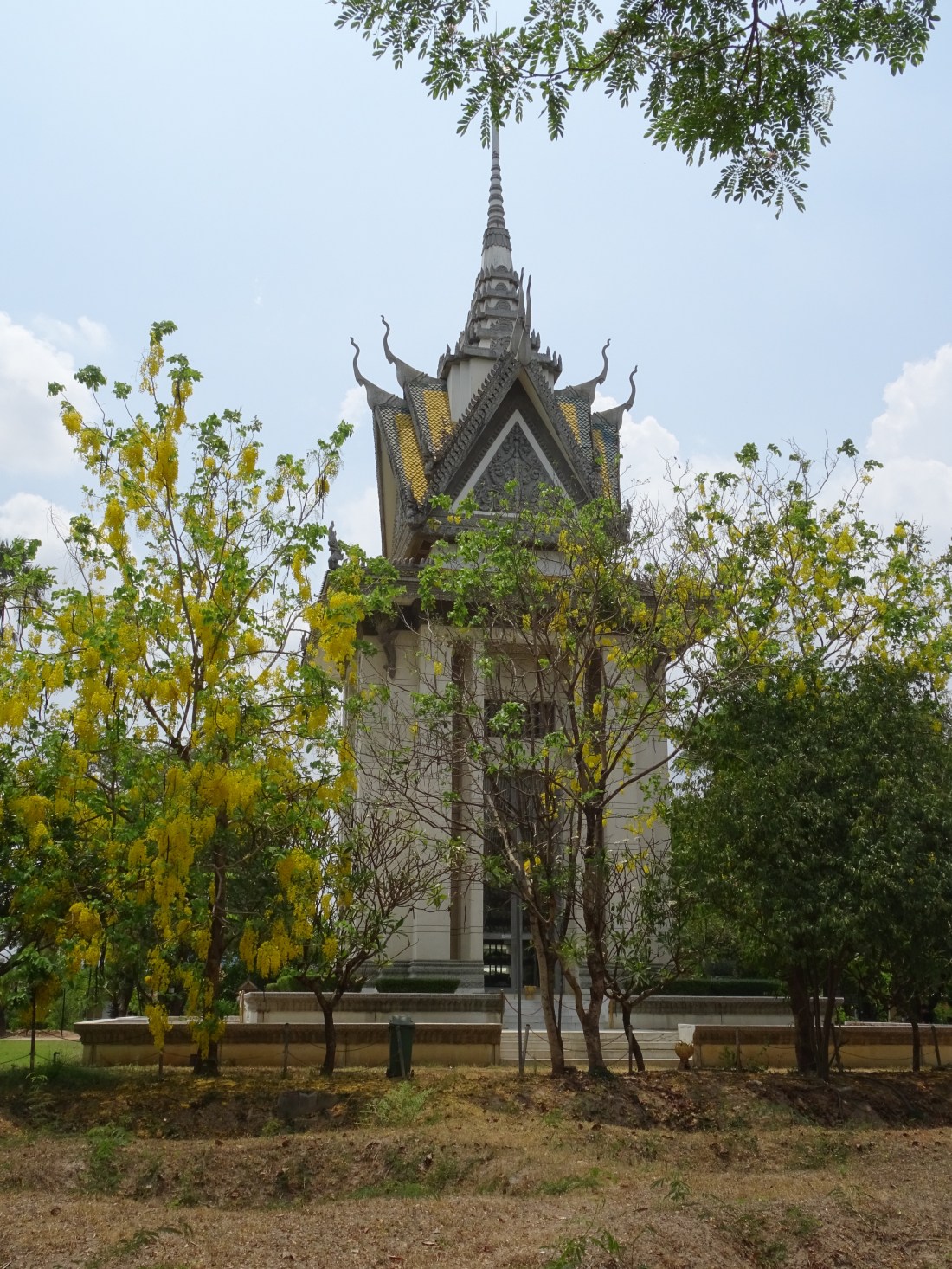
What is hard to avoid focusing in on is what lies inside behind the glass. 17 tiers running around all 4 sides of the stupa are full of human remains. Skulls take up many of them and on the lowest levels in particular, so you come face to face with the murdered. These are the people that died here, the bodies recovered during excavation of 85 out of around 130 mass graves surrounding the stupa. The skulls were all marked with dots of colour, indicating how the person was killed: bullets, hatchets, chemicals.
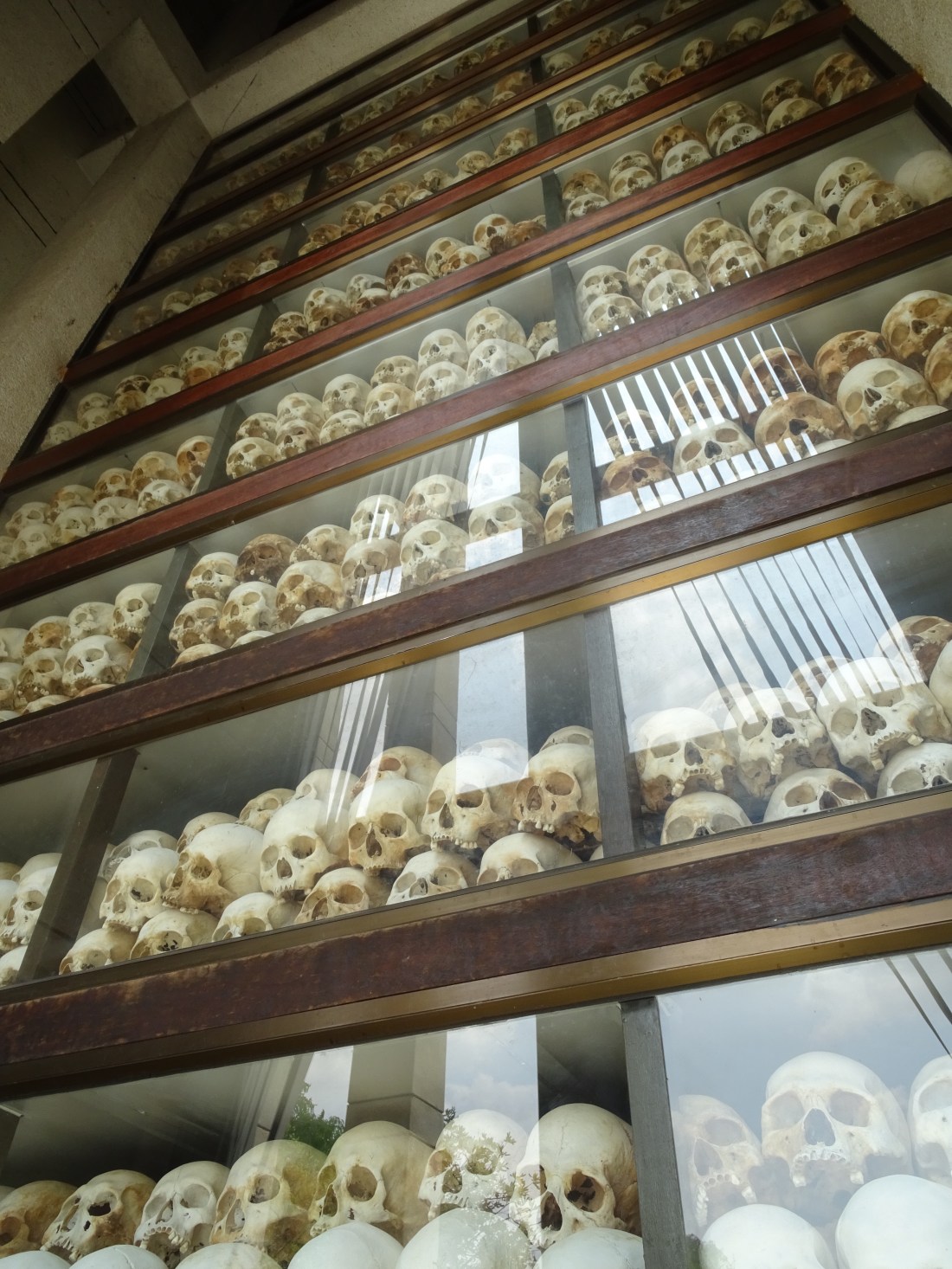
We’d never seen such a shocking sight before. On this trip we’ve seen our fair share of human remains – Juanita in Arequipa and the remains of mummified Nazca people in Peru – but this was so utterly and horrifyingly different. Each one of these people had been persecuted and brutally murdered.
The Khmer Rouge were so named because the colour red is synonymous with communism. Over 3 years and 8 months in the 1970s they murdered 3 million people out of a Cambodian population of just 8 million. As we walked through our audio tour we were shocked to learn that this site was only 1 of around 300 sites were people were brought to be killed. Nearly 9000 bodies so far have been recovered, but every few months the staff here walk around collecting bone, teeth and clothing scraps that have risen to the surface from the rain. They believe around 20,000 people were killed at this site; up to 300 people or so per day. Some graves have been left undisturbed, but the ground continues to reveal the victims below as time ticks on. A tragic reminder of what went on in this country, much ignored by the rest of the world. Indeed, we were horrified to hear on the audio guide that even after the regime collapsed in 1989, many counties – namely the UK, France, Germany, the US and Australia – all continued to recognise the Khmer Rouge regime as the legitimate political ruler in Cambodia, and the UN continued to provide financial aid to the regime after liberation. Unthinkable.
Why did all this happen? An tyrannical extremist leader who terrorised, brainwashed and cultivated a young army to purge to country of ‘new people’ in the cities and return the country to ‘base’ people – traditional countryside workers. Incredibly, Pol Pot was a school teacher, but condemned other teachers to death as head of the Khmer Rouge and retained absolute power despite never making a public appearance. Even after the collapse of his hold on Cambodia, he remained the leader of the Khmer Rouge for another 20 years. He died under house arrest less than 1 year later aged 73, having faced no repercussions for his atrocious actions.
The audio guide enabled us the circuit the site, learning more about how the victims died, and eventually seeing the mass graves.
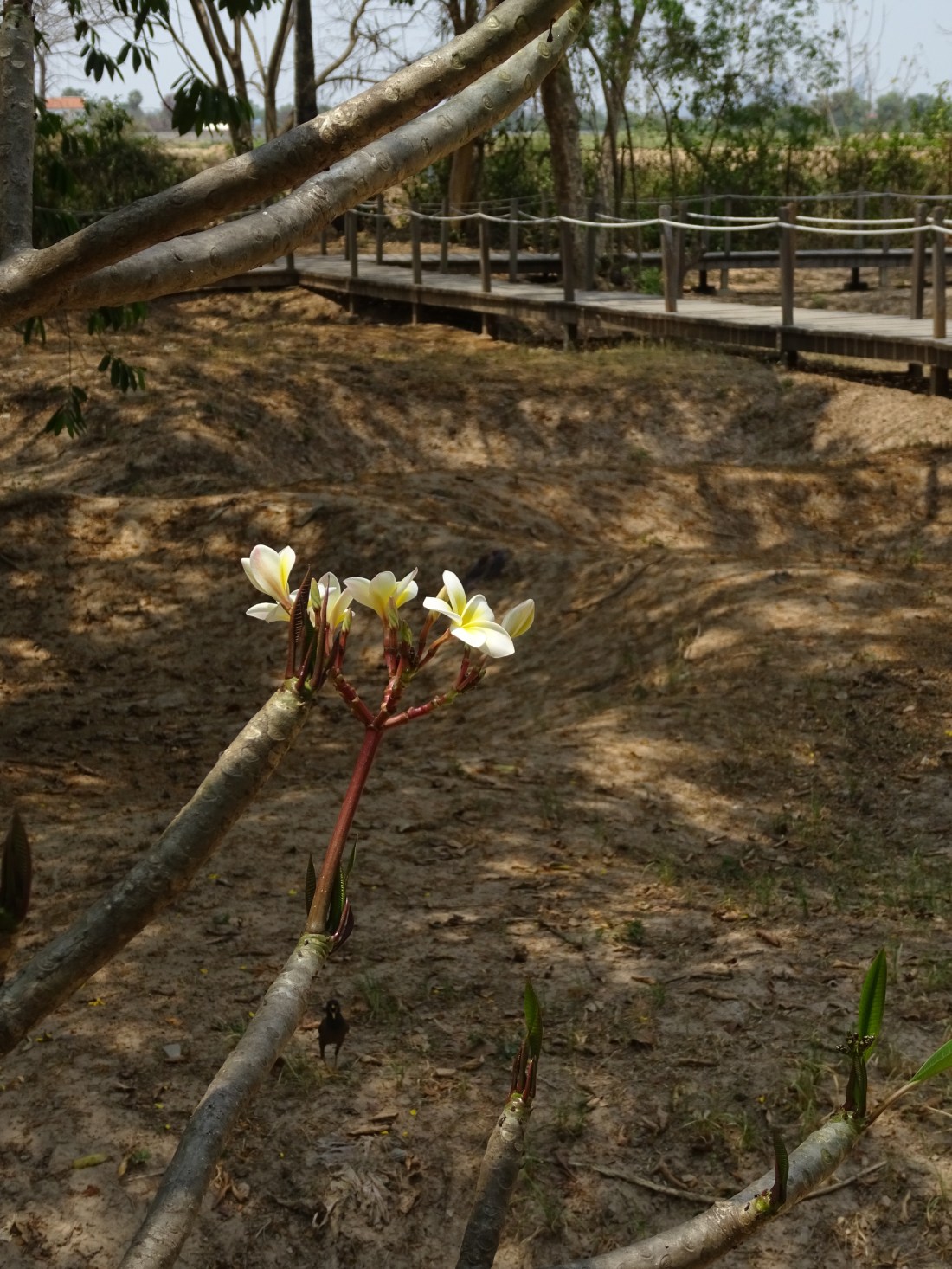
People were effectively bludgeoned to death with farming tools – the cheapest way to kill, and without the incriminating sound of bullets. The Khmer Rouge soldiers would use farming hoes, shovels, iron bars, axes, knives; anything they could get hold of. They killed women and children too. Horrifyingly, we passed a site where they murdered young babies, by smashing their heads against a tree. A local man who discovered the site did so because he noticed blood, brain and pieces on bone on the tree trunk.
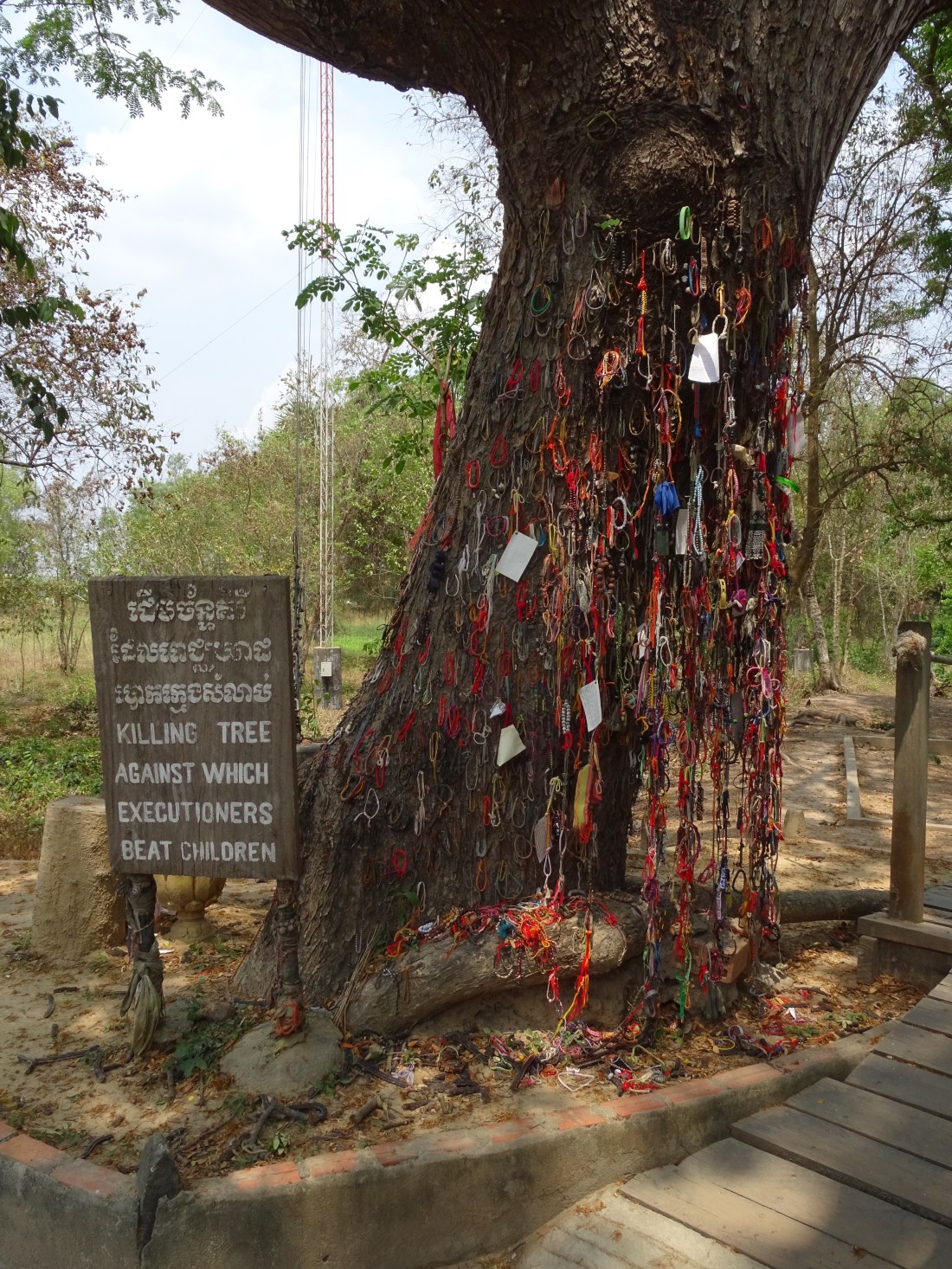
One mass grave had only headless corpses – and it is believed these were Khmer soldiers who were accused of betrayal. They had been decapitated as they were considered to have had a ‘Vietnamese head on a Cambodian body.’
There were obvious synergies with other brutal regimes and mass murders, particularly with the Nazi regime. Record keeping was precise – the Khmer Rouge wanted to be sure they no-one had escaped or that they hadn’t missed anyone. Clothing was stripped of the victims on arrival for maximum demoralisation. There were transparent cases displaying clothing that had been found and it was really heartbreaking to see this all stacked up, men, women and children’s layered on top of each other. And examination of the site also revealed that the chemical DDT was used to hide the stench of decay, or to finish killing those that weren’t quite dead when they were thrown into the graves.
Choeung Ek Genocide Center was a sobering and hard-hitting experience, but we’d hugely encourage people to make this a key part of their trip to Cambodia. It’s so important that this atrocity is never forgotten and that the world continues to learn and share what happened here. It’s a quiet, sacred place for contemplation, which I’m glad we took time to take in.
The rest of the afternoon we spent quietly by the pool, except for a late afternoon rematch of basketball shoot out, which Gerard still won (marginally…), and then went for a delicious and cheap dinner at Sinan restaurant – Cambodian food is fast becoming a new favourite of ours!
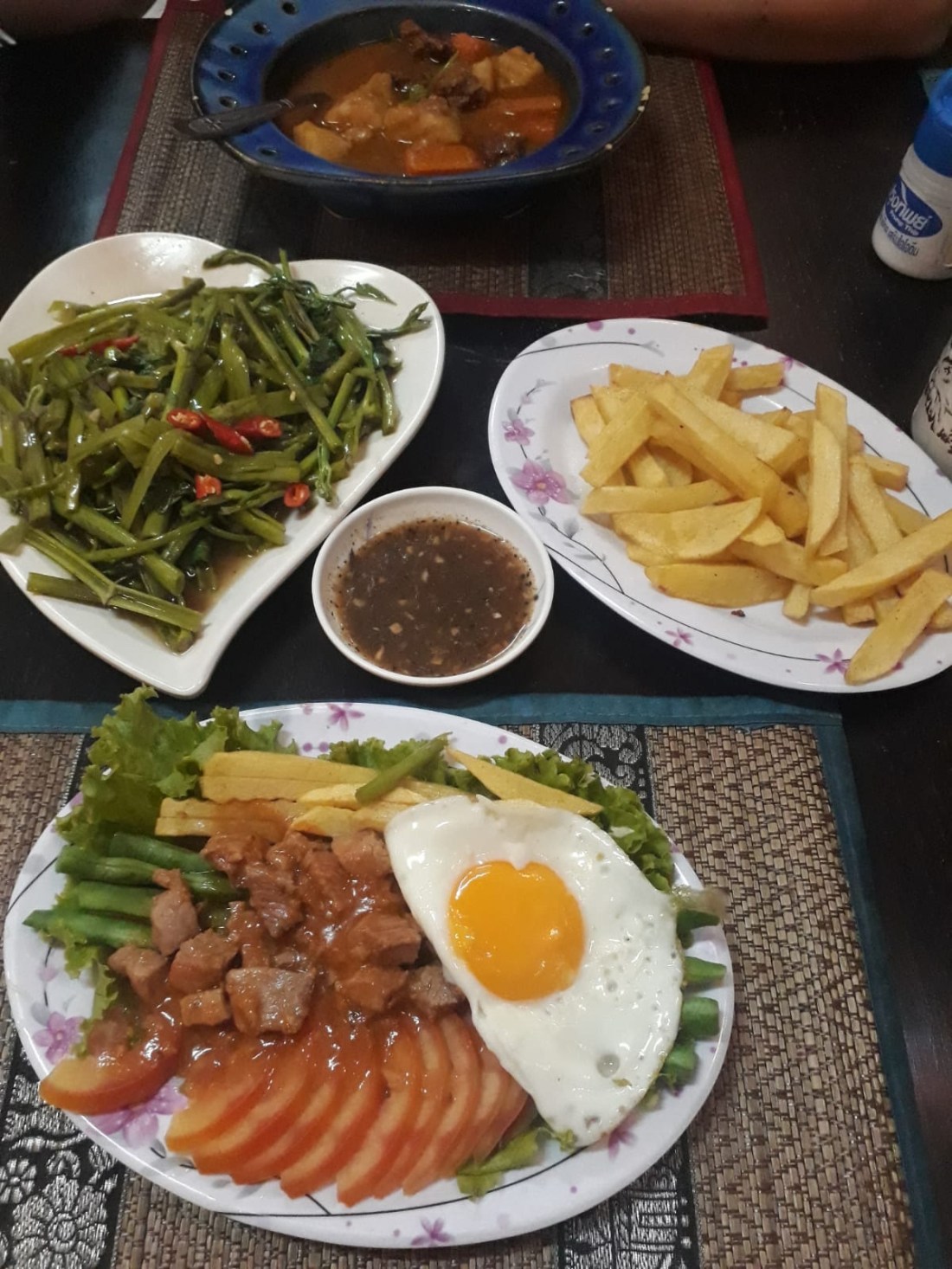
Not only was the price of dinner crazy, but so were the sights we saw on the ride back to our hostel in the tuk tuk. One guy, who was set up as a fast food vendor, cart attached to the back of his scooter, was driving down the road with all his cooking equipment and food still on the counter. Brings a whole new meaning to ‘fast food!’
1 April – S21, Royal Palace & Museum
Today was going to be a packed sightseeing day. We started with a really amazing breakfast at Feliz hostel, rated no.1 on trip advisor for breakfast! Rach was happy to have bruschetta on the menu, as she had been craving nice bread, and it was yummy. Ged had fried yellow noodle with beef which was the best we had tasted.
From there we got a tuk tuk to the Tuol Sleng Genocide Museum, a former school which was used as Security Prison 21 (S-21) by the Khmer Rouge. From the outside, the place looks rather ordinary – surban concrete buildings with jackfruit trees and tall coconut palms swaying above. But inside there are bloodstains, weapons of torture, and photographs of the thousands of people who were imprisoned, tortured and executed here.
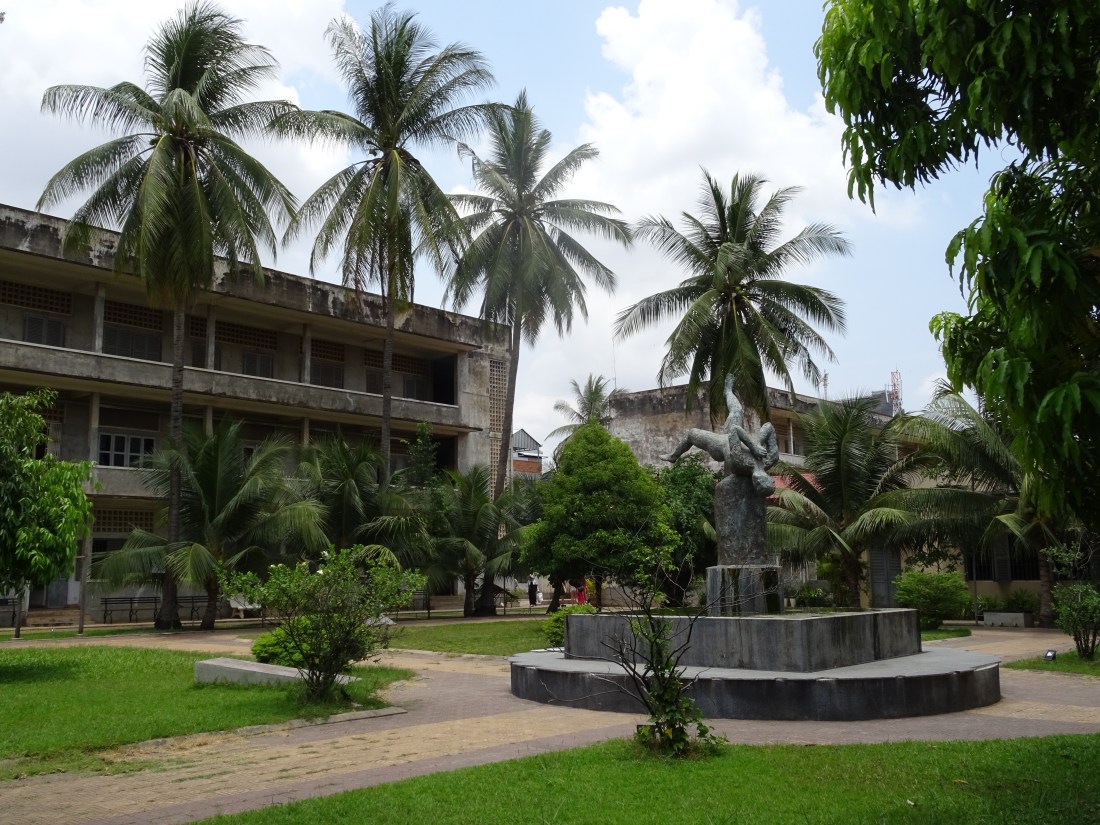
This prison is one of the 200 or so locations where those who were deemed to be against the Angkar, or ‘the organisation,’ were sent. Teachers, doctors, politicians and other educated Cambodians were sent to prisons like S21 and tortured, sometimes 3 times a day, into confessing their ‘crimes’ before being sent off to the Killing Fields. Their interrogators and torturers were young women and men taken from rural villages. It was horrific to walk through each of the building blocks, first viewing the iron beds that prisoners were shackled to, blood still staining the floor, and nightmare-inducing photographs on the walls of how they died.
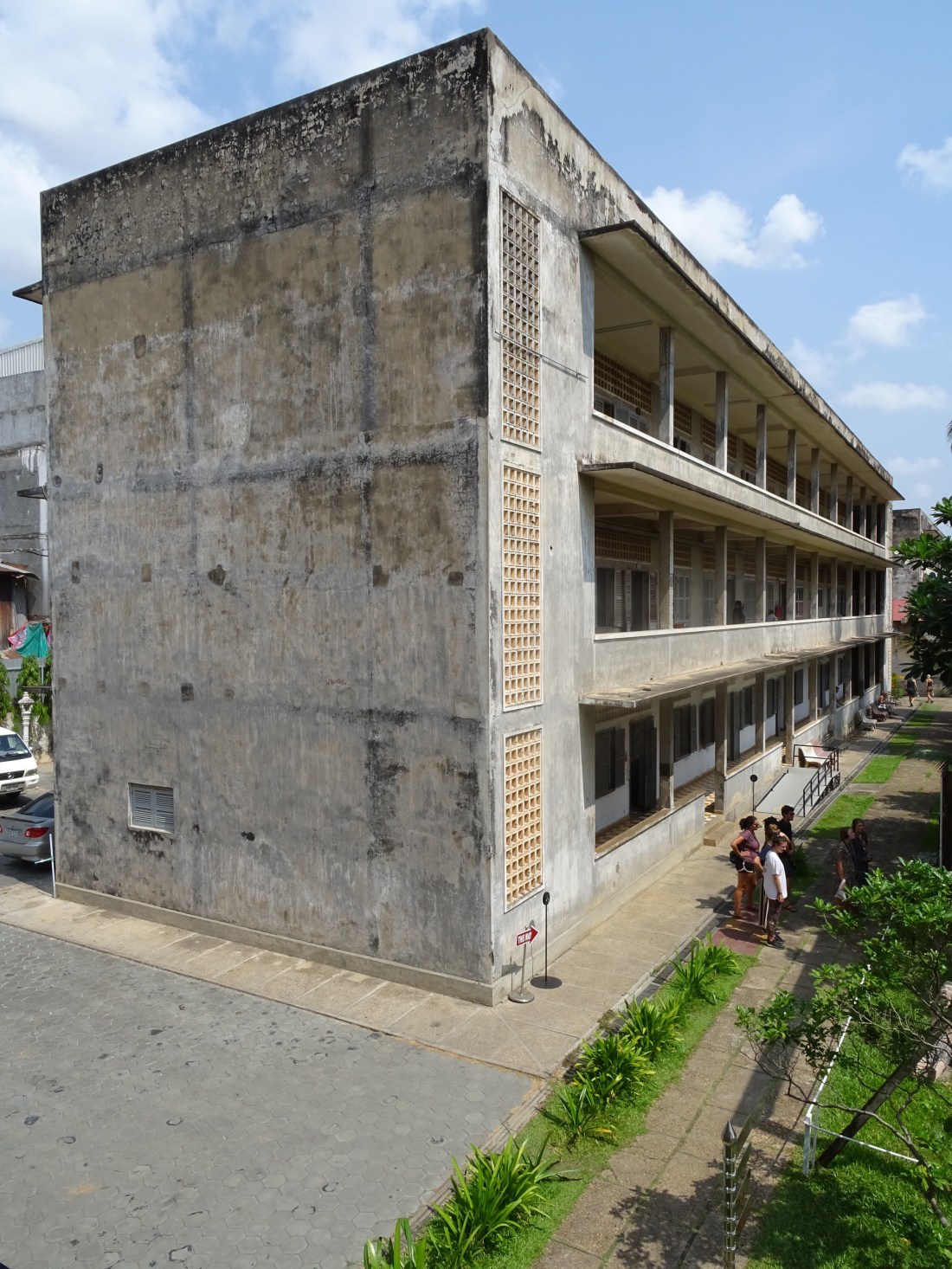
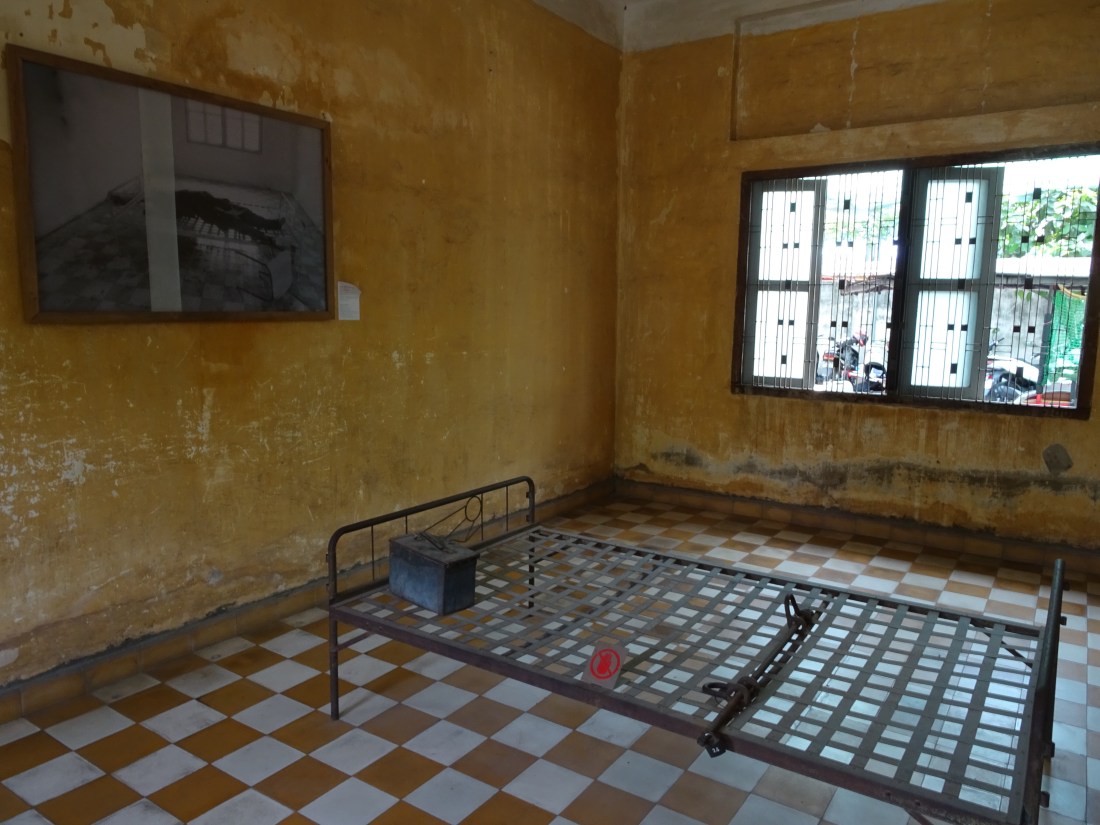
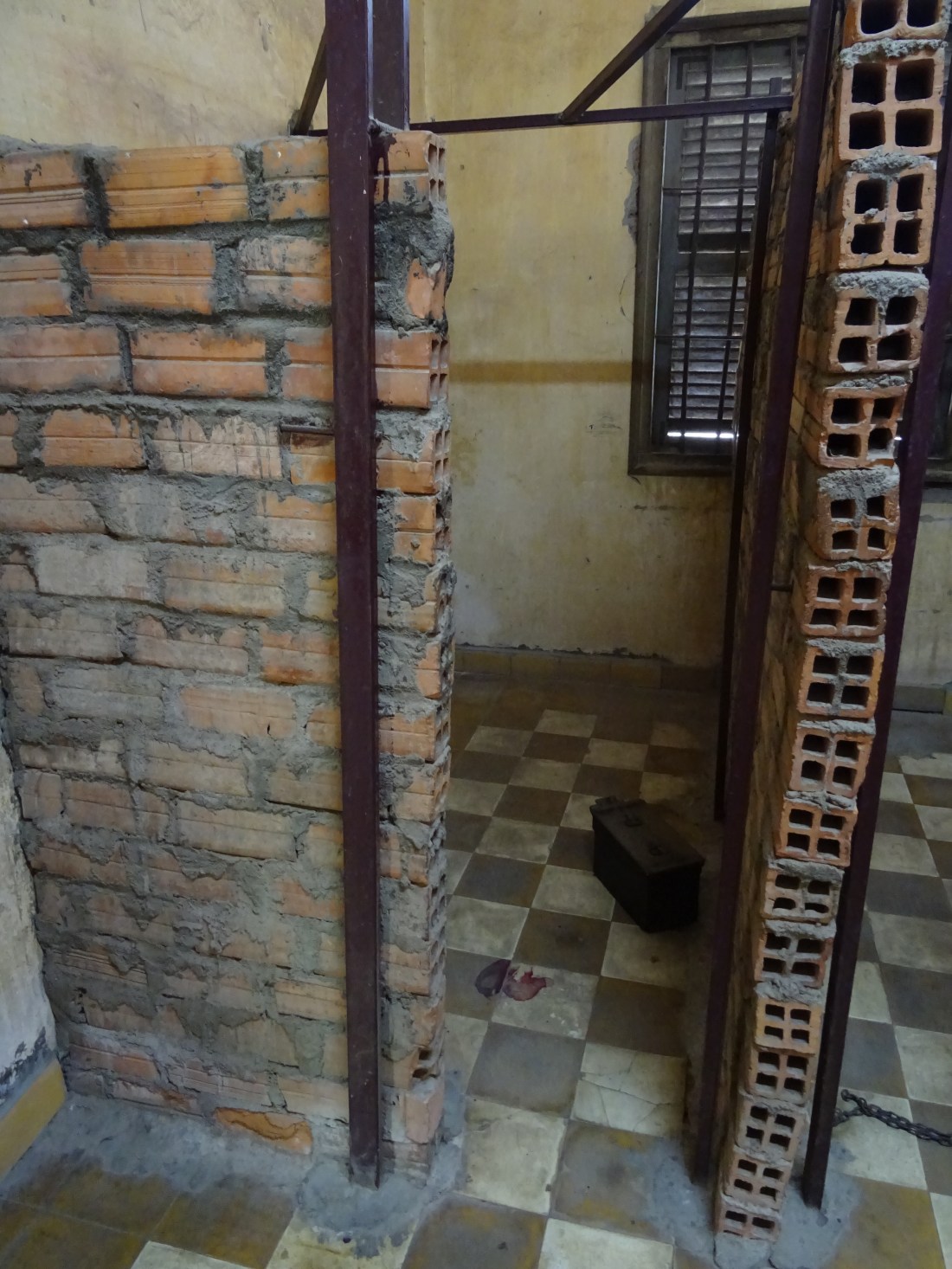
These rooms were former classrooms, which makes it seem all the more disgusting that something built to do such good became a place of such suffering. In one of the other blocks we saw the cells that prisoners were kept in – rudimentary half-height brick walls thrown up to keep them encased in. Horrendously, sometimes prisoners would die ‘accidentally’ from starvation, before signing their confession (much to the anger of the Khmer Rouge) and so prisoners would have to sleep next to corpses in these cells until they were eventually moved.
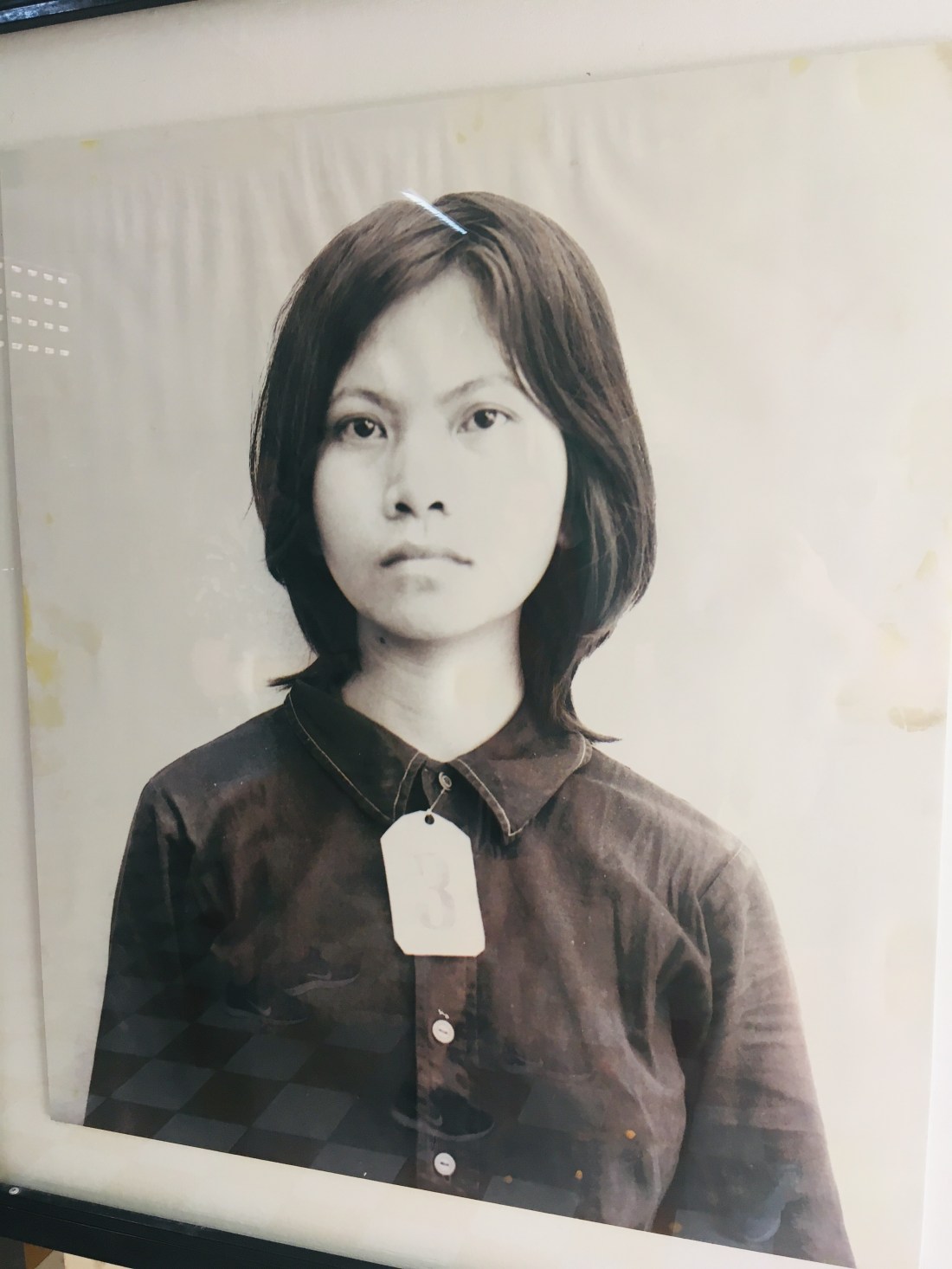
In block C the endless rows upon rows of faces staring back at you – black and white mugshots takes as prisoners entered S-21 – was really heartbreaking. One face stared back at us a little more intensely than the others, her portrait larger on the wall. Huot bophana became the face of this tragedy; a literate woman whose education marked her out for persecution. She was taken away from her family, forced to work in the fields. Her love for her fiancée Ly Sitha, a monk, was kept secret, and Sitha joined the KR in order to try to find her and rescue her. He managed to get her food, but when he returned to Phnom Penh their love letters gave them away and he was executed for hiding his education and for putting himself before the revolution. Bophana was sent to Tuol Sleng where she was interrogated, tortured, and finally, after several months, executed and buried in a mass grave. Their story is one of thousands like it, but it’s one of the few that survives in such detail — through their letters and her forced confessions. Her defiant expression in her photograph enables her to stand witness for the countless others that endured such unjust hardship. I’m not sure we’ll ever forget this young woman’s face.
As we left S-21 we saw the white grave stones that mark the last 14 people to die here. They were hurriedly murdered as the Khmer Rouge soldiers fled on liberation day, and were found 2 days later. This is certainly a grotesque form of tourism, but we think it’s one of the most important things you can do in Cambodia. The country is still suffering from the effects of the regime, and tourism is not only helping to boost the economy and provide jobs, but visits like this allow a greater worldwide understanding of the atrocities that took place here.
From here we tuk-tuk’d to two other places of interest; the National Museum (Ged’s choice) and the Royal Palace (Rach’s choice). Supposedly one of the best archaeological collections in Cambodia we were a little disappointed in the National Museum for the $10 entrance fee. While it did provide an interesting insight into how statuary has changed over time due to the transition from Hinduism to Buddhism, and Khmer to Angkor to Colonial styles, there weren’t many explanatory panels so it quickly became an endless array of statues.
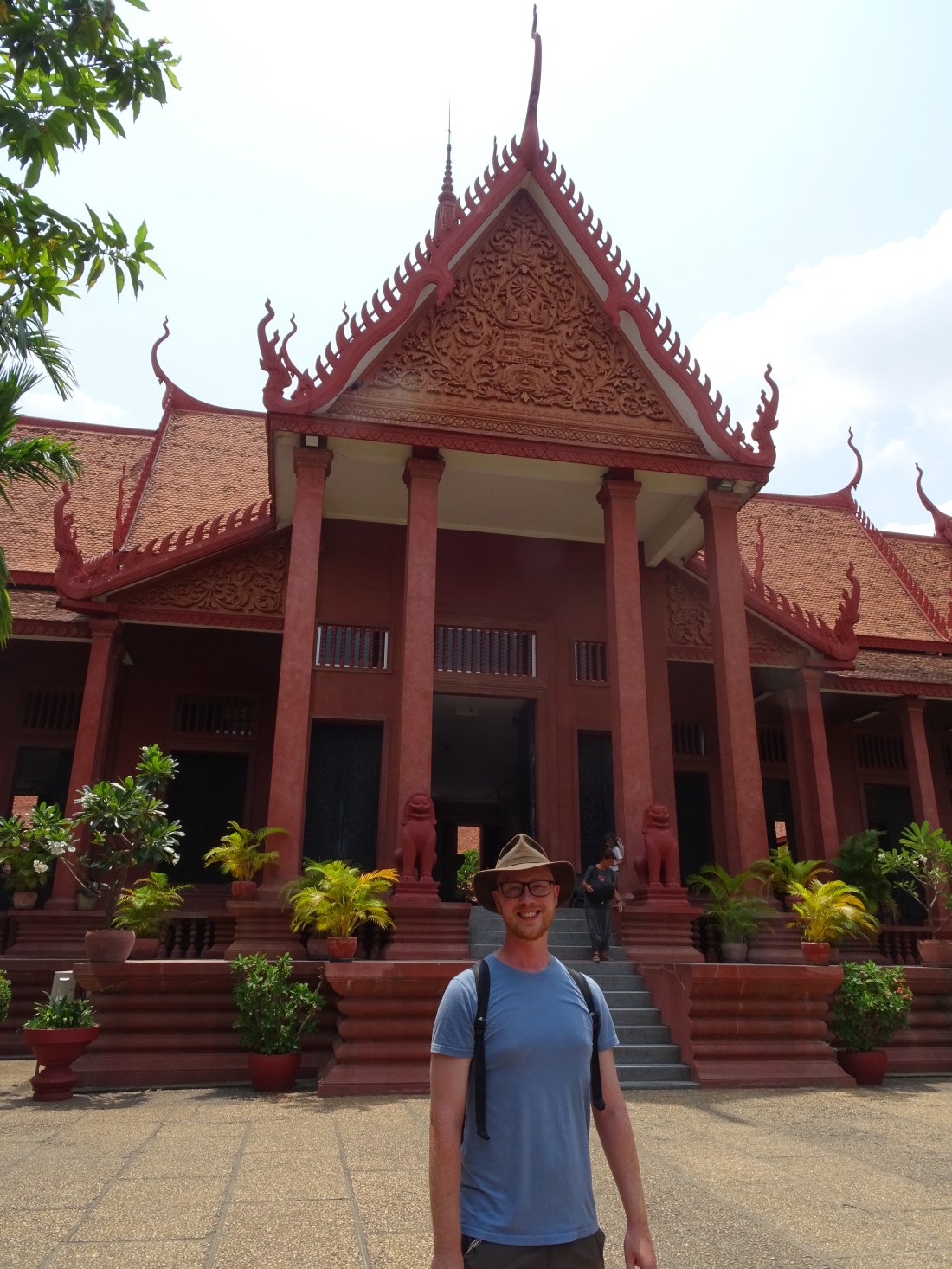
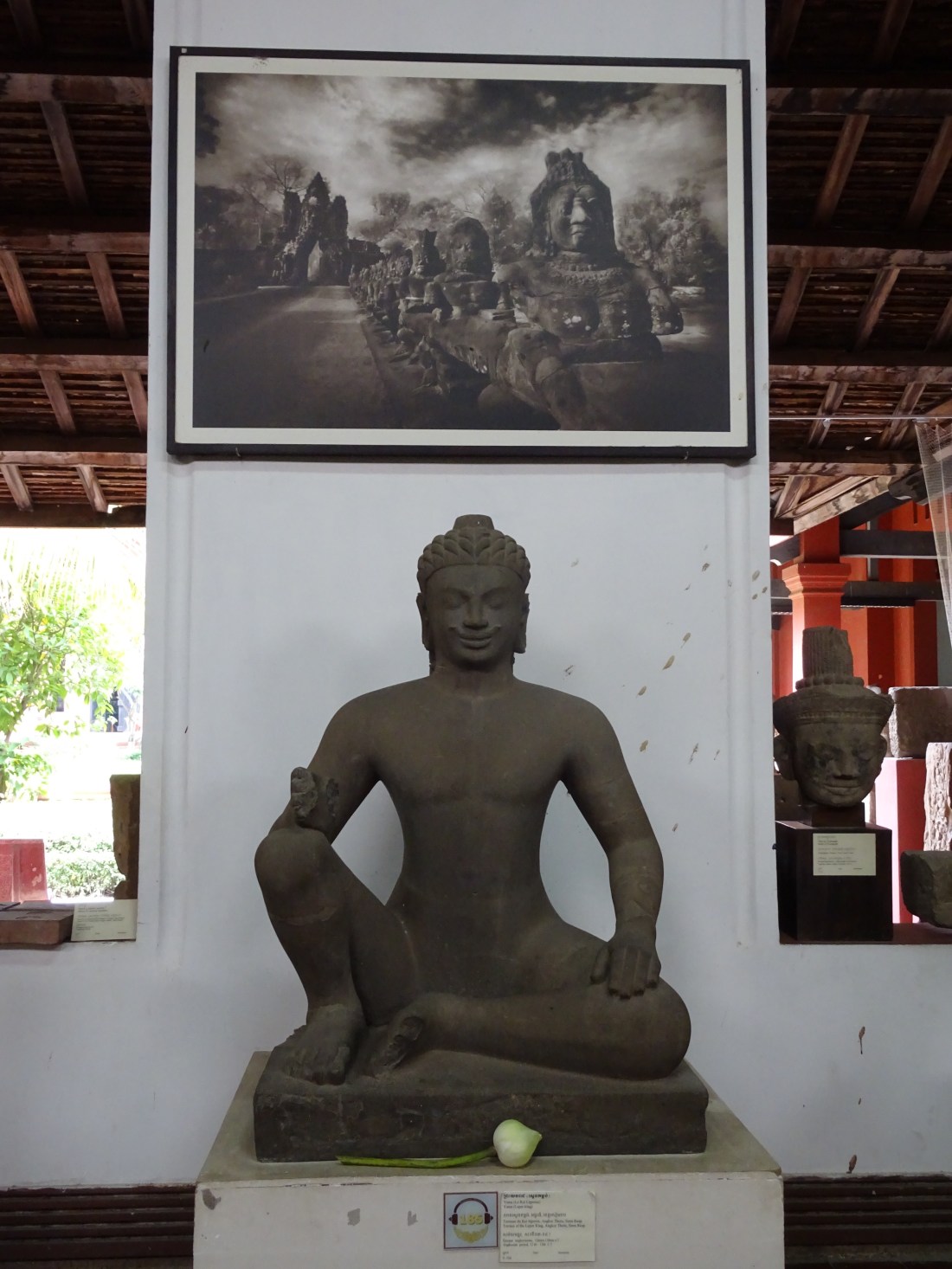
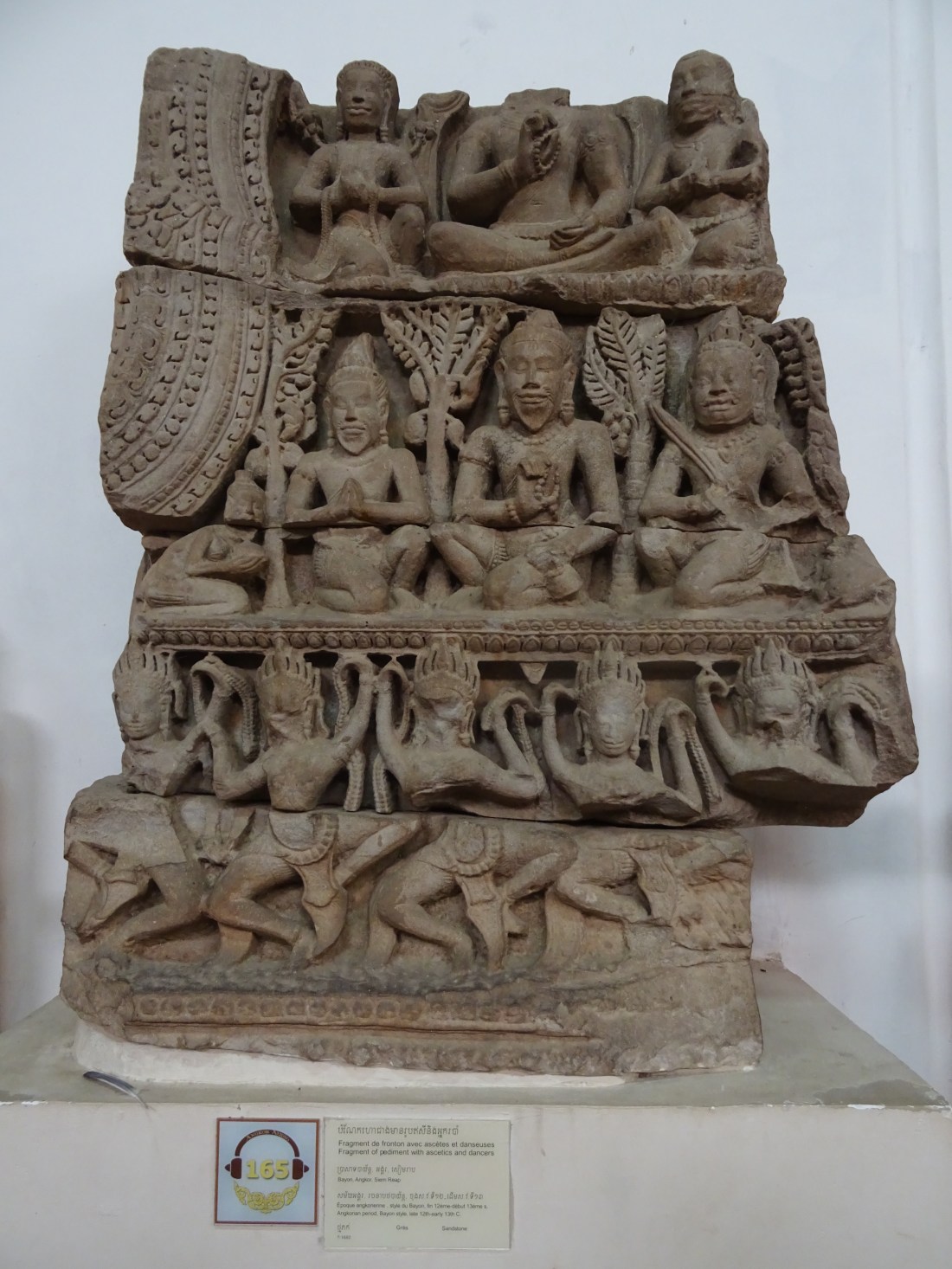
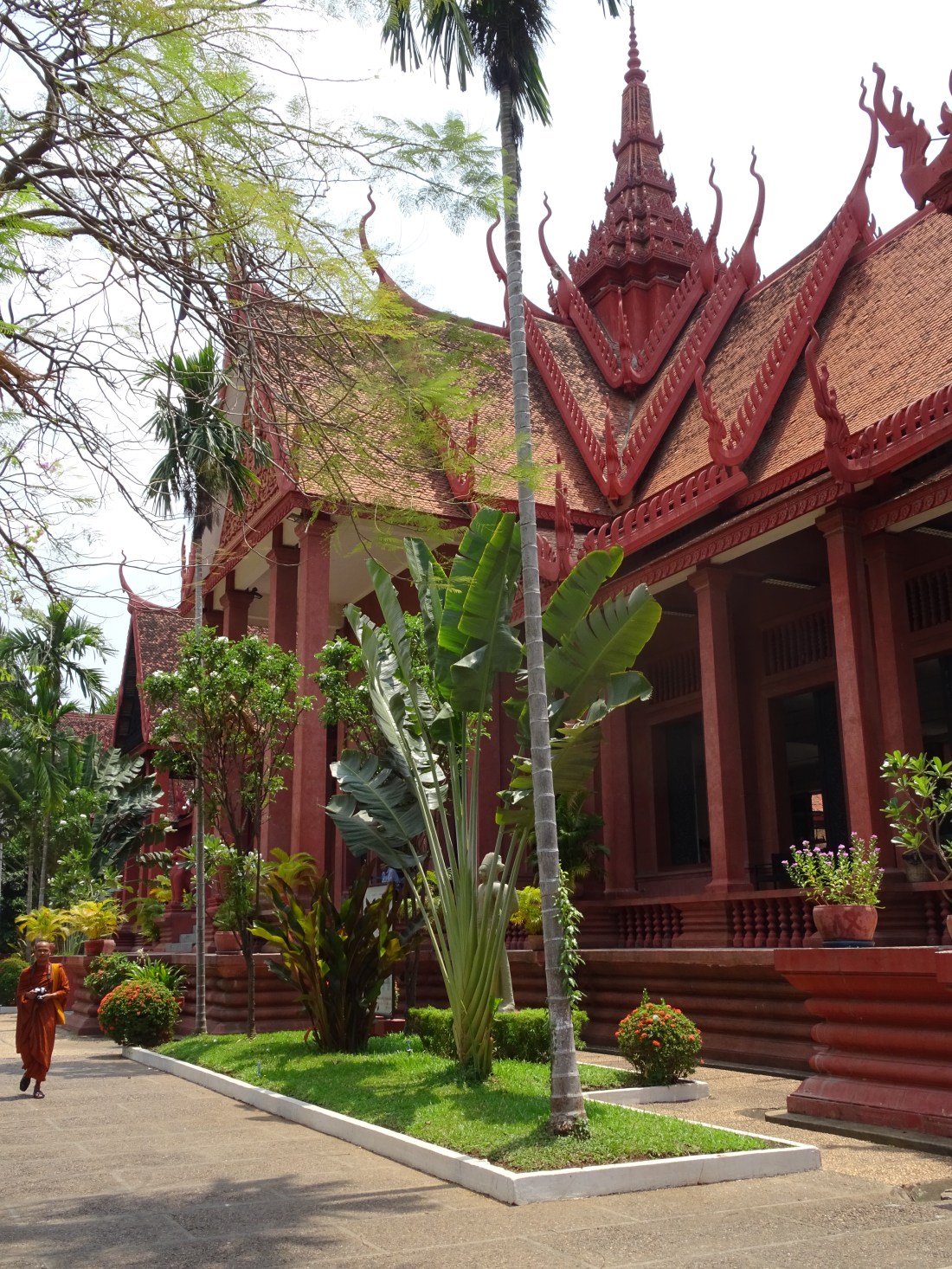
Weirdly a raging cold had taken hold of Rach so she spent her time in the shade of the courtyard admiring the museum building itself, which was a real architectural gem.
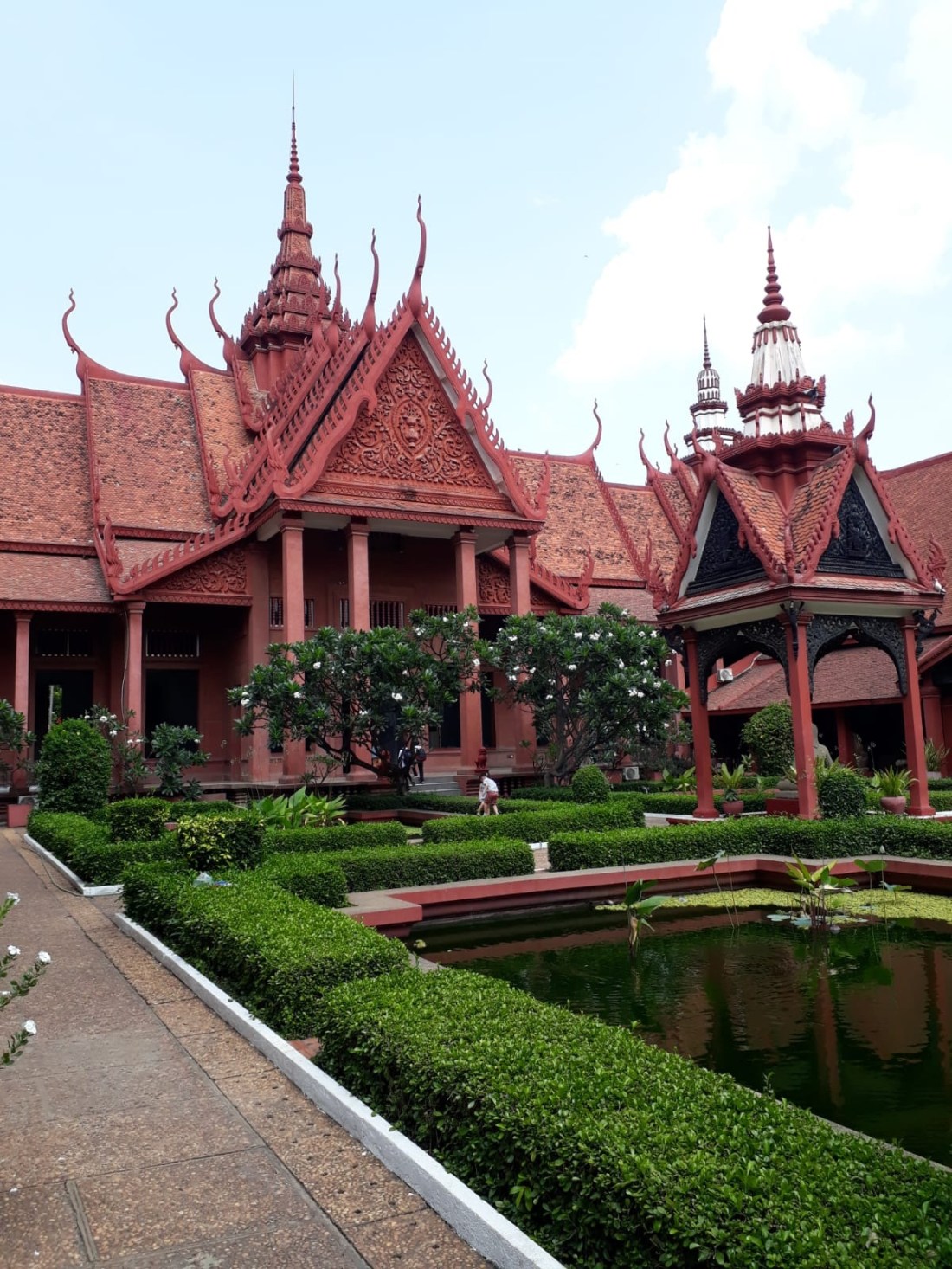
We stayed about an hour or so then headed for the palace just next door.
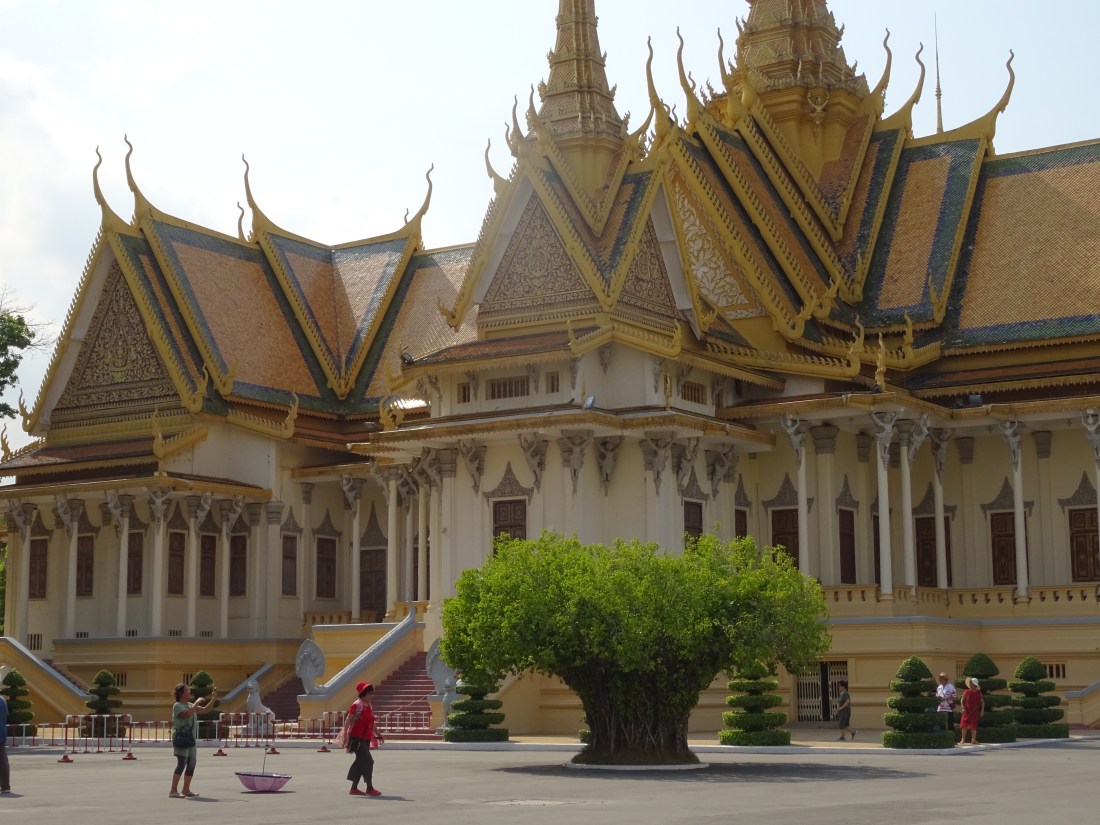
The impressive Royal Palace was built relatively recently in the city, after the capital was relocated here for the second time in the 19th century. Made to be fit for a king out of marble, gold and other precious stones, it’s one of the most iconic sights in the city. We entered through the South Gate, the ‘commoners entrance’ – the other 3 being the victory gate, the western ‘executing’ gate and the northern ‘funeral’ gate, where the last king was carried out of the palace grounds in 2013 after his death.
Set amid the beautifully manicured grounds and ornate buildings is the golden-spired Throne Hall, which is painted yellow to symbolise Buddhism, the main religion in Cambodia, and white to represent Hinduism, the dominant religion during Angkorian times. Inside sit two golden thrones which are only used only for coronations, and a western throne.
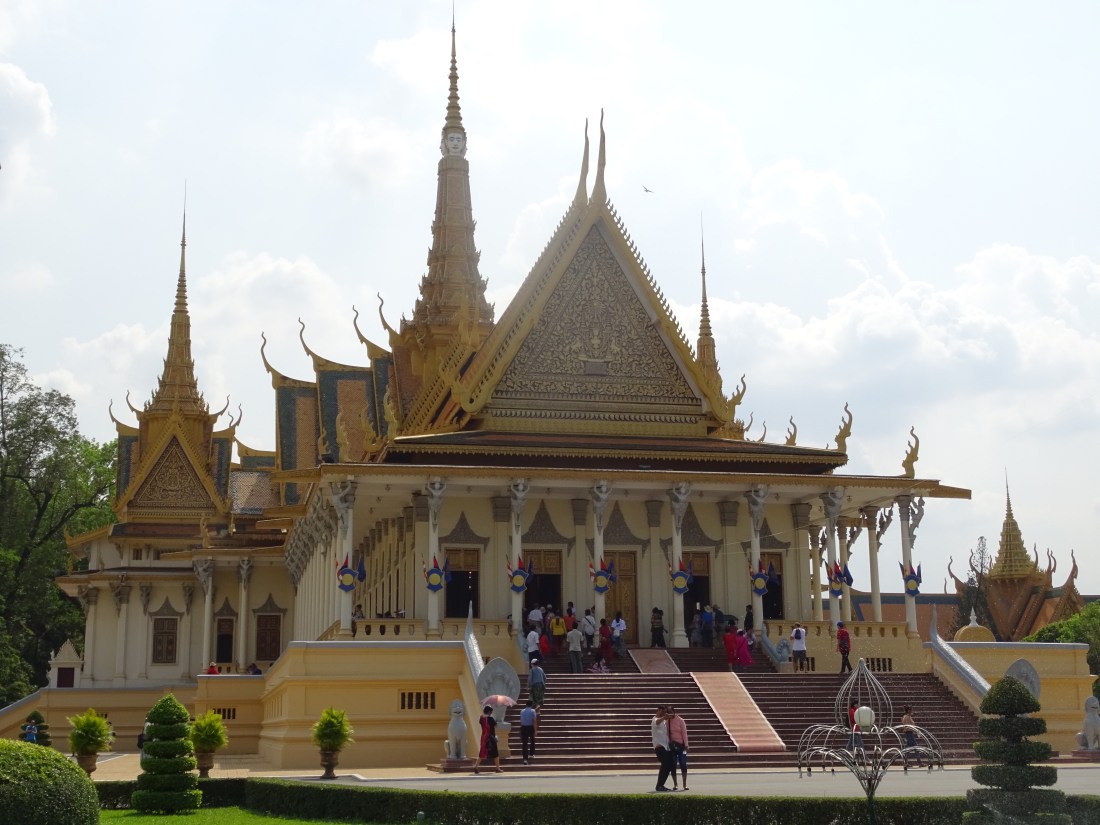
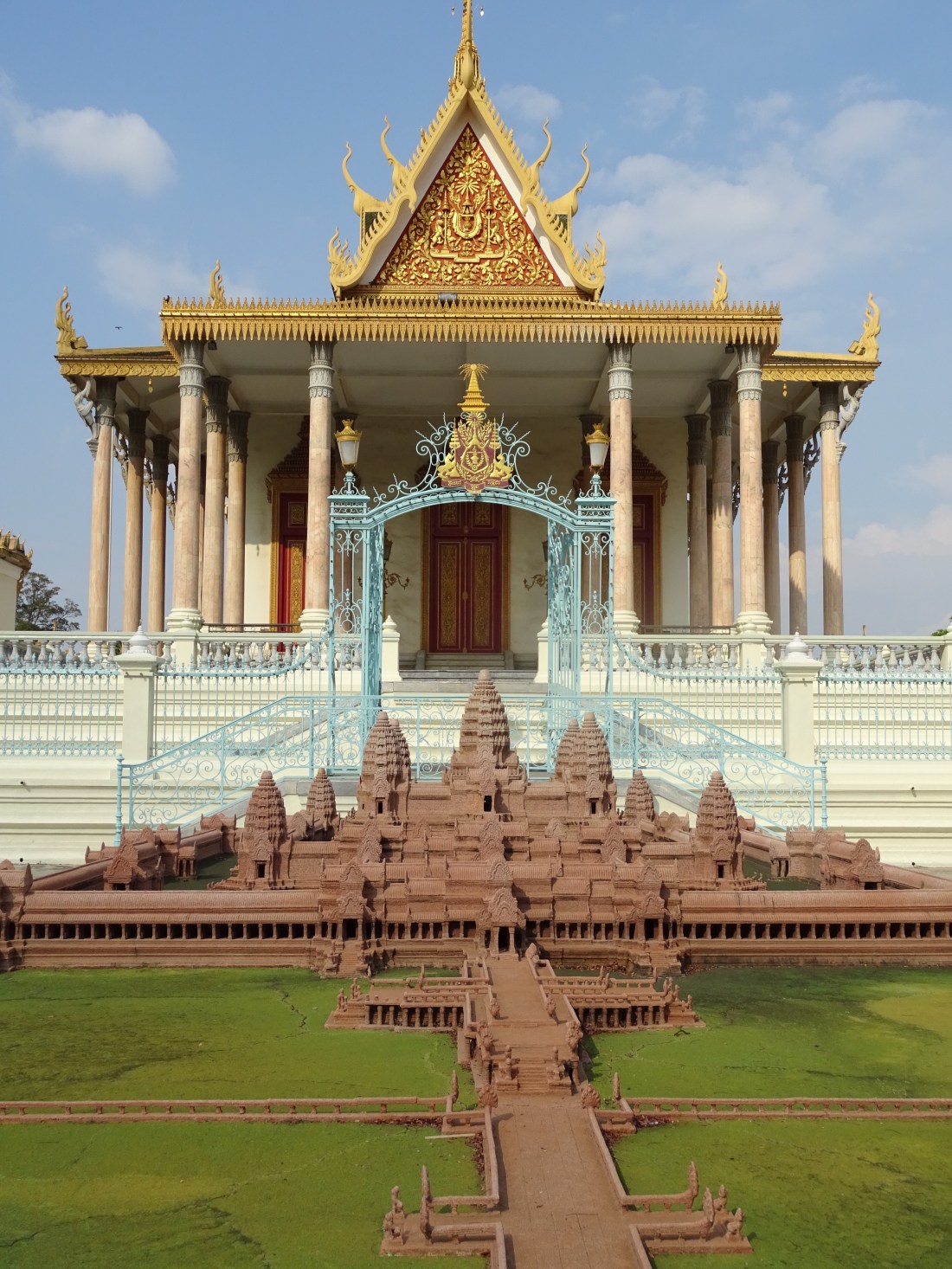
The infamous Silver Pagoda was even more elaborate. Dripping with wealth, its floor is entirely made up of 5000kg of silver spread over 5329 tiles. It’s one of the only temples to survive under the Khmer Rouge, although half of its contents were destroyed during the Vietnam war. It’s still the epitome of extravagance though, from the Italian marble steps leading up to it to the life sized gold Buddha encrusted with over 2,000 diamonds. Not to mention the countless gold buddhas everywhere you turn! Sadly photos were not permitted inside, so here it is from the outside!
The heat at this point in the day was unbelievably stifling, so we escaped back to the hotel to cool off. While Rach was sleeping off her cold, Ged experienced the thunderstorm that followed in the early evening, smells of the city changing from the usual whiff of grilled meat mixed with sewage, to that intense smell you get when it rains on hot tarmac. We just hoped it wouldn’t be an omen for our time in Siem Reap, starting tomorrow!
2 April – Journeying to Siem Reap
The day had come to leave the capital and travel to Siem Reap, home to the ruinous temples of Angkor Wat. Ged was soon to re-enter archaeological heaven!
We grabbed breakfast at a Polish place recommended on trip advisor. Their speciality was pies – it was the first one we’ve had on this entire trip! We also ordered some sandwiches to go ready for the journey, which was to take around 5-6 hours.
The curious thing was that we were effectively posting ourselves to a Siem Reap – the seats we had booked on the bus were in fact seats in the postal minibus! This is quite a normal way to travel here – the post is going to Siem Reap so why not earn a bit more money for the miles by selling seats to passengers?!
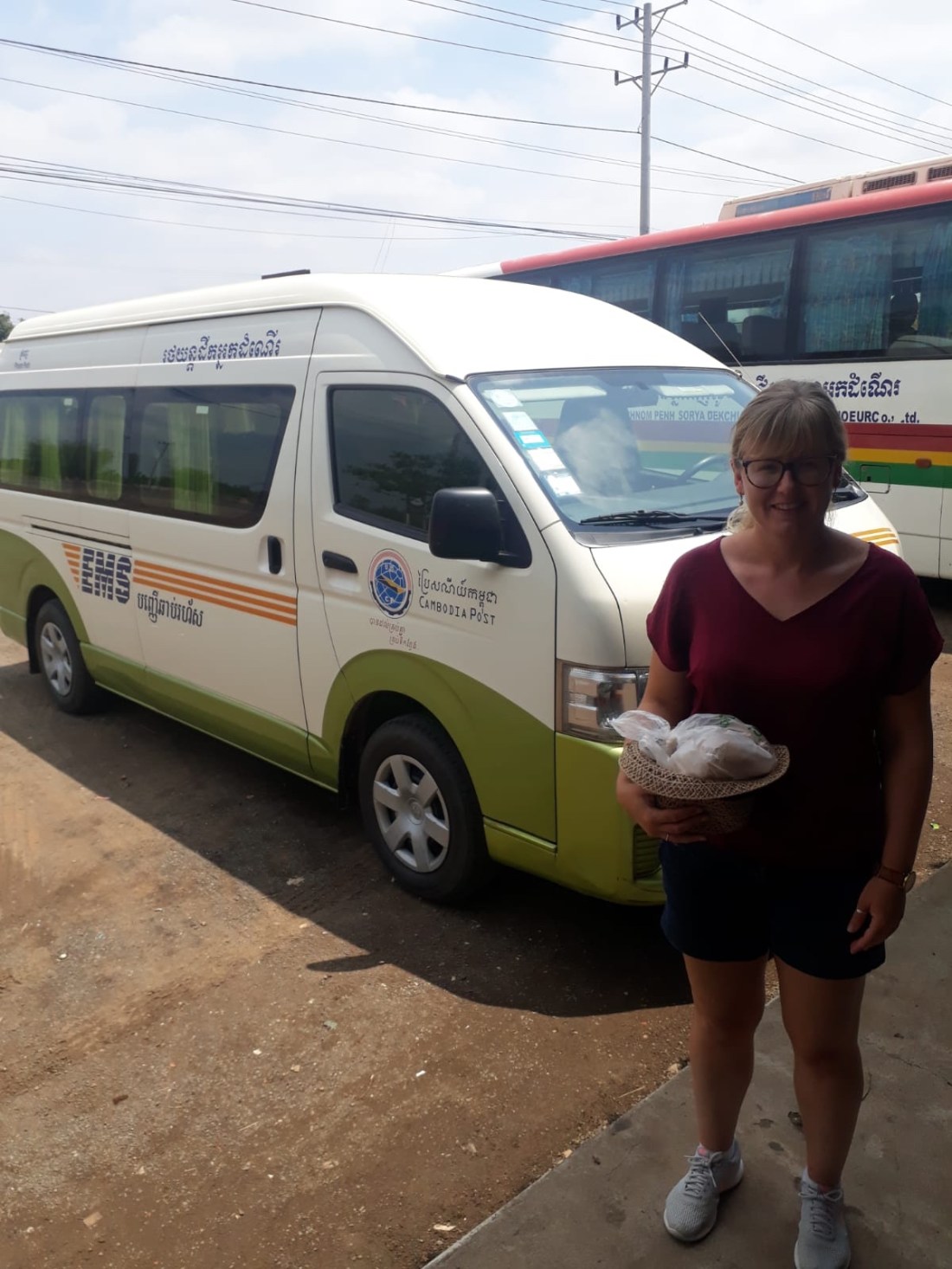
About 9 of us were doing the journey so we all packed in and were instantly grateful for the air conditioning. A welcome Calippo at a rest stop half way, and some films to watch, the time passed fairly quickly and we were there around 3pm following our 9.30am departure.
Siem Reap had quite a diffierent feel to Phnom Penh – prettier, as we drove along the river with ornate lampposts dotted along the banks, cleaner, and a little more chilled out.
We checked into our hotel, which was the loveliest of the trip so far. The Cyclo Siem Reap considers itself a boutique 4* hotel and you’d be forgiven for thinking that must be a lie when it costs £7pp per night to stay there, including breakfast! We had a lovely big room, and a nice pool area out the back to chill out in – much needed in the seemingly ever increasing heat.
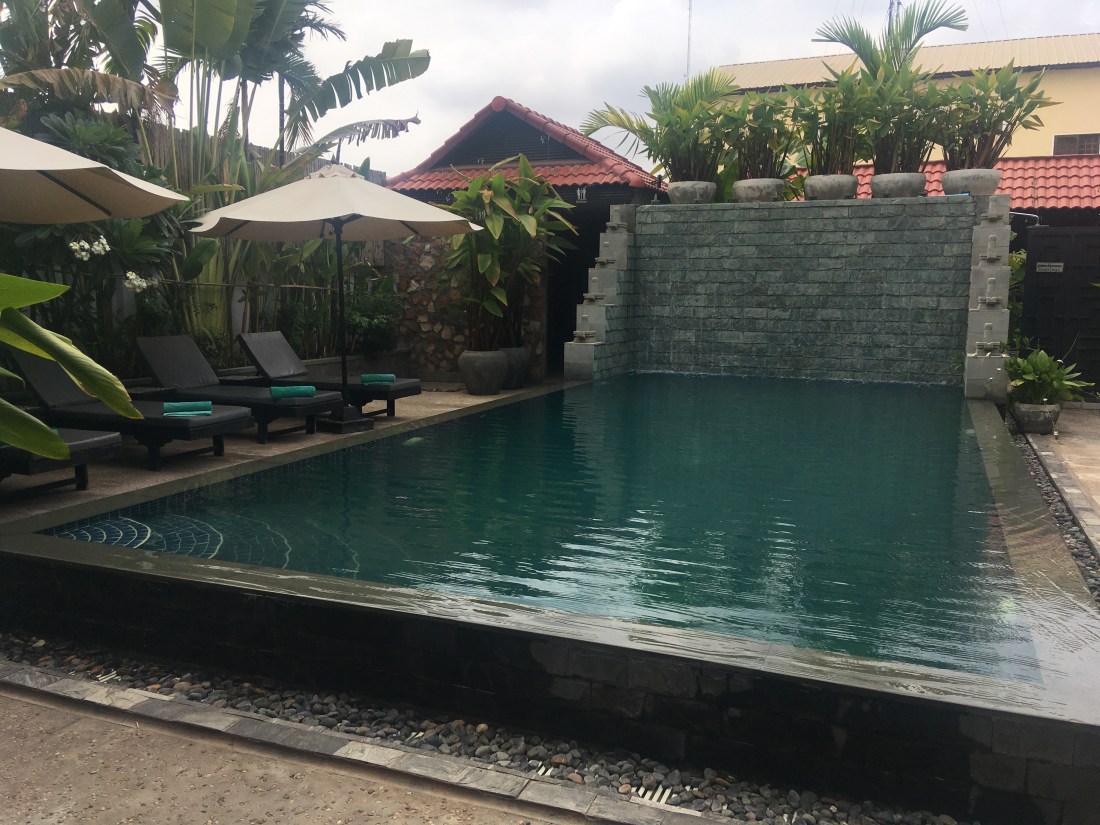
We were staying here 3 nights, and 2 full days so we spent a couple of hours by the pool planning our 2 days of sightseeing with some cheap beers from the shop down the road.
In the evening we headed out to see the city at night (more like a town really though, size-wise), with a couple of restaurants in mind for cheap local food. As we wandered down the street to our first choice and couldn’t find it we suddenly realised that the reason was that everything was very dark. Several blocks or so had had a power cut! Not uncommon in Cambodia, we headed for our second choice place a little further away. Same situation! With most places getting by with a few candles on the tables to serve bottled drinks only, we were left with only the places with their own generator. Mexican food it was! Not the best, but not the worst Mexican food we’ve had (burritos in Peru were pretty dire) and then turned in for the night. We were getting picked up in the morning to do our first day at Angkor Wat on the ‘grand tour.’ That’s next time, on the blog!
 Around the world in 140 days