
Author: Ged
Photos: Rach (unless specified otherwise)
17 April
Our cheap and cheerful Vietjet flight was the last of the day to arrive in Hue (pronounced “huway”). The airport was all but deserted except for a short bloke, more wide than tall, standing near the exit. It became evident he was some sort of taxi guy. Suprisingly he offered a ride for half the price of the Grab app to get to the city centre. We don’t normally go with these unlicensed taxi fellas but in the end he was sound. We had agreed the price in advance and Ged made sure he knew we were watching every turn on googlemaps. Hungry, and tired from carrying luggage up five flights of stairs in the hotel, Ged went out to hunt and gather some pizza whilst Rach unpacked. Ged’s first impression of Hue was just how quiet it was. The atmosphere felt very different to Hanoi. Before long Ged was being bombarded by guys on scooters shouting, “Oi! Oi! You like lady? You like marijuana? Oi!” Sometimes the poor lady was on the back of the scooter which just mad Ged feel deeply sad and angry. Eventually he came accross a pizza place that was about to close. An angry, drunk French customer was shouting in English at the bemused waiting staff about being ripped off. It turns out his card was declined and he wouldn’t accept the print out from the machine saying so as it was only in Vietnamese. The staff offered their phones for him to check his balance online, suggested he check it at an ATM, or even pay half now and half in the morning after he checks his account. He flatly refused and just said he had paid and would pay no more. Ged got a bit annoyed by the guy so offered to google translate. Turns out the waiting staff were telling the truth and the guy eventually paid his bill in cash….. Ged got a free beer for the effort from the staff! Triumphant, Ged returned to the room (and to the now famished/worried Rach) an hour after leaving it, with a decent and dirt cheap ham and mushroom pizza. Operation “Thin Crust” was a success.
18 April
Hue is home to the Imperial Citadel of Vietnam where once the emperors and their families resided, safe in a serene city walled off from the rest of the world. Once the seat of power in Vietnam, Hue is pretty much geographically in the centre of this long and thin country. The citadel, and surrounding modern city, sits on the banks of the Perfume river, so named for the fragrant grasses that line the banks, although their smell isn’t really evident today. The city has about half a million residents so is one of the smaller cities in the country, making it much easier to explore by foot.
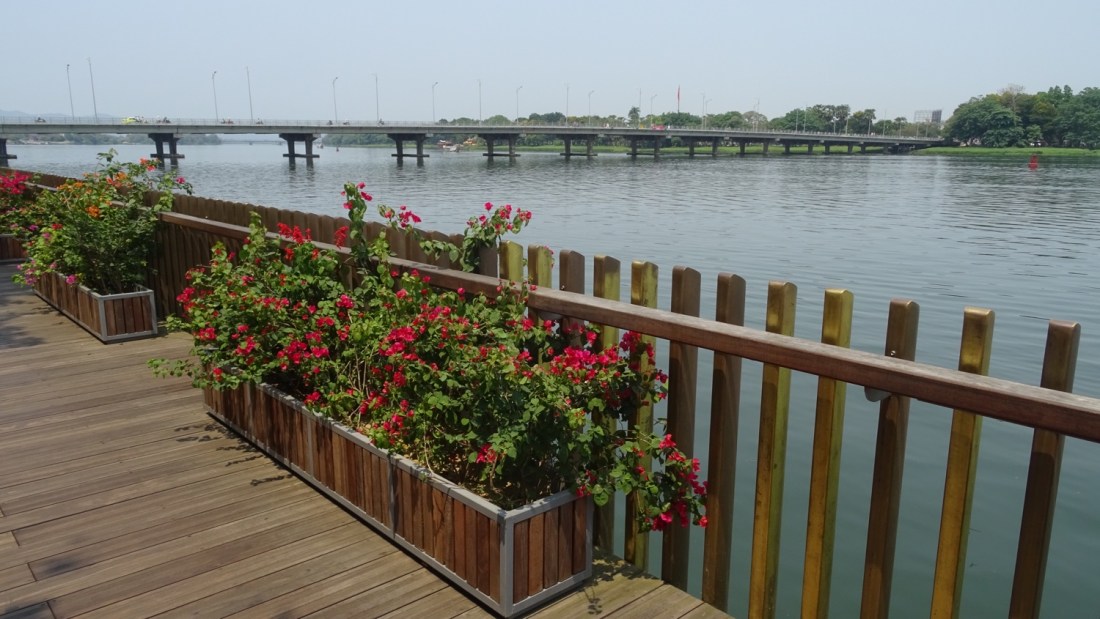
The main attraction of the city is definitely the Imperial Citadel and many tour operators offer a visit as part of a wider tour of the city. However, they only give a couple of hours inside the walls and we wanted to take our time. We decided to download a self guided walking app with notes on the different sections rather than pay for a tour, and so opted for a £12 combo ticket to get into the citadel and the nearby royal tombs (they were the next day’s trip). Up and out by 9:30am, the sun was already blistering as we made our way across the bridge to the formidable walls of the citadel.
At 37°C the temperature was no joke, and at near 90% humidity we were melting as we walked. We made sure we had several litres of water with us and Ged had opted for SPF100 suncream….. the pasty bald git. Needed though!
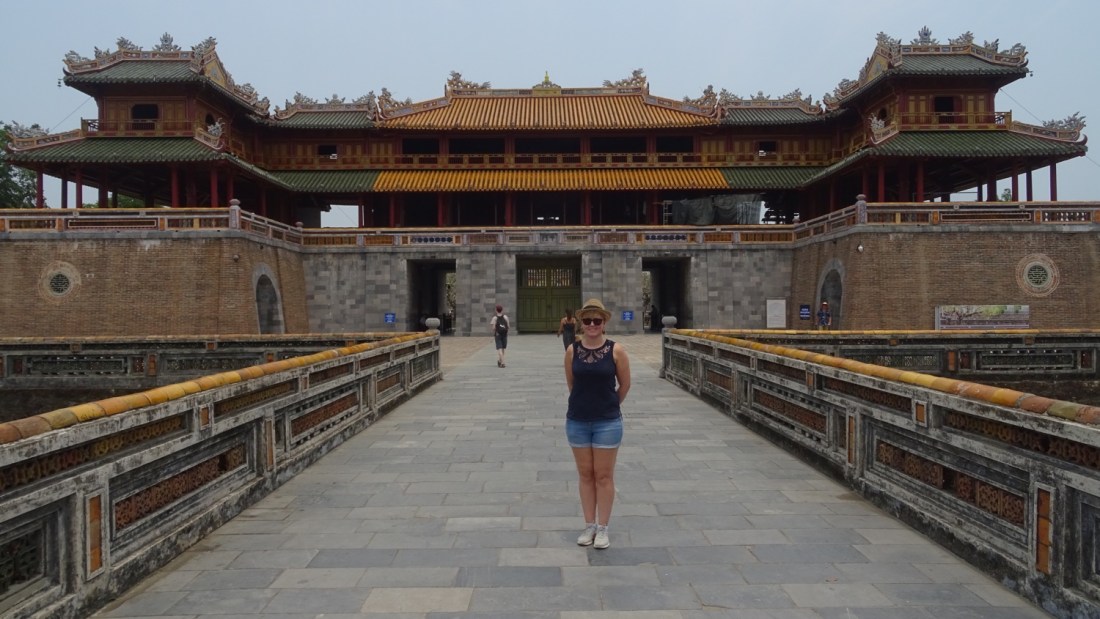
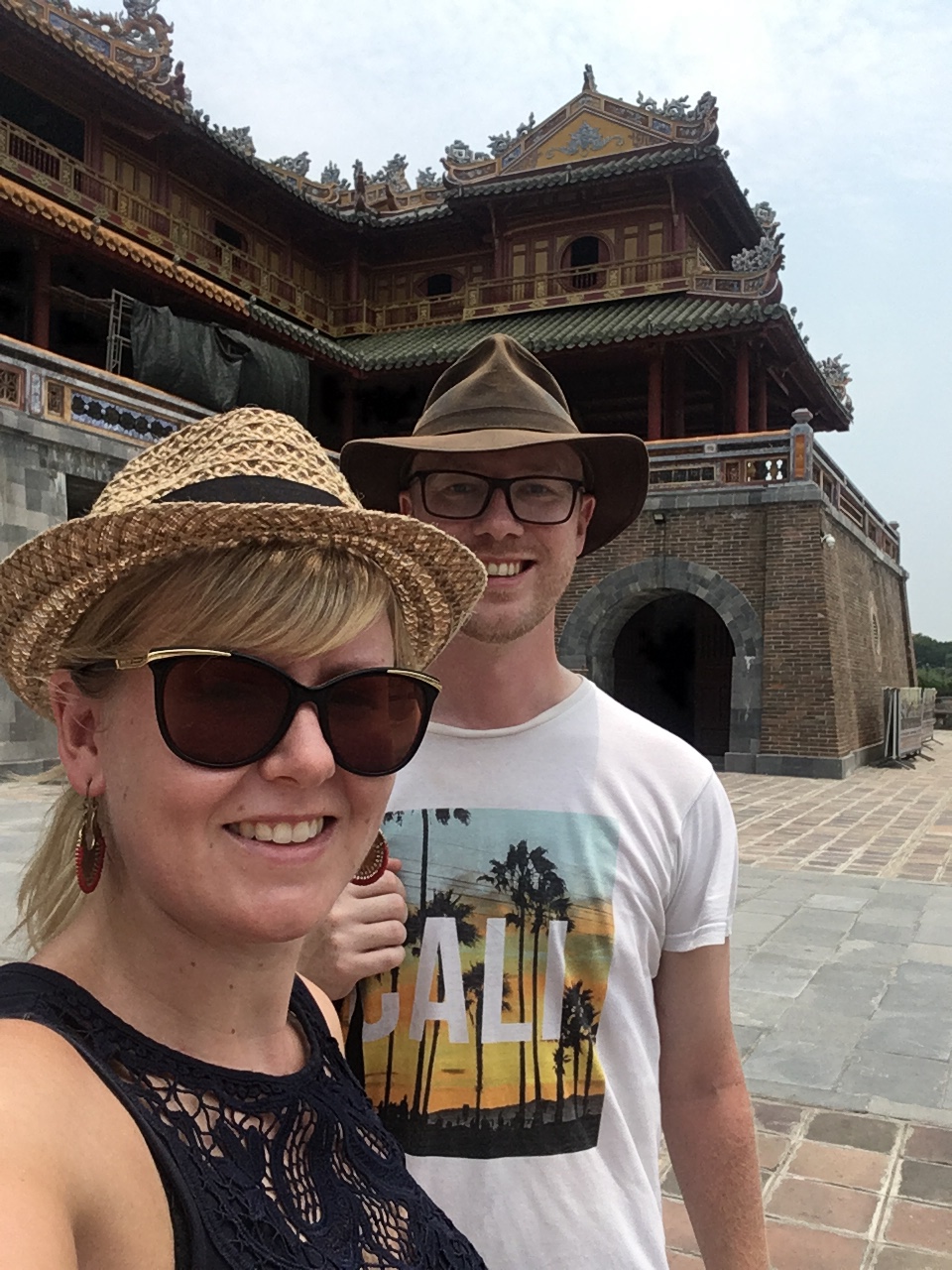
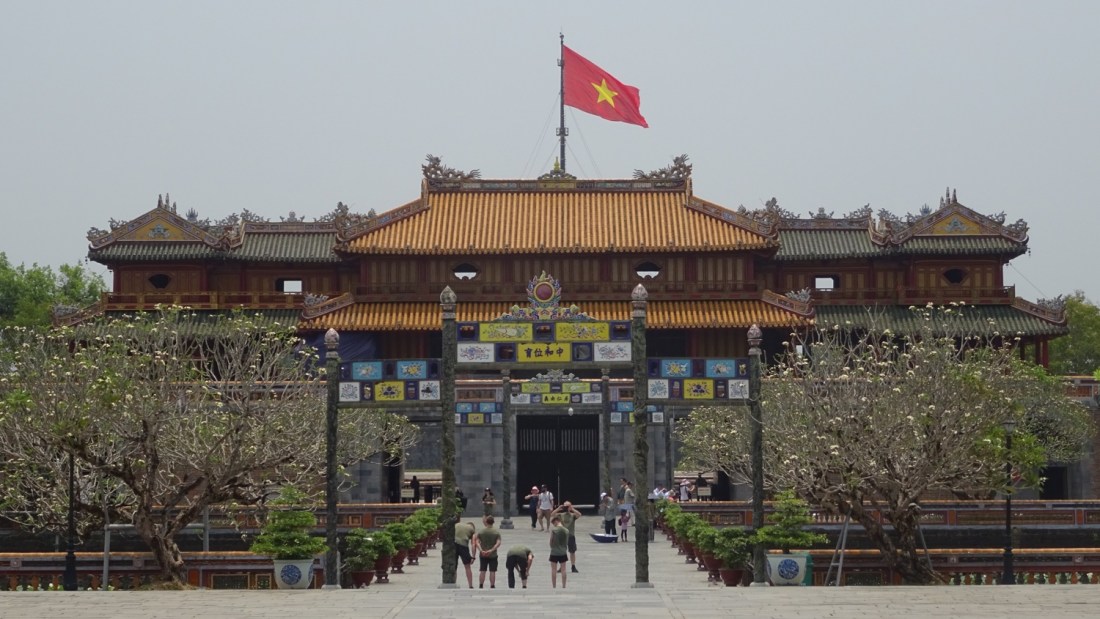
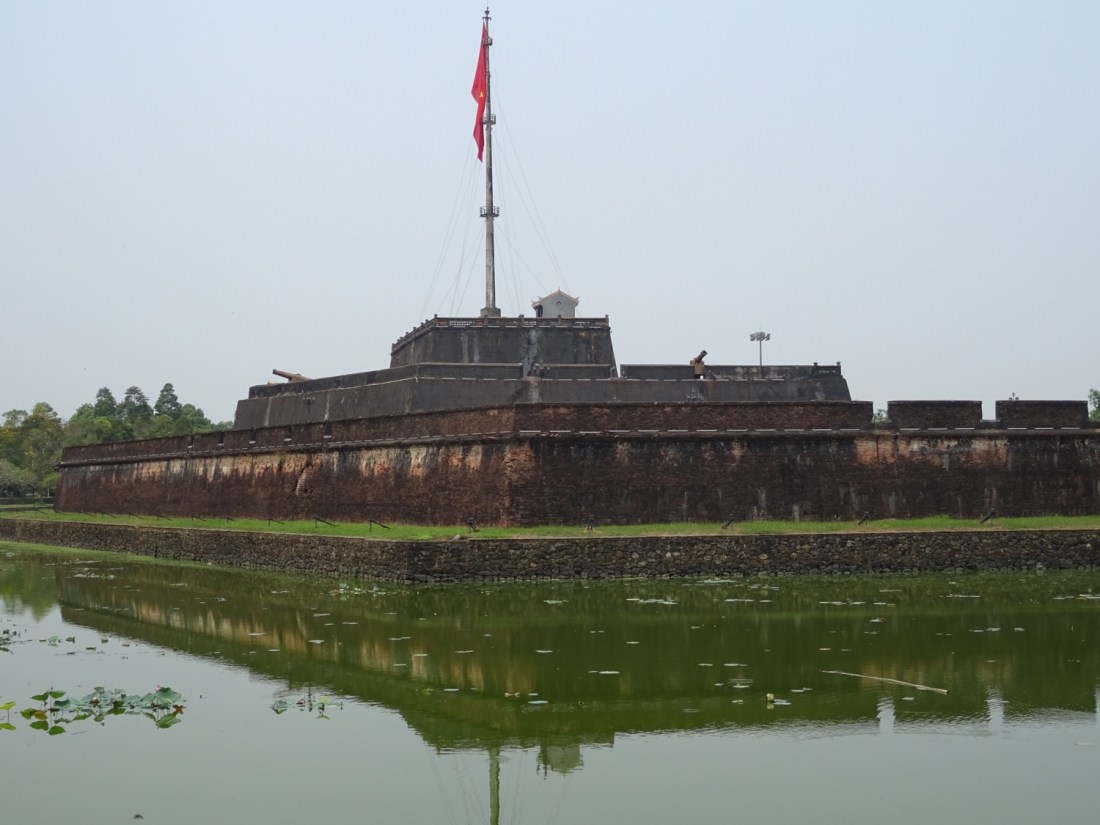
When you walk through the gates you are greeted with a huge square. At one end in the centre is the stunningly ornate main gate and at the opposite end is a huge flag pole with a massive billowing red flag with a yellow star fluttering in the breeze. The imperial gate and the flag of the people’s republic are seemingly at odds but this is a modern Vietnam that embraces all of its past and is very definitely moving forward in the world.
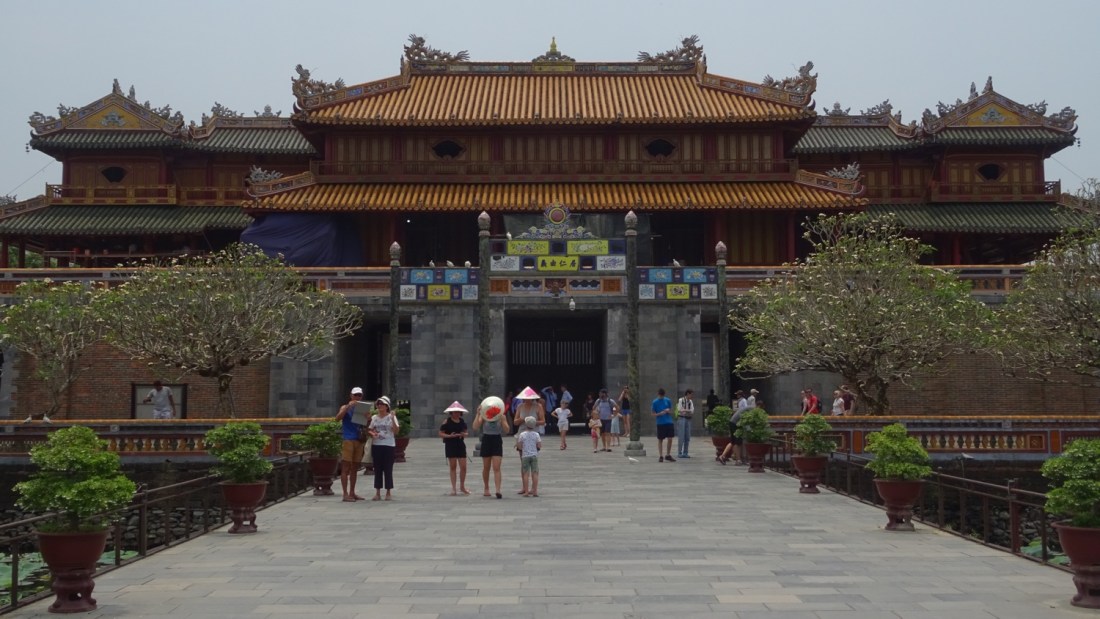
This recently ruined citadel is receiving a lot of funding from the Vietnamese government to restore and conserve this national treasure. It’s heartening to see that heritage is so important in a country still recovering from the brutal and utterly destructive wars of the last century.
As you cross the little shrub-lined bridge from the first 3-tiered decorated gate, over the ornamental ponds complete with playful carp swimming away, you get a better glimpse of the first of many beautiful temples in this Imperial City. Absolutely stunning, and not a bit of it was hinted at from the outer defensive walls.
After, we turned left from the main gate and followed the outer roads around the citadel clockwise finishing up with the central “purple” area. The whole citadel is split up into smaller walled sections including areas for the women’s temples, the women’s residences, the men’s temples, the Emperor’s private residences, military reception halls, civil reception halls, ceremony squares, gatehouses, and ornate pagodas.
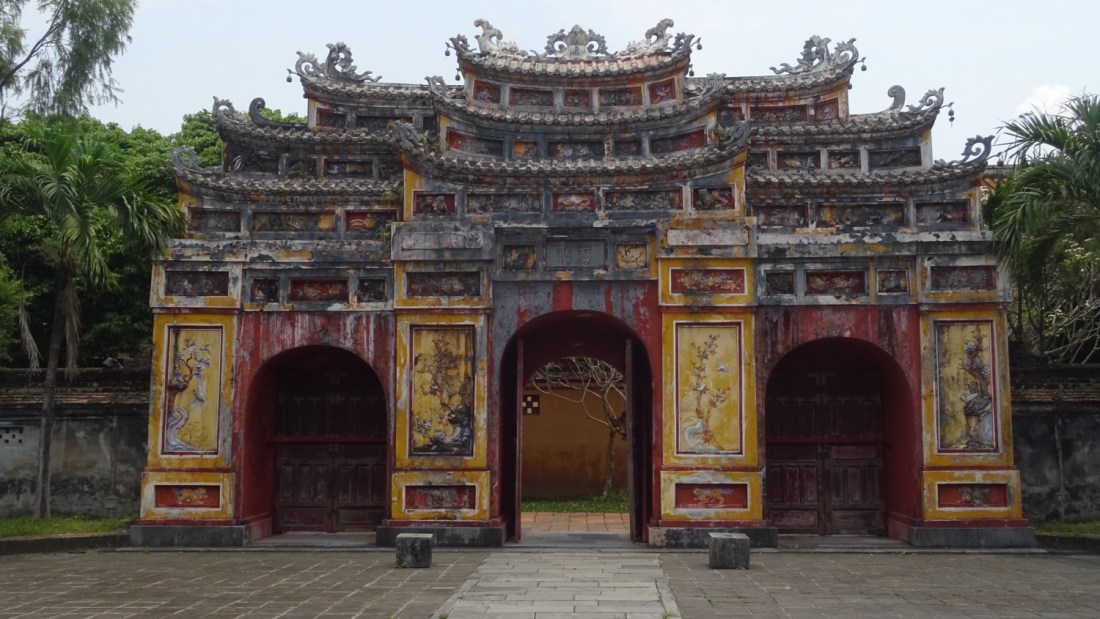
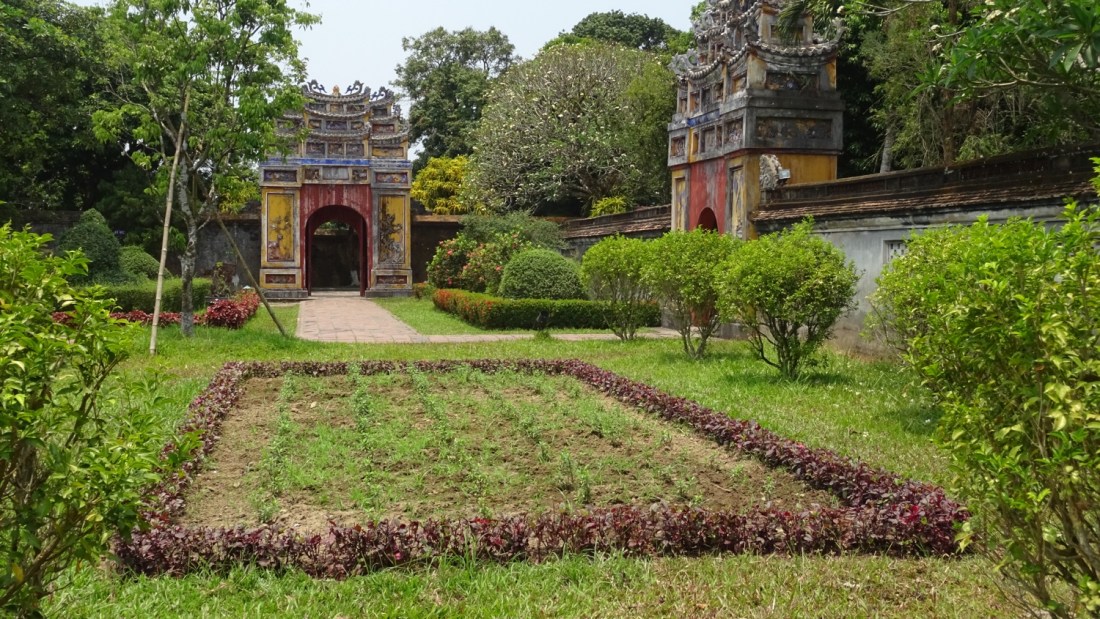
This place must have been utterly idyllic during the days of the Emperors and one can only imagine what it was like to walk the avenues with a retenue in tow taking in the smells of the fragrant plants that line the roads.
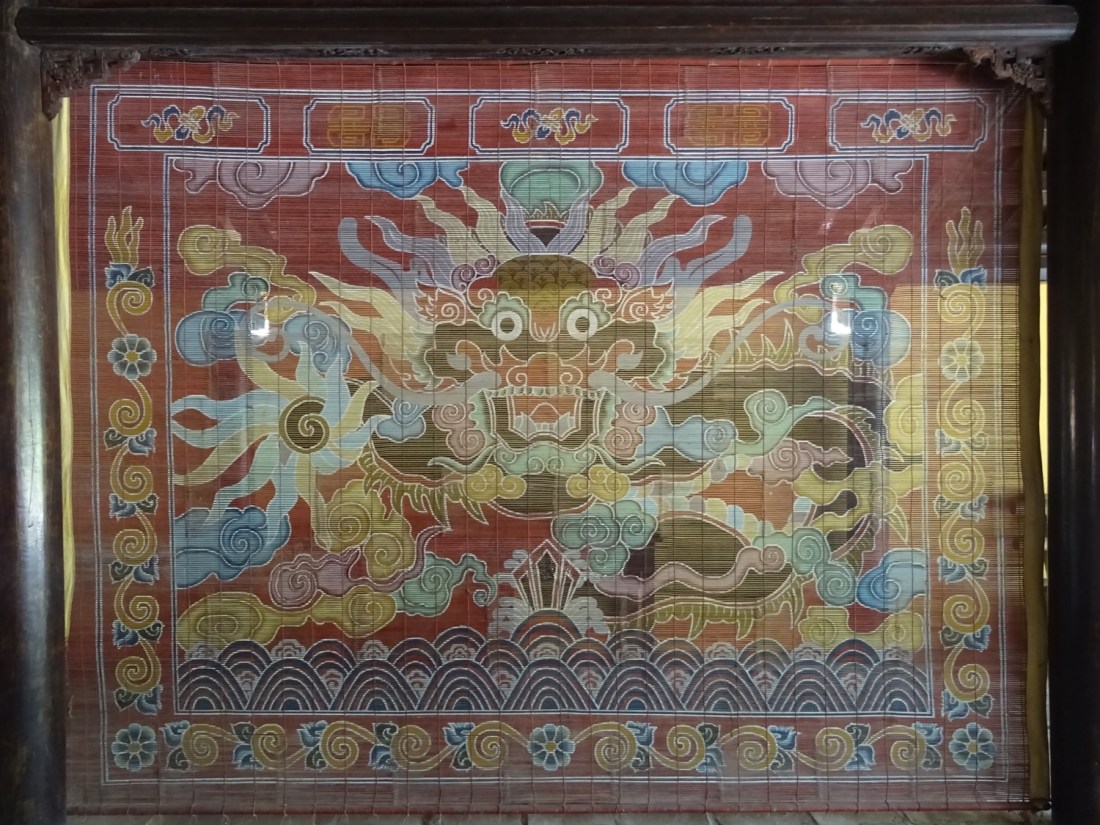
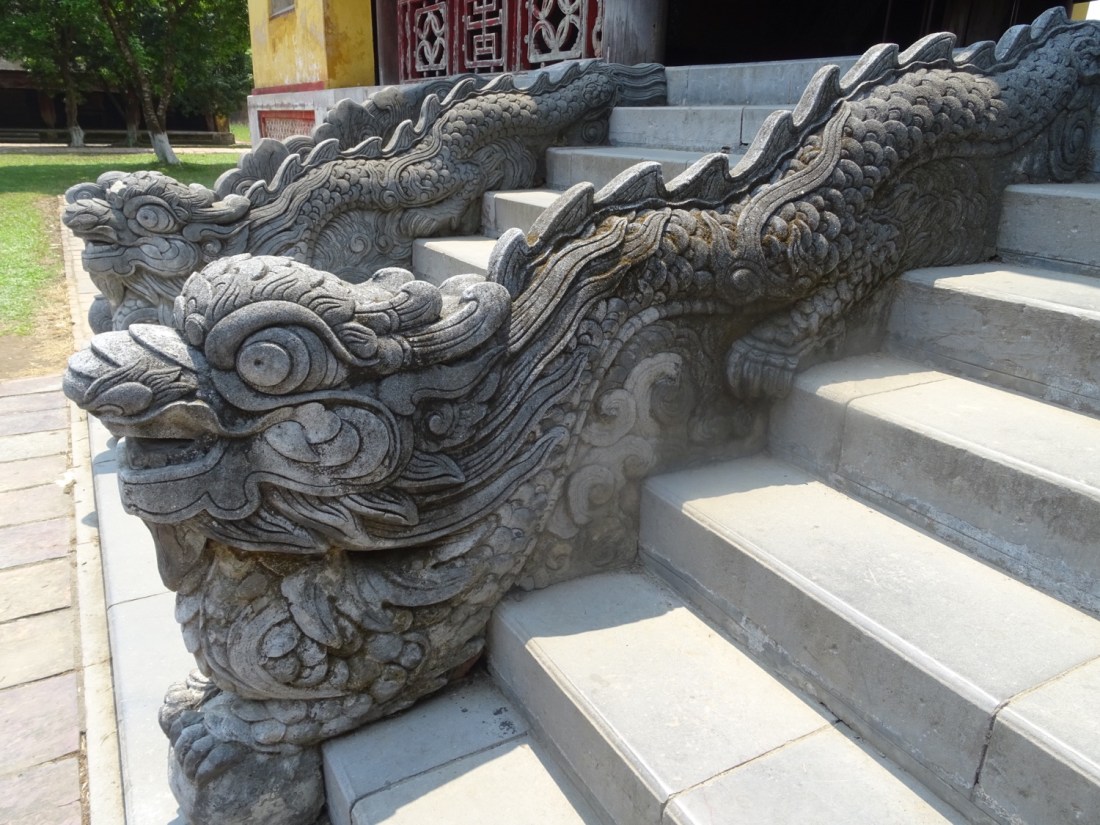
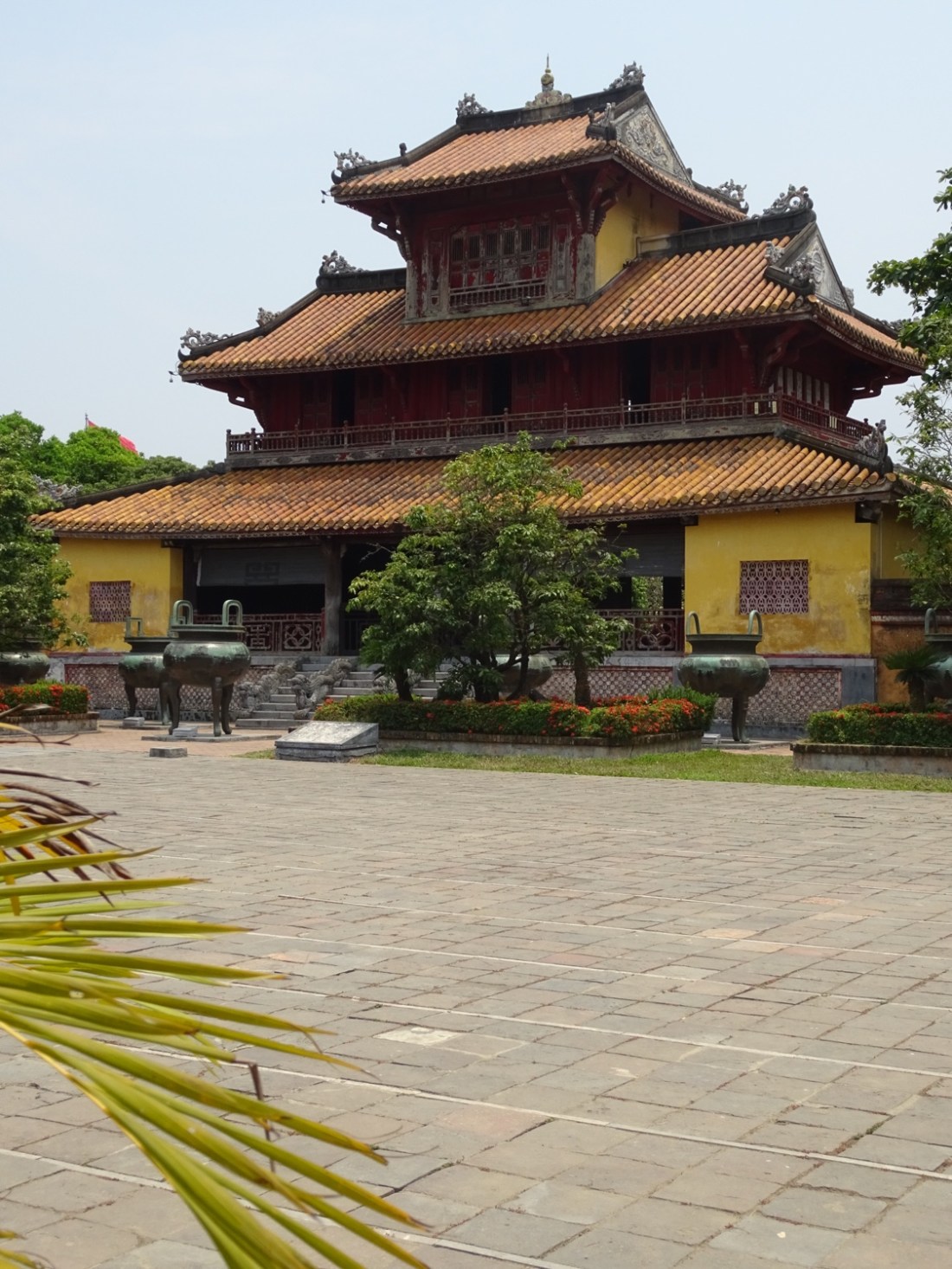
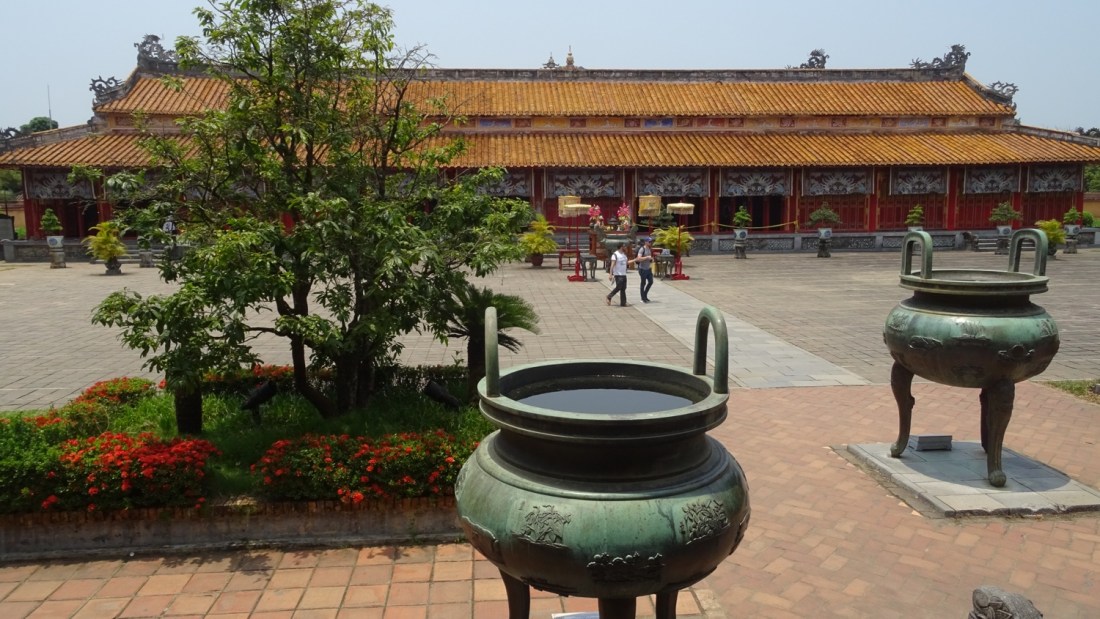
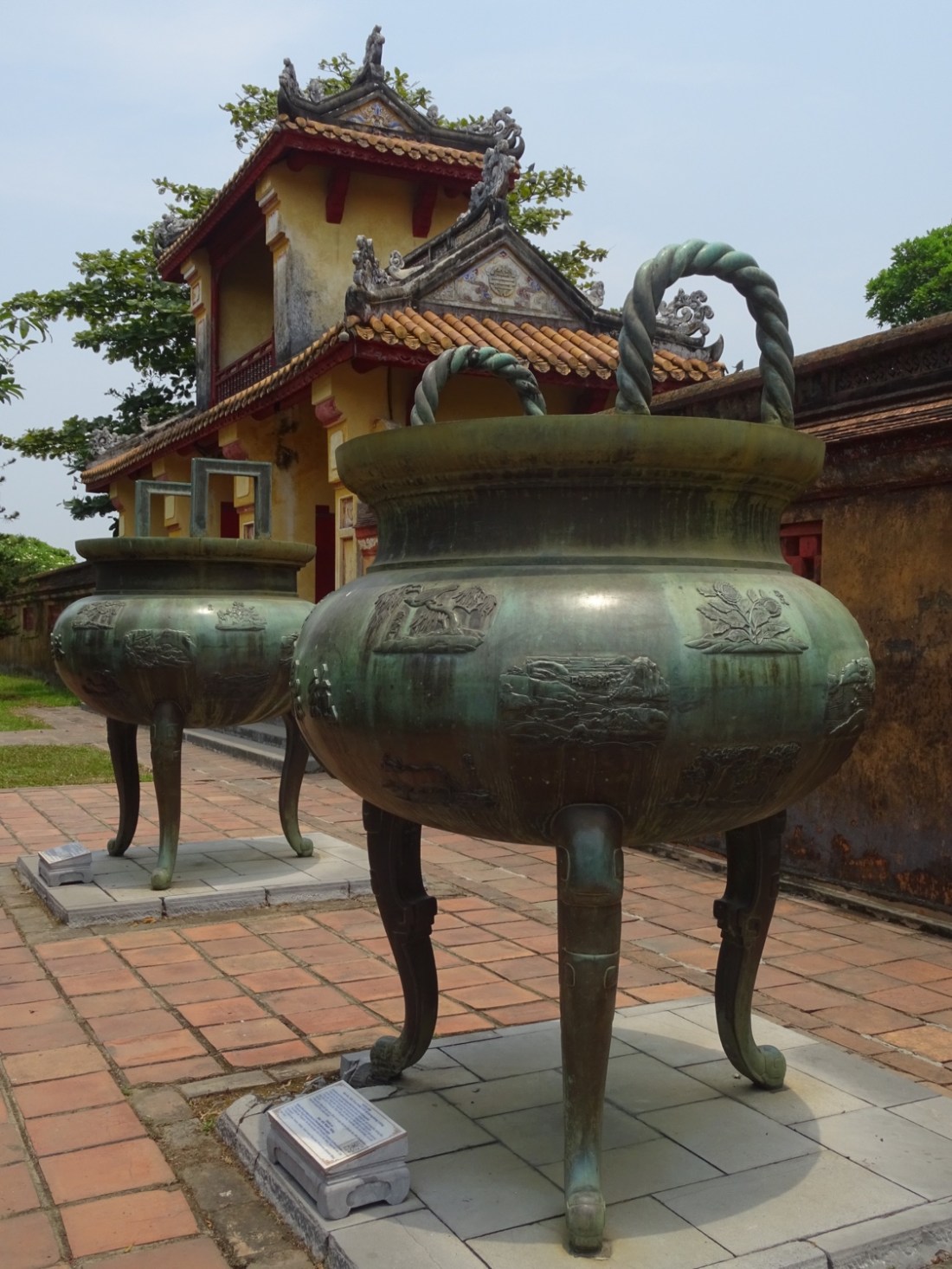
Nearby we found the 9 dynastic urns which show the art of bronze casting at its peak in the 19th century, and which have now been recognised as national treasures of Vietnam.
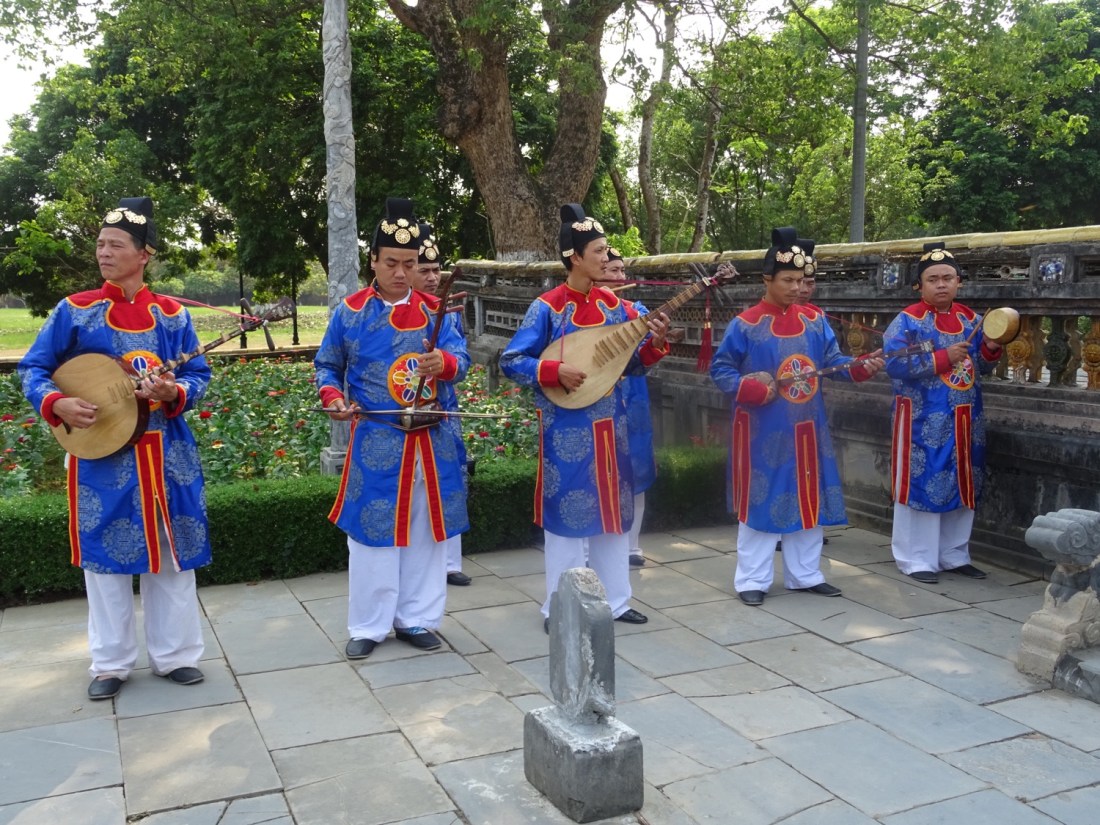
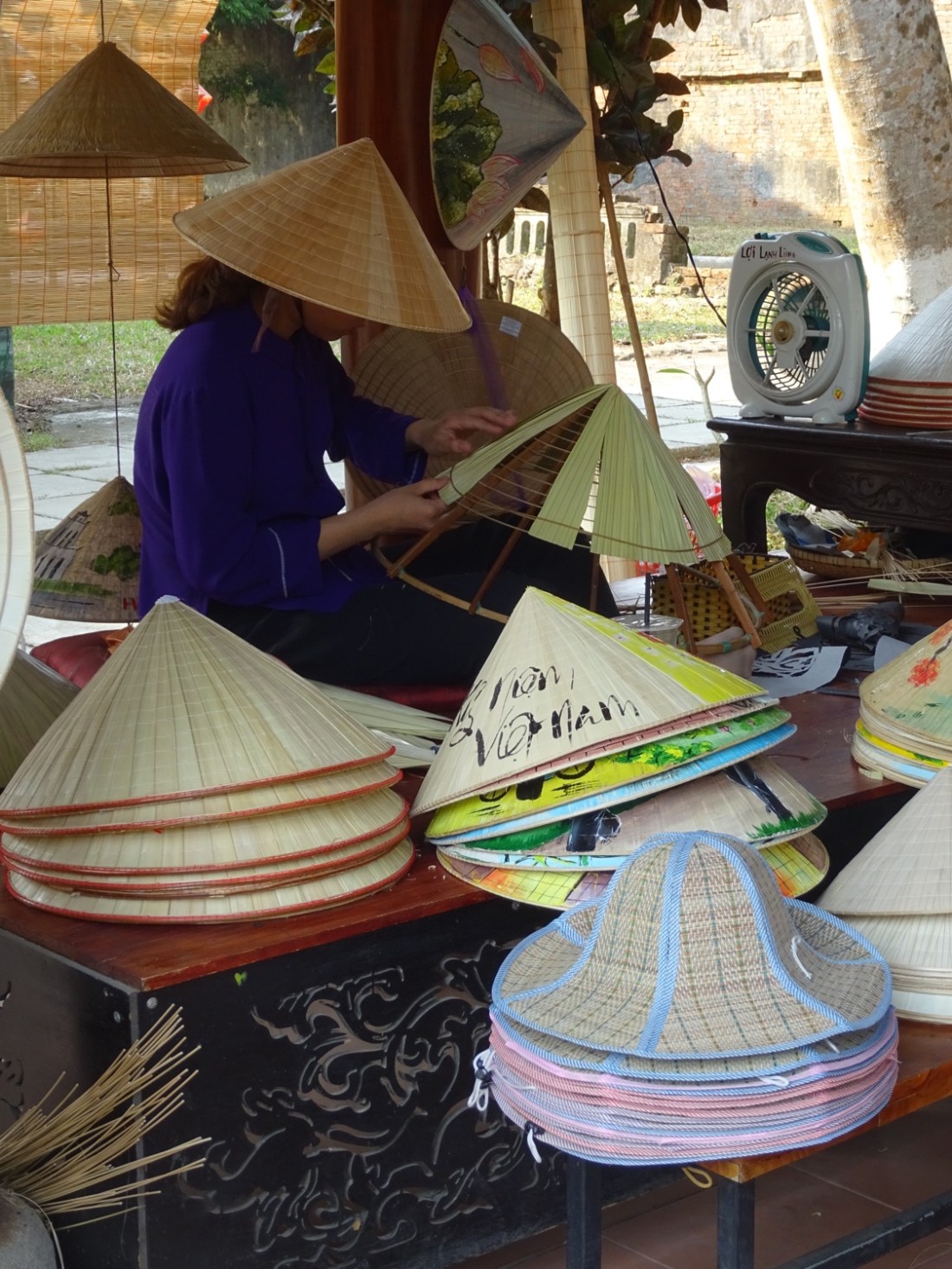
Our visit also included a performance of traditional Vietnamese music (although not a patch on the water puppet musicians) and demonstrations of traditional crafts such as how to make the iconic bamboo conical hats. We loved the peace of the citadel and learning about a way of life so alien to our own.
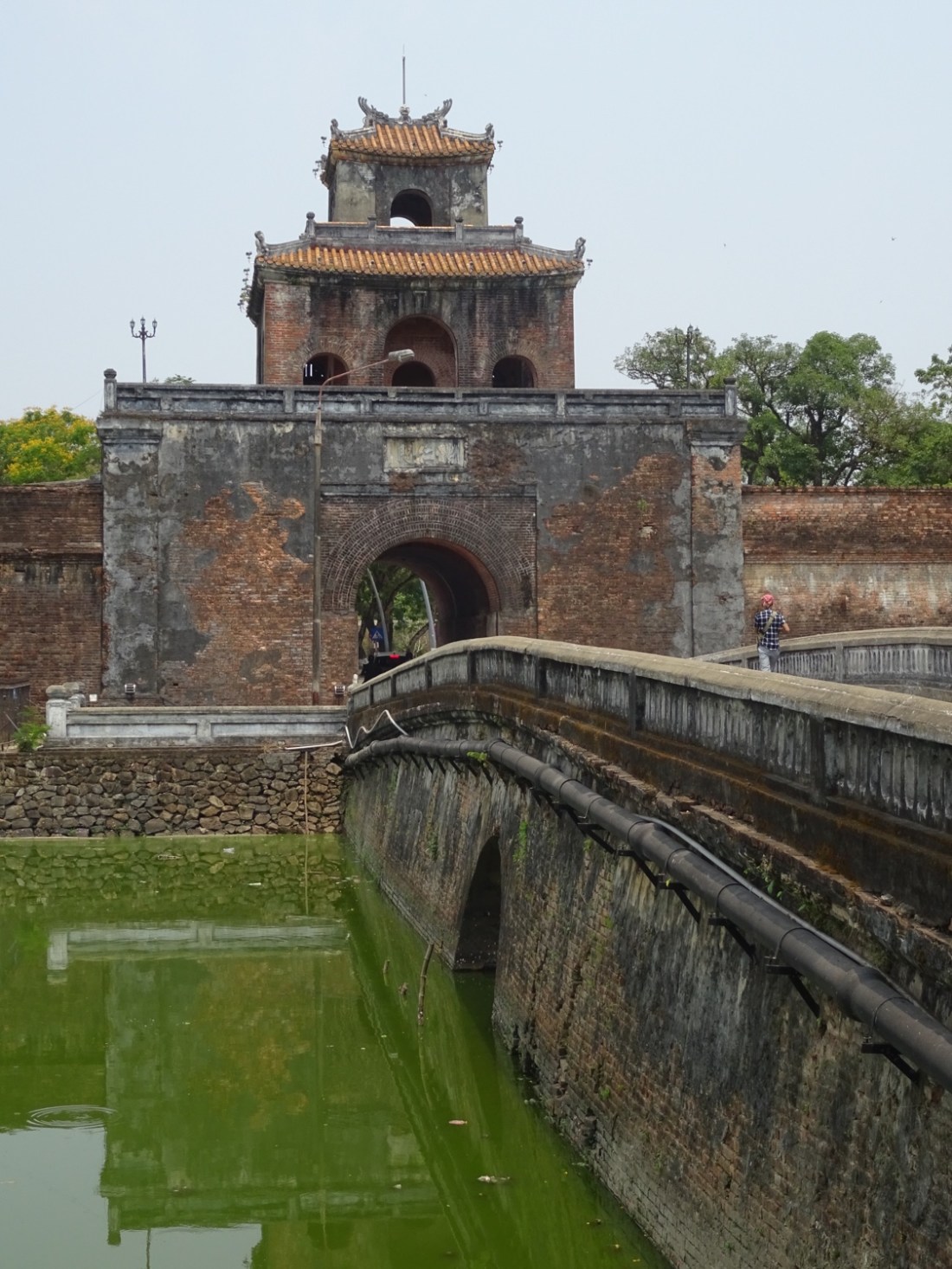
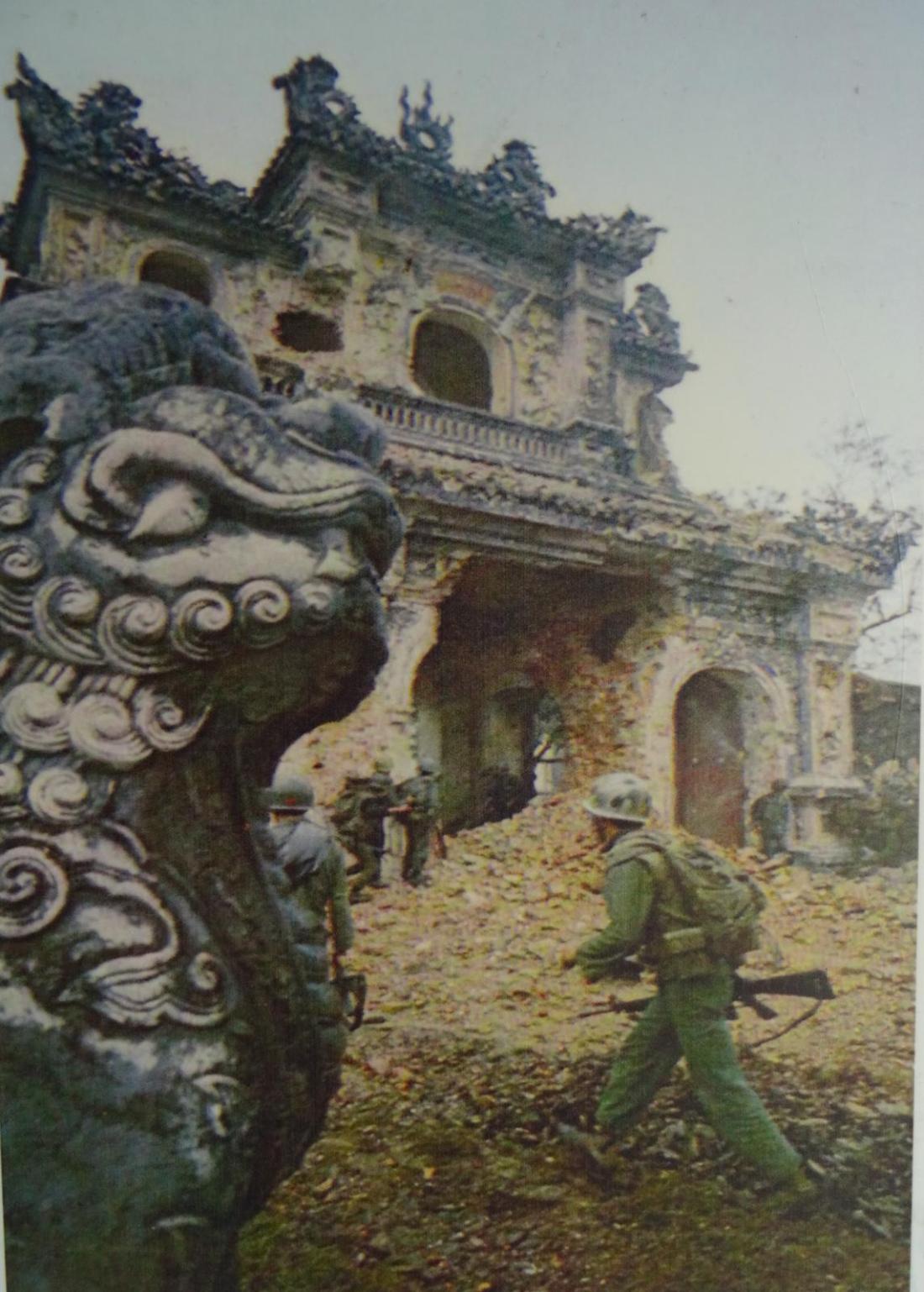
At about 4pm, our last part of the trip was to look at pictures of the citadel before and after the war with the USA. Truly beautiful, the pictures taken during the reign of the last Emperor show the majesty of the citadel in all its pomp. Today, much of the citadel is flattened, in ruins, half reconstructed, or rebuilt as faithfully as possible based upon old pictures and paintings. North Vietnamese combatants defended Hue from the walled citadel, and the USA nearly bombed it out of existence. Hien Thon gate pictured below was one of the sites of terrible close quarter fighting during the war and much of it was blown away or riddled with bullets. Reconstructors have done an amazing job to make the gate what it is today, but it was hard not to think of the awful devastation this place saw.
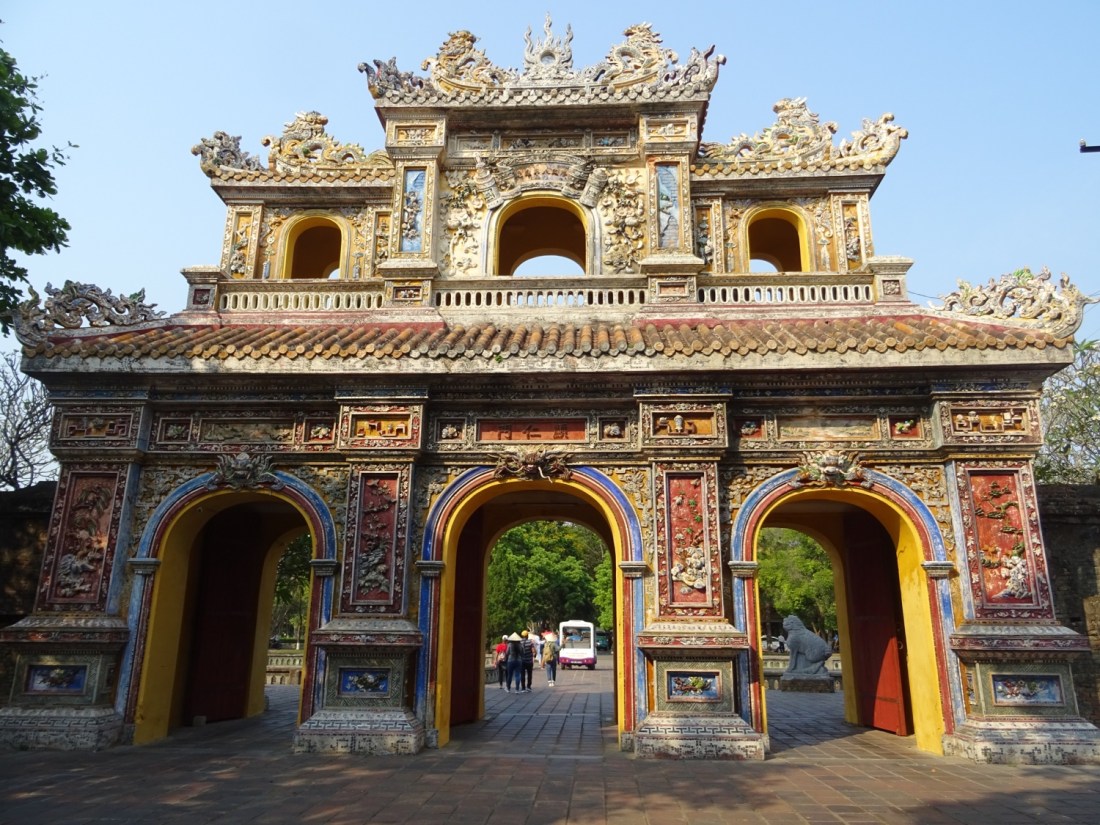
After a full day learning about this once mysterious and closed off city within a city we headed out through the restored Hiển Nhơn Gate back into the hustle and bustle of modern Hue.
After such a long day in the heat a cold beer was needed. Ged had spotted an open air bar near the hotel on the way out in the morning so we bee-lined for ‘ReTro’ bar on the way back. The icy beer was glorious and we finished them within three gulps and ordered more. This was fine though as it was the cheapest beer we’d had on the whole trip. At 10,000 Dong (33p!) Ged hadn’t seen beer this cheap since digging in the Czech Republic in 2006.
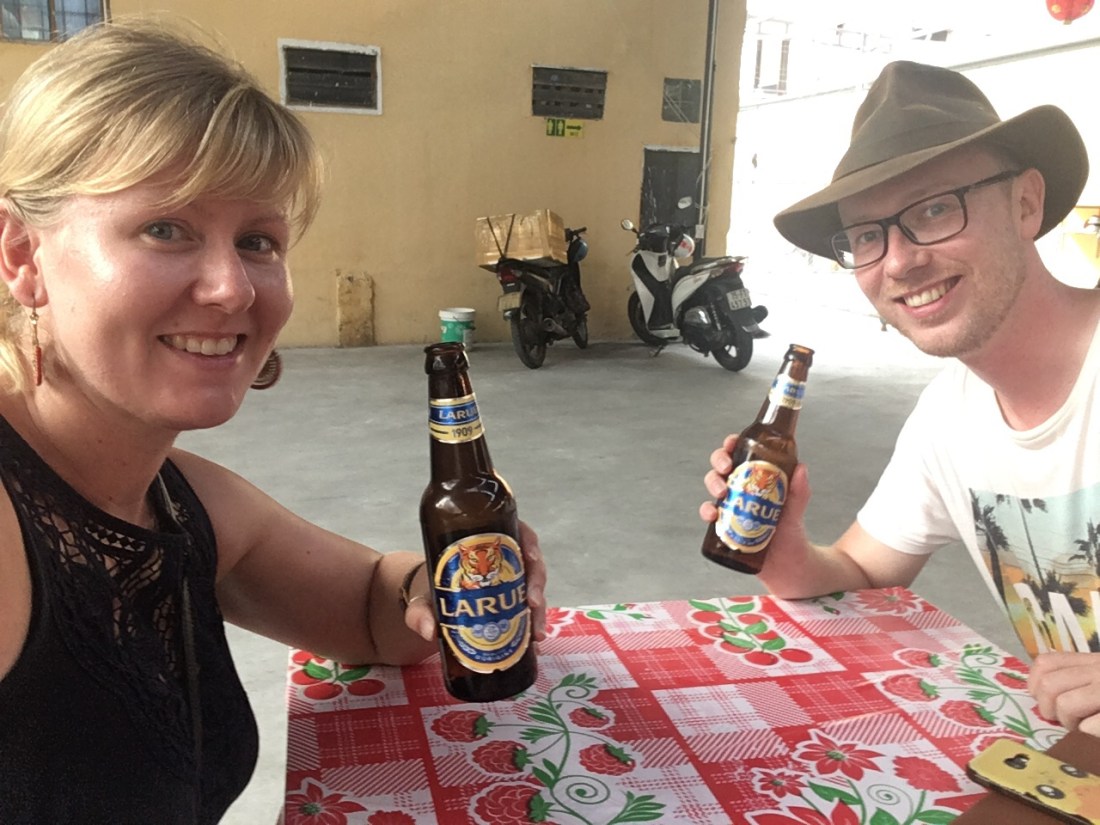
“Blimey!” Rach exclaimed, “That’s the badger!” after taking her first gulp. Beer was half the price of a cola and even cheaper than a bottle of water in the bar. We had no option but to drink the beer. A tough life indeed. As we sat, tempting smells of barbecueing meat and fish wafted towards us. I’m sure this was done on purpose to make us hungry. We decided to eat there but the food wasn’t as cheap as the beer and probably the worst we’d had in Vietnam so far. Oh well, can’t win ’em all!
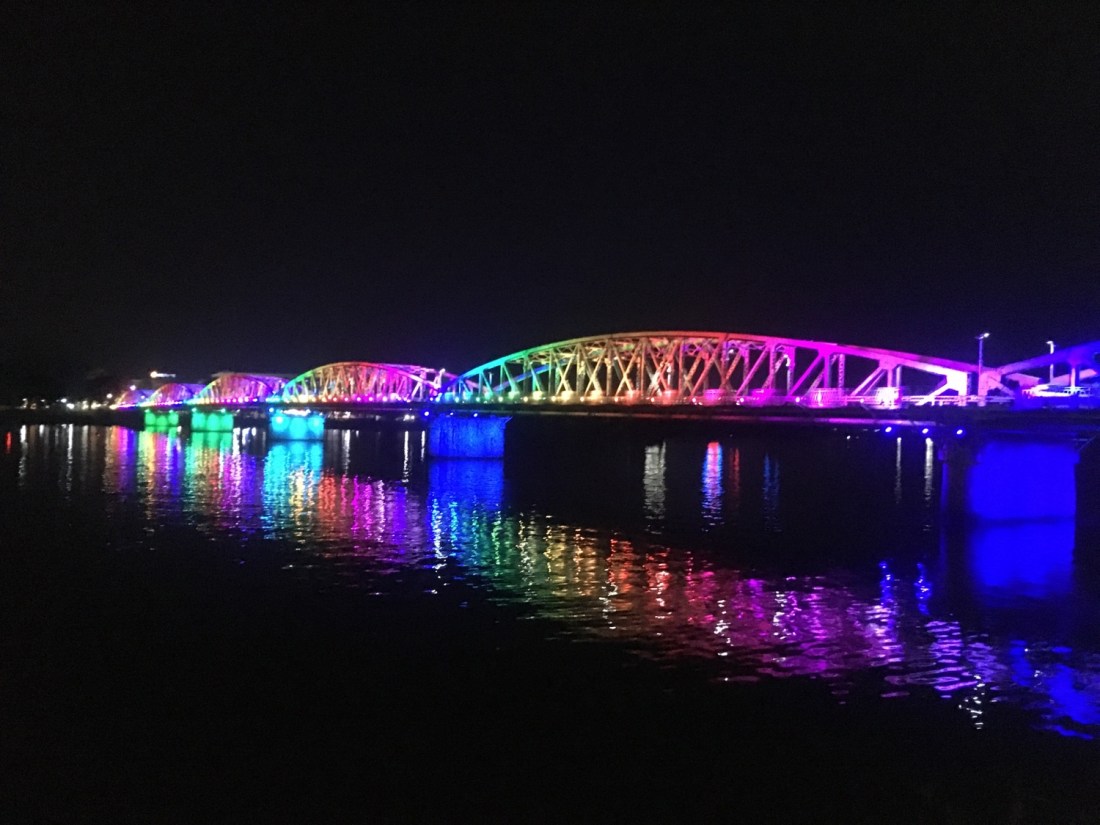
After the lacklustre grub we thought we’d go see the night market hoping it was half as good as in Luang Prabang. It should have been called the not market! Despite being on a street called night market street, and being told it was on every night by the hotel, it seems no one told the market vendors. Not a soul was there! Oh well, we took a stroll down the banks of the river and took pictures of the cool changing lights of the bridge.
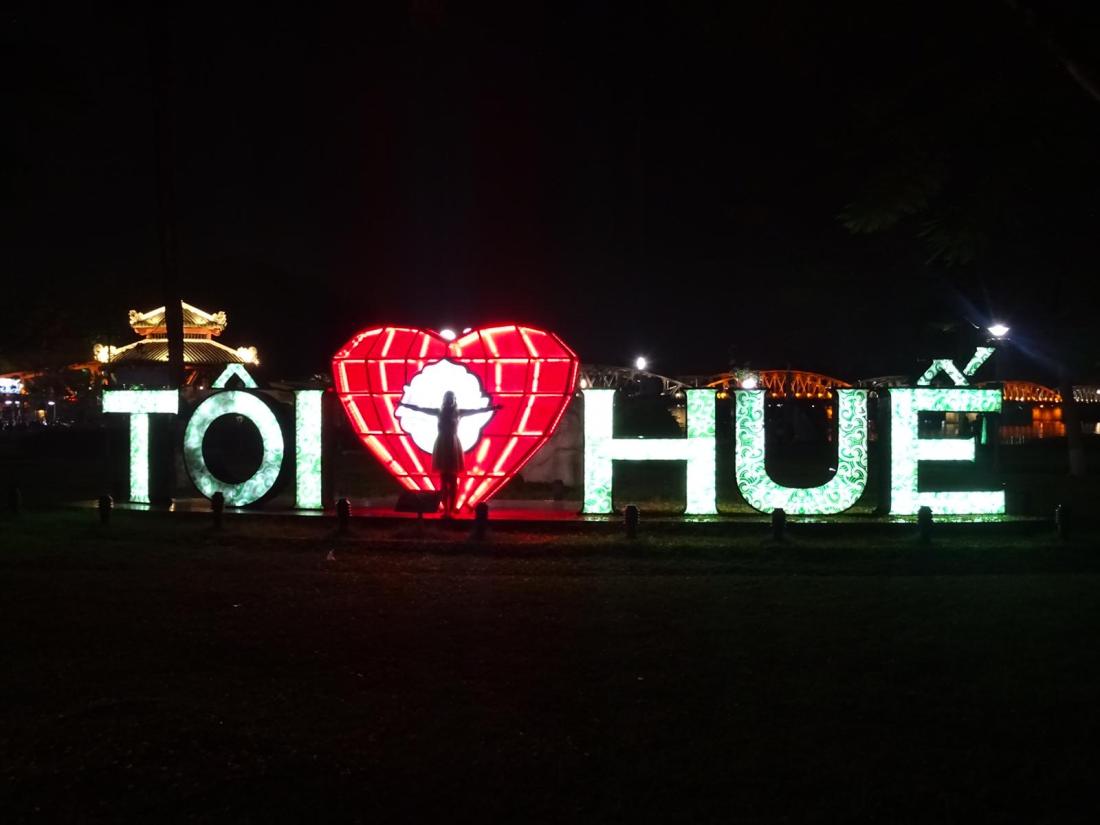
Despite the not market it had been a pretty top day!
19 April
To make the most of our time on our last full day in Hue we had booked a full day tour through our hotel for US$15 (including lunch!). This didn’t include any entrance fees, but the combo ticket we’d bought the day before would serve us well here. Our tour bus picked us up at 10am rather than the scheduled 8:30 because we opted not to go back the Imperial Citadel. They only allocated 1.5 hours to see it after it took us all day the day before!
Our first stop/activity was a ride on a “dragon” boat down the perfume river.
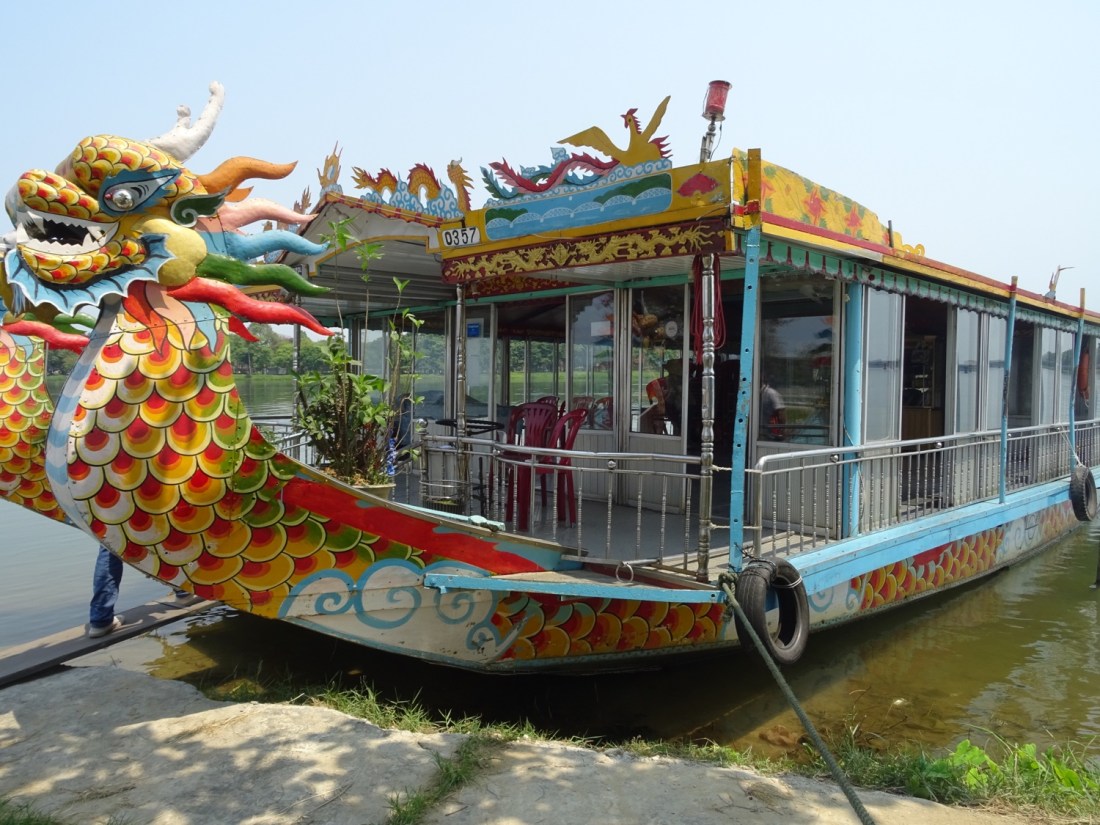
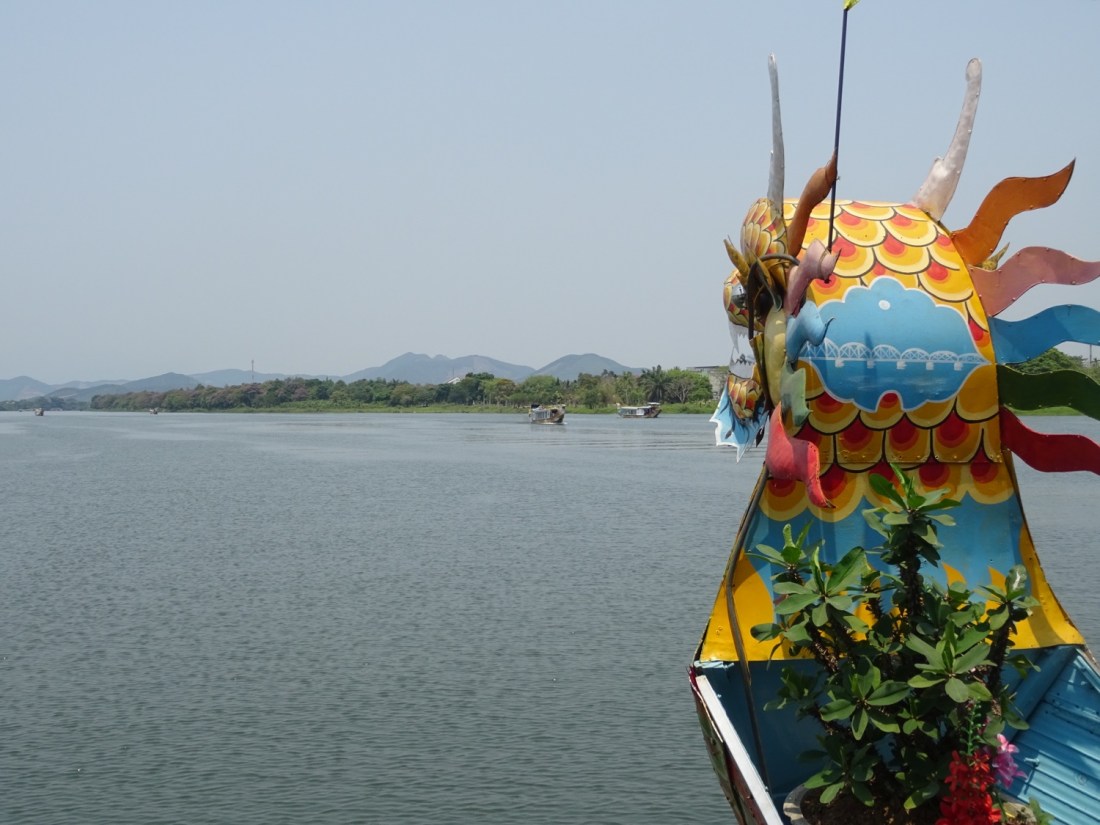
The ride was pleasant enough and as we floated away from the city centre it was clear just how small the place is. In seemingly no time we were in the countryside which is actually rather beautiful and lush, passing little hamlets and stand alone houses as we went. Soon enough we were headed to the opposite bank of the river and the emblematic seven storey octaganol tower of the Thiên Mụ (heavenly lady) pagoda sprang into view.
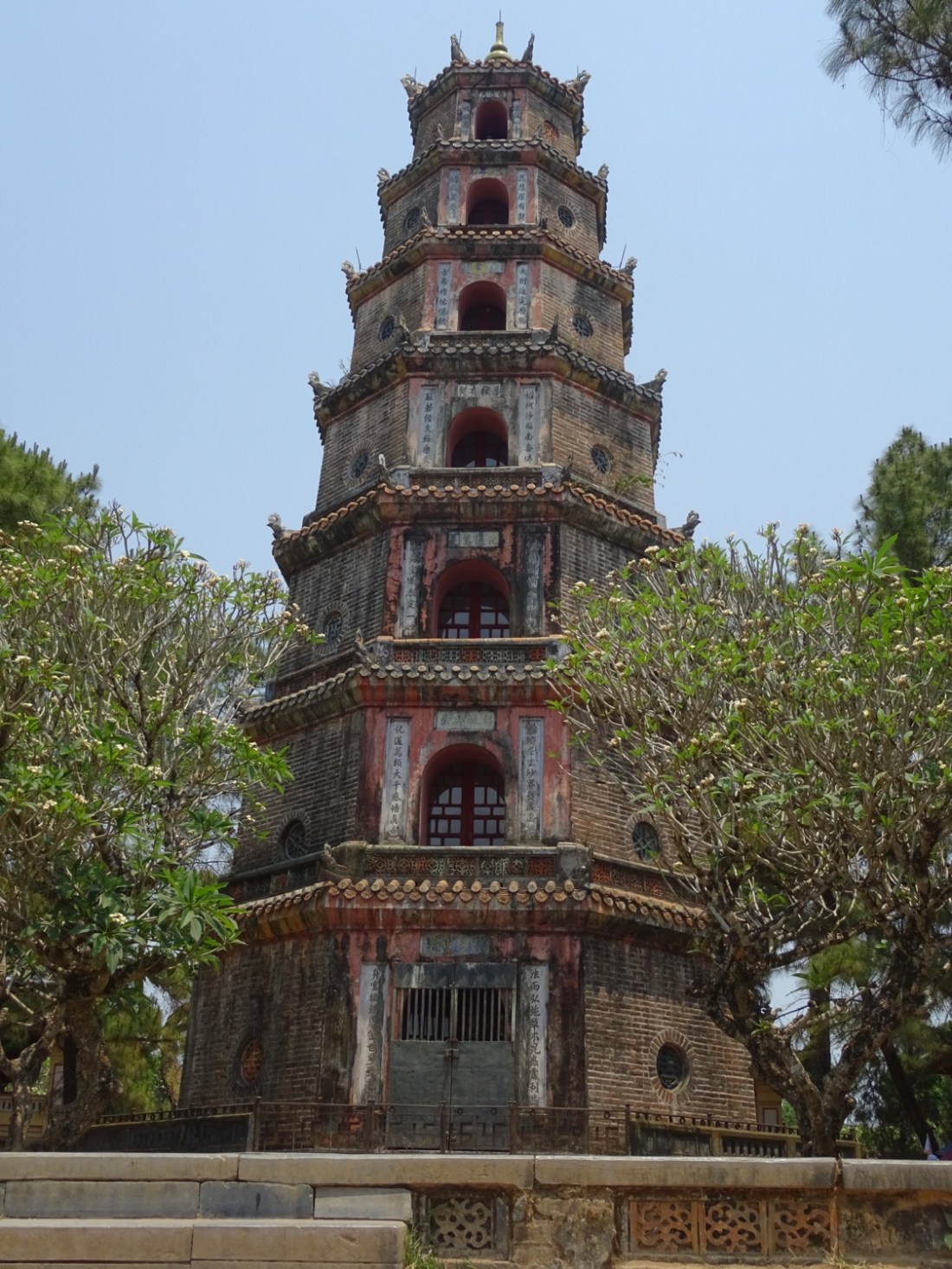
We landed and quickly gained the top of steep steps that form the riverside entrance of this temple complex. Orignally a 17th century Buddhist temple and initiate training center, most of the current buildings date to the beginning of the 20th century following a disastrous cyclone whiping out most of what was there. The area has a very calm atmosphere and its easy to imagine spending hours meditating and contemplating the universe in the gardens, shaded pavilions and spacious courtyards.
One artefact of note here is the car that belonged to one of the most famous monks in Vietnam’s recent history. In June 1963 Thích Quảng Đức drove this car to Saigon, parked in a busy intersection, emptied petrol from the car over himself, sat down in the lotus position, and set fire to himself. His death was a protest against the South Vietnamese government’s oppression of Buddhist monks and their way of life. The photograph of the flames enveloping his body whilst he remained placidly calm is one of the most enduring images of Vietnam’s terrible period of violence in the middle of the last century and you may well already know the image in question (more on Thích Quảng Đức in our upcoming Ho Cho Minh/Saigon post).
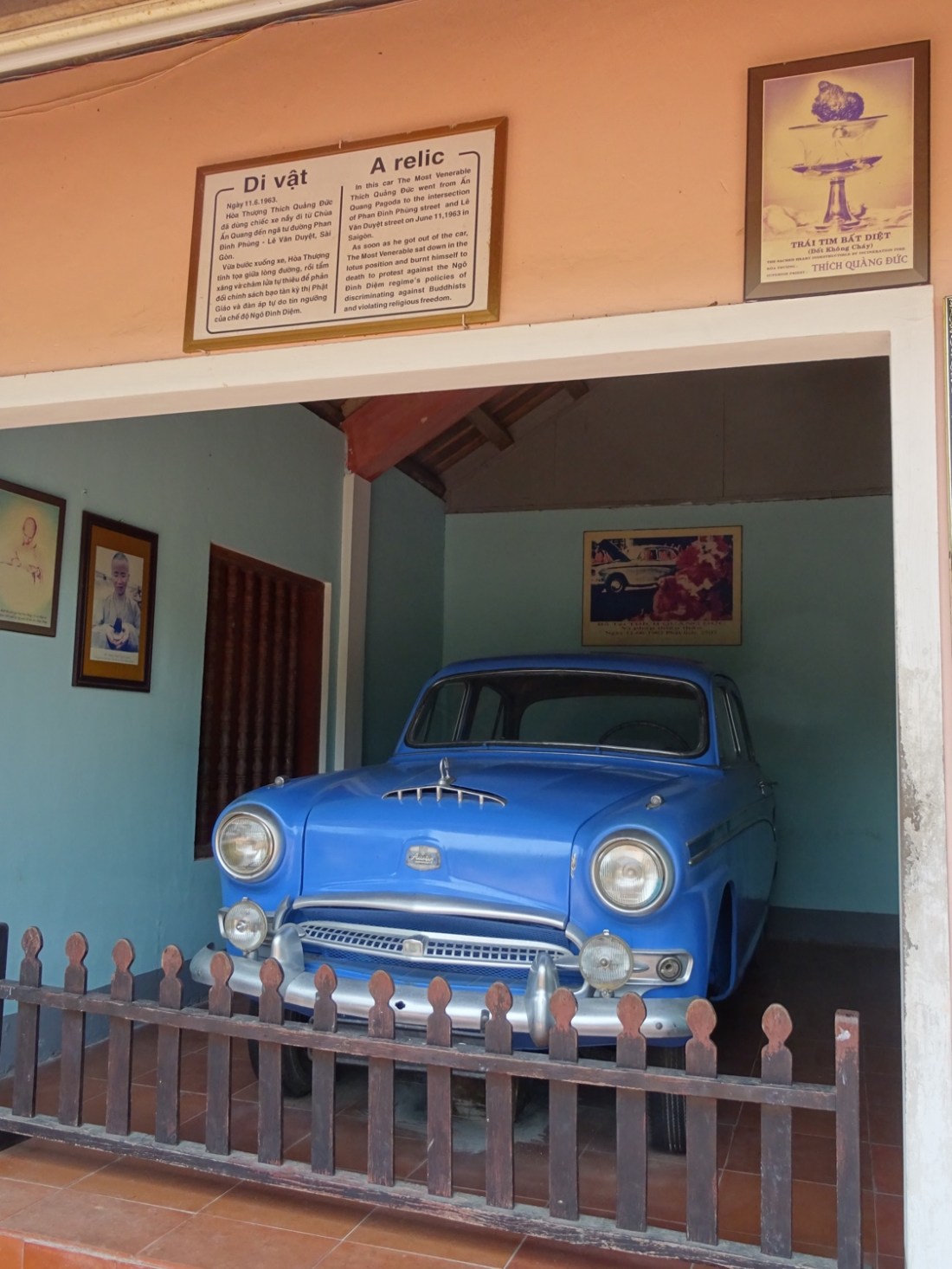
Unfortunately we didn’t have too much of an opportunity to take in the atmosphere of this holy site as we had so much more to see! We left the pagoda and climbed aboard our bus that had suddenly appeared outside.
Our next stop was a 19th century Mandarin garden house, built by a former advisor to the 10th Nguyen Dynasty Emporer. Built upon feng shui principles, the house was a simple one story building with narrow rooms and mostly low ceilings. Worshipping the ancestors is still a very strongly held tradition in Vietnam and we learned that their funerary tradition is to wear white! Can you imagine turning up to a funeral in Britain wearing white??
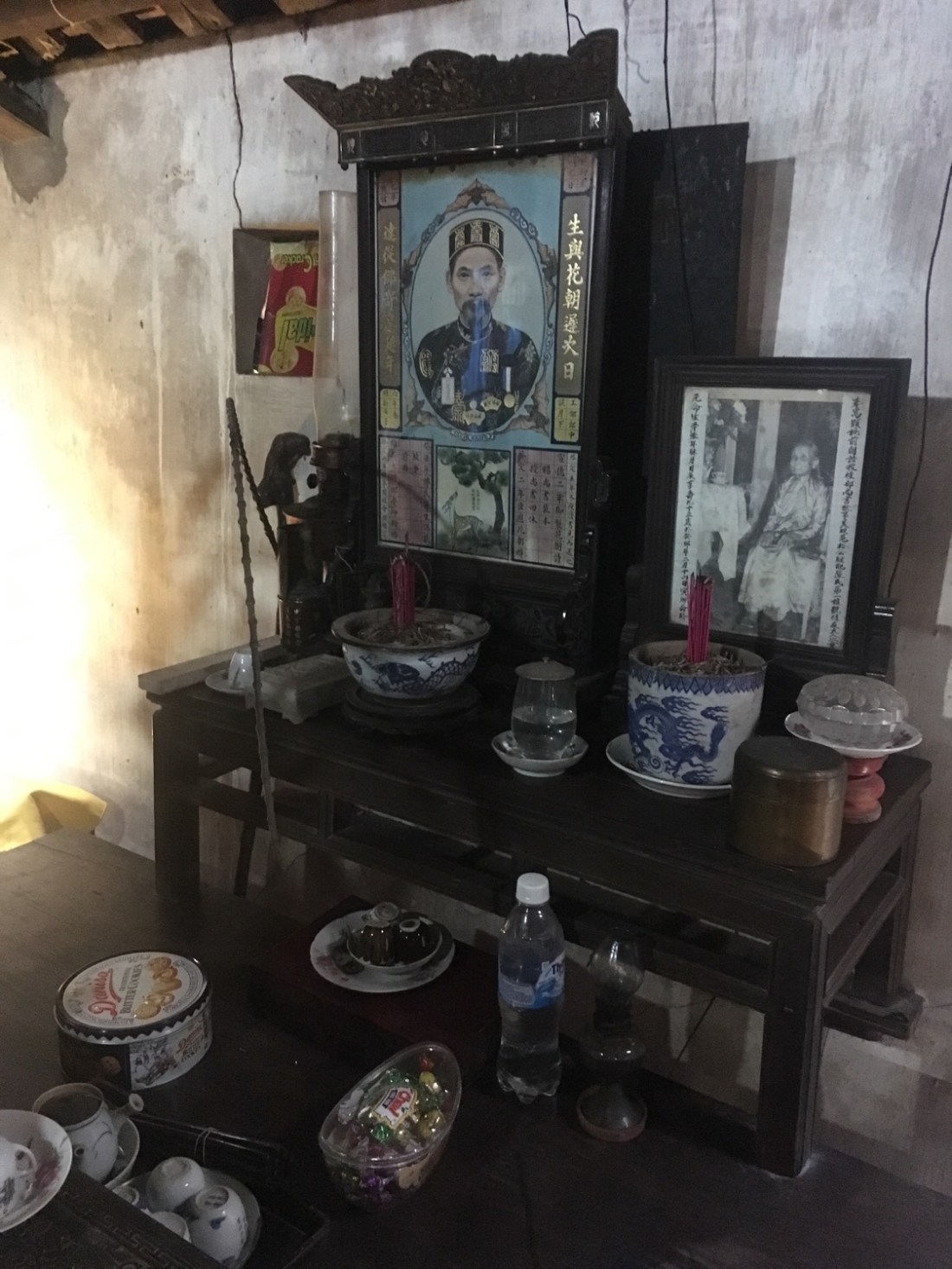
The garden part of the house is more functional than ornamental and we were treated to ripe bananas freshly picked just outside the door. We weren’t really free to explore though as the house is still occupied by a descendent of the person that built it! After a refreshing cup of tea and a chat about the family history we were off again.
Back into the city centre for lunch, we were well fed with soup, savoury pancakes, and what we can only describe as little packets of gloop that were suprisingly tasty.
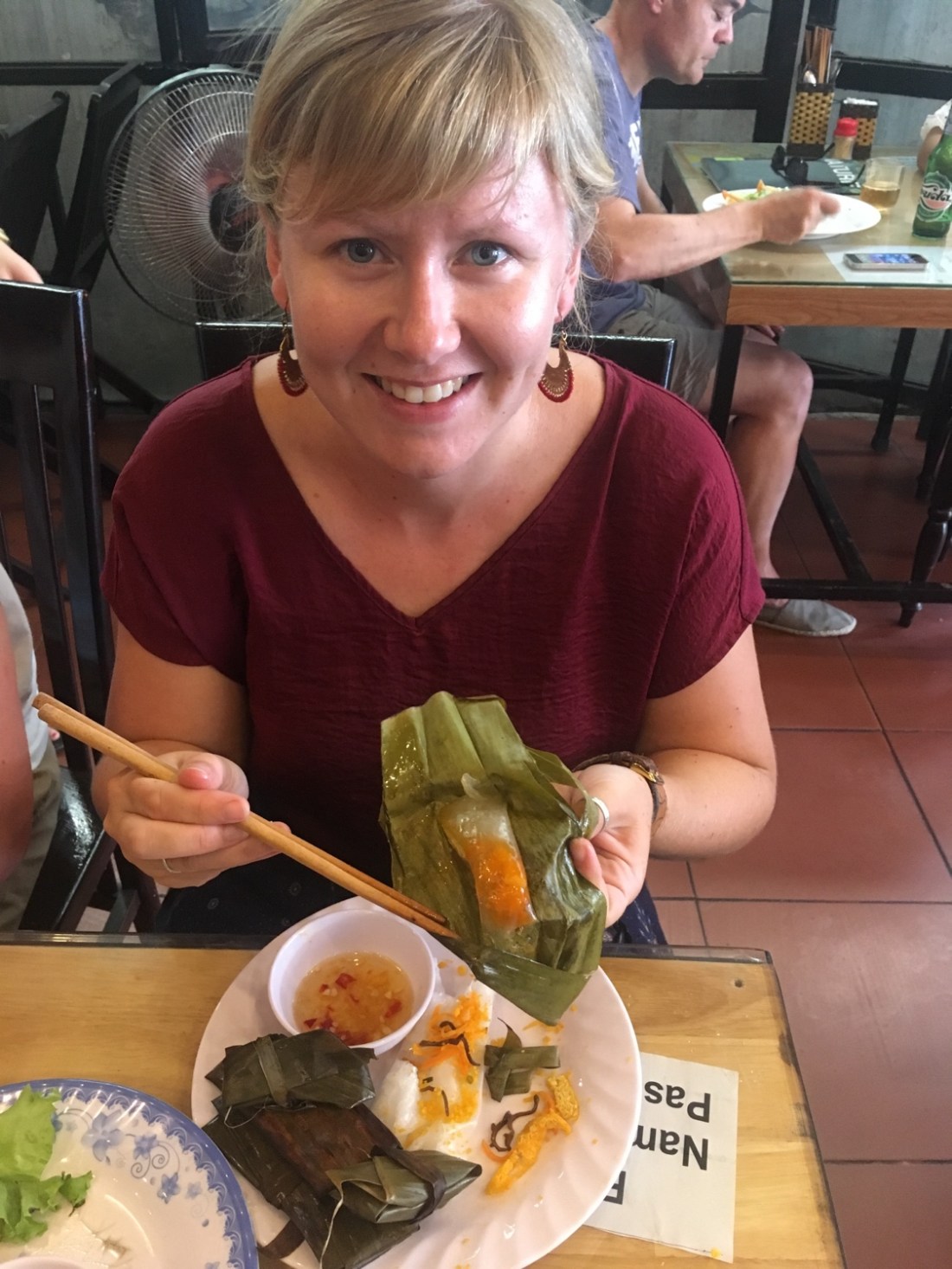
Ready to crack on with the main event, we once more boarded the bus and headed out into the lush countryside.
Aside from ten minutes to see how incense sticks are made in “Incense Stick Village,” our afternoon was spent visiting three of the most impressive and intact royal tombs of the last ruling dynasty of Vietnam. Each tomb is more than one building and was actually intended as much of a personal park/retreat to be enjoyed by each emperor during their life as much their home in death. “Resting place” is probably the best way to describe the tombs as they boast impressive views, beautiful ornamental ponds, gardens for walking, reception rooms, and in one case even a pavilion purpose-built for composing poetry. These tomb complexes are far from morbid. Each “tomb” was more beautiful than the last and we were so glad we made the visit.
First up was the tomb of the 12th emporer of the Nguyen dynasty; Khải Định the puppet king. This largely concrete structure is all in grey on the outside and features symbols of the major religions in Vietnam; lotus flowers from Buddhism, Shiva from Hinduism, and subtle crosses for the Catholic French then-rulers of Vietnam. The structure took 11 years to complete as all of the building materials had to be imported, including the cement from France.
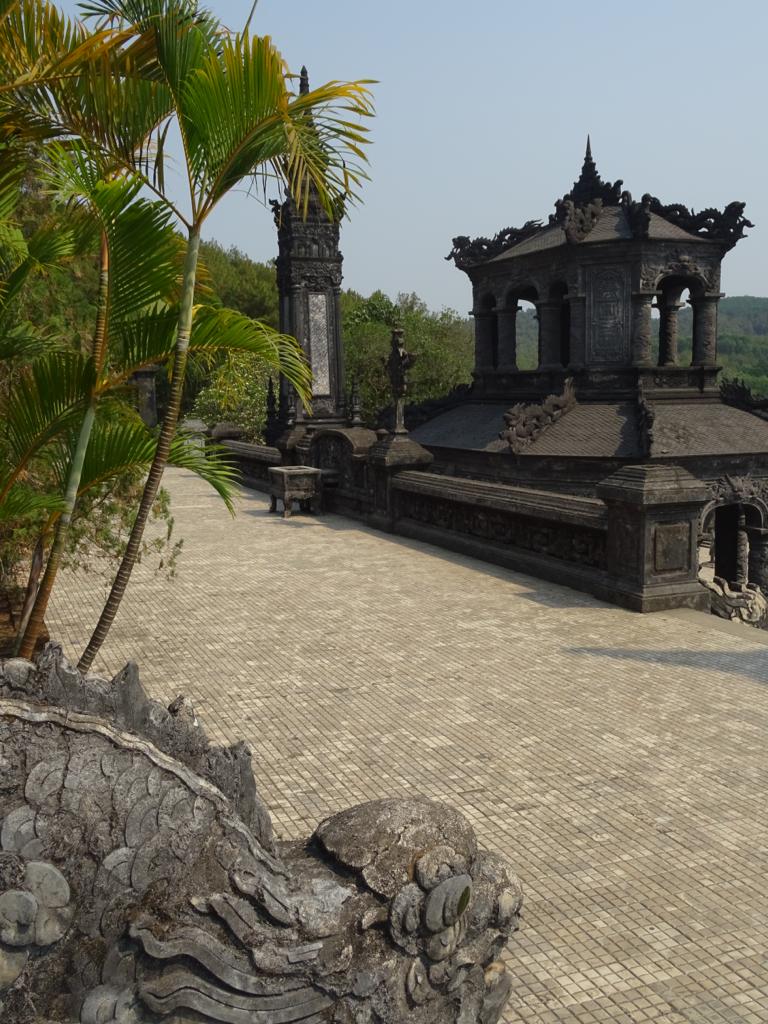
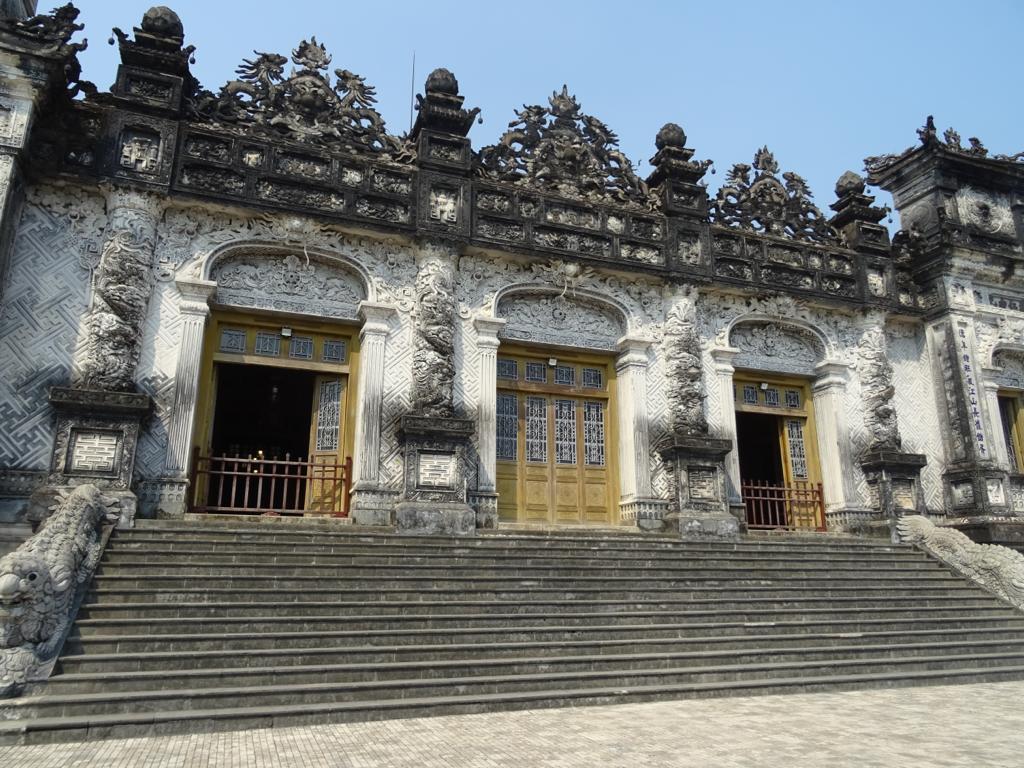
The interior is an explosion of colour in stark contrast to the drab exterior and is a riot of porcelain mosaic in various designs.
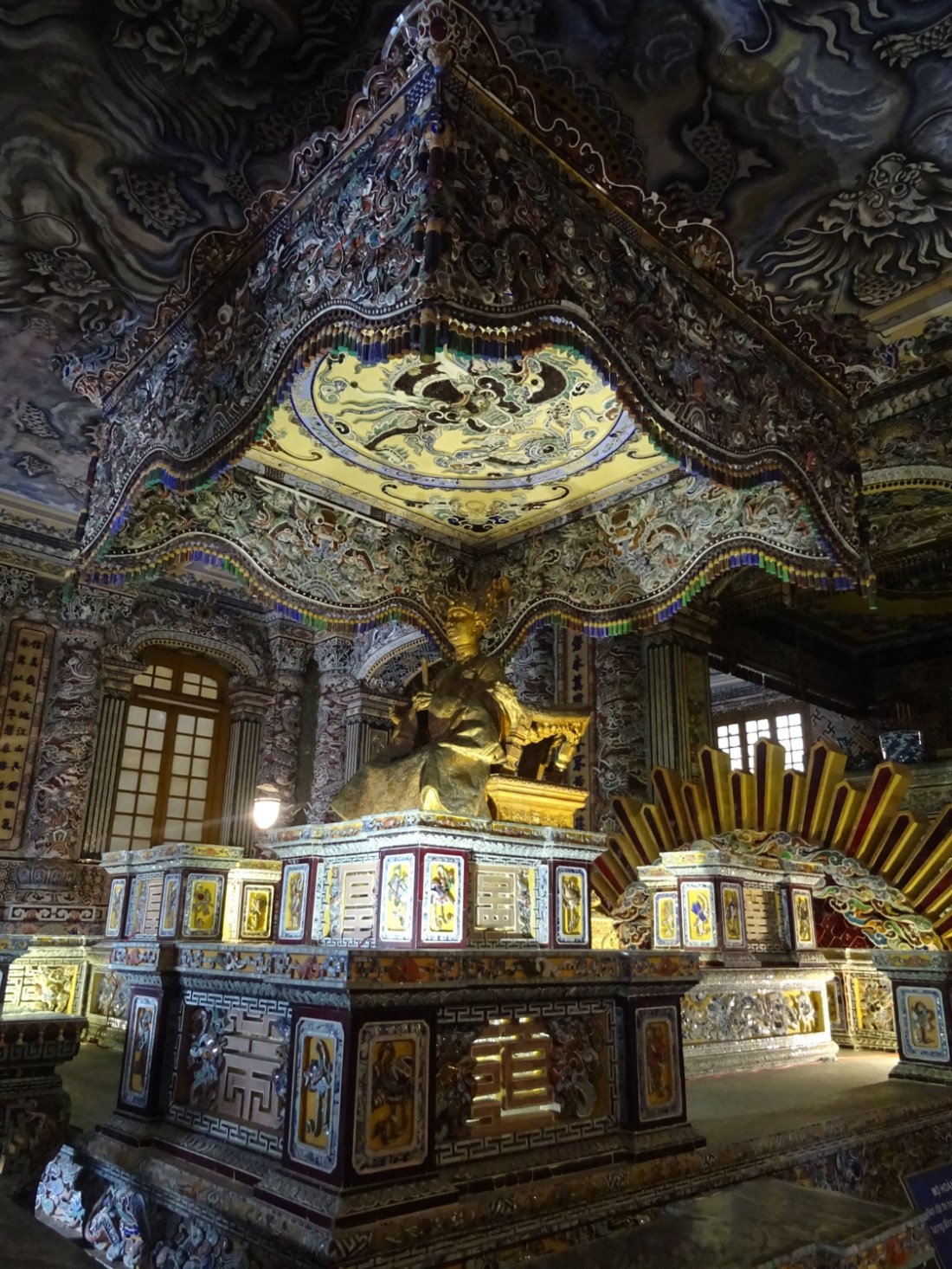
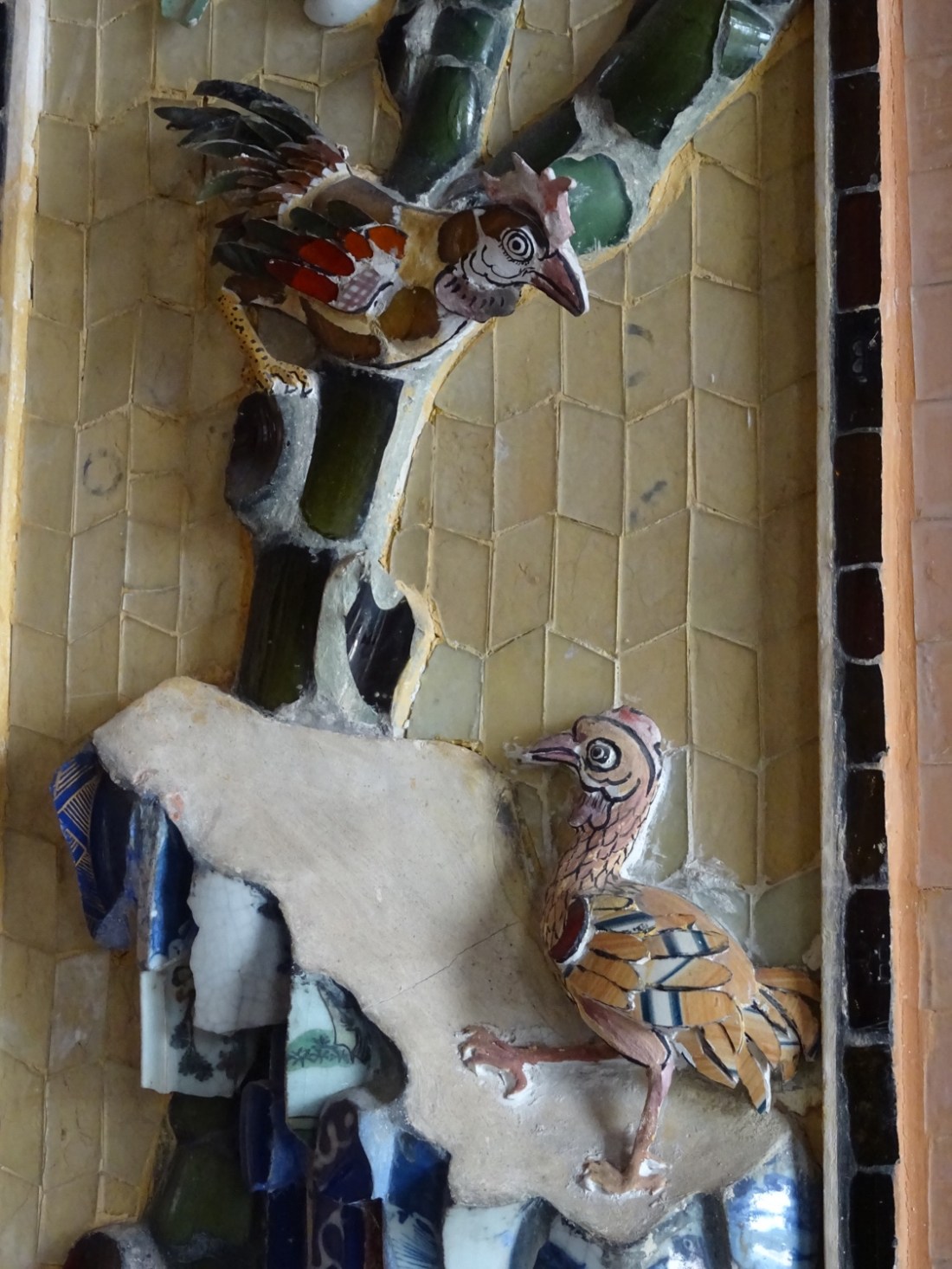
The lifesized statue of this unpopular emperor is surrounded by many intricate designs of creatures both mythical and natural. However, the illusion of grandeur ebbs away on closer inspection. Every ceramic “tile” is in fact a fragment of some mug, plate, or other tableware. Imagine St.Paul’s cathedral being decorated with smashed up crockery!! Nevertheless, the tomb itself is interesting and commands impressive views across the valley.
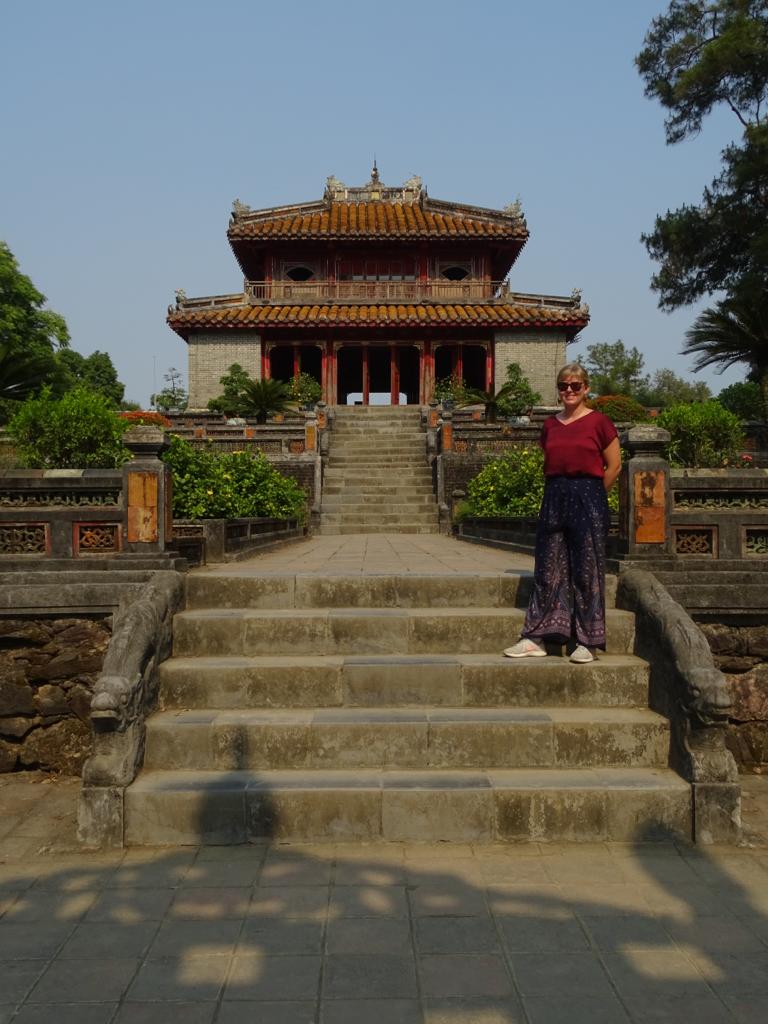
Our second tomb was that of Emperor Minh Mạng, Vietnam’s 2nd and greatest emperor according to our guide. Aside from his many military conquests, civic rulings, and unifying the country, his most tiring accomplishment must have been the prolific procreation he is famous for. Reputedly he had 500 wives (that’s about 1 every 2 weeks of his 20 year reign!), by which he is said to have sired 78 boys and 64 girls. Sounds exhausting! Minh Mạng’s mausoleum is a series of buildings spread out over tremendously peaceful grounds. We honestly can’t imagine a more idyllic picnic spot than in front of the “tomb’s” poetry pavilion. Alas, there was no time for that.
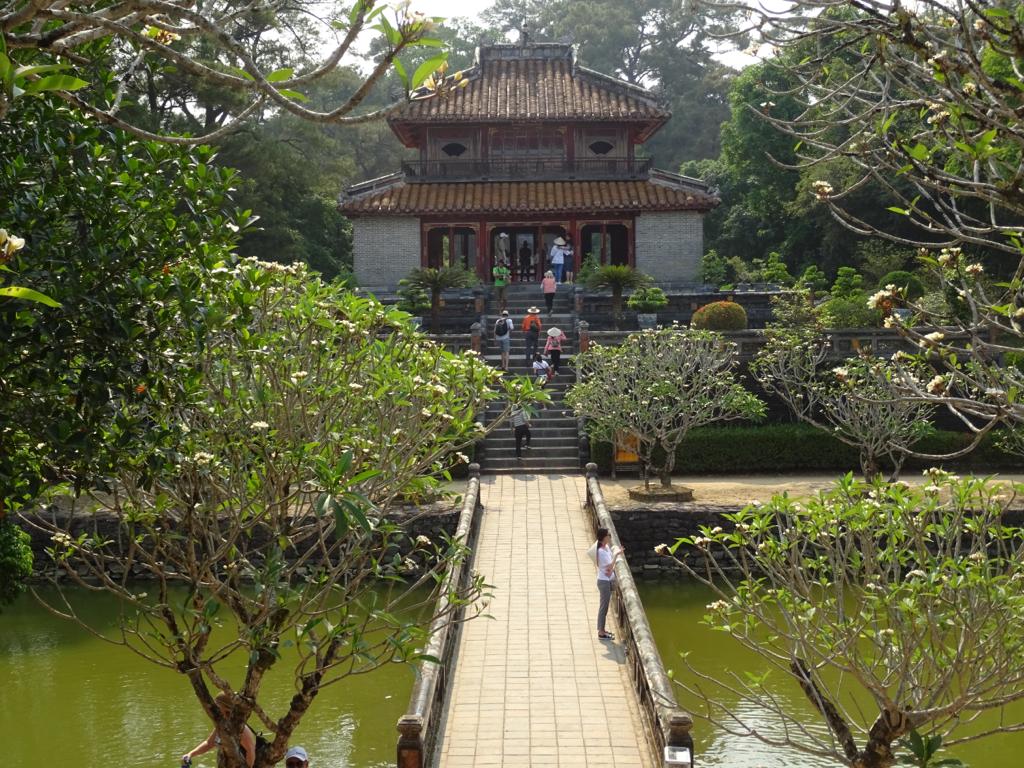
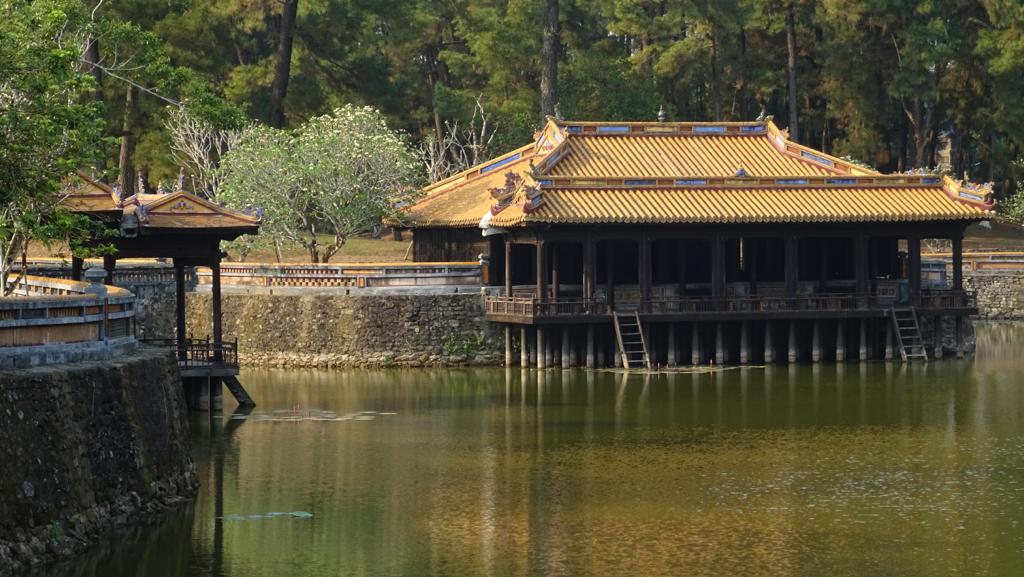
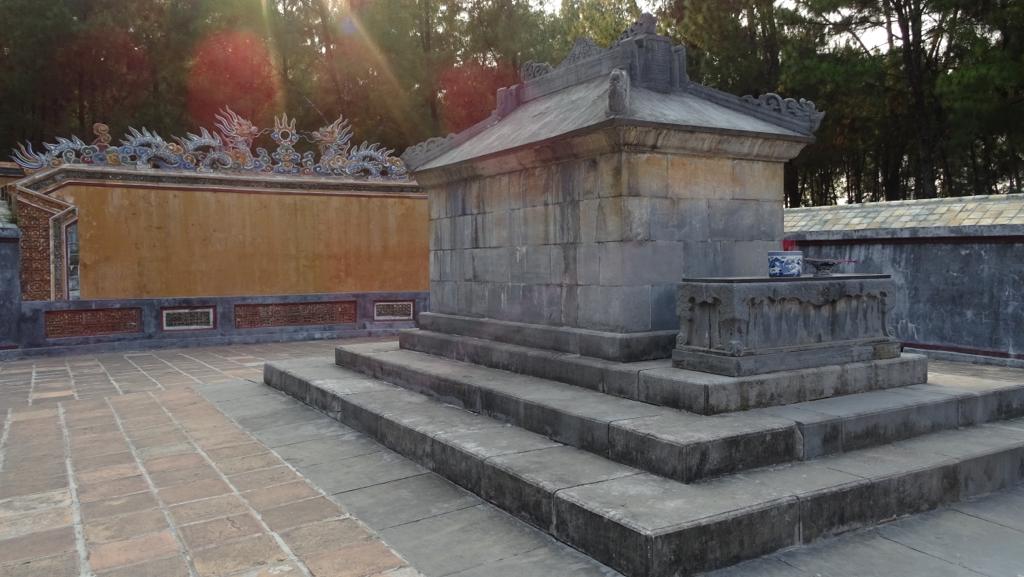
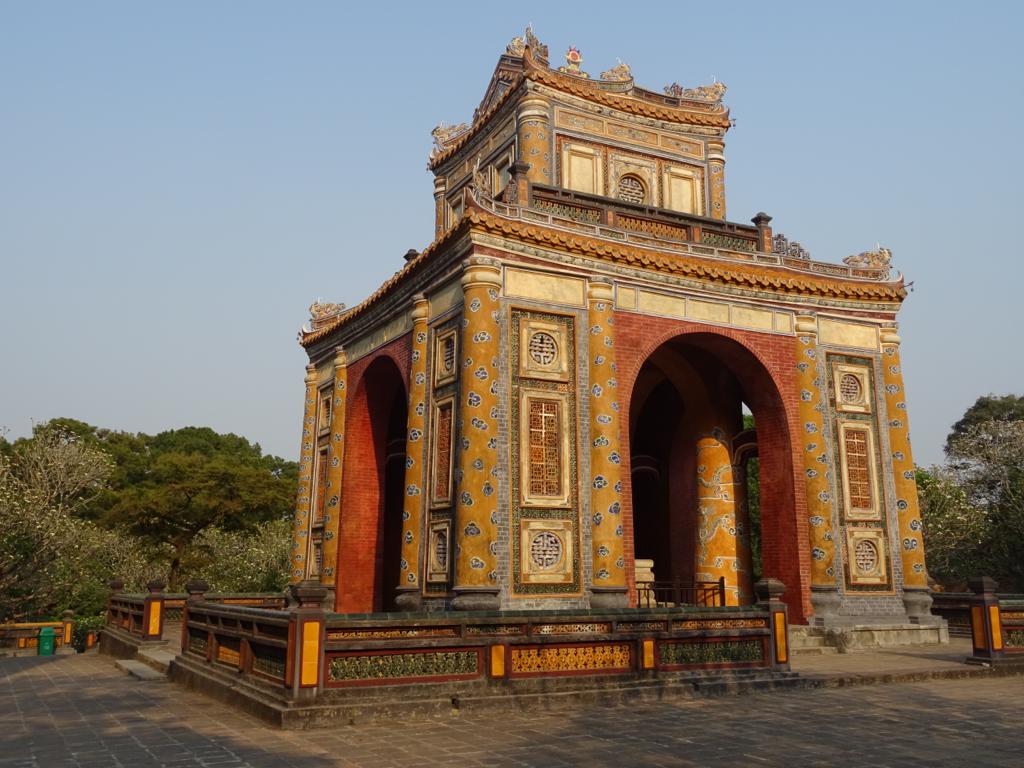
Our last, and favourite, tomb was that of the unfortnate 4th emperor; Tự Đức. Infamous for losing the rule of the country to the French and for not producing an heir, Tự Đức built his stunning tomb/park to cheer himself up and because he didn’t think anyone would do it for him. His epitaph is carved on the largest stele in Vietnam and contains a list of his failures, which he was sorry for, and asks for people not to think too harshly of him. We almost felt sorry for him! Until recently the park was a popular camping spot for kids and is now a beautiful oasis of relaxation for locals and tourists alike. All too soon it was time to catch the bus home and we were back in the heat of the city by 4pm having loved seeing some of the history and beauty that surrounds Hue.
As it was so hot, and ReTro bar was on the way back from our drop off point, it was impossible not to have a couple more of the cheap, cold beers. After being suitably refreshed we got ready and headed out to into Hue’s night time to see what we could see. We wandered into an area known as walking street (which is actually several streets) on a tip Rach had seen on a backpackers forum. We have learned “Walking Streets” tend to be the hub of tourist life in South East Asia and it is something we have seen a number of times now. This walking street was like many others; bars, questionable restaurants, lots of westeners, hostels, shops selling fake gear, and street food. It was the street food we were interested in but actually the place had a pretty good atmosphere and we found ourselves walking around, people watching, having a drink, and a good old nosey at what was going on.
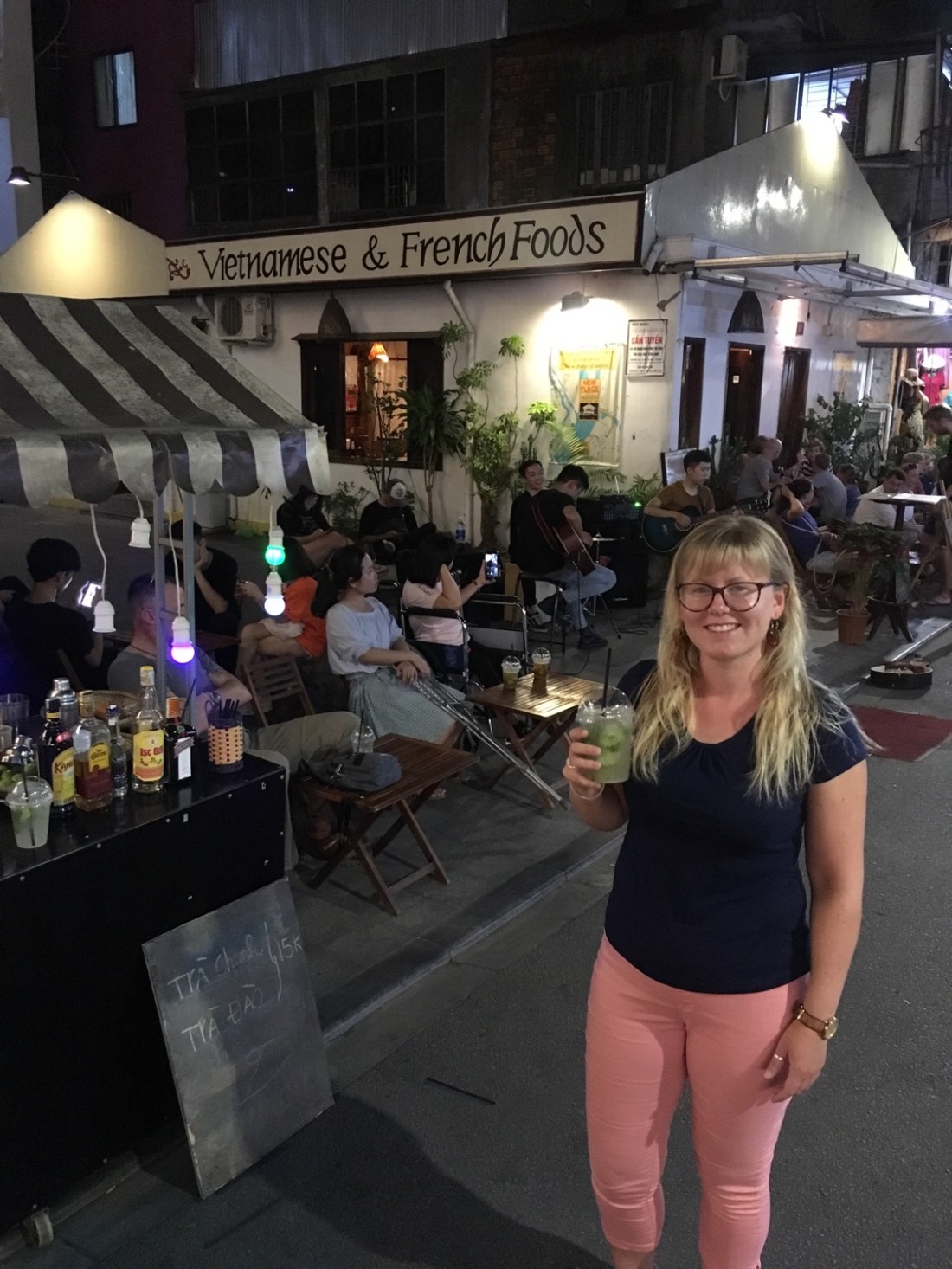
Neither of us can remember why, but we picked a restaurant/bar to eat in, in the end seemingly on a whim. Rach ordered grilled pork ribs which were great but Ged went for a new dish: Bò nhúng ớt. Herbs and fragrant leaves covered with thin strips of raw beef on one plate, cooked noodles on another plate, and lastly a steaming pot of spicy broth bubbling over a candle were brought to the table. The smell was unreal and we were so hungry we dove right in with our chopsticks.
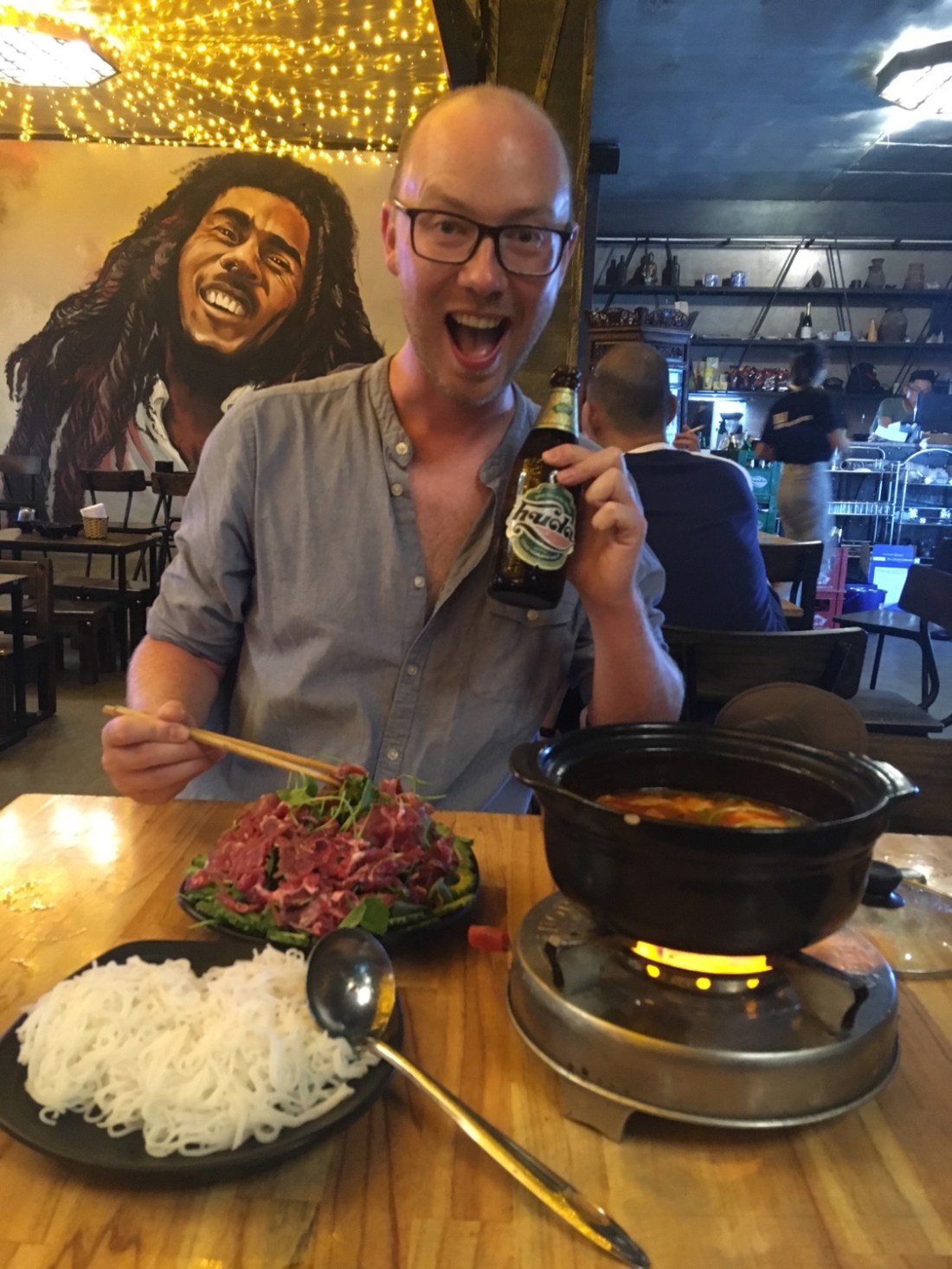
The trick is to put some of the cooked noodles in a bowl with a little of the broth, then dip the raw beef with some of the leaves in the hot broth to cook it to your liking, then pick up some of the noodles with the beef and put the lot in your gob. The taste was brilliant and the beef nearly melted in your mouth. At 100,000 Dong (£3.30 ish) the beef hot pot was excellent value and the best thing we ate in Hue. There was so much food we didn’t really need Rach’s dish and we were suitably stuffed on the very leisurely walk home.
There was so much history and beauty to enjoy in Hue; the citadel, the river, the pagodas, the countryside and the royal tombs. We’d seen it all quickly yet we feel we probably saw all Hue had to offer. It is a small place really, the atmosphere was a little more touristy, and the food just wasn’t as consistently good as in Hanoi. We had enjoyed our time and glad we went but we were ready to travel on to the lantern city of Hoi An the next day. Southwards ho!
 Around the world in 140 days